
You've seen them everywhere. Those quick, snappy video moments that pop up in your feed, disappear in 24 hours, and somehow capture exactly what made an event feel special. Story clips are changing how we document experiences, and if you're running events, they're probably changing your job too. The best part? Your attendees are already creating them. You just need to make it easier and actually use what they're giving you.
What Makes Story Clips Work
Story clips succeed because they're real. Not polished. Not scripted. Just people recording what they're experiencing right now.
Traditional event videos take weeks to produce. You hire a crew, shoot hours of footage, edit it down, add graphics, get approvals. By the time it's ready, everyone's moved on. Story clips flip that completely.
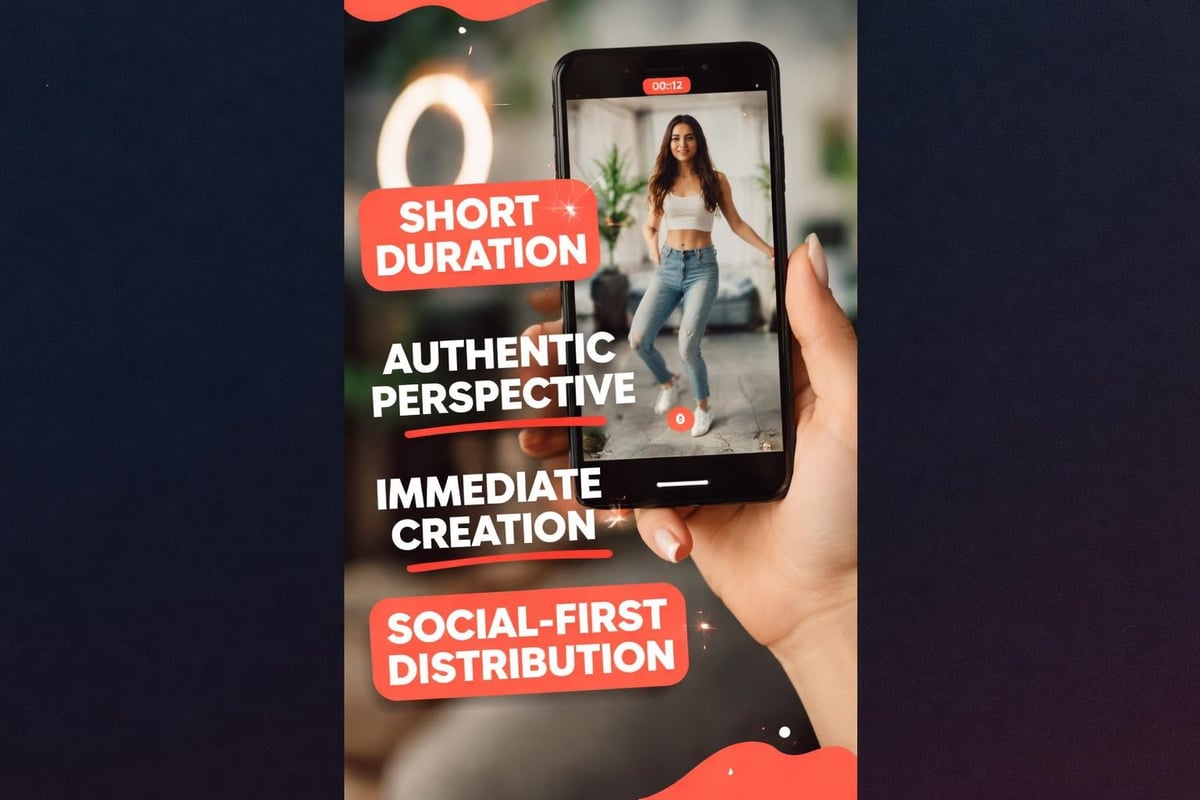
Here's what makes them different:
- Created in the moment, not days later
- No production crew needed
- Authentic perspective from attendees
- Published within hours, sometimes minutes
- Cost a fraction of traditional video
The format itself drives the behaviour. Vertical video. Short duration. Meant to be watched on mobile. People already know how to create them because they're doing it on Instagram, TikTok, and Snapchat every day.
The Psychology Behind Short-Form Content
Your brain processes story clips differently than long-form video. Research shows people make viewing decisions within 3 seconds. If the clip doesn't grab them immediately, they're gone.
That constraint actually helps. When you know you've got 15 seconds, you cut the rubbish. You get to the point. You show the moment that matters.
Video storytelling works because it taps into how humans naturally communicate. We've been sharing stories around fires for thousands of years. Story clips are just the digital version.
Turning Attendees Into Content Creators
Most event organisers treat attendees as audience members. That's leaving money on the table.
Your attendees are already recording. Walk through any festival, conference, or sporting event and count the phones pointed at stages, speakers, or pitches. That content exists. The question is whether you're harnessing it or letting it disappear into private camera rolls.
Setting Up for Success
Give people a reason to share and a place to put it. That's the entire strategy.
Three things need to happen:
- Make it obvious - Tell people you want their clips, before and during the event
- Make it easy - One tap to submit, not a five-step process
- Make it worthwhile - Show their content, feature their names, give them recognition
The best UGC platforms handle the technical bits, so you can focus on encouraging participation. But the encouragement matters more than the technology.
| Traditional Video Production | Story Clips from Attendees |
|---|---|
| £5,000-£50,000 per event | Free to minimal cost |
| 2-6 weeks turnaround | Same day publishing |
| Single perspective | Multiple viewpoints |
| Professional but distant | Raw but authentic |
| Limited social reach | Natural viral potential |
Getting People to Actually Participate
Incentives work, but not the way you think. Cash prizes might get submissions, but they attract the wrong behaviour. People start performing instead of capturing.
Better approach: social recognition. Feature the best clips on the main screen. Shout them out on your event socials. Make creators feel seen. That costs you nothing and drives more authentic content than any prize draw.
The timing matters too. If you're asking for story clips three days after the event, you're too late. The energy's gone. People have moved on. You need to capture enthusiasm while it exists, which means having your systems ready before day one.
Editing and Curating at Scale
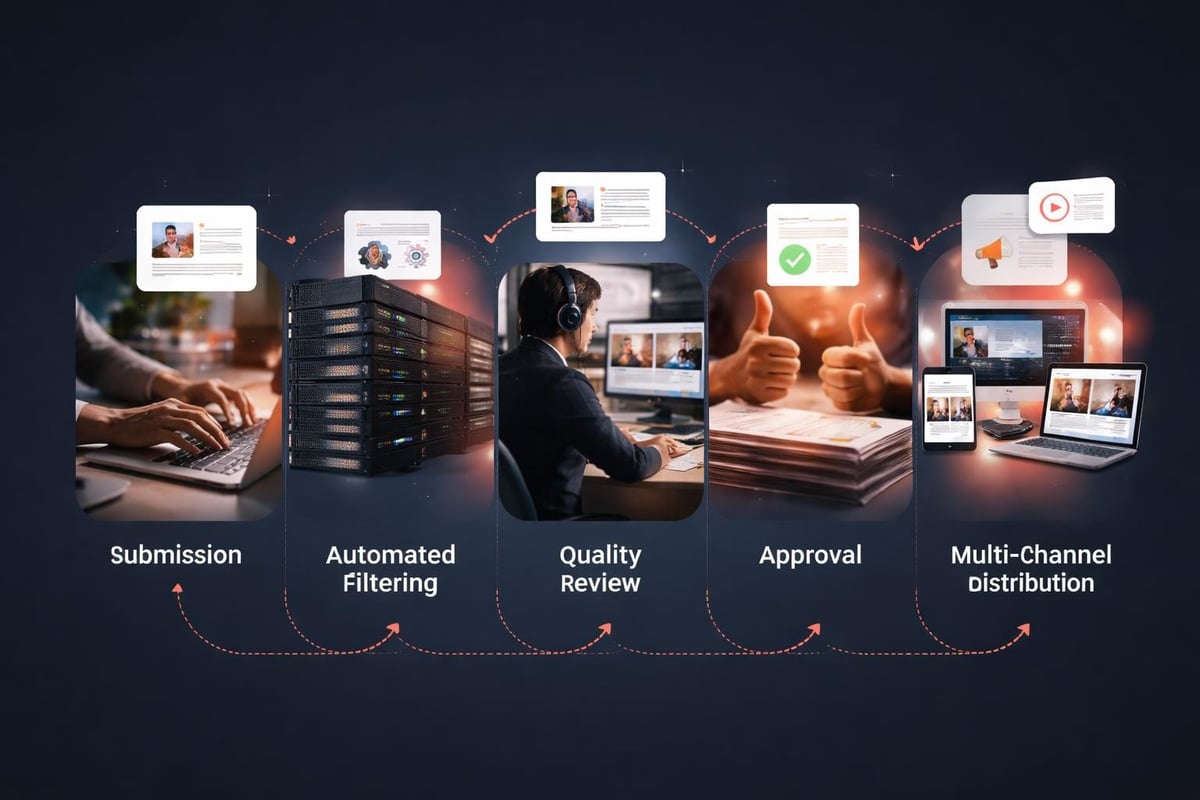
You'll get hundreds of clips. Most will be unusable. Some will be brilliant. A few will be outright problematic.
This is where content curation best practices become essential. You need a system that filters, organises, and highlights quality content without requiring 40 hours of manual review.
What to Look For
Quality isn't about production value. It's about moment capture.
- Authentic reactions - Real emotion beats perfect lighting
- Clear audio - If viewers can't hear it, they'll scroll past
- Stable footage - A little shake is fine, but unwatchable is unwatchable
- Relevant content - Does it actually show something from your event?
The video content creation process becomes collaborative when attendees are involved. You're not creating from scratch. You're selecting and arranging.
Handling Rights and Permissions
This trips up more organisers than anything else. You post someone's clip. They get upset. Suddenly you're dealing with legal threats instead of celebrating your event.
Sort this upfront. When people submit story clips, make the permissions clear:
- What you'll use the content for
- Where it might appear (socials, website, ads)
- How long you'll keep using it
- Whether they retain any rights
Most people are happy to share if you ask properly. Nobody's happy when you take without asking. The consent management piece isn't exciting, but it's necessary.
Distribution That Actually Works
You've got great story clips. Now what?
Posting them to your Instagram story and calling it done wastes their potential. These clips can work across multiple platforms, but each platform needs its own approach.
Platform-Specific Strategies
Different platforms, different rules. What works on TikTok flops on LinkedIn.
Instagram Stories and Reels:
- Keep it under 30 seconds
- Add text overlays for context
- Use location tags and event hashtags
- Post during peak hours (lunch and evening)
TikTok:
- Lean into trends and sounds
- Make the first second count
- Encourage duets and stitches
- Cross-promote your event hashtag
Facebook:
- Slightly longer clips work here (30-60 seconds)
- Add captions for sound-off viewing
- Use Facebook Reels strategically
- Tag relevant pages and partners
LinkedIn:
- Focus on professional moments
- Behind-the-scenes content performs well
- Keep it under 90 seconds
- Add context in the post caption
The content curation strategy extends beyond just collecting clips. It's about matching content to audience and platform.
Measuring What Matters
Views don't tell you much. A million views from bots is worthless. 10,000 views from your target audience is gold.
| Metric | What It Tells You | Why It Matters |
|---|---|---|
| Completion rate | How engaging your clips are | Low completion = content needs work |
| Shares | Organic reach potential | High shares = hitting the right note |
| Profile visits | Interest in your brand | Direct correlation to future attendance |
| Saves | Lasting value | People planning to reference later |
| Comments | Active engagement | Conversation beats passive viewing |
Track these properly and you'll know which story clips actually drive results. Most analytics platforms show you this data. You just need to look at it.
Making Story Clips Part of Your Workflow
One-off experiments don't work. You need story clips baked into how you run events.
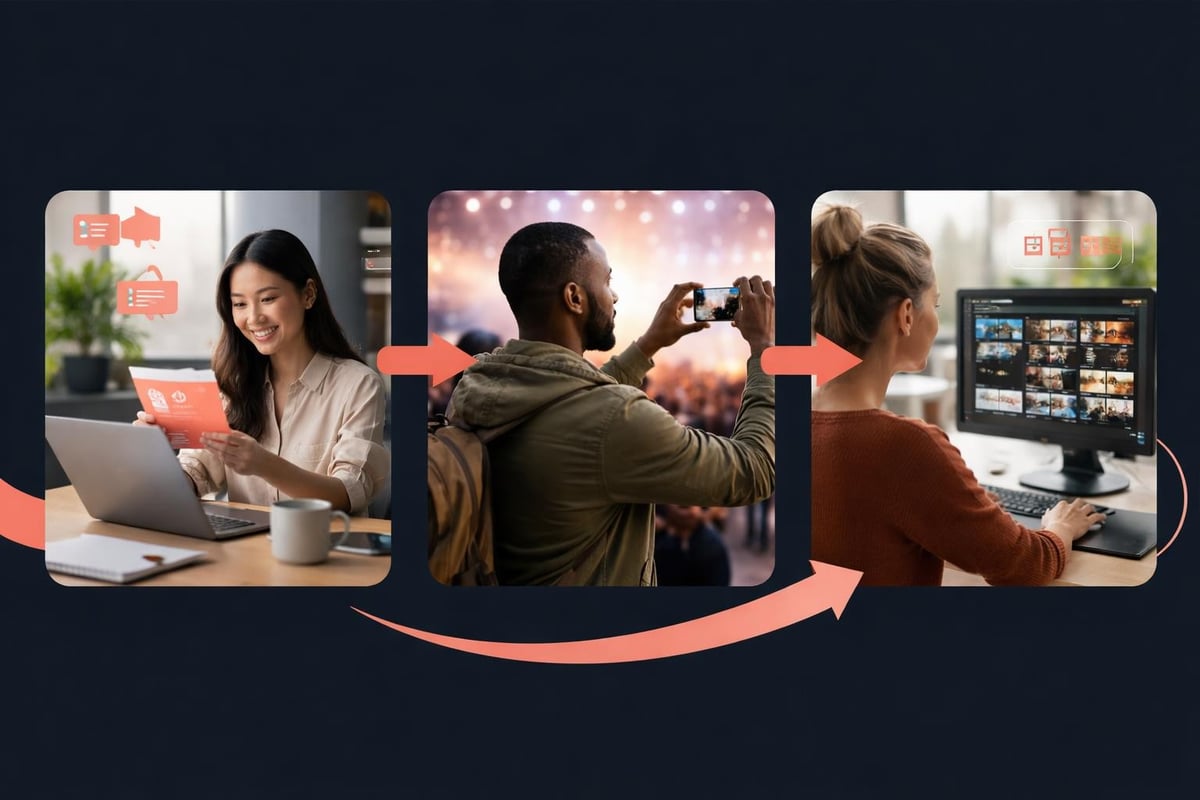
That means planning for them before the event, facilitating them during, and leveraging them after. It's a cycle, not a one-time thing.
Before the Event
Promotion starts here. Tell people you're collecting story clips. Give them a hashtag. Show examples from past events if you have them.
Pre-event checklist:
- Set up submission platform
- Create branded hashtag
- Prepare promotional materials
- Brief your team on participation strategy
- Test the technical workflow
Some organisers worry this feels pushy. It's not. You're giving attendees a way to contribute. Most people like that.
During the Event
This is where real moments happen. Your job is removing friction.
Signage helps. "Share your clips" messages on screens, programmes, and throughout the venue. QR codes make submission instant. People scan, upload, done.
Staff involvement matters too. If your team is enthusiastic about collecting story clips, attendees will be. If they ignore it, everyone else will too.
After the Event
The work isn't over when people leave. Now you're turning individual story clips into something bigger.
Creating video from clips lets you build highlight reels, promotional content, and evergreen marketing materials. The best video content creation software makes this easier, but don't overthink it. Even basic editing tools work fine.
Keep distributing for weeks. Not everything needs to go out on day one. Spread your story clips across your content calendar. A well-timed clip posted three weeks after your event can drive ticket sales for the next one.
Common Mistakes to Avoid
You'll mess something up. Everyone does the first time. Here's what usually goes wrong and how to skip it.
Asking too late - If you mention story clips submission after the event ends, participation drops by 80%. Ask early, ask often.
Making it complicated - Every extra step in your submission process cuts participation in half. One click or you're losing people.
Ignoring quality standards - Not every clip deserves publishing. Setting a quality bar isn't mean; it's respecting your audience's time.
Forgetting to showcase contributors - People want recognition. Tag them. Credit them. Make them feel part of something.
Not having clear usage rights - This causes problems later. Sort it upfront.
The video storytelling approach that works best treats contributors as partners, not content sources. That mindset shift changes everything.
Technical Considerations That Matter
Format matters more than you think. Story clips need to work on mobile because that's where they're viewed.
Video Specs That Work
- Resolution: 1080x1920 (vertical) minimum
- Format: MP4 is universal
- Length: 15-60 seconds ideal
- File size: Under 100MB for easy sharing
The best video format for web balances quality and loading speed. Too large and people bounce. Too compressed and it looks terrible.
Some events still shoot horizontal video and wonder why it flops on Instagram. Don't be that event. Vertical is the format. Work with it, not against it.
Storage and Organisation
Hundreds of story clips need a home. Scattered across phones, emails, and random folders doesn't work.
Cloud storage is non-negotiable. You need searchable, organised, accessible storage that your whole team can use. Video submission systems handle this automatically, which beats manually sorting files.
Tag everything. Event name, date, location, creator, content type. Seems tedious now, saves hours later when you're looking for specific clips.
The Future of Event Content
Story clips aren't going anywhere. If anything, they're becoming more central to how events create and distribute content.
AI is making curation faster. Not creating content (that's still humans), but sorting, tagging, and identifying the best clips from hundreds of submissions. That's helpful, not threatening.
The platforms keep evolving too. New features on TikTok-style vertical video apps change what's possible. Stay current but don't chase every trend. Focus on what works for your audience.
What won't change: people love sharing experiences. Give them the tools and reason to do it, and they will. That's the foundation everything else builds on.
Story clips turn your attendees from passive viewers into active storytellers, and that shift multiplies your content output while cutting production costs to nearly nothing. If you're ready to transform how your events generate and share authentic moments, SureShot ApS gives you the platform to collect, curate, and distribute user-generated content that actually gets shared. Your attendees are already recording. Start using what they create.