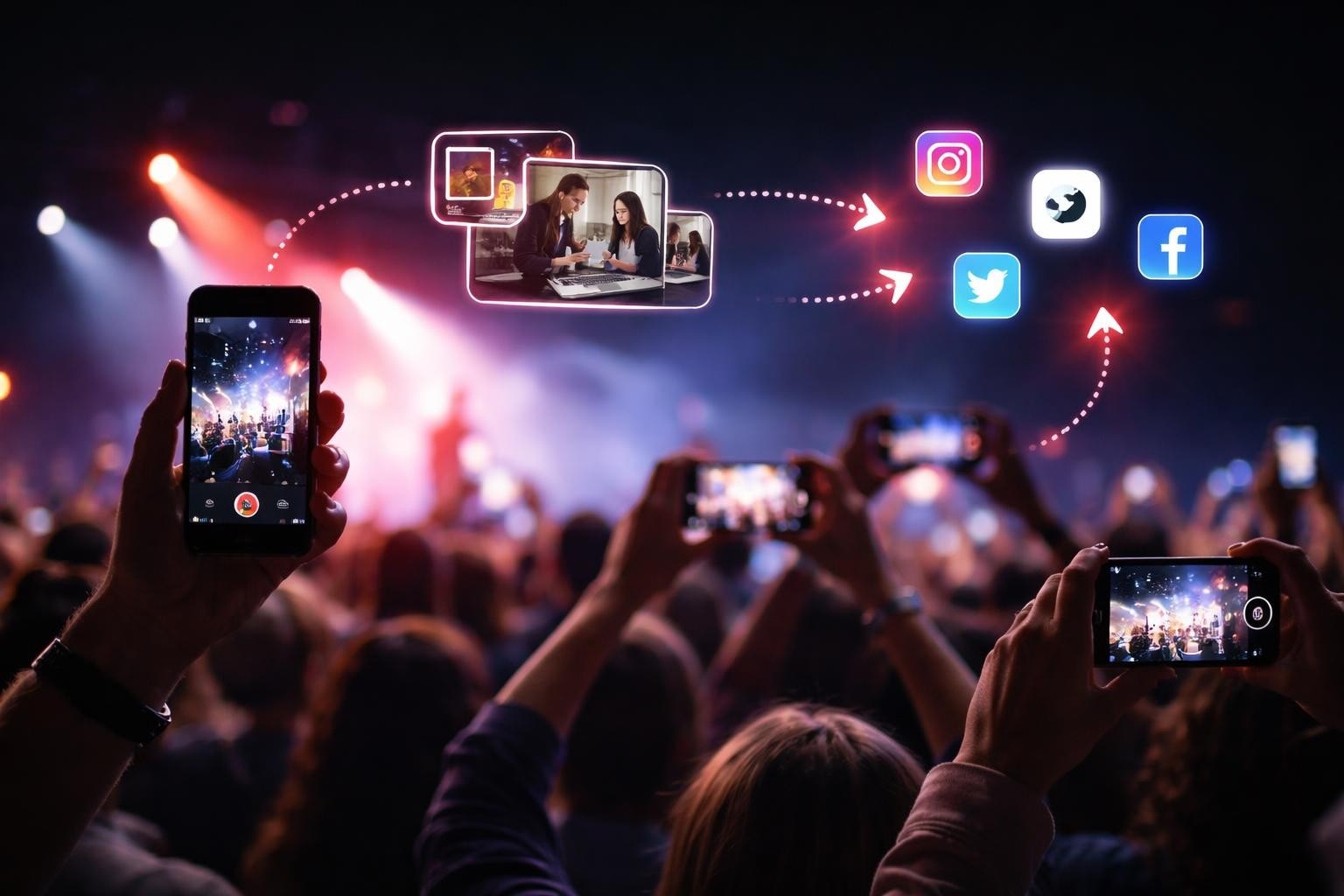

You've probably noticed that the most engaging videos in your feed aren't the ones with perfect lighting and scripted dialogue. They're the shaky phone recordings from someone's mate at a festival, or the quick clips from conference attendees sharing what they've just learned. That's user videos doing what polished marketing content can't: feeling real. When you hand the camera to your audience instead of hiring a production crew, something interesting happens. People actually watch.
What Makes User Videos Different
User videos aren't about production value. They're about perspective.
When attendees at your event pull out their phones and start recording, they're not thinking about brand guidelines or marketing objectives. They're capturing what actually matters to them. That authentic viewpoint is exactly what makes user-generated video content valuable.
Here's what sets them apart:
- Trust factor: People trust content from other people more than branded content
- Volume: You get dozens or hundreds of perspectives instead of one official angle
- Cost: Your attendees are creating content for free
- Reach: Every creator shares with their own network organically
The difference between a professionally shot event highlight reel and user videos is like the difference between a restaurant's Instagram photos and what your food actually looks like when it arrives. One's aspirational, the other's believable.
Why Events Need User Videos Now
Professional event videography has a problem. It's expensive, it takes weeks to produce, and by the time you post it, nobody cares anymore.
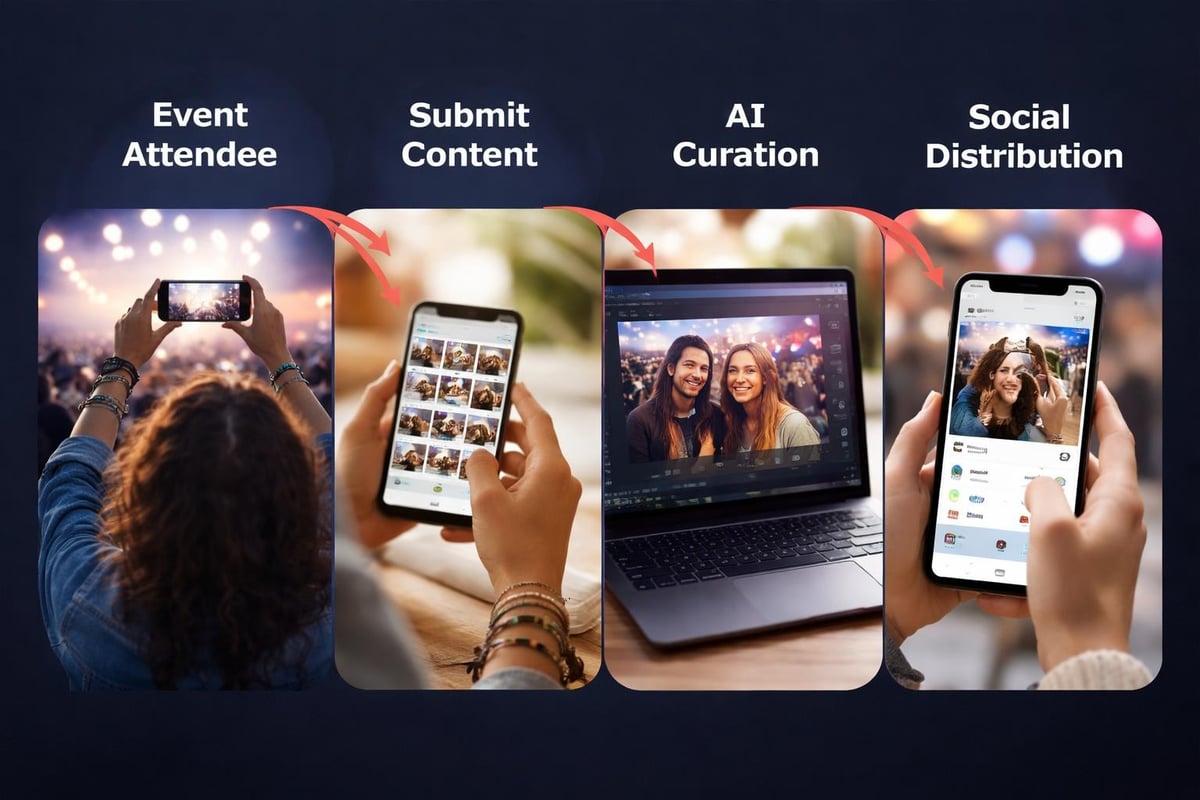
User videos solve this. They appear during or immediately after your event, when interest is highest. They show your event through multiple lenses simultaneously. And they cost you almost nothing beyond choosing the right platform to collect and manage them.
The Economics Make Sense
| Traditional Video Production | User Videos |
|---|---|
| £5,000-£20,000 per event | Platform subscription only |
| 2-4 weeks turnaround | Hours or days |
| 1 professional perspective | Dozens of authentic angles |
| Limited social reach | Exponential organic spread |
The numbers aren't even close. When you consider that each person creating user videos shares them with their own audience, you're multiplying your reach without multiplying your budget.
How to Actually Get Attendees Creating
People won't just start filming because you ask nicely. You need to make it easy, give them a reason, and show them where it goes.
Make the submission process dead simple. If people have to email videos or navigate complicated upload forms, they won't bother. A streamlined video submission system removes friction. Scan a QR code, pick your video, done.
Give them a reason beyond "please help us". Maybe their video gets featured on the big screen. Maybe the best ones win prizes. Maybe you're creating a collaborative highlight reel everyone can download. People participate when there's something in it for them.
Building the Right Framework
Setting up a user video system isn't complicated, but you need these pieces:
- Clear guidelines: Tell people what you want (crowd shots, reactions, specific moments)
- Easy access: QR codes on badges, posters, or displayed on screens throughout your venue
- Immediate incentive: Show submissions on screens in real-time or feature them in your event feed
- Follow-up: Send contributors the final compilation so they share it again
The key is reducing every barrier between "I should record this" and "done, submitted". Every extra tap or form field costs you half your potential content.
Curation: The Bit That Actually Matters
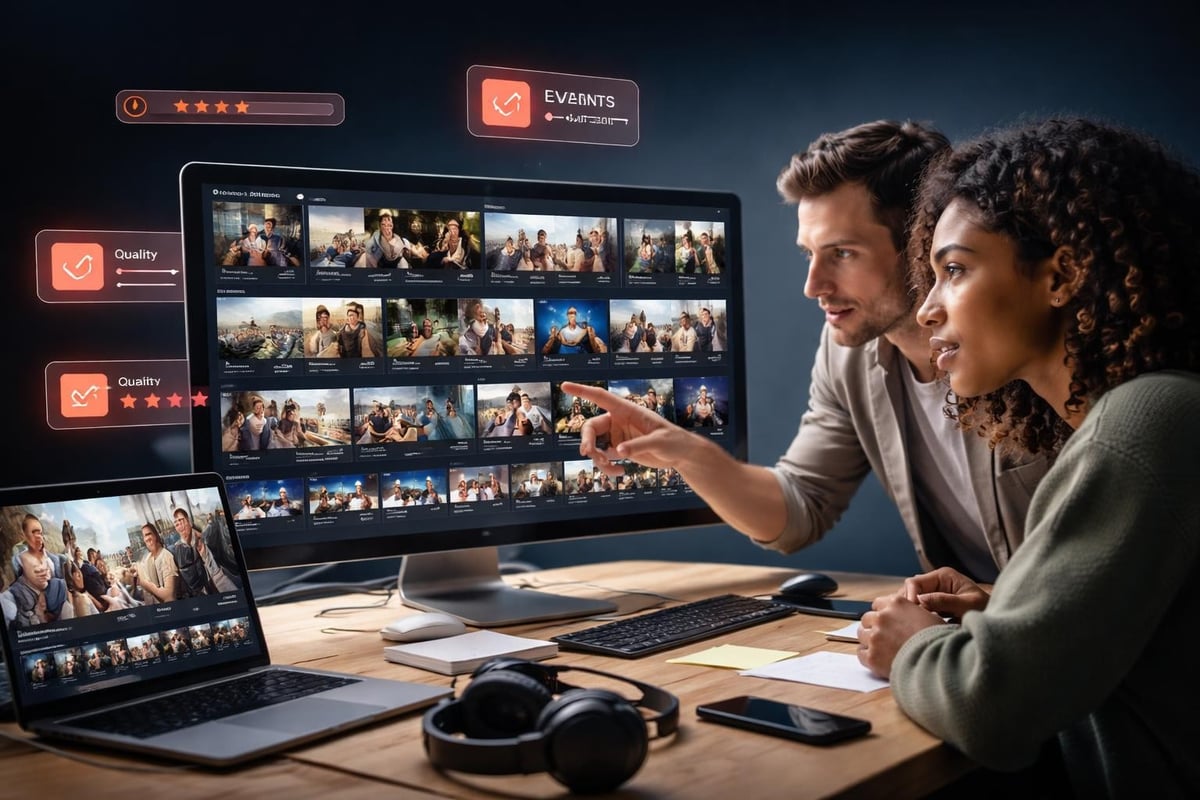
Collecting hundreds of user videos is easy. Ending up with something watchable is the hard part.
You'll get brilliant footage. You'll also get blurry nonsense, accidental pocket recordings, and clips that are just someone's shoes. Without curation, user videos become a chaotic mess nobody wants to watch.
This is where content curation tools earn their keep. You need smart filtering that highlights the good stuff and bins the rubbish, ideally without watching every single clip manually. AI can handle the initial sorting, flagging videos with good lighting, steady shots, and actual content worth keeping.
What Good Curation Looks Like
- Quality filtering: Automatic rejection of too-dark, too-blurry, or too-short clips
- Consent management: Only using content from people who've actually given permission
- Format optimization: Converting everything to the best video format for web distribution
- Theme grouping: Organizing clips by topic, time, or location for easier editing
The difference between curated user videos and a raw dump of content is the difference between a highlight reel and security footage. Both show what happened, but only one's worth watching.
Distribution That Actually Spreads
You've collected the videos. You've curated them. Now what?
Most events make the mistake of creating one big compilation and calling it done. That's leaving money on the table. Effective user-generated content campaigns distribute content across multiple channels in formats optimized for each platform.
Break it up. Your 10-minute compilation becomes:
- 60-second highlights for Instagram and TikTok
- 15-second teasers for Stories and Reels
- Individual standout moments as separate posts
- Behind-the-scenes clips for LinkedIn
- Full compilation on YouTube
Each piece serves a different platform and audience. Someone who won't watch 10 minutes might watch 15 seconds, share it, and bring new eyes to your event.
Timing Is Everything
Post during the event. Post immediately after. Then keep drip-feeding content for weeks. The organic reach of user videos compounds when you understand content curation strategy and time your posts to maintain momentum.
Legal Bits You Can't Ignore
User videos come with strings attached. Mainly, you need permission to use them.
Consent isn't optional. Before you splash someone's video across your marketing channels, you need explicit permission. A proper consent management platform handles this automatically during submission, so you're not chasing people for rights weeks later.
The basics you need covered:
- Clear terms: Tell people how you'll use their content upfront
- Opt-in, not opt-out: Make consent an active choice during submission
- Attribution: Credit creators when you use their clips
- Revocation rights: Let people withdraw consent if they change their minds
Getting this wrong isn't just awkward, it's potentially expensive. Build consent into your collection process from day one, or you'll have brilliant footage you can't legally use.
What Success Actually Looks Like
Measuring user video success isn't about views alone. It's about what those videos do for your event.
| Metric | What It Tells You |
|---|---|
| Submission rate | How engaged your attendees actually were |
| Share rate | Whether content resonates beyond your audience |
| Reach per video | Organic amplification effectiveness |
| Cost per view | ROI versus traditional video production |
| Follow-on ticket sales | Actual business impact |
The best measure? When people share user videos from your event without being asked. That's when you know you've created something that resonates.

Common Mistakes That Kill User Video Programmes
You'll probably mess some things up. Most events do. Here's what usually goes wrong:
Making submission too complicated. If your process involves more than scanning a code and selecting a video, you've already lost half your contributors. Every additional step cuts participation by about 30%.
Forgetting to promote it. Attendees don't know they can submit videos unless you tell them. Repeatedly. On signage, in announcements, through event apps, and from the stage.
Taking too long to use the content. User videos have a shelf life measured in days, not weeks. If you're still "working on the compilation" three weeks later, you've missed the window when people care.
Ignoring quality entirely. Yes, authentic matters more than polished. No, that doesn't mean using footage where nobody can see or hear anything. Basic quality thresholds still apply.
The best practices for encouraging user-generated video content boil down to making it easy, making it rewarding, and making it fast.
Getting Started Without Overthinking It
You don't need a massive budget or a complex strategy. You need a way to collect videos, a method to sort them, and a plan to share them.
Start small. Pick one event. Set up a simple submission system. Ask attendees to film three things: their favourite moment, the crowd during a highlight, and one piece of advice for next year's attendees.
Collect everything through one platform that handles uploads, manages content licensing, and helps you sort the keepers from the duds. Use the good clips in your post-event marketing. Measure what works.
Then scale from there.
The Minimum Viable Setup
- Collection point: QR code leading to mobile upload page
- Submission prompt: Simple question or theme to guide what people film
- Curation tool: Something that filters out technical failures automatically
- Distribution plan: Where and when you'll post the resulting content
- Measurement: Basic tracking of submissions, shares, and reach
That's enough to prove whether user videos work for your events. Everything else is optimization.
Where This Heads Next
User videos aren't a trend. They're how content works now.
Events that treat attendees as content creators instead of just audiences build deeper engagement and wider reach. The technology for collecting, curating, and distributing this content keeps getting simpler. The expectations from attendees keep growing.
In two years, events without user video programmes will feel like events without social media felt a decade ago. Possible, but noticeably behind.
The question isn't whether to use user videos. It's whether you're set up to handle them properly when they become table stakes for event marketing. Start building that capability now, whilst you can still experiment without the pressure of everyone else already doing it better.
User videos turn your attendees into your content team, creating authentic moments that actually get shared. The trick is making submission effortless and curation smart, so you end up with shareable content instead of chaotic noise. If you're running events and want to capture real moments without the production costs or turnaround delays, SureShot handles the collection, curation, and consent management so you can focus on making your event worth filming in the first place.