

Content Licensing Definition: Types, Rights, And Examples
Every video clip your attendees share, every photo they post, every testimonial they record, none of it belongs to you unless there's a proper agreement in place. Understanding the content licensing definition is essential for any event organizer who wants to use crowd-sourced material without legal headaches. Get it wrong, and you risk copyright claims, takedown notices, or worse.
At SureShot, we built our entire platform around making user-generated content collection simple and legally sound. When attendees submit videos through our system, they grant you a clear license to use that footage. But what does that actually mean? What rights do you have, and what limitations apply?
This article breaks down the fundamentals of content licensing, what it is, how different license types work, and why these agreements matter for your marketing and promotional efforts. You'll see real examples of licensing in action and learn how to protect both your organization and the creators who contribute content. Whether you're gathering highlights from a festival or compiling testimonials from a corporate conference, knowing your licensing basics keeps you compliant and confident.
What content licensing means
Content licensing is a legal agreement that grants someone permission to use creative work without transferring ownership. The original creator retains copyright, but the licensee (the person or company using the content) gains specific rights to reproduce, display, modify, or distribute that material under defined conditions. You don't buy the content itself; you buy the right to use it in particular ways for a specific purpose, duration, or geographic area.
The basic framework
At its core, the content licensing definition describes a contract where the licensor (content owner) maintains copyright while authorizing a licensee (you or your organization) to use their material. This arrangement protects both parties through clearly stated terms. The licensor controls how their work appears in public and receives compensation or recognition. You gain legal access to valuable content without the expense and time required to create it from scratch.
Think of it like renting a property instead of purchasing it outright. You can live in the space, decorate it, and use it for your needs, but fundamental ownership stays with the landlord. Similarly, when you license a video clip from an event attendee, that person still owns the footage. Your license simply gives you permission to incorporate that clip into your promotional materials under agreed terms.
Key elements in licensing agreements
Every licensing agreement contains specific parameters that define what you can and cannot do with the content. The scope of use determines whether you can use material for commercial purposes, editorial content, social media, or other channels. Duration clauses specify how long your license remains valid, from a one-time use to perpetual rights. Geographic restrictions may limit where you can publish or distribute the content.
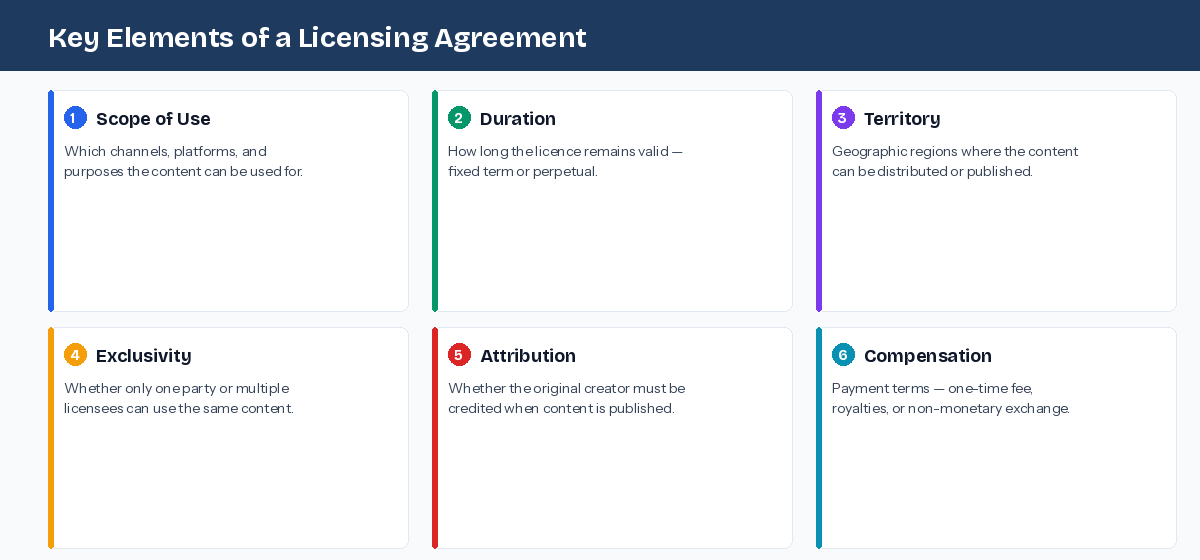
Licensing agreements typically outline usage scope, duration, territory, exclusivity, attribution requirements, and compensation terms.
Attribution requirements tell you whether you must credit the original creator by name or if you can use the content without acknowledgment. Exclusivity clauses determine if the licensor can grant the same rights to other parties or if you receive sole access to that material. Payment structures vary widely, from one-time fees to royalty arrangements based on how often or where you use the content. Modification rights clarify whether you can edit, crop, or alter the original work, or if you must use it exactly as provided.
How licensing differs from ownership
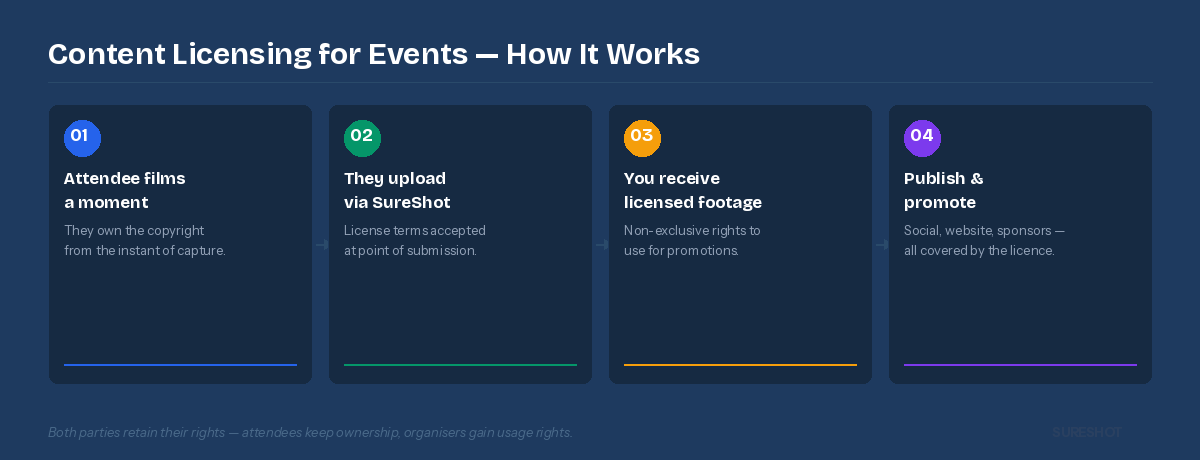
Purchasing content outright means you acquire full copyright ownership and can do whatever you want with it, including reselling or relicensing to others. Licensing, however, keeps legal ownership with the creator while granting you limited, defined rights. This distinction matters when you collect user-generated content from event attendees. They created the footage with their devices and own the copyright. Your license allows you to compile and publish their videos without claiming ownership of the raw files.
For event organizers using platforms like SureShot, this framework makes content collection legally straightforward. Attendees upload their clips and simultaneously grant you a license to use those videos for promotional purposes. You can edit the footage into highlight reels, share clips on social media, and incorporate them into marketing campaigns. The attendees retain ownership and may continue using their own footage elsewhere. This mutual arrangement protects everyone involved and eliminates confusion about who controls the content.
Why content licensing matters
Content licensing protects you from legal disputes while ensuring creators maintain control over their work. Without proper licensing agreements, you risk copyright infringement claims, expensive lawsuits, and damage to your organization's reputation. Every piece of user-generated content you collect from event attendees falls under copyright law, and using it without permission violates the creator's exclusive rights. A clear license eliminates this risk by documenting exactly what you can do with the content.
Legal protection for your organization
Understanding the content licensing definition keeps your promotional campaigns legally sound. When you gather video clips, photos, or testimonials from attendees, you need documented permission to publish that material across social media, websites, or marketing channels. Without a license, creators can demand you remove their content or seek compensation for unauthorized use. Copyright holders have the right to control how their work appears publicly, and ignorance of licensing requirements doesn't excuse infringement.
Proper licensing agreements protect you from takedown notices, cease-and-desist letters, and potential copyright lawsuits that can cost thousands in legal fees.
Beyond avoiding legal action, licensing agreements create clear expectations for everyone involved. Attendees know exactly how their submissions will be used, which builds trust and encourages more people to contribute content. You gain confidence that every clip in your promotional materials is legally cleared for its intended purpose. This documentation becomes particularly valuable when multiple stakeholders review your marketing campaigns or when legal teams need to verify proper usage rights.
Protecting creators while using their work
Licensing arrangements respect the creative contributions attendees make to your event. These agreements acknowledge that the person who filmed a moment owns that footage, even if they captured it at your venue. By obtaining a license rather than demanding full copyright transfer, you demonstrate respect for intellectual property while still gaining the usage rights you need for promotional purposes.
Fair licensing terms encourage attendees to share more freely because they retain ownership and control. They can still post their own videos to personal social media accounts or use them in other contexts. This balanced approach creates a positive relationship between your organization and the community attending your events. When people feel their contributions are valued and properly credited, they become enthusiastic participants in your content collection efforts rather than reluctant sources.
How content licensing agreements work
Content licensing agreements follow a straightforward process where the content owner (licensor) grants specific usage rights to another party (licensee) through a documented contract. The agreement spells out exactly what you can do with the material, for how long, and under what conditions. Both parties negotiate terms that protect the creator's interests while giving you the flexibility to use the content for your intended purposes.
The licensing process from start to finish
You begin by identifying content you want to use and contacting the copyright holder to discuss licensing terms. For event organizers collecting attendee footage, this process happens automatically through your platform's terms of service. When attendees upload videos through SureShot, they review and accept licensing terms as part of the submission process, granting you immediate usage rights without individual negotiations.
The licensor provides specific details about what uses they'll permit, whether you can modify the content, and how long the license remains valid. You review these terms to ensure they match your intended applications, whether that means social media posts, website galleries, or promotional videos. Once both sides agree, the contract becomes binding and documents the legal permission you have to use that content.
Most licensing agreements activate immediately upon signature or content submission, giving you instant access to use the material within the defined parameters.
Essential terms every license includes
Every licensing agreement specifies the scope of permitted use, defining channels where you can publish the content (social media, websites, print materials, broadcasts). Duration clauses establish whether your license lasts for a specific timeframe, covers a single campaign, or grants perpetual rights to use the material indefinitely. Geographic restrictions may limit distribution to certain countries or regions, though many user-generated content licenses offer worldwide usage.
Attribution requirements tell you whether you must credit the original creator by name or handle when you publish their content. Modification rights clarify if you can edit, crop, combine, or enhance the footage, or if you must use it in its original form. Compensation terms outline any payment obligations, though many event-based UGC licenses operate on a non-monetary basis where attendees contribute content in exchange for exposure or community participation.
Types of content licenses and rights
Content licenses fall into several distinct categories, each offering different levels of control and flexibility. Understanding these variations helps you choose the right licensing structure for your event content collection needs. The license type you select determines how many parties can use the content, whether you pay per use or a flat fee, and what restrictions apply to commercial applications.

Exclusive vs non-exclusive licenses
Exclusive licenses grant you sole rights to use the content, preventing even the original creator from licensing the same material to others during the agreement period. When you secure exclusive rights to attendee footage, no competing event organizer or marketing agency can use those same clips. This protection comes with higher costs and stricter terms, but guarantees your promotional materials feature unique content that audiences won't see elsewhere.
Non-exclusive licenses allow the copyright holder to grant the same usage rights to multiple licensees simultaneously. Most user-generated content from event attendees operates under non-exclusive terms, meaning creators can share their footage with others while you use it for your promotional purposes. This arrangement keeps licensing costs lower and makes attendees more willing to contribute, since they retain freedom to use their own content however they choose.
Royalty-free and rights-managed models
Royalty-free licenses require a one-time payment that grants unlimited usage rights within the scope defined by the agreement. You pay once and can use the content repeatedly across multiple campaigns without additional fees. Event organizers benefit from this model because budget planning becomes straightforward, and you avoid tracking usage for royalty calculations.
Royalty-free doesn't mean free; it means you pay once instead of paying royalties each time you use the content.
Rights-managed licenses charge based on specific usage parameters like distribution channels, audience size, or campaign duration. Each application requires separate payment, which can add up quickly but offers precise control over how and where content appears. Few event-based UGC platforms use this model due to its complexity and tracking requirements.
Creative Commons and open licensing
Creative Commons licenses provide standardized options that let creators share work while maintaining copyright protection. These licenses range from highly permissive (allowing any use with attribution) to restrictive (permitting only non-commercial applications or prohibiting modifications). Understanding the content licensing definition includes recognizing how these open licenses differ from traditional commercial agreements in their simplified terms and broader permissions.
Content licensing vs related concepts
Content licensing sits alongside several related legal frameworks that govern how creative work gets used and distributed. Understanding these distinctions helps you choose the right approach when collecting attendee footage and protects you from misapplying legal concepts that could leave your organization exposed. While the content licensing definition centers on granting temporary usage rights, other frameworks involve permanent ownership transfers or operate under different legal principles entirely.
Licensing versus copyright transfer
Copyright transfer means the original creator permanently gives up ownership and all associated rights to another party. You become the copyright holder and can do whatever you want with the content, including selling it or licensing it to others. This differs fundamentally from licensing, where creators maintain ownership while granting you limited usage rights under specific conditions.
Event organizers rarely need full copyright transfer from attendees. Acquiring permanent ownership of every submitted video creates unnecessary legal complexity and makes attendees hesitant to contribute. Licensing provides everything you need for promotional purposes while respecting the fact that attendees want to keep their own footage and use it in their personal accounts.
Work for hire arrangements
Work for hire agreements apply when someone creates content specifically as part of their employment duties or under a commissioned contract that explicitly states the work belongs to the hiring party. Under this framework, you own the copyright from the moment of creation because the work was made within an employment relationship or under specific contractual terms.
Work for hire ownership differs from licensing because no separate rights transfer occurs; you already own the content as soon as it's created.
Attendee submissions at your events don't qualify as work for hire because these individuals aren't your employees and didn't accept commissioned assignments to create specific content. They voluntarily filmed moments using their own equipment and chose to share those clips with your organization.
Public domain and fair use
Public domain content has no copyright protection, either because protection expired or the creator explicitly released all rights. You can use public domain material without licenses or permission, but attendee videos always carry copyright protection from the moment of creation. Fair use allows limited unauthorized use of copyrighted material for purposes like criticism, commentary, or education, but relying on fair use for promotional event content creates legal risk you don't need to take when proper licensing makes everything clear and documented.
Real-world content licensing examples
Seeing how licensing works in practice makes the content licensing definition easier to grasp and apply to your own event operations. Real-world examples demonstrate how different organizations structure agreements, what terms they prioritize, and how they balance creator rights with business needs. These scenarios cover everything from massive music festivals to corporate conferences, showing you what works and what potential complications to avoid.
Event industry licensing scenarios
Music festivals use non-exclusive licenses to collect attendee footage for promotional campaigns. When fans submit videos through dedicated apps or hashtag campaigns, the festival organizers receive rights to compile highlight reels, share clips on social media, and feature content in next year's marketing materials. Attendees keep ownership of their original videos and can post them to personal accounts, while the festival gains authentic content that showcases the crowd experience from multiple perspectives.
Corporate conferences typically implement broader licensing terms that cover all event content, including attendee testimonials, session recordings, and networking moments. Your licensing agreement might specify that submitted content can appear in case studies, training materials, promotional videos, and sponsor presentations. This comprehensive approach gives you flexibility to repurpose content across multiple channels without renegotiating terms for each new application.
Event organizers who clearly communicate licensing terms during registration see 40% higher content submission rates than those who only mention usage rights after content collection begins.
Sports events often combine exclusive and non-exclusive licensing models. Teams secure exclusive rights to certain premium content, like locker room celebrations or player interviews, while maintaining non-exclusive licenses for general fan footage. This structure lets organizations protect their most valuable content while still encouraging widespread fan participation in content creation efforts.
Platform-based content licensing
Social media platforms operate under licensing agreements where you grant them broad rights to host, display, and distribute your uploaded content. When attendees share event clips on Instagram or TikTok, they've already licensed that content to the platform under terms that allow extensive usage. Your event collection platform should offer clearer, more limited terms that focus specifically on promotional purposes rather than the sweeping permissions commercial platforms typically require from users.
Final takeaways
Understanding the content licensing definition keeps your event marketing legally compliant while respecting creator rights. You need documented permission to use attendee footage, and proper licensing agreements provide that protection without requiring you to purchase full copyright ownership. The right license type depends on your specific needs, whether you require exclusive access to standout clips or prefer non-exclusive terms that encourage widespread participation.
When you collect user-generated content from events, clear licensing terms build trust with attendees and eliminate confusion about usage rights. Your agreements should specify scope of use, duration, attribution requirements, and any restrictions on modification or distribution. This documentation protects both your organisation and the people who contribute content to your promotional efforts.
SureShot handles licensing automatically when attendees submit videos, giving you immediate usage rights for promotional purposes while creators maintain ownership of their footage. Book a demo to see how our platform streamlines content collection with built-in licensing agreements that keep your marketing campaigns legally sound.