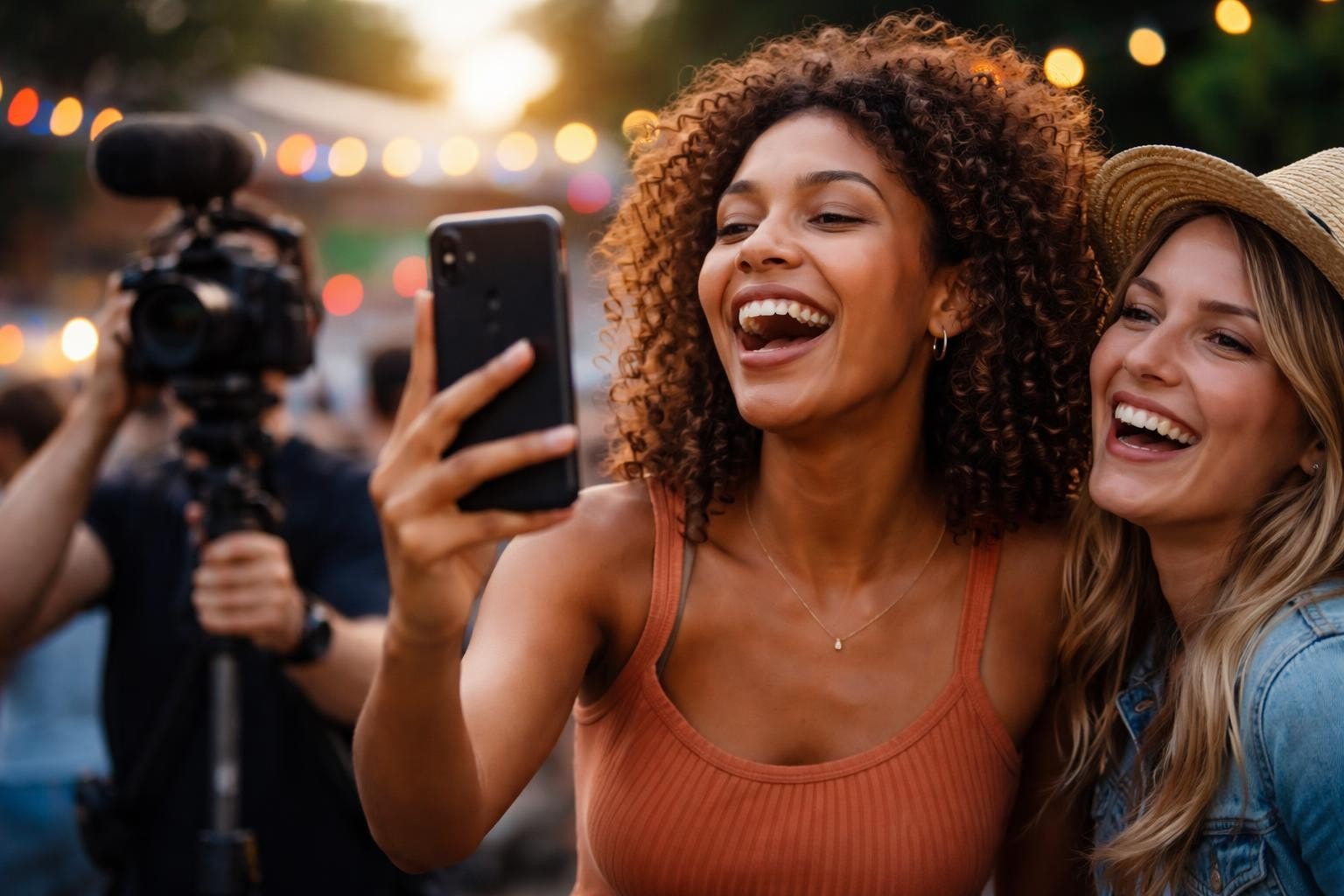

You've seen it happen. Someone at a festival pulls out their phone, captures a moment, posts it. Within hours, that shaky 15-second clip gets more engagement than the professionally shot recap video that cost thousands. That's videos in real life doing what expensive productions can't: feeling real. The gap between what brands produce and what people actually share keeps widening, and if you're still betting on polished content alone, you're missing the point entirely.
The Shift Nobody Saw Coming
Professional video production used to be the only game in town. Now it's just one option, and often not the best one.
People scroll past obvious marketing. They stop for content that looks like their mate filmed it. Participatory video isn't just a research method anymore. It's how communities tell stories when they don't trust the official version.
Here's what changed:
- Phone cameras got good enough
- Platform algorithms started favouring authentic content
- Audiences developed allergic reactions to anything that smells like an advert
- Production costs became harder to justify when user content performs better
The numbers back this up. Authentic content gets shared more, trusted more, and remembered more. Not because it's technically better, but because it's believable.

Why Real Beats Perfect Every Time
Videos in real life have something studios can't fake: they weren't meant to sell you anything. That's their superpower.
When someone films a moment they genuinely care about, it shows. The framing might be off. The audio might be rubbish. None of that matters because the emotion is real. Authenticity drives connection, and that principle applies just as much to standard video.
The Trust Factor
Brands say they're great. Attendees at your event showing their mates a good time? That's proof.
| Professional Content | User-Generated Content |
|---|---|
| High production value | Authentic moments |
| Scripted messaging | Spontaneous reactions |
| Brand perspective | Attendee perspective |
| Expensive to create | Essentially free |
| Limited reach potential | Natural viral spread |
You can't buy the kind of credibility that comes from real people sharing real experiences. That's why the best UGC platforms focus on making it easy for attendees to capture and share, not on making everything look professionally produced.
How Events Became Content Goldmines
Every person at your event is a potential creator. Most event organisers still haven't figured out what to do with that.
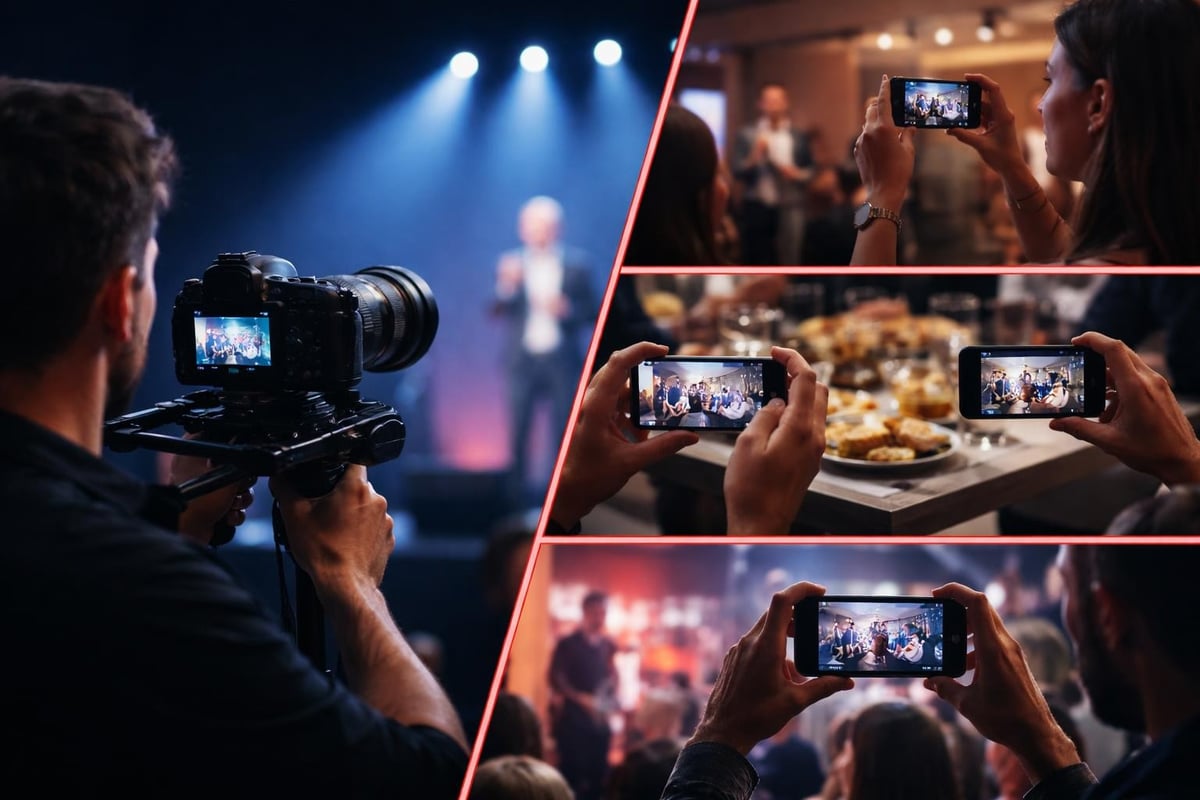
Think about a music festival. Official photographers capture maybe 200 great shots. Attendees capture 20,000. The maths isn't subtle. When you crowdsource event video content, you're not just getting more footage. You're getting different angles, different moments, different stories.
What attendees capture that professionals miss:
- The queue chat that turned into a friendship
- The surprise moment between sets
- The joke that became an inside reference
- The small details that made the event feel special
These aren't B-roll. They're the actual story. Professional crews film what's planned. Attendees film what's happening. There's a difference.
The Content Volume Problem
One crew can only be in one place. A thousand attendees can be everywhere.
This isn't about replacing professional content. It's about acknowledging that videos in real life capture things that planned content can't. Authentic video reveals insights that scripted content misses entirely.
The Technical Stuff That Actually Matters
You don't need to understand codec specifications to know what works. But a few basics help.
Modern phones shoot in formats that social platforms love. That's not an accident. When you're choosing the best video format for web, remember that platforms optimise for what people actually upload, not what professionals prefer.
Platform Requirements vs Reality
Each platform has its preferences:
- Vertical video dominates mobile - Yes, even though we all learned to film horizontally
- Short wins over long - Attention spans haven't gotten longer
- Authentic beats polished - Algorithms can tell the difference
- Sound-off viewing is standard - Subtitles aren't optional anymore
If you're still converting horizontal to vertical after filming, you've already lost. Attendees film vertically by default because that's how they use their phones. They're ahead of the curve, not behind it.
What Smart Tools Actually Do Here
These tools don't make fake videos look real. They make real videos usable.
When you've got hundreds of clips from attendees, you need help sorting through them. That's where automated event video curation comes in. Smart filtering identifies the good moments, flags the unusable stuff, and helps you find the clips worth sharing.
The platform handles:
- Quality filtering (shaky footage vs stable shots)
- Duplicate detection (everyone filmed the headline act)
- Content moderation (keeping things brand-safe)
- Highlight identification (which moments matter most)
It doesn't create. It curates. There's a massive difference, and anyone pretending otherwise is selling you something you don't need.
The Curation Challenge
Raw authenticity isn't the same as good content. You still need editorial judgement.
Content curation best practices apply here. You're looking for moments that tell your event's story through attendee eyes. Some clips will be brilliant. Most will be ordinary. A few will be unusable. Smart tools help sort the pile, but humans decide what the story is.
Rights, Permissions, and Not Getting Sued
This bit's boring but crucial. When attendees film at your event, who owns that content?
The answer depends on your consent management approach. You need clear permissions before using anyone's footage. This isn't optional, and hoping for the best isn't a strategy.
| Permission Type | What It Covers | When You Need It |
|---|---|---|
| Filming consent | Right to capture | Before the event |
| Usage rights | Right to publish | Before you post |
| Commercial use | Right to monetise | If you're advertising |
| Perpetual licence | Long-term use | For archival content |
Getting this wrong means pulling down content or paying settlements. Getting it right means attendees understand what they're contributing to and feel good about it.
The Distribution Advantage
Videos in real life spread differently than marketing content. They follow social graphs instead of media plans.
When an attendee shares footage, their network sees it. Those people trust them. That's earned media working exactly how it should. You can't buy that kind of distribution, and trying to fake it with influencers misses the point.
How Authentic Content Travels
Someone films a moment. They share it because they want to, not because you asked. Their mates see it, some of them share it. The ones who share it add their own context. Each share carries implicit endorsement.
Content moves through social connections, gaining credibility with each share. Compare that to sponsored posts that come with built-in scepticism.
The multiplication effect works like this:
- 100 attendees each share with 200 people = 20,000 impressions
- Those shares reach people who actually trust the sender
- Cost per impression: essentially zero
- Authenticity rating: maximum
You can't replicate that with a media buy. The trust simply isn't there.
Making It Work at Scale
One event with ten attendees filming is manageable. A festival with thousands filming simultaneously is chaos without systems.
That's where content curation tools become essential. You need infrastructure to collect, sort, and publish at speed. Waiting three weeks to share event highlights means you've already missed the conversation.
The Technical Stack
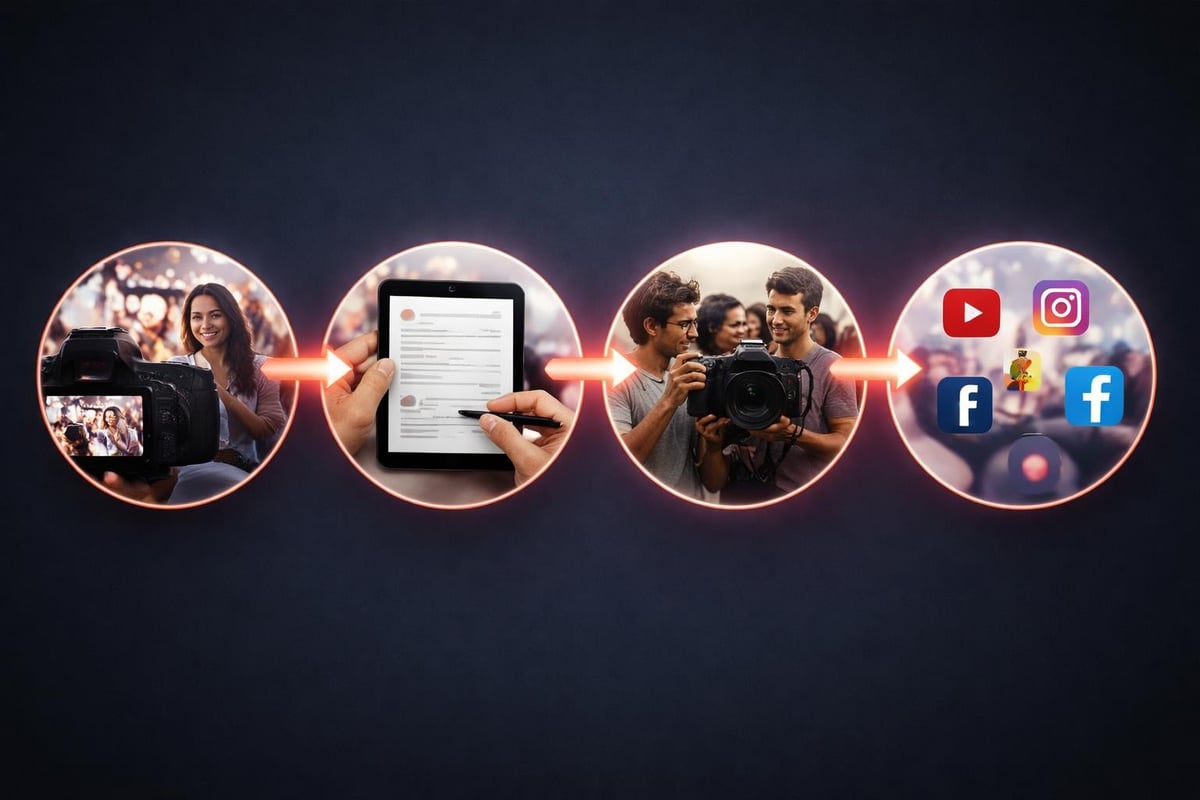
You need a few components working together:
- Collection mechanism - How attendees submit content easily
- Storage solution - Where all that footage lives
- Curation system - How you find the good stuff fast
- Publishing workflow - Getting approved content out quickly
- Rights management - Tracking permissions at scale
This isn't exotic technology. It's mostly about having clear processes and tools that don't require a manual for every user.
The Cost Reality
Professional event videography runs £2,000-£10,000 for a single day. User-generated content from attendees? The cost is in the platform, not the production.
Here's the actual comparison:
| Traditional Approach | UGC Approach |
|---|---|
| £5k-£10k per event | Platform fee (monthly) |
| One perspective | Dozens of perspectives |
| 2-3 weeks turnaround | Real-time sharing |
| Limited distribution | Natural social spread |
| Professional polish | Authentic feel |
You're not eliminating professional content. You're supplementing it with something that performs better in most contexts and costs a fraction of the price.
What This Means for Your Next Event
Stop thinking about video as something you produce. Start thinking about it as something that happens.
Your attendees are filming anyway. The question is whether you're part of that process or just hoping some of it turns out usable. How to film an event used to be a guide for professionals. Now it's about enabling everyone there to capture what matters to them.
The practical steps:
- Make it easy for attendees to submit content
- Set clear expectations about usage rights upfront
- Have systems to curate content quickly
- Share the best moments while they're still relevant
- Credit creators when you use their content
Videos in real life don't wait for post-production. They happen in the moment and get shared immediately. Your systems need to keep up with that pace.
The Algorithm Question
Platform algorithms prefer content that generates genuine engagement. User-generated content does that better than marketing material.
When someone shares footage they captured, their network engages with it honestly. Comments, shares, reactions, all genuine. Algorithms notice the difference between that and the polite engagement that branded content gets.
This isn't about gaming the system. It's about working with how platforms actually function. Engagement patterns differ dramatically based on content authenticity.
Why Platforms Push Authentic Content
Social platforms want users to stay engaged. Real moments from real people keep users scrolling. Polished marketing content makes them leave. The platforms aren't being altruistic. They're protecting their business model.
That means videos in real life get better organic reach than expensive productions. Not always, but often enough that the economics shift dramatically. A clip that cost nothing to produce can outperform content that cost thousands.
The Future Looks Scrappier
Video production isn't going away. But its role is changing. Professional content sets the tone. User content tells the story.
Events that understand this get authentic documentation, better social reach, and lower content costs. Events that don't are still paying premium rates for content that underperforms against phone footage.
The tools keep improving. Phones keep getting better. Platforms keep rewarding authenticity. The trend isn't reversing. If your content strategy still relies primarily on professional production, you're working against the current.
Real moments captured by real people will always outperform manufactured content. That's not changing. If you're running events and want to tap into what your attendees are already filming, SureShot ApS gives you the platform to collect, curate, and share authentic video content at scale. Your attendees become your storytellers, your content costs drop, and your organic reach grows. Worth a look.