
Earned Media Definition: Examples, Benefits, Vs Paid Media
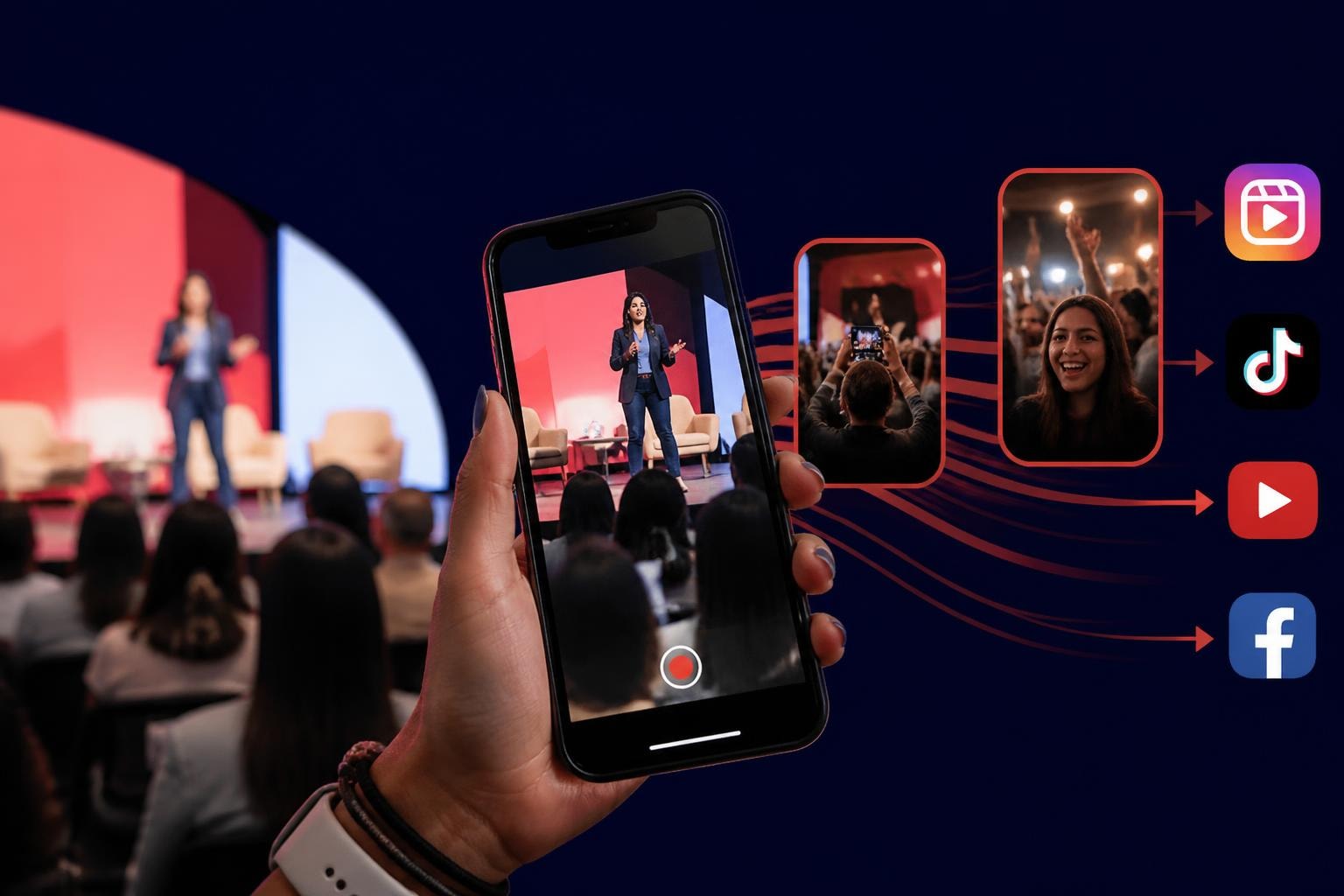
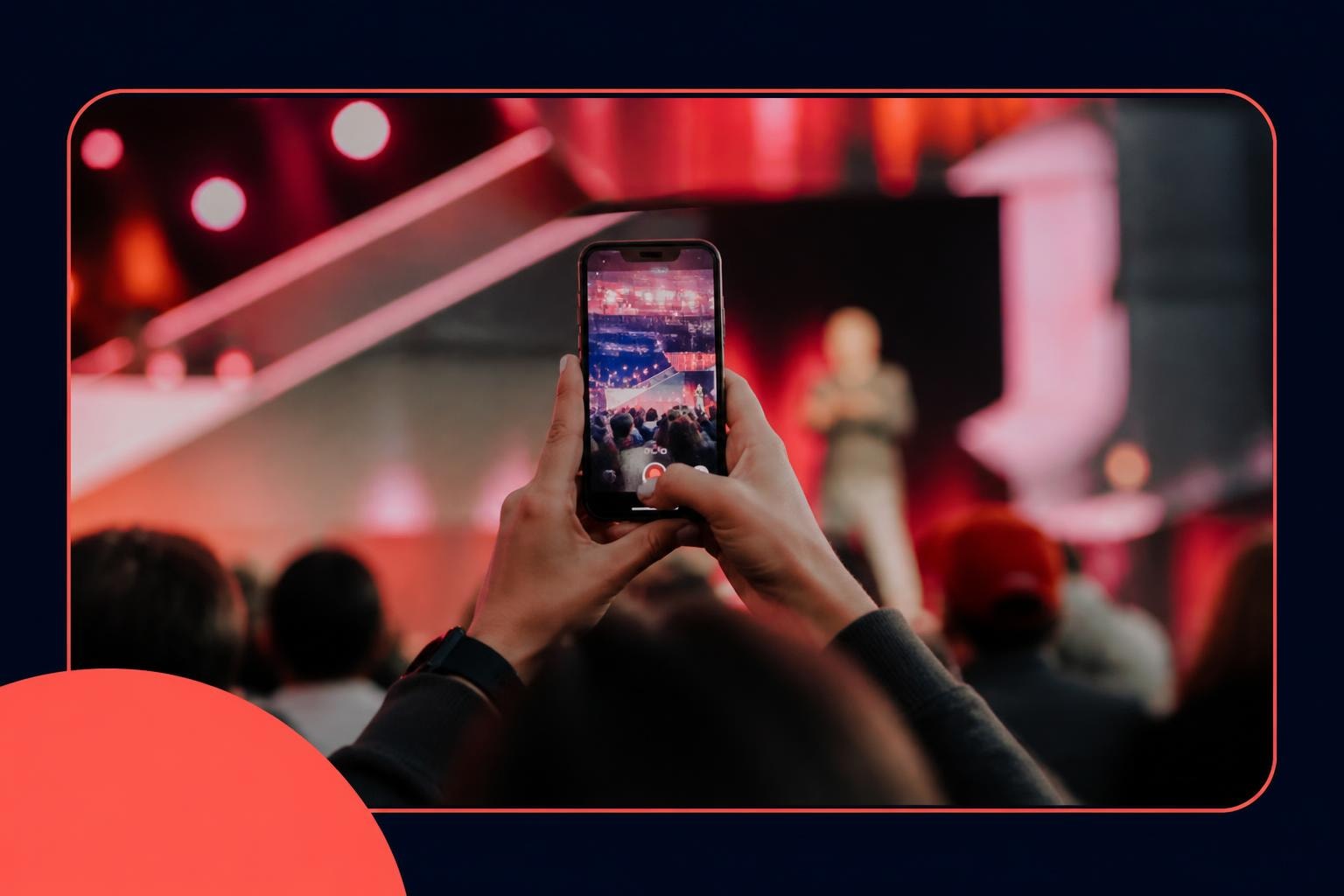
When attendees pull out their phones and share videos from your event, they're doing something most marketing budgets can't buy: giving you authentic promotion without a price tag attached. This organic exposure sits at the heart of the earned media definition, coverage and mentions your brand receives without direct payment.
Understanding earned media matters because it fundamentally changes how you think about content and reach. Unlike ads you pay for or content you publish yourself, earned media comes from others: journalists, influencers, customers, and event attendees who talk about you because they want to, not because you paid them.
At SureShot, we help event organizers capture and leverage user-generated video content, one of the most powerful forms of earned media available. This article breaks down exactly what earned media is, shows you real examples of how it works, and explains how it compares to paid and owned media strategies.
What earned media means in marketing
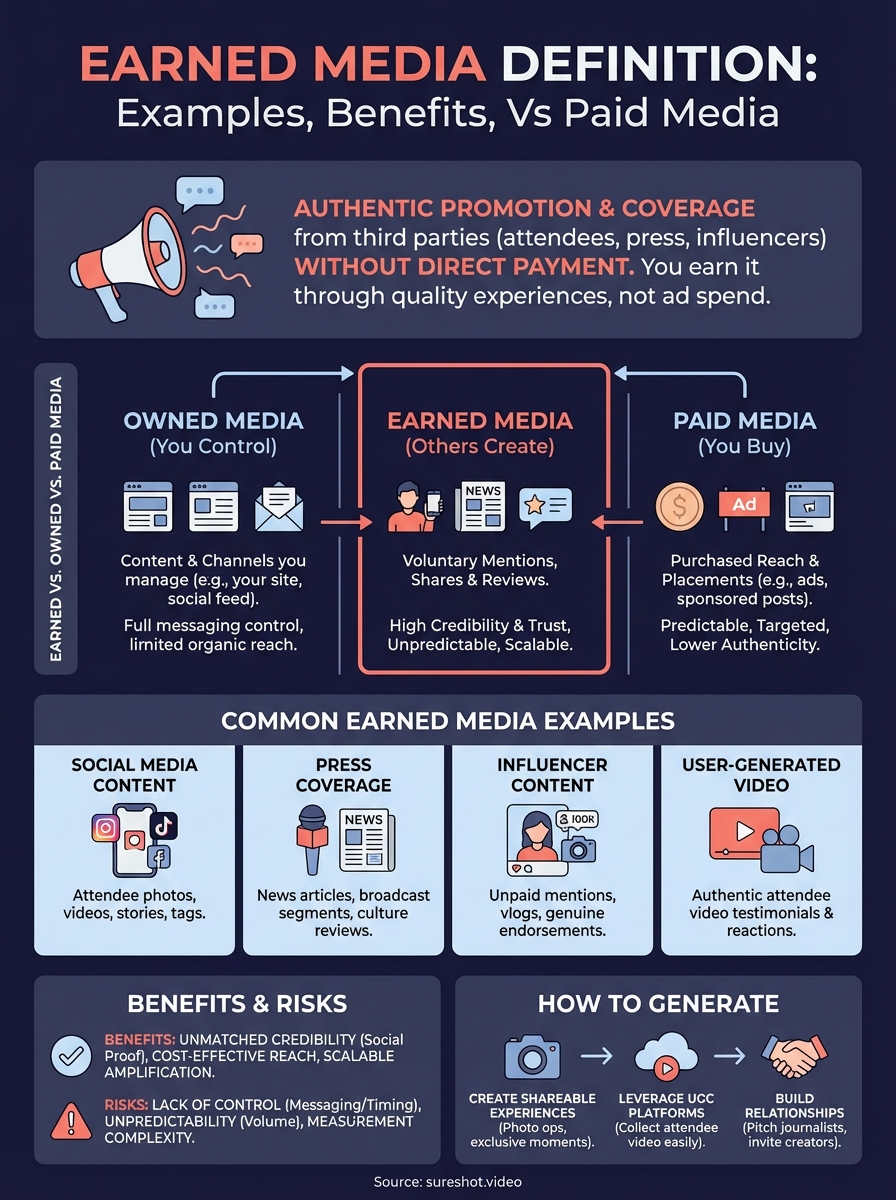
The earned media definition centres on publicity and exposure you receive through third-party sources rather than channels you control or pay for directly. When someone shares your event video on Instagram, a journalist writes about your festival, or attendees tag you in their posts, you're experiencing earned media. This type of coverage comes from external voices choosing to amplify your message because they find it valuable, interesting, or worth sharing.
The Core Principle Behind Earned Media
You earn this media through the quality of your experiences and the relationships you build, not through advertising spend. A music festival that creates memorable moments naturally generates attendee posts, reviews, and social media buzz. The term "earned" reflects the effort required: you provide something worth talking about, then others decide independently to spread the word. This differs fundamentally from buying ad space or publishing your own content because you don't control when, where, or how the coverage appears.
Earned media transforms your customers and attendees into voluntary brand advocates who amplify your message at no direct cost.
Marketing teams value earned media because it carries inherent credibility that paid advertising can't replicate. When a satisfied attendee posts a video from your event, their followers trust that genuine experience more than a polished ad campaign. You're leveraging social proof, the psychological principle that people trust recommendations from peers over corporate messaging. Research consistently shows consumers find user-generated content more authentic and influential than brand-created materials when making decisions.
Why Marketers Value It
The marketing value extends beyond credibility into measurable reach and engagement metrics. Every earned mention potentially exposes your brand to new audiences through established communities and networks. An influencer's post about your event reaches their followers, a news article taps into the publication's readership, and attendee videos spread through personal networks you couldn't access otherwise. You're essentially multiplying your marketing reach without proportionally increasing your budget.
Real-World Forms of Earned Media
Earned media appears in several recognizable formats across digital and traditional channels. Social media mentions and shares represent the most common form, particularly when attendees post photos, videos, or stories featuring your event. Press coverage in news outlets, whether online articles or broadcast segments, counts as earned media when journalists choose to cover your event based on newsworthiness. Product reviews, blog posts from attendees, podcast mentions, and even word-of-mouth conversations all fall under this category because external parties initiate the coverage voluntarily.
User-generated video content exemplifies earned media's power for events. When attendees capture and share their experiences, they create authentic testimonials that reach their personal networks organically. These videos showcase real moments and genuine reactions, providing social proof that no scripted commercial can match. Each share extends your event's visibility into communities you might never reach through paid campaigns alone.
Earned vs owned vs paid media
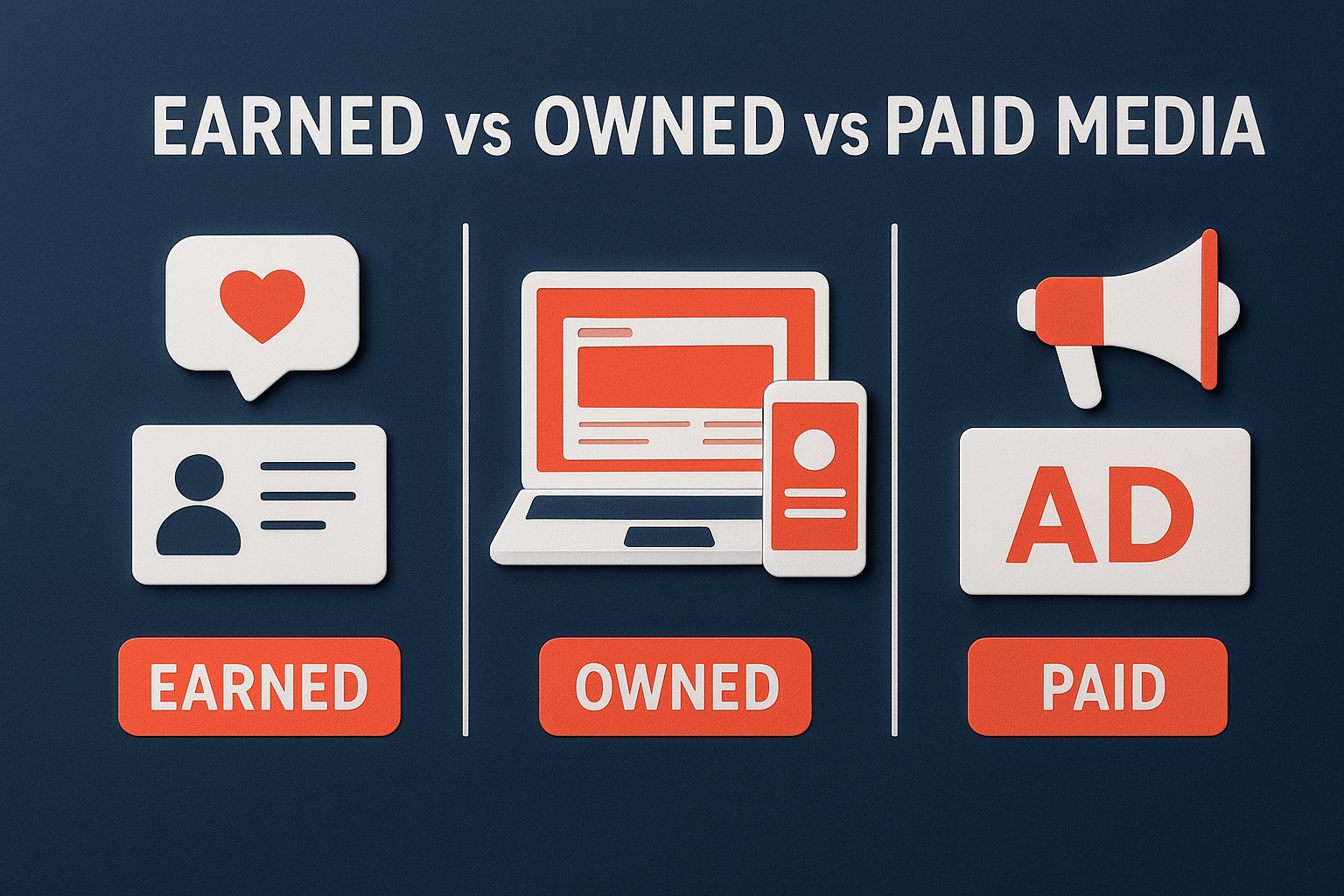
The earned media definition makes more sense when you see how it fits alongside owned and paid media in a complete marketing strategy. These three categories represent every channel available for promoting your events, each with distinct characteristics, costs, and control levels. Understanding the differences helps you allocate resources effectively and set realistic expectations for each media type's role in your overall strategy.
Owned Media: Content You Control
You create and publish owned media through channels your organization directly controls, including your website, blog, email newsletters, and social media accounts. When you post updates about your upcoming festival on your Instagram account or publish event recaps on your blog, you're using owned media. This category gives you complete control over messaging, timing, and presentation, though you're limited to reaching audiences who already follow your channels or discover them through search.
Paid Media: Reach You Purchase
Paid media involves buying access to audiences through advertising platforms and sponsored placements. You pay for Facebook ads promoting your event, sponsor posts with influencers, or purchase banner ads on relevant websites. This approach delivers predictable reach and precise targeting capabilities because platforms guarantee impressions in exchange for your budget. The trade-off comes in cost and perceived authenticity, since audiences recognise these placements as promotional content.
Each media type serves different purposes in your event marketing strategy, with earned media providing credibility that owned and paid channels cannot replicate alone.
How They Work Together
Smart event marketers integrate all three types rather than relying on one exclusively. You might use owned media to share attendee videos (earned media) and promote that authentic content through paid social ads. The earned media you generate through exceptional event experiences feeds your owned channels with compelling content, while paid media amplifies that content to reach new audiences. Your owned properties serve as the foundation, paid media extends your reach, and earned media builds credibility that enhances both.
Common earned media examples
The earned media definition becomes clearer when you see specific examples of how coverage appears in real marketing contexts. These examples span digital and traditional channels, each offering unique advantages for event promotion. Recognising these forms helps you identify opportunities and measure success as you build your earned media strategy.
Social Media Content From Attendees
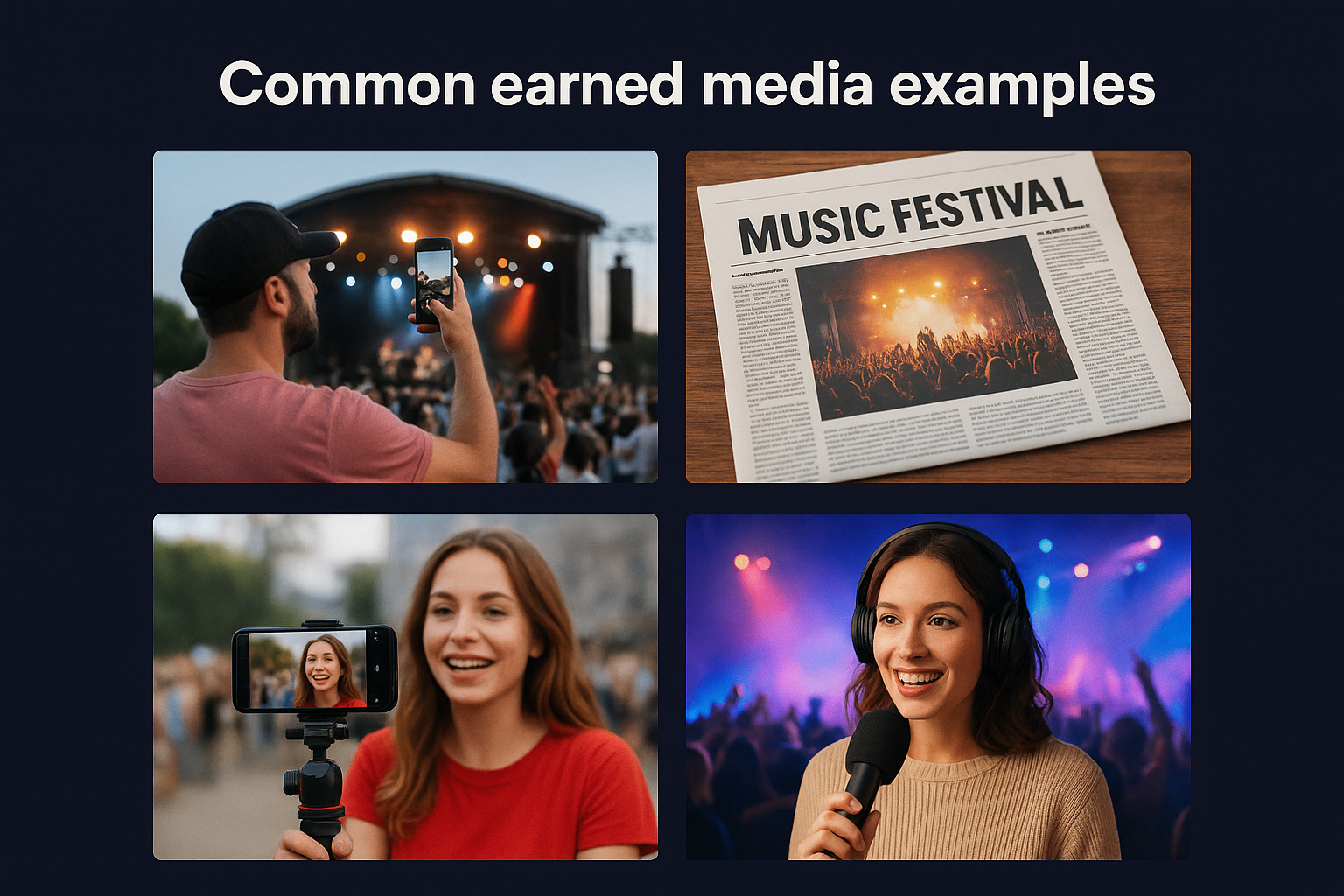
User-generated posts represent the most accessible form of earned media for events. When attendees share videos, photos, or stories from your festival, they create authentic content that reaches their personal networks organically. You see this when someone posts Instagram stories featuring your event's stages, tags your official account in TikTok videos capturing memorable performances, or shares Twitter threads recapping their experience. These posts carry weight because followers trust personal recommendations more than branded messaging. Event organizers often collect thousands of these organic mentions during and after major festivals.
Press Coverage and Media Mentions
Journalists choosing to cover your event generates valuable earned media with built-in credibility. News outlets might feature your festival in event roundups, culture sections publish reviews of your conference, or local TV stations broadcast segments showing highlights from your gathering. You can't pay for this type of coverage directly, though you can pitch story angles and provide press access that makes covering your event easier. Media mentions expose your brand to established audiences who trust the publication's editorial judgment, extending your reach far beyond your existing followers.
Press coverage transforms your event from a promotional message into newsworthy content that audiences actively seek out and trust.
Influencer and Creator Content
Content creators and influencers posting about your event without sponsorship agreements produce powerful earned media that blends personal authority with authentic experience. An influencer attending your music festival might create YouTube vlogs documenting their experience, TikTok creators could feature your event in trending challenges, or podcast hosts might discuss your conference on their shows. This differs from paid influencer partnerships because creators choose to feature you based on genuine interest, not contractual obligations. Their audiences respond more positively knowing the content reflects real enthusiasm rather than sponsored promotion.
Benefits and risks of earned media
The earned media definition highlights authentic third-party endorsement, but understanding both advantages and potential drawbacks helps you build realistic expectations and prepare appropriate strategies. Event organizers who grasp these dynamics can maximise benefits while mitigating challenges that come with media you don't directly control.
The Strategic Advantages
Earned media delivers credibility that paid advertising cannot replicate because audiences recognise it as unbiased third-party validation. When attendees voluntarily share videos from your event or journalists choose to cover your festival, they signal to their audiences that your experience merits attention. This authentic endorsement carries more weight than any scripted commercial you could produce. You benefit from social proof at scale, as each share potentially exposes your brand to networks you couldn't access otherwise.
Earned media provides cost-effective reach amplification while simultaneously building brand credibility through authentic third-party voices.
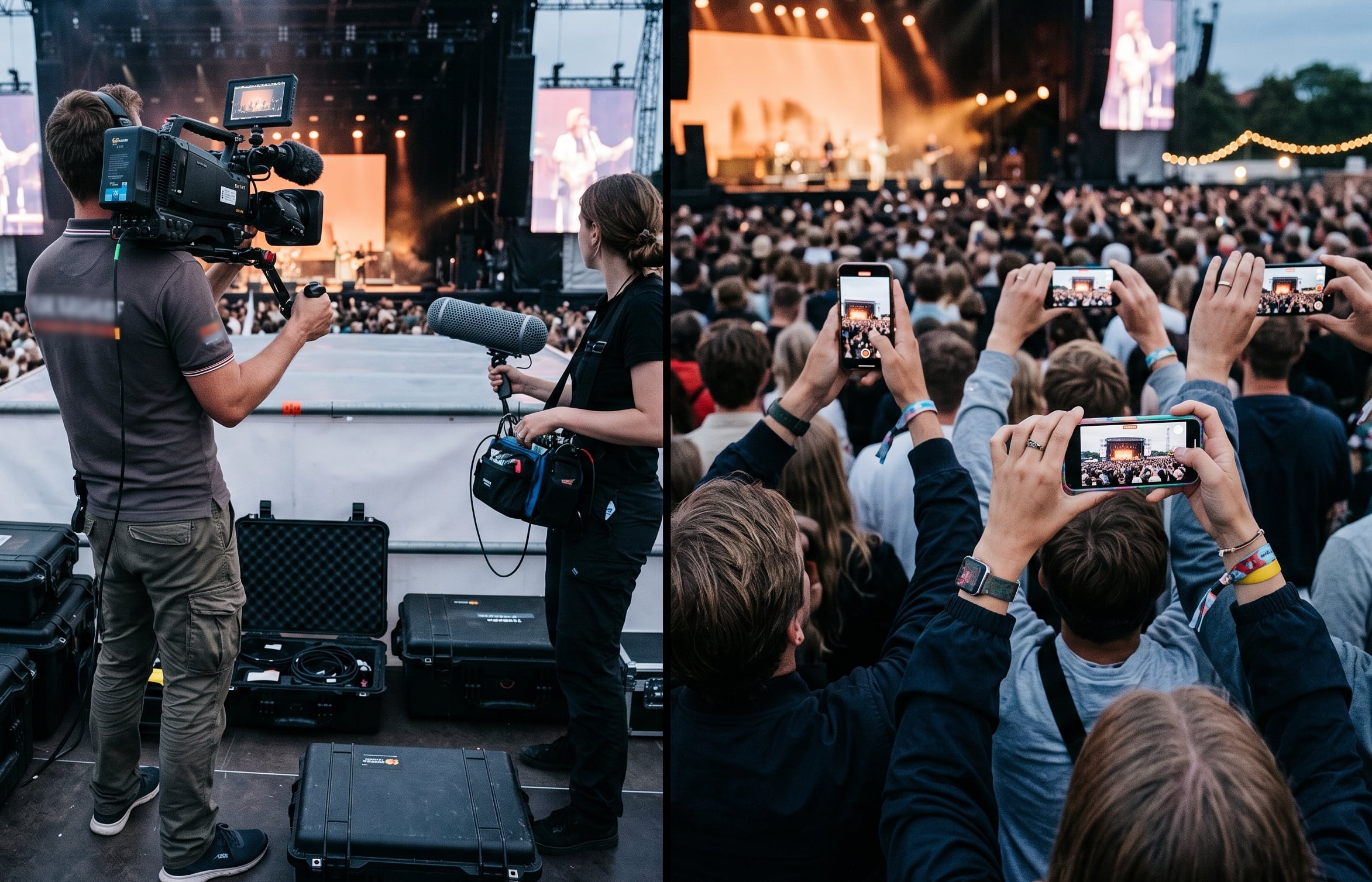
Cost efficiency represents another significant advantage, especially when you leverage user-generated content from attendees. Rather than funding expensive video production teams, you tap into thousands of attendees already capturing moments with their smartphones. This approach dramatically reduces content creation costs while generating diverse perspectives that professional crews might miss. The authentic footage attendees create often performs better on social platforms than polished promotional content because audiences respond to genuine experiences over manufactured messaging.
Potential Challenges to Consider
Control limitations create the primary risk with earned media because you cannot dictate what others say about your event or when they publish. An attendee might share videos highlighting operational issues, journalists could focus on negative aspects you hoped to downplay, or timing might not align with your marketing calendar. You face unpredictability in volume and quality, as earned coverage depends entirely on others choosing to participate rather than guaranteed placements you purchase.
Measurement complexity adds another layer of difficulty since tracking earned media impact requires monitoring multiple channels and attribution models. You need systems to identify mentions across social platforms, quantify reach from influencer posts, and assess the value of press coverage. Without proper tools, you risk undervaluing earned media's contribution or missing opportunities to amplify positive coverage through your owned and paid channels.
How to generate earned media for events
Generating earned media requires strategic planning that begins long before your event doors open. You cannot simply hope attendees and journalists will talk about your event; you need to create experiences worth sharing and provide tools that make sharing easy. The earned media definition emphasizes organic coverage, but deliberate actions significantly increase your chances of receiving that unpaid exposure.
Create Shareable Event Experiences
You generate earned media by designing moments specifically intended for social sharing and documentation. Install distinctive photo opportunities or Instagram-worthy installations that attendees naturally want to capture and post. Create exclusive experiences like backstage access, meet-and-greets, or unique performances that make attendees feel they witnessed something special worth sharing with their networks. The more remarkable your event moments, the more likely attendees will voluntarily document and distribute that content across their social channels.
Events that prioritise shareable experiences transform every attendee into a potential content creator and brand ambassador.
Leverage User-Generated Content Platforms
You accelerate earned media generation by implementing systems that collect and organise attendee-created content efficiently. Rather than hoping attendees tag you correctly or finding their posts manually, use platforms that allow attendees to submit videos and photos directly during the event. This approach captures authentic moments while they happen and provides you with a library of genuine content you can amplify through your owned and paid channels. The easier you make content submission, the more material you collect from your attendees.
Build Relationships With Media and Influencers
You increase press coverage opportunities by establishing connections with journalists and creators before your event. Send personalized pitches highlighting newsworthy angles, offer exclusive access or interviews, and provide press kits with relevant information and assets. Invite influencers who align with your audience to attend as guests, though without payment obligations that would convert their coverage into paid media. Strong relationships mean reporters and creators think of your events when seeking stories in your category, resulting in consistent earned coverage across multiple events.
Next steps
The earned media definition centres on authentic third-party endorsement that you earn through exceptional experiences rather than purchased placements. You've seen how attendee-created videos, press coverage, and organic social mentions deliver credibility and reach that paid advertising cannot replicate alone. Understanding these distinctions between earned, owned, and paid media helps you build integrated strategies that maximise each channel's strengths.
Event organizers who capture user-generated content systematically unlock the most accessible form of earned media available. Attendees already record moments from your events with their smartphones, creating authentic testimonials that reach personal networks organically. The challenge lies in collecting and managing that content efficiently without expensive production teams or complicated workflows.
SureShot simplifies this process by providing a platform specifically designed for gathering attendee-created videos at scale. You can transform every participant into a content creator whose authentic footage amplifies your event's reach long after doors close. Book a demo to see how our platform helps you leverage user-generated content as powerful earned media.