

Content Curation Definition: What It Means and Examples
Content curation means finding relevant content from various sources, organising it, and sharing it with your audience in a structured way. Think of it like being a museum curator who selects the best pieces for an exhibition. You filter through the noise, pick what matters, and present it so people can easily digest the information. This saves your audience time while positioning you as a trusted source who knows what's worth their attention.
This guide breaks down everything you need to know about content curation. You'll learn why it matters for marketing, how to do it step by step, and see real examples that make the concept clear. We'll also compare it to content creation so you understand when to use each approach. By the end, you'll know exactly how to start curating content for your business, including how events and video fit into your strategy.
Why content curation matters in marketing
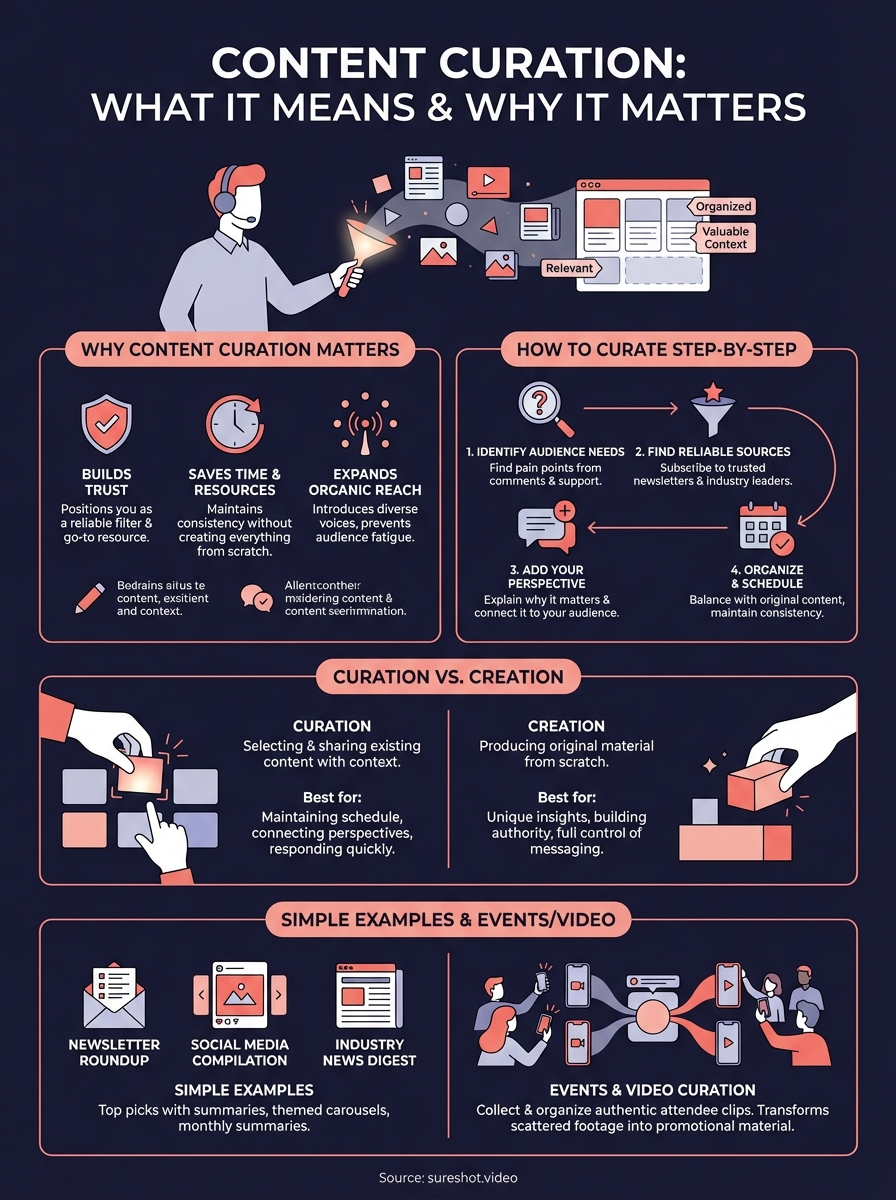
Marketing teams face constant pressure to publish fresh content, but creating everything from scratch drains resources fast. Content curation solves this problem by letting you share valuable information without producing every piece yourself. You maintain an active presence while your team focuses energy on higher-impact projects. This approach keeps your audience engaged between original posts and demonstrates that you care more about their needs than self-promotion.

Builds trust without constant creation
Your audience trusts you more when you consistently share useful content, regardless of who created it. Curating quality sources positions you as a reliable filter in an overwhelming digital landscape. People turn to brands that help them cut through noise and find what matters. When you point your followers toward excellent articles, videos, or data, you become their go-to resource rather than just another voice fighting for attention.
The content curation definition includes adding your unique perspective, which transforms simple sharing into strategic marketing.
Saves time and resources
Producing original content requires research, writing, editing, design, and approval processes that can take days or weeks. Curation reduces this timeline dramatically because the content already exists. You select pieces that align with your message, add brief context, and publish. This efficiency means you can maintain posting consistency even when your team handles multiple projects or faces tight deadlines. The time saved often gets redirected toward strategy or higher-value content creation.
Expands your reach organically
Curated content introduces your audience to diverse voices and fresh perspectives they might miss otherwise. This variety keeps your channels interesting and prevents audience fatigue from seeing only your brand's voice. When you tag or credit original creators, you open doors to relationship building with influencers and thought leaders in your space. Many creators will share your curated posts with their audiences, multiplying your organic reach without paid promotion.
How to curate content step by step
Content curation works best when you follow a clear process instead of randomly sharing what you find. A systematic approach ensures consistency and helps you deliver value every time you curate. The steps below give you a framework that takes you from discovering content to publishing it with your unique angle. You can adapt this process to fit your team's workflow while maintaining the core principles that make curation effective.

Identify your audience's needs
Start by understanding what problems your audience wants solved and what questions they ask most often. Review comments, messages, and support tickets to spot recurring themes that matter to your followers. This research tells you exactly what topics deserve your attention when you curate content. Your audience's pain points become your curation filter, making it easier to say no to irrelevant content even when it seems interesting. The content curation definition emphasizes relevance, which only comes from knowing your audience deeply.
Find reliable sources
Build a list of trusted publications, experts, and platforms where quality content appears consistently. Subscribe to industry newsletters, follow thought leaders, and monitor authoritative websites in your niche. Set up alerts for topics that matter to your audience so fresh content reaches you automatically. Quality sources save you time because you don't waste effort verifying facts or checking credibility for every piece you consider. Focus on sources your audience already respects or should know about.
The best curators develop an eye for spotting valuable content quickly, which comes from regularly reviewing the same trusted sources.
Add your perspective
Never just repost content without adding context that connects it to your audience. Write a brief introduction explaining why this piece matters and what specific value your followers will get from reading it. Point out the most relevant sections or highlight insights that apply directly to your industry. Your commentary transforms sharing into curation by giving readers a reason to trust your selection beyond the original content's merit. This step separates strategic curation from simple content aggregation that adds no value.
Organise and schedule
Create a content calendar that balances curated pieces with your original content throughout the week or month. Plan themes or topics for different days so your curation feels intentional rather than random. Use scheduling tools to maintain consistency even during busy periods when you can't post manually. Track which curated content generates the most engagement so you refine your selection criteria over time. Store content you find but aren't ready to share in a swipe file for future use when gaps appear in your calendar.
Content curation vs content creation
Content creation means producing original material from scratch, while curation involves selecting and sharing existing content with your own context added. Both strategies serve important but different purposes in your marketing mix. Creation establishes your unique voice and expertise, while curation demonstrates your awareness of the broader landscape and commitment to serving your audience's needs. Most successful brands use a combination of both approaches rather than relying exclusively on one method.

When to curate content
Curate content when you need to maintain consistent publishing schedules but lack the resources to produce everything yourself. This approach works especially well when experts outside your organization have already created definitive pieces on topics your audience cares about. You add value by introducing your followers to these resources rather than attempting to recreate information that already exists in excellent form. The content curation definition emphasizes that your role becomes filtering and contextualizing rather than generating from zero.
Use curation to fill gaps between major original pieces or when you want to position your brand as a connector within your industry. Sharing diverse perspectives builds trust because it shows you care more about helping your audience than promoting only your own views. Curation also helps when you need to respond quickly to trending topics or breaking news where timeliness matters more than producing a comprehensive original analysis.
The best marketing strategies balance curated and created content based on resources available and specific goals for each campaign.
When to create original content
Original content becomes necessary when you have unique insights, data, or experiences that no one else can provide. Your proprietary research, case studies, and specific methodologies require creation because they don't exist anywhere else. Creation builds your authority and gives people reasons to follow you directly rather than just consuming curated content they might find elsewhere. These pieces become your intellectual property that differentiates your brand from competitors who might curate the same sources you do.
Choose creation when you need content that aligns perfectly with your brand voice, values, and specific audience needs in ways that existing content cannot match. Original pieces give you complete control over messaging and let you guide readers toward your products or services naturally. Creation also generates assets you can repurpose across multiple channels without worrying about licensing or attribution requirements that come with curated content.
Simple content curation examples
Understanding the content curation definition becomes clearer when you see how real organizations apply it across different channels. These examples show practical ways to curate content without requiring advanced tools or large teams. You can adapt any of these approaches to fit your industry, audience size, or available resources. Each example demonstrates the core principle of selecting valuable content, adding context, and delivering it in a format your audience finds useful. Notice how the best curators always add their own perspective rather than simply reposting what they find.
Weekly newsletter roundup
Many brands send weekly emails featuring the top five articles, studies, or tools they discovered that week. Each item gets a two-sentence summary explaining why it matters and what readers will learn. This format works because subscribers get curated value delivered directly to their inbox without searching multiple sources themselves. You select pieces from various publications, add your brief take on each one, and send it every Friday morning. The consistency trains your audience to expect and anticipate your curation, building a habit around your brand.
Newsletter curation establishes you as the expert who keeps followers informed without them doing the research themselves.
Social media compilation posts
Instagram and LinkedIn users often create carousel posts that compile related tips, quotes, or statistics from multiple sources into one scrollable format. You might gather ten expert opinions on a trending topic, credit each source, and present them with consistent visual styling. This approach showcases diverse perspectives while your caption explains why these particular viewpoints matter right now. The effort you invest in organising scattered information into a digestible format delivers clear value your followers appreciate and share.
Industry news digest
Your blog can feature monthly posts that summarize the biggest developments in your field with links to original coverage and your analysis of what each story means for your audience. You scan industry publications throughout the month, bookmark significant announcements or research findings, then write brief commentary connecting each piece to your readers' specific challenges. This digest format positions you as the go-to source for staying current without your audience monitoring dozens of news sites themselves.
Content curation for events and video
Events generate massive amounts of video content that most organizers never see or use effectively. Attendees capture moments on their phones throughout your event, creating authentic perspectives that professional crews miss. Video curation for events means collecting these attendee clips, organising them by relevance, and transforming scattered footage into cohesive promotional material. This approach extends the content curation definition into physical experiences where your audience becomes active contributors rather than passive consumers.

Event attendee content as curation
Your attendees already record video at your events, but that footage disappears into personal devices unless you create a system to collect it. Smart event organizers set up simple submission methods that let attendees share their clips directly through mobile apps or dedicated platforms. You curate this incoming content by selecting the best moments that showcase your event's energy, unique experiences, and community atmosphere. This attendee-generated video gives you authentic marketing material that costs nothing to produce while increasing engagement because people love seeing themselves featured in official event content.
Video content from attendees carries more trust and authenticity than any professionally produced marketing material your team could create.
Video curation best practices
Review submitted videos quickly to identify clips worth featuring before your event ends and momentum fades. Look for footage that captures genuine reactions, exciting moments, or unique angles that tell your event's story better than scripted content. Organise clips by theme or timeline so you can assemble highlight reels, social media posts, or promotional videos for future events. Always credit creators when you share their content and make participation easy by minimising technical barriers or complicated submission processes. The best video curation systems use AI assistance to flag promising clips automatically, saving you hours of manual review while ensuring you never miss valuable content buried in hundreds of submissions.
Final thoughts
Understanding the content curation definition gives you a practical strategy for maintaining consistent marketing output without exhausting your resources. You filter valuable information from multiple sources, add your perspective, and deliver it in formats your audience appreciates. This approach builds trust while freeing your team to focus on high-impact original content that showcases your unique expertise.
Events present a unique curation opportunity where attendees become your content creators. Their authentic video captures moments and perspectives that professional crews miss entirely. Collecting and organising this footage transforms scattered clips into powerful promotional material that costs nothing to produce while delivering genuine social proof.
Your event deserves content that reflects the real experience attendees had. Smart video curation systems make collecting attendee footage simple while giving you the authentic material your marketing needs. Book a demo to see how you can turn every attendee into a content contributor for your next event.