
What Is Content Licensing? A Beginner's Guide With Examples
You capture an amazing video at a concert. The venue wants to use it in their marketing campaigns. Can they just take it? Not without content licensing. Content licensing is a legal agreement that grants permission to use, share, or republish someone else's creative work. This includes videos, photos, music, written articles, software, and more. The person who owns the content (the licensor) allows another party (the licensee) to use it under specific terms. These terms typically cover how the content can be used, for how long, and what compensation is required.
This guide breaks down everything you need to know about content licensing from a practical perspective. You'll learn why it matters for events and media companies, how to set up a license agreement that protects both parties, the main types of licenses you'll encounter, typical pricing structures and fee models, common legal mistakes to avoid, and real examples from the event and media industries. Whether you're an event organizer collecting attendee videos or a content creator sharing your work, understanding licensing protects everyone involved and keeps your content strategy legally sound.
Why content licensing matters
You need content licensing to protect yourself legally and financially when using or sharing creative work. Without a proper license, you risk copyright infringement lawsuits, expensive legal battles, and damage to your reputation. Event organizers who use attendee videos without permission face potential claims from content creators. Creators who share their work without clear terms lose control over how others use their content and miss opportunities to earn revenue from it.
Protection and legal clarity
Licensing creates clear boundaries for everyone involved in content creation and distribution. When you license content properly, you establish exactly what rights transfer from the creator to the user. This includes usage scope (can you edit the video?), duration (how long can you use it?), territory (where can you share it?), and exclusivity (can the creator license it to others?). Event attendees who submit videos through platforms gain certainty about how organizers will use their content, while organizers get legitimate rights to promotional materials without legal exposure.
Clear licensing terms prevent costly disputes and build trust between content creators and users.
Business value and revenue opportunities
Understanding what is content licensing opens up monetization pathways for creators and cost-effective content strategies for businesses. Professional photographers, videographers, and writers generate recurring income through licensing agreements rather than one-time sales. Event organizers access authentic user-generated content at a fraction of professional production costs while attendees gain recognition and sometimes compensation for their contributions. Media companies build content libraries they can license repeatedly to multiple clients, maximizing the value of every piece they create. This model works because licensing lets the same content serve multiple purposes across different platforms and audiences without requiring new production each time.
How to set up a content license
Setting up a content license requires a clear agreement between the content creator and the person or organization who wants to use it. You start by identifying exactly what content will be licensed, who owns it, and what permissions the licensee needs. The process typically involves drafting written terms, negotiating any special conditions, and getting both parties to agree in a legally binding format. Event organizers using attendee videos need this process to operate legally, while individual creators need it to control their work and earn fair compensation.
Identify what content needs protection
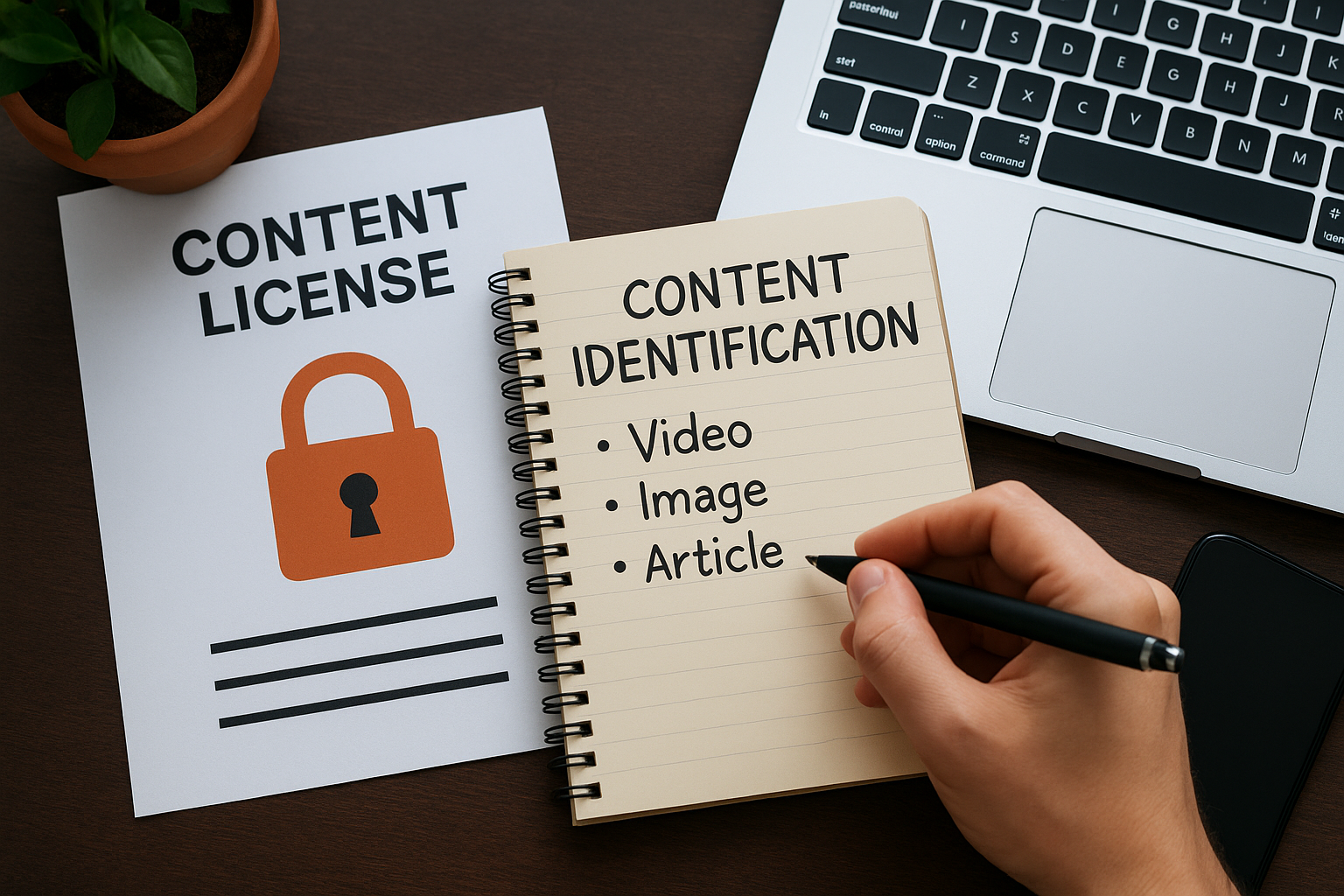
You need to specify exactly which creative works your license covers before drafting any agreement. This means describing videos by title or event date, identifying images by file name or subject matter, or listing written content by headline and publication date. Event platforms like SureShot make this easier by automatically cataloging each uploaded clip with metadata tags that identify the creator, timestamp, and event context. Generic descriptions like "all event content" create confusion and legal gaps, so be specific about what you're licensing.
Draft the core agreement terms
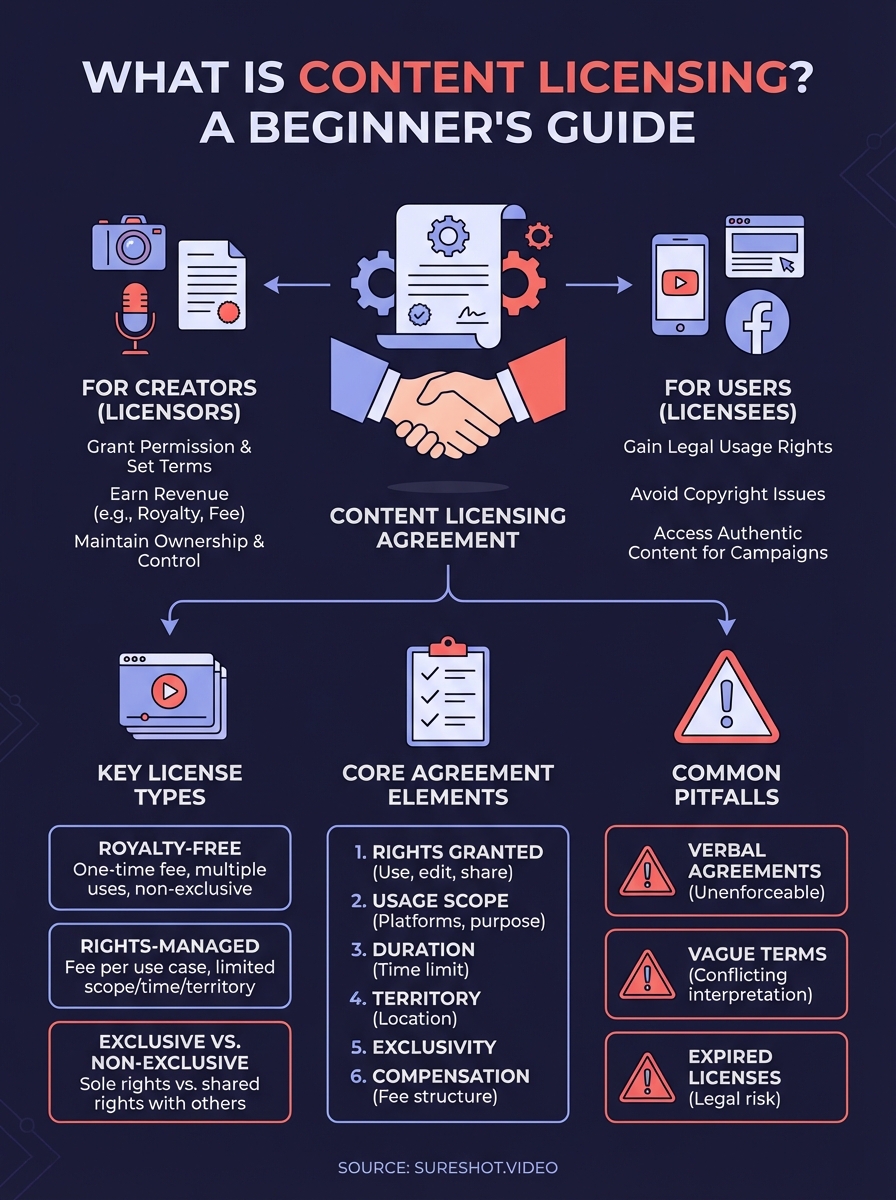
Your licensing agreement must include six essential elements that define the relationship between licensor and licensee. First, clearly state what rights you're granting (reproduction, distribution, public display, modification). Second, define the usage scope (marketing materials, social media, website content, or all promotional purposes). Third, specify the duration (one year, perpetual, or tied to a specific campaign). Fourth, establish the territory (worldwide or specific countries). Fifth, determine if the license is exclusive or non-exclusive. Sixth, outline the compensation structure (flat fee, royalty percentage, or free with attribution).
Well-drafted license terms prevent disputes and ensure both parties understand their rights and obligations from the start.
Get signatures and store properly
You must obtain written consent from all parties involved before using any licensed content. Digital signatures through platforms like DocuSign or Adobe Sign provide legally binding agreements that you can execute quickly with remote parties. Event organizers collecting attendee videos should build the licensing step directly into the upload process so attendees explicitly agree to terms before submitting content. Store all signed agreements in a secure, organized system where you can easily retrieve them if questions arise about usage rights. Keep backup copies in multiple locations and maintain a spreadsheet that tracks which content corresponds to which agreement, when licenses expire, and what restrictions apply to each piece.
Key types of content licenses and rights
You encounter several distinct license types when dealing with creative content, each offering different levels of control and flexibility. Understanding what is content licensing means recognizing these categories and knowing which one fits your specific situation. Event organizers need different rights than media companies, and individual creators have different goals than large publishers. The license type you choose determines usage restrictions, cost structure, and how many other parties can use the same content simultaneously.
Royalty-free licenses
You pay a one-time fee with royalty-free licenses and then use the content multiple times without additional payments. This does not mean the content is free (despite the confusing name). Instead, it means you avoid ongoing royalty payments each time you use the licensed material. Event organizers benefit from this model when they need attendee videos for multiple marketing campaigns across different platforms and time periods. You purchase the license once, and whether you use the video in ten social media posts or one hundred email campaigns, you pay the same initial fee. Stock photo agencies like Getty Images and Shutterstock primarily operate on this model, making it straightforward for businesses to budget content costs upfront.
Limitations still apply to royalty-free licenses even though you avoid recurring fees. Most agreements restrict you from reselling or sublicensing the content to third parties. You typically cannot use the material in ways that suggest endorsement by the creator or in contexts that could damage their reputation. Event videos licensed royalty-free usually come with restrictions on editing (you can trim but not fundamentally alter the content) and requirements for proper attribution to the original creator.
Rights-managed licenses
Rights-managed licenses give you permission to use content for specific, predetermined purposes with pricing based on exactly how you plan to use it. You negotiate terms around usage duration, geographic territory, media type, and exclusivity. A festival organizer might license a performance video for social media use in North America for six months, while a different license could cover the same video for television broadcast worldwide for one year. This model offers maximum control for content creators because they approve each use case individually and can charge premium rates for high-value applications.
The negotiation process for rights-managed licenses takes more time than royalty-free alternatives but provides greater flexibility for unique situations. You can license the same piece of content multiple times under different terms, allowing creators to maximize revenue from popular works. Event organizers who need exclusive access to certain moments (like a surprise guest appearance) benefit from rights-managed agreements that prevent competitors from using the same footage. This license type works best when you need specific usage rights that standard royalty-free terms don't accommodate.
Exclusive vs non-exclusive licenses
Exclusive licenses grant you sole rights to use the content, preventing even the original creator from licensing it to anyone else during the agreement period. You gain complete control over how and where the content appears, which matters when you want to maintain a competitive advantage through unique promotional materials. Event brands building signature experiences often secure exclusive licenses to attendee footage that captures their most distinctive moments. The creator cannot sell or distribute the same content elsewhere until the exclusive period ends, giving you guaranteed uniqueness in your marketing efforts.
Non-exclusive licenses allow the creator to license the same content to multiple parties simultaneously. You pay lower fees because you share usage rights with others who might use the same material for their own purposes. This model works well for general event coverage where uniqueness matters less than cost efficiency. Content platforms serving multiple event organizers typically offer non-exclusive licenses so that various clients can access the same content library at affordable rates. You accept that competitors might use similar footage in exchange for dramatically reduced licensing costs.
Choose exclusive licenses when uniqueness drives your content strategy and non-exclusive when cost savings and broad access matter more.
Creative Commons licenses
Creative Commons provides a standardized set of licenses that content creators use to grant permissions without custom negotiations. These licenses range from very permissive (allowing any use with attribution) to restrictive (allowing only non-commercial use with no modifications). You find Creative Commons licenses frequently on user-generated content platforms, educational resources, and open-source projects. The system uses simple abbreviations like CC BY (attribution required) or CC BY-NC-ND (attribution required, non-commercial use only, no derivatives) that clearly communicate usage terms at a glance.
Event organizers encounter Creative Commons licenses when attendees want to share their content openly while maintaining some control. A photographer might release event photos under CC BY-SA, allowing you to use and modify the images as long as you credit them and share any derivative works under the same license. These licenses eliminate lengthy contract negotiations while still protecting creator rights through standardized terms that courts recognize worldwide.
What to know about fees and pricing
You face widely varying costs when licensing content, ranging from free with attribution to hundreds of thousands of dollars for exclusive rights to premium material. Understanding what is content licensing includes grasping how creators and rights holders determine prices for different use cases. Event organizers typically pay less for user-generated attendee videos than for professional footage, while major brands pay premium rates for exclusive access to high-impact content. Your specific costs depend on several factors including usage scope, duration, exclusivity, content quality, and the creator's reputation.
Common pricing models
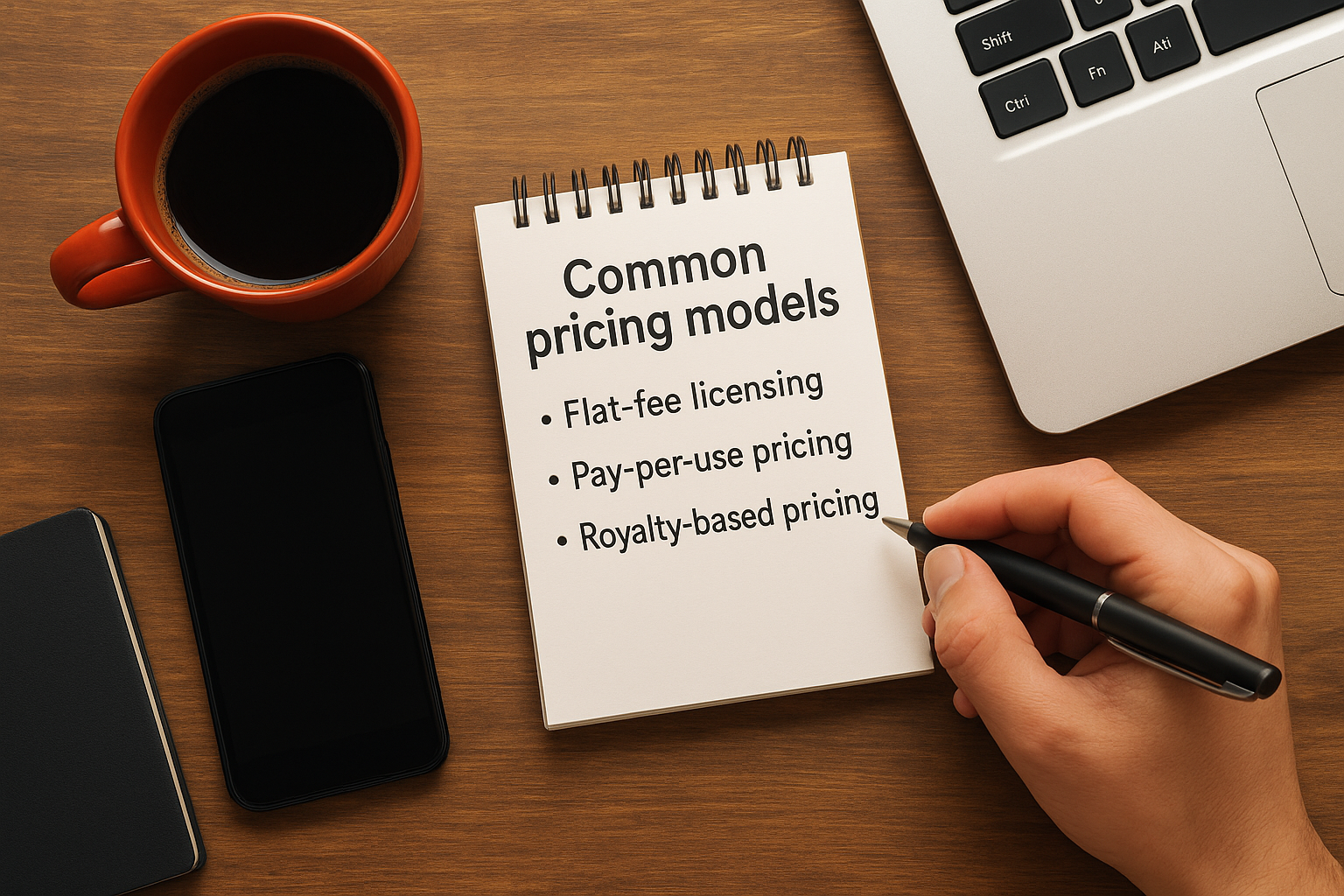
You encounter three primary pricing structures when licensing content for events and media projects. Flat-fee licensing charges a single upfront payment for defined usage rights, making budgeting straightforward and eliminating ongoing costs. This model works well for event organizers who need attendee videos for promotional campaigns with predictable timelines and platforms. Pay-per-use pricing charges you each time you use the licensed content, which suits situations where you only need occasional access to specific materials. Royalty-based pricing requires you to pay a percentage of revenue generated from products or campaigns that incorporate the licensed content, aligning creator compensation with your commercial success.
Subscription models provide access to entire content libraries for a recurring monthly or annual fee. Stock media platforms use this approach, letting you download multiple pieces within your subscription tier without individual transaction costs. Event platforms offering curated attendee content collections increasingly adopt subscription pricing to give organizers unlimited access to authentic footage across multiple events.
Factors that affect licensing costs
Usage scope dramatically impacts your licensing fees because broader rights command higher prices. A social media-only license for attendee event footage costs significantly less than rights covering television broadcast, print advertising, and digital platforms simultaneously. Geographic territory matters too, as worldwide rights typically cost double or triple what regional licenses demand. Duration affects pricing in predictable ways: perpetual licenses that never expire carry premium rates compared to time-limited agreements for specific campaigns or seasons.
Exclusivity represents the biggest price multiplier in content licensing negotiations. Exclusive licenses that prevent the creator from licensing the same content to competitors often cost three to ten times more than non-exclusive alternatives. Content quality and production value influence pricing as well, with professionally shot 4K video commanding higher rates than smartphone footage. Creator reputation plays a role too, as established photographers and videographers with proven track records charge more than emerging creators building their portfolios.
License fees reflect not just the content itself but the commercial value you extract from using it in your business activities.
Common mistakes and legal pitfalls to avoid
You risk serious legal consequences when you make basic errors in content licensing, from expensive lawsuits to forced takedowns of your marketing materials. Event organizers who misunderstand what is content licensing often assume verbal agreements provide adequate protection or that attendee videos become automatically available for any use once uploaded. These assumptions lead to copyright infringement claims, cease-and-desist letters, and damaged relationships with content creators. Most licensing mistakes stem from rushing the agreement process, using ambiguous language, or failing to document permissions properly. Knowing the most common pitfalls helps you establish solid licensing practices that protect everyone involved.
Using content without written agreements
You cannot rely on verbal permissions or implied consent when licensing content for commercial purposes. Event organizers who ask attendees "Can we use your video?" and receive a casual "sure" lack enforceable legal protection if disputes arise later. Courts require written documentation showing that creators understood and agreed to specific usage terms before granting permission. Handshake deals and email conversations without clear terms create legal gray zones that favor the content creator in disputes.
Build licensing agreements directly into your content collection process so creators explicitly accept written terms before submitting materials. Platforms that require attendees to check boxes confirming they grant usage rights create enforceable contracts that hold up under legal scrutiny. Never assume that posting content on social media or at an event grants you automatic licensing rights to use it in your marketing efforts.
Unclear or vague license terms
Ambiguous language in licensing agreements causes disputes about what uses the licensee actually permitted. Terms like "promotional purposes" or "marketing materials" mean different things to different people and leave room for conflicting interpretations when organizers use content in ways creators did not anticipate. You need specific language that lists exact platforms (Instagram, Facebook, website, email campaigns), formats (video ads, still images, edited compilations), and durations (one year from event date, perpetual for archived materials).
Vague licensing terms protect neither party and inevitably lead to disagreements that could have been prevented with clear, specific language.
Failing to track license expiration dates
License agreements with time limits require active management to avoid unauthorized use after expiration. You violate the agreement when you continue using content beyond the licensed period, even if the violation happens accidentally because you lost track of dates. Expired licenses expose you to infringement claims and demonstrate poor content management practices that undermine your credibility with creators. Set up systems that alert you before licenses expire so you can either renew agreements or remove content from active use.
Content licensing examples for events and media
Real-world examples show you exactly how content licensing works across different event types and media contexts. These cases demonstrate the practical application of licensing principles and help you understand what is content licensing in action. Event organizers and media companies use these agreements daily to collect, manage, and distribute content legally while protecting creator rights and building authentic promotional materials from attendee contributions.
Music festivals and concert footage
Music festivals like Coachella and Lollapalooza collect thousands of attendee videos through dedicated apps and hashtag campaigns, then license this content for promotional use across social media platforms and marketing materials. Attendees who upload clips through official channels agree to licensing terms that grant the festival non-exclusive rights to use, edit, and share their videos in exchange for enhanced visibility and sometimes VIP perks. These agreements typically allow the festival to create highlight reels, social media posts, and year-round promotional content while attendees retain ownership and can use their own footage freely. The licensing terms usually specify attribution requirements, usage duration, and restrictions on commercial exploitation beyond festival promotion.
Corporate conferences and business events
Technology conferences and corporate gatherings use content licensing to transform attendee presentations and workshop recordings into educational resources and marketing assets. When speakers submit their presentations, they sign agreements granting the event organizer rights to record, edit, and distribute their content through event apps, YouTube channels, and professional development platforms. Attendees who capture networking moments or session highlights often participate in licensing arrangements that let organizers use this user-generated content for next year's promotional campaigns while the original creators maintain copyright ownership and personal usage rights.
Content licensing transforms spontaneous attendee moments into valuable marketing assets that extend event reach far beyond the original gathering.
Media company content libraries
News organizations and media publishers license their archived content to documentaries, educational institutions, and other media producers who need historical footage or expert commentary. The New York Times licenses articles and images to platforms seeking authoritative content, while broadcasters license sports highlights to content creators and advertisers. These arrangements generate recurring revenue from existing content while expanding the reach and impact of original reporting through new contexts and audiences.
Bringing it all together
You now understand what is content licensing and how it creates legal frameworks that protect both content creators and users in the event and media industries. Proper licensing agreements establish clear usage rights, prevent costly legal disputes, and open revenue opportunities for everyone involved. Event organizers gain access to authentic attendee content for marketing campaigns while creators maintain control over their work and receive fair compensation or recognition.
Success with content licensing requires written agreements that specify exact usage terms, track expiration dates, and avoid vague language that leads to disputes. Whether you choose royalty-free, rights-managed, or exclusive licenses depends on your specific needs for control, budget, and uniqueness. The principles apply universally across concerts, festivals, conferences, and media projects where creative work changes hands.
Platforms like SureShot simplify this entire process for event organizers by building licensing directly into the content collection workflow. Attendees grant clear permissions when they upload videos, giving you legally sound access to promotional materials without complex negotiations. Book a demo to see how automated licensing streamlines your event content strategy.