
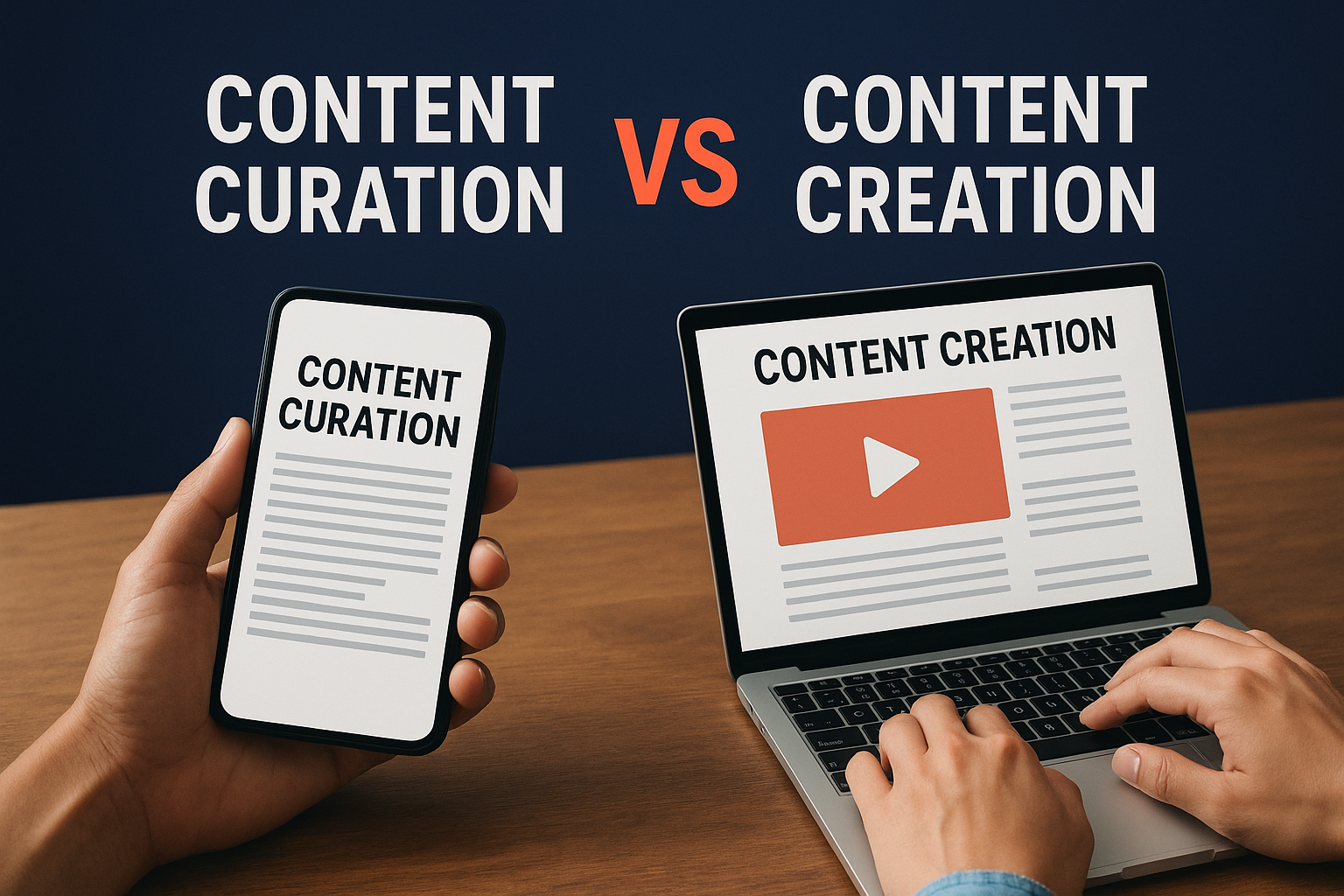

Content Curation vs Content Creation: Which Should You Use?
Content creation means making original material from scratch. You write blog posts, shoot videos, design graphics, or record podcasts. Content curation means finding existing material from other sources and sharing it with your audience. You collect industry articles, repost social media content, or compile helpful resources others created.
This guide breaks down both approaches so you can decide which fits your goals. You'll learn when to create original content and when to share what others made. We'll cover the benefits and drawbacks of each method, show you how to combine them effectively, and help you build a strategy that saves time while delivering value to your audience.
Why content creation and curation matter
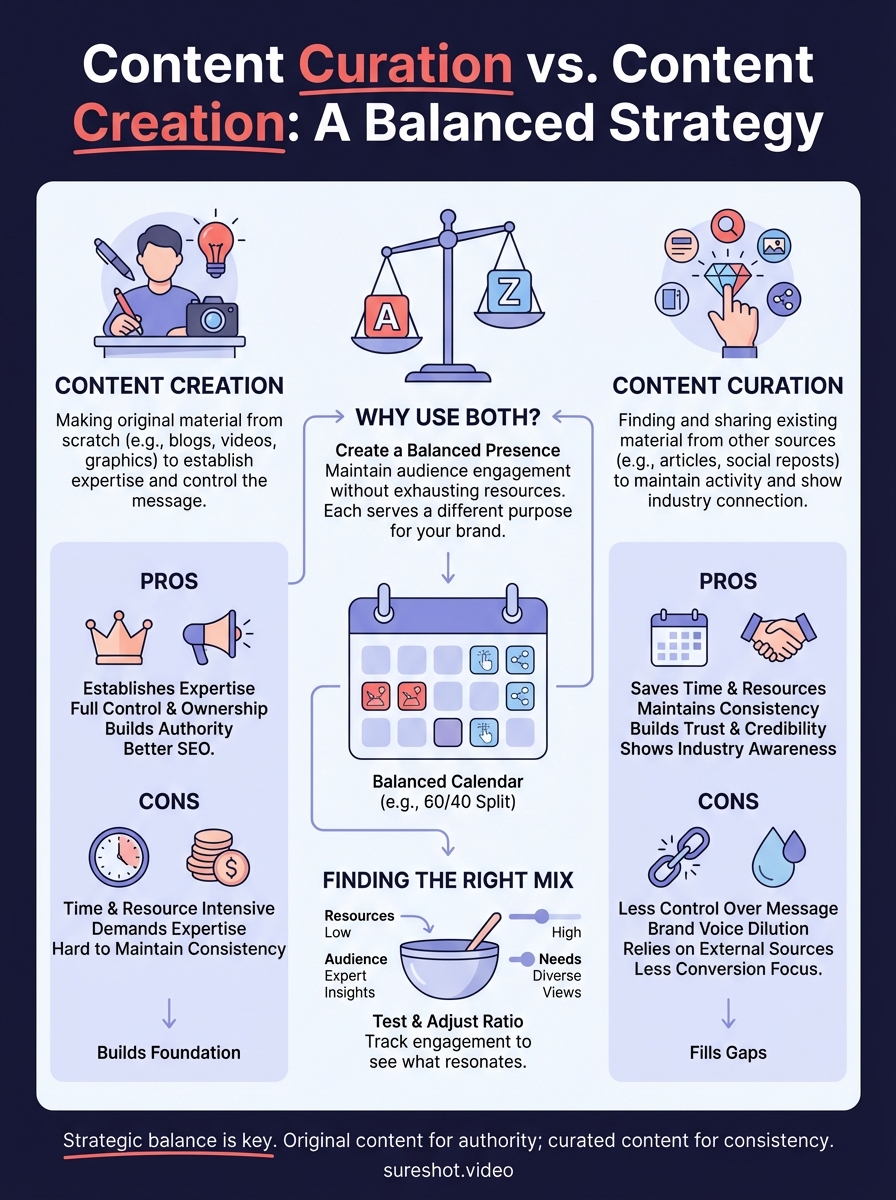
Your content strategy needs both approaches because each serves a different purpose in building your brand. Original content establishes your expertise and gives you complete control over your message, while curated content keeps your channels active and shows you stay connected to broader industry conversations. Together, they create a balanced presence that maintains audience engagement without exhausting your resources.

Your audience expects consistent value
People follow your channels because they want regular insights and information, not sporadic posts when you find time to create something from scratch. Content curation lets you maintain that consistency even during busy periods when original creation feels impossible. You share relevant articles, industry updates, or helpful resources that align with your audience's interests. This steady flow of value keeps your brand visible and positions you as a reliable source, which matters more than posting only when you produce original material.
Consistent content delivery builds audience trust and keeps your brand top-of-mind.
Both approaches strengthen different aspects of your brand
Original content showcases your unique perspective and demonstrates deep knowledge in your field. You control every word, image, and call-to-action. Curated content proves you stay informed about industry trends and care about providing value beyond self-promotion. Understanding the content curation vs content creation debate helps you leverage both methods strategically rather than choosing one over the other.
How to use creation and curation in your strategy
Your strategy needs a clear framework for when to create and when to curate. Start by identifying your core message and the topics where you want to establish authority. Create original content for these areas. Use curated content to complement your original work, fill gaps in your publishing schedule, and broaden the conversation beyond your immediate expertise. The content curation vs content creation decision becomes easier when you understand what each approach accomplishes for your specific goals.
Build your foundation with original content
Your original content forms the backbone of your presence. Create detailed pieces about your product, service, or area of expertise that only you can write. These pieces demonstrate your unique perspective and give people a reason to follow your channels instead of someone else's. If you run events, create guides about planning successful gatherings, share case studies from your experiences, or explain how your approach solves specific problems. This foundation establishes credibility and gives you material to reference when you share curated content later.
Original content also gives you ownership and control. You decide the message, the format, and how it supports your business goals. Nobody can remove or alter this content without your permission.
Fill gaps with curated content
Curated content keeps your channels active between major original pieces. You share industry news, relevant statistics, or helpful resources from trusted sources. This approach requires less time and resources than creating everything yourself. When you spot an article about event trends, a study about audience engagement, or tips about video marketing that align with your brand, share it with your audience. Add your perspective in the caption or description to show why it matters.
Strategic curation maintains audience engagement while conserving resources for high-impact original content.
Balance both approaches in your calendar
Plan your content calendar with specific slots for creation and curation. Many brands follow a 60/40 split, with 60% original content and 40% curated material. Test different ratios to find what works for your audience. Schedule original content for peak engagement times when your audience pays closest attention. Place curated content during slower periods or when you need to maintain visibility without creating from scratch. Track which pieces drive the most engagement and adjust your mix based on actual performance rather than assumptions.

Pros and cons of content curation
Content curation offers specific advantages and limitations that affect how you build your presence. Understanding these trade-offs helps you decide when curation makes sense and when you need original content instead. The content curation vs content creation decision depends on weighing these factors against your available resources and strategic goals.
Benefits of curation
Curation saves significant time because you skip the creation process. You find relevant content, add your perspective, and share it with your audience. This efficiency lets you maintain consistent posting schedules without dedicating hours to production. You keep your channels active even during busy periods when creating original material feels impossible.

Sharing quality content from others builds trust and credibility with your audience. You demonstrate that you care more about providing value than promoting yourself constantly. When you curate pieces from recognised industry sources, you associate your brand with established authorities. This approach also expands your content variety by introducing different perspectives and formats your audience might not discover otherwise.
Strategic curation positions your brand as an informed industry participant rather than an isolated voice.
Drawbacks to consider
Curation gives you less control over the message because you depend on external sources. Someone might change or remove the original content after you share it. You also risk promoting competitors if you share content from brands in your space. Every curated piece needs vetting to ensure it aligns with your values and won't damage your reputation.
Your brand voice gets diluted when you rely too heavily on curated material. Audiences follow you for your unique perspective, not a stream of links to other people's work. Curation alone rarely converts readers into customers because the content doesn't focus on your specific solutions. You need original content to demonstrate why people should choose your offering over alternatives.
Pros and cons of content creation
Original content gives you complete ownership and control over your message, but creating it requires more time and resources than curation. The content curation vs content creation debate often centres on these trade-offs between control and efficiency. When you create original material, you build authority and establish your unique voice, yet you also commit to production schedules that demand consistent effort and expertise.
Benefits of original content
Creating original content establishes your expertise in ways curated material never can. You demonstrate deep knowledge when you write detailed guides, produce videos, or share case studies based on your actual experience. This approach builds trust because readers see you as a primary source rather than someone who only shares what others say. Original content also ranks better in search engines because you own unique material that provides fresh perspectives.
You maintain full control over messaging, format, and calls-to-action when you create content yourself. If you want to showcase how your event platform helps organizers collect authentic video moments, you write exactly that. Nobody can remove, alter, or retract your content without permission. This ownership lets you guide readers toward specific actions that support your business goals.
Limitations to consider
Creating original content demands significant time investment from planning through production to publication. You need research, writing, editing, design, and review cycles before anything goes live. Small teams often struggle to maintain consistent output while handling other responsibilities. Hiring creators or agencies adds cost that many brands cannot sustain long-term.
Quality original content requires genuine expertise in your subject area. You cannot fake deep knowledge, and audiences quickly spot shallow attempts to fill space. If you lack certain skills like video production or graphic design, you either learn them or pay others who possess these abilities.
Original content demands greater resources but delivers unmatched authority and ownership.
Finding the right mix for your content
Your ideal balance between creation and curation depends on your specific resources and audience needs. Most brands succeed with a mix rather than choosing one approach exclusively. The content curation vs content creation debate misses the point because you need both to build a sustainable strategy. Start by evaluating what you can realistically produce, then adjust based on how your audience responds to different content types.
Start with your available resources
Assess your current capacity for content production honestly. If you have a small team or limited time, lean more heavily toward curation while building your original content library gradually. Brands with dedicated content teams can shift toward more original material because they possess the resources to maintain consistent output. Your budget also matters since original content often requires investment in tools, talent, or technology that curation does not demand.
Set realistic expectations about production frequency based on what you can sustain long-term. Publishing three curated pieces weekly beats publishing one original piece monthly if consistency matters more for your goals. Quality beats quantity for original content, while curation fills the gaps between major releases.
Test different ratios for your audience
Start with a 60/40 split between original and curated content, then track engagement metrics for each type. Watch which pieces drive the most shares, comments, and conversions to understand what resonates with your audience. Some audiences prefer expert insights and detailed original content, while others respond better to diverse perspectives from multiple sources.
Testing reveals audience preferences that assumptions miss.
Adjust your mix based on actual performance data rather than industry standards. If your original content consistently outperforms curated material, shift resources toward creation. If curated content drives engagement while your original pieces struggle, examine why before changing your ratio. Your ideal balance emerges through experimentation and measurement, not guesswork.
Bringing it all together
The content curation vs content creation debate matters less than building a strategy that serves your audience consistently. You need both approaches working together: original content establishes your authority while curated material maintains your presence between major releases. Start with a balanced mix, track what performs best, and adjust based on real engagement data rather than assumptions about what works best.
Your event attendees already create authentic video content that strengthens your marketing without the cost or time of traditional production. SureShot helps you collect and manage this user-generated content efficiently, turning attendee moments into promotional material that builds trust and expands your organic reach. This approach gives you original content created by real people experiencing your events firsthand. Book a demo to see how attendee-created videos can power your content strategy.