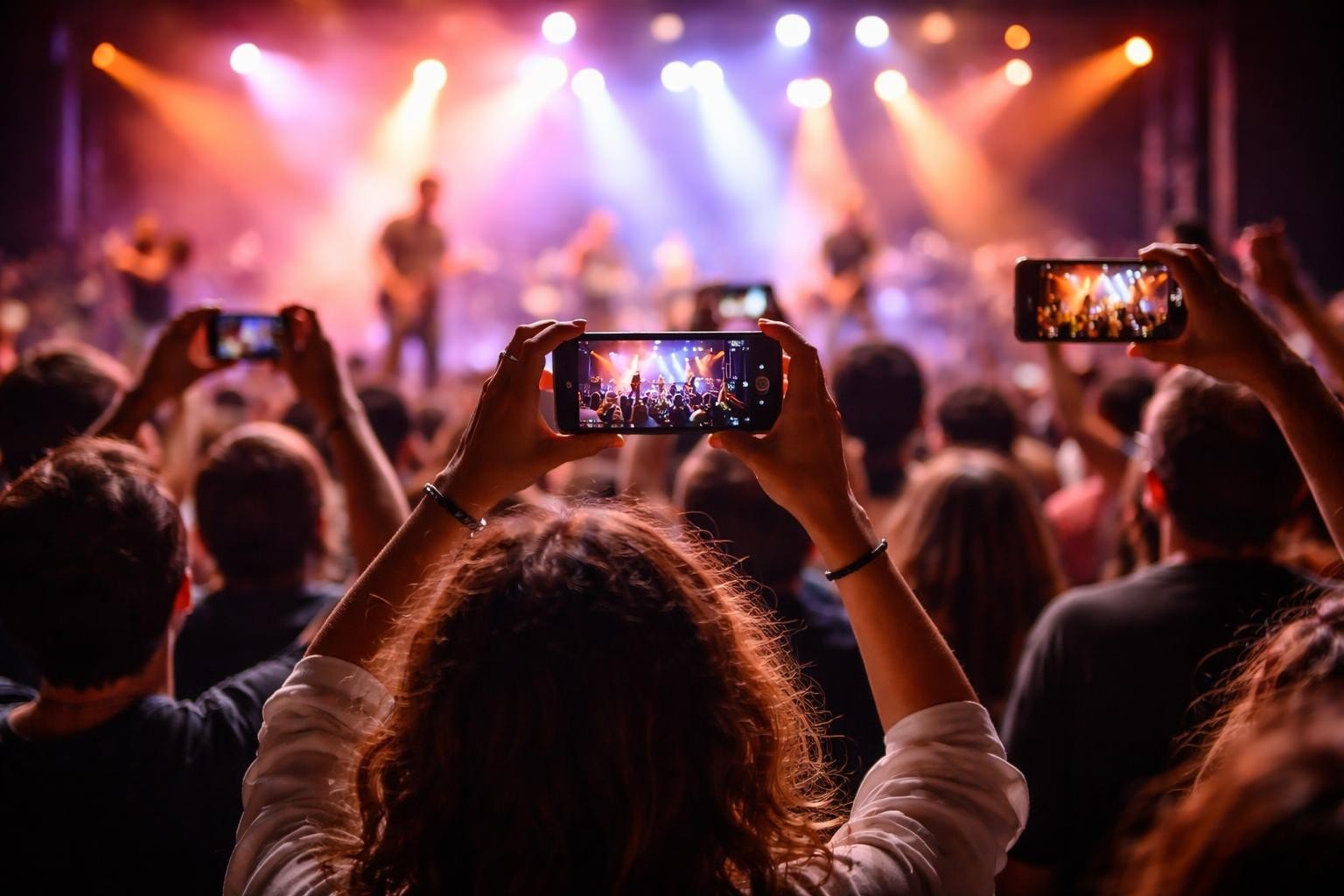

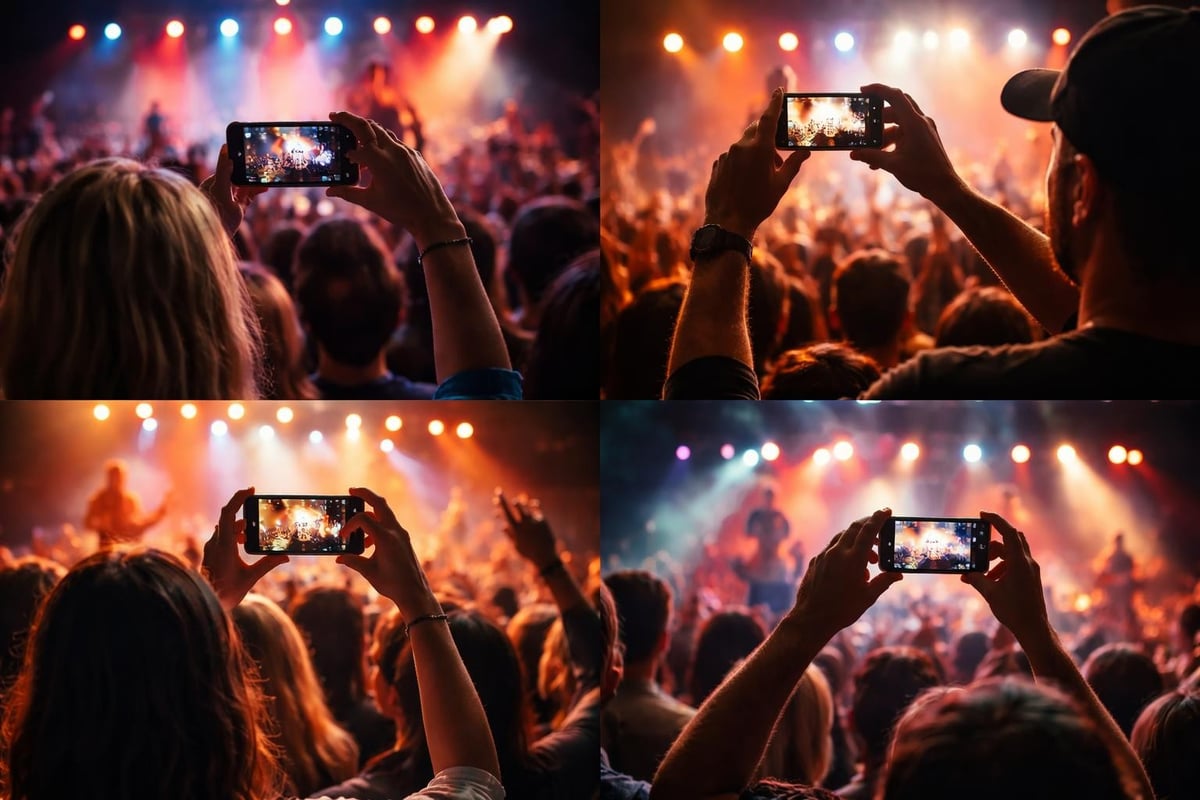
The live music video you scroll past on Instagram wasn't shot by a production crew. It came from someone in the crowd with a phone and a decent view. That's the shift happening right now - event organisers aren't hiring more videographers, they're turning attendees into their camera operators. The footage is messier, more genuine, and it performs better because people trust it more than anything polished.
Why Authentic Live Music Video Outperforms Studio Content
Audiences can spot manufactured content from a mile away. When you watch a live music video that's too clean, too perfectly framed, something feels off. The unprecedented rebound in live music attendance post-pandemic proved people crave real experiences, and they want video content that reflects that reality.
User-generated live music video captures what professional crews miss - the genuine reactions, the unexpected angles, the raw energy of being there. It's not about perfect lighting or steady shots. It's about the moment a bass drop hits and the entire crowd loses it together.
What Makes Crowd-Sourced Footage Actually Work
Here's what separates useful user-generated content from a mess of shaky vertical videos:
- Multiple perspectives simultaneously - You get 50 different angles of the same moment instead of one camera position
- Real emotional responses - People film what genuinely excites them, not what's on a shot list
- Social proof built in - When viewers see real attendees filming, it validates the experience
- Zero direction needed - Attendees already know what they want to capture
The challenge isn't getting footage. It's collecting it, sorting through it, and turning hundreds of clips into something coherent. That's where content curation software becomes essential rather than optional.
The Economics of Live Music Video Production
Traditional video production for live events costs thousands. A decent crew runs £2,000-5,000 per day minimum. For a multi-day festival, you're looking at £20,000+ before editing.
Compare that to crowdsourced content:
| Approach | Upfront Cost | Content Volume | Authenticity | Social Reach |
|---|---|---|---|---|
| Professional crew | £20,000+ | 50-100 clips | Polished | Limited to brand channels |
| User-generated | Platform fee only | 500+ clips | High | Spreads organically |
| Hybrid | £5,000-10,000 | 200+ clips | Mixed | Moderate |
The live music business is projected to reach $79.7 billion by 2030, and organisers are realising content budgets don't need to scale linearly with ambition. You get more footage, more perspectives, and better social media performance by enabling attendees rather than hiring more cameras.
Setting Up a User-Generated Live Music Video System
The technical setup is simpler than you'd think. You don't need custom apps or complicated infrastructure. You need three things: a way for people to submit content, a system to curate it, and a workflow to publish it quickly.
Getting Attendees to Actually Film and Share
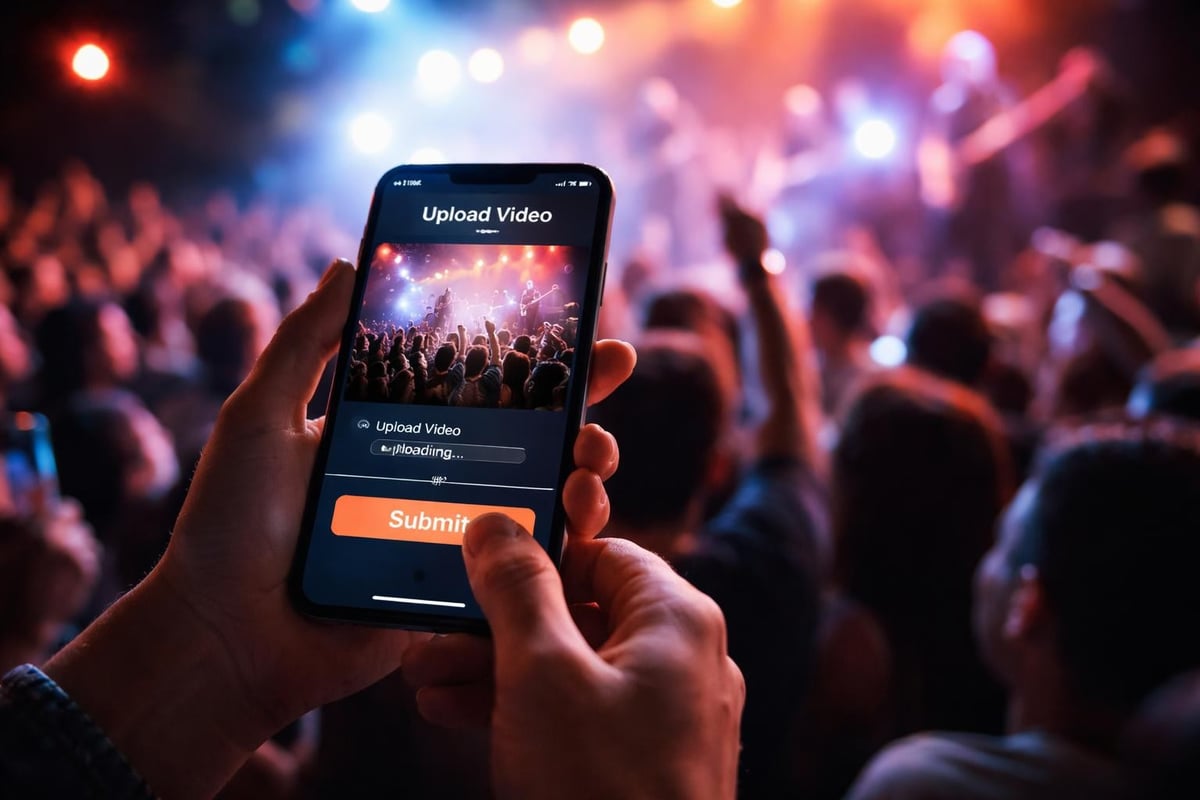
People already film at events. The problem is getting that footage from their camera rolls to your content library. Make submission frictionless:
- QR codes displayed throughout the venue - Point, scan, upload
- Branded hashtags that trigger collection - Social listening captures tagged content automatically
- In-app incentives - Early access to edited highlights, contest entries, recognition on screens
- Clear rights management upfront - People need to know what you'll do with their clips
The key is asking for content while they're still at the event, emotions running high. Wait until tomorrow and you've lost 80% of potential submissions.
Curating Raw Footage Into Usable Content
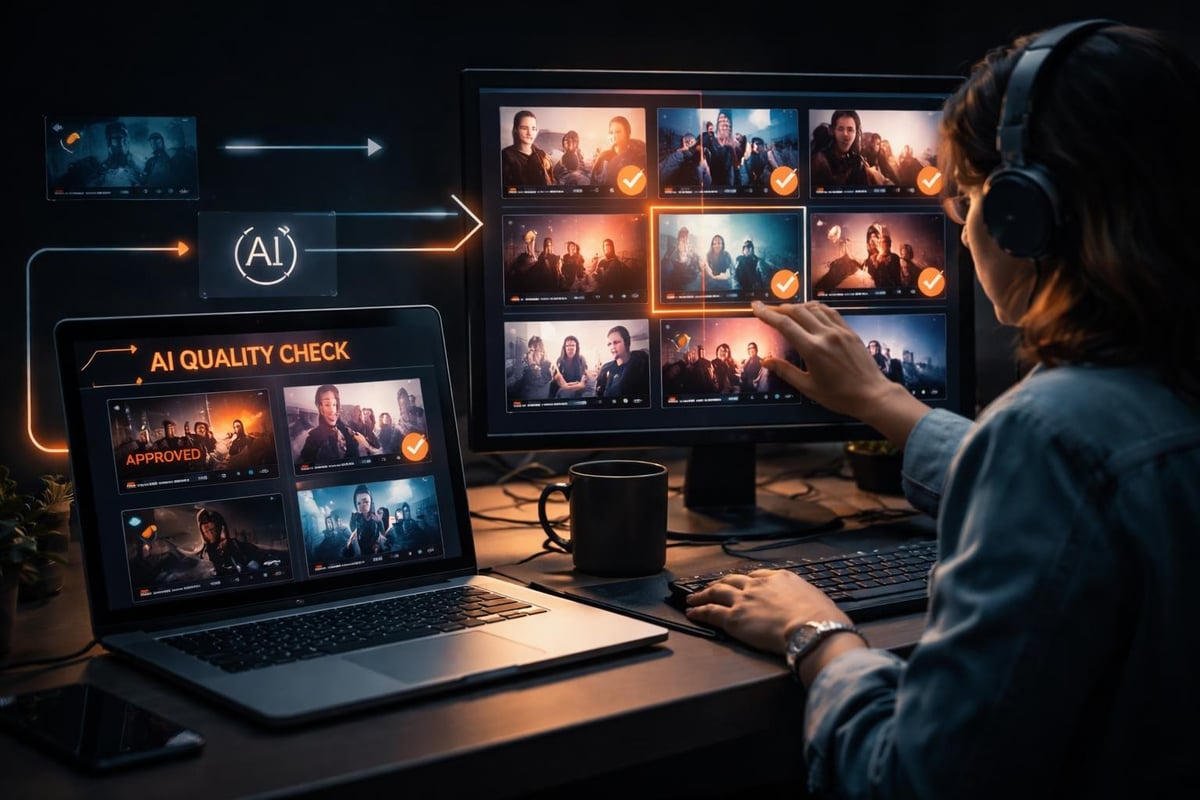
You'll receive everything from 30-second crowd pans to two-minute vertical videos of entire songs. Most of it isn't usable as-is. This is where AI-assisted curation separates functional systems from wishful thinking.
Automating event video curation means using intelligent filters to surface the best clips based on objective criteria - image stability, audio quality, duration, lighting. Then human editors make final calls on what tells the story you're trying to tell.
Quality filters that work:
- Minimum resolution threshold (1080p)
- Maximum shake/stabilisation score
- Audio level detection (too quiet or distorted gets flagged)
- Face detection (helps find crowd reaction shots)
- Duplicate scene elimination
The goal isn't perfection. It's finding clips authentic enough to feel real but polished enough to represent your event well.
Distribution Strategy for Live Music Video Content
Creating the content is half the work. Getting it seen is the other half. The global entertainment and media industry revenue hitting $3.5 trillion by 2029 means more competition for attention, which makes distribution timing and platform selection critical.
Platform-Specific Considerations
Each platform treats live music video differently:
| Platform | Ideal Length | Format Priority | Best For |
|---|---|---|---|
| Instagram Reels | 15-30 sec | Vertical (9:16) | Highlight moments |
| TikTok | 30-60 sec | Vertical (9:16) | Viral potential |
| YouTube Shorts | 30-60 sec | Vertical (9:16) | Searchability |
| YouTube Long | 3-10 min | Horizontal (16:9) | Full performances |
| 60-90 sec | Square (1:1) | Community sharing |
Understanding short-form video length matters because platforms punish content that doesn't match their preferred format. Upload a 5-minute vertical video to Instagram and the algorithm buries it.
The smart play: cut multiple versions from the same source footage. A 90-second event recap becomes a 30-second Reel, a 60-second TikTok, and a 3-minute YouTube video with minimal additional editing.
Timing Your Content Release
Post during the event and you capture live engagement. Post after and you miss the moment. The solution is publishing in waves:
During the event (real-time):
- Quick clips to Stories/Reels (raw, minimal editing)
- Live crowd reactions to specific songs
- Behind-the-scenes moments
24 hours post-event:
- Curated highlight reels (60-90 seconds)
- Best crowd moments compilation
- Artist-specific performance clips
Week after:
- Extended recap videos (3-5 minutes)
- Attendee testimonial compilations
- "Best of" themed collections
This keeps your event in feeds for 7-10 days rather than one news cycle. With 5.1 trillion global music streams in 2025, people consume music content constantly - you're just giving them yours in digestible chunks over time.
Rights, Permissions, and Legal Reality
User-generated content comes with legal strings attached. People own the footage they shoot. You can't just use it however you want without explicit permission.
Building a Rights Management System
Before you collect a single clip, you need clear terms:
- What you're allowed to do with submitted content (post to social, use in marketing, include in promotional videos)
- How long you have rights (perpetual vs. limited term)
- Whether contributors maintain ownership (non-exclusive license is standard)
- Credit and attribution policies (do you tag contributors?)
Most organisers handle this through submission forms with checkbox agreements. That's legally shaky. Better approach: integrated consent management that captures explicit opt-in before upload.
The attendance at live performances continues rising, which means more people filming more content. Your rights framework needs to scale without manual review of every submission.
Technical Requirements That Actually Matter
You don't need enterprise-grade infrastructure to collect user-generated live music video. You need systems that work under pressure when hundreds of people try uploading simultaneously during set breaks.
What Your Platform Must Handle
Critical capabilities:
- Upload processing without crashes (300+ concurrent uploads)
- Mobile-optimised submission flow (90% of footage comes from phones)
- Automated backup and redundancy (you can't ask attendees to resubmit)
- Format flexibility (people film in whatever resolution/orientation they want)
Nice-to-have features:
- Real-time moderation tools
- Automated tagging and categorisation
- Direct social publishing
- Analytics on submission patterns
The difference between a UGC platform that works and one that doesn't often comes down to upload speed. If someone waits 45 seconds for a 20-second clip to upload, they give up. You've lost that content forever.
Measuring Success Beyond View Counts
Views don't tell you if your live music video strategy is working. You need metrics that connect content to business outcomes.
Metrics That Reveal Performance
Engagement depth:
- Average watch percentage (50%+ is solid for user-generated content)
- Share rate (how often viewers send clips to friends)
- Save rate (indicates content people want to reference later)
- Click-through to ticket sales or artist pages
Content velocity:
- Time from event to first post
- Number of pieces published per event day
- Ratio of submissions to published clips (lower is better - means better curation)
Community growth:
- New followers from event content
- Tagging behaviour (are attendees tagging friends?)
- Conversion from viewer to next event attendee
A live music video with 10,000 views that drives 50 ticket sales outperforms one with 100,000 views and zero conversions. Track what matters to your bottom line.
The Reality of Content Quality Control
Not everything submitted is usable. Some footage is too dark, too shaky, or just captures someone's backpack for 45 seconds. You need filters - both automated and human.
Common quality issues:
- Vertical video of horizontal screens (creates tiny, unusable footage)
- Excessive camera movement (makes viewers motion sick)
- Overblown audio (distorted beyond recognition)
- Obstructed views (someone's head blocking the entire frame)
- Wrong content entirely (selfies, food, nothing related to the event)
Your curation workflow should eliminate obvious problems automatically, then surface borderline cases for quick human review. Spending 20 hours manually reviewing 500 clips defeats the efficiency gains of crowdsourced video.
Set minimum standards, enforce them automatically, and be okay with publishing content that's "good enough" rather than perfect. The authenticity more than compensates for technical imperfection.
What This Looks Like in Practice
Theory is easy. Implementation is where most event organisers stumble. Here's what a functional live music video workflow actually looks like during a real event:
Friday night, first headliner:
- Attendees scan QR codes displayed on screens and venue signage
- Upload clips directly through mobile-optimised submission portal
- AI filters flag clips meeting minimum quality thresholds
- Editor reviews flagged clips during set breaks (5-10 minutes)
- Best clips go live to Instagram/TikTok within 30 minutes
Saturday morning:
- Overnight batch processing sorts remaining submissions
- Editor creates 90-second Friday night recap
- Posts to YouTube, Instagram, Facebook by 10am
- Drives Saturday ticket sales with "don't miss tonight" call-to-action
Sunday post-event:
- Full weekend highlight reel (3-4 minutes)
- Artist-specific compilations for promotional use
- Thank you post featuring attendee submissions
- Data analysis: which clips drove most engagement
The entire system runs with one dedicated editor and automated tools handling 80% of the sorting work. That's how you make user-generated content practical rather than theoretical.
Building Long-Term Value From Event Content
Your live music video doesn't stop being useful when the event ends. Smart organisers build content libraries that drive value for months.
Repurposing strategies:
- Teaser content for next year's event announcement
- Social proof in ticket sales campaigns ("see what you missed")
- Artist relationship building (share clips directly with performers)
- Sponsor deliverables (branded content from user submissions)
- Training material for future event staff
The current music industry trends show audiences want ongoing engagement, not just event-day excitement. Your archive of authentic live music video becomes the foundation for year-round content strategy.
Store content properly, tag it thoroughly, and make it searchable. Future you will thank present you when you need a 15-second clip of crowd energy for an Instagram ad six months later.
Live music video works when you stop trying to control every frame and start enabling the people already filming anyway. The footage won't be perfect, but it'll be real, and that matters more than production value ever will. If you're ready to turn your event attendees into your content team, SureShot ApS gives you the platform to collect, curate, and publish authentic moments without drowning in manual workflow. Your next event's best marketing content is already in your attendees' pockets - you just need a system to capture it.