

You've seen the shift. Polished brand videos get scrolled past, but a shaky clip from someone's phone stops thumbs mid-swipe. That's ugc video doing what expensive production can't: earning trust. User-generated content isn't new, but in 2026, it's become the baseline for brands that want organic reach without burning budgets. The user-generated content landscape has evolved from forum posts and blog comments to sophisticated video ecosystems that drive real business outcomes.
Why UGC Video Works When Everything Else Feels Forced
People smell marketing from a mile away now. They've built filters for it. But when someone at a conference pulls out their phone and captures a genuine reaction, that's different. It doesn't trigger the same defensive mechanisms.
The Trust Factor Nobody Talks About
Traditional marketing relies on persuasion. UGC video relies on documentation. There's a massive difference. When attendees at your event share what they're experiencing, they're not trying to sell anything. They're sharing. That absence of agenda is what makes it valuable.
Here's what actually matters:
The growth of UGC platforms reflects this shift, with smart content curation helping brands manage the volume without losing the human touch.
The Economics of Letting Your Audience Create
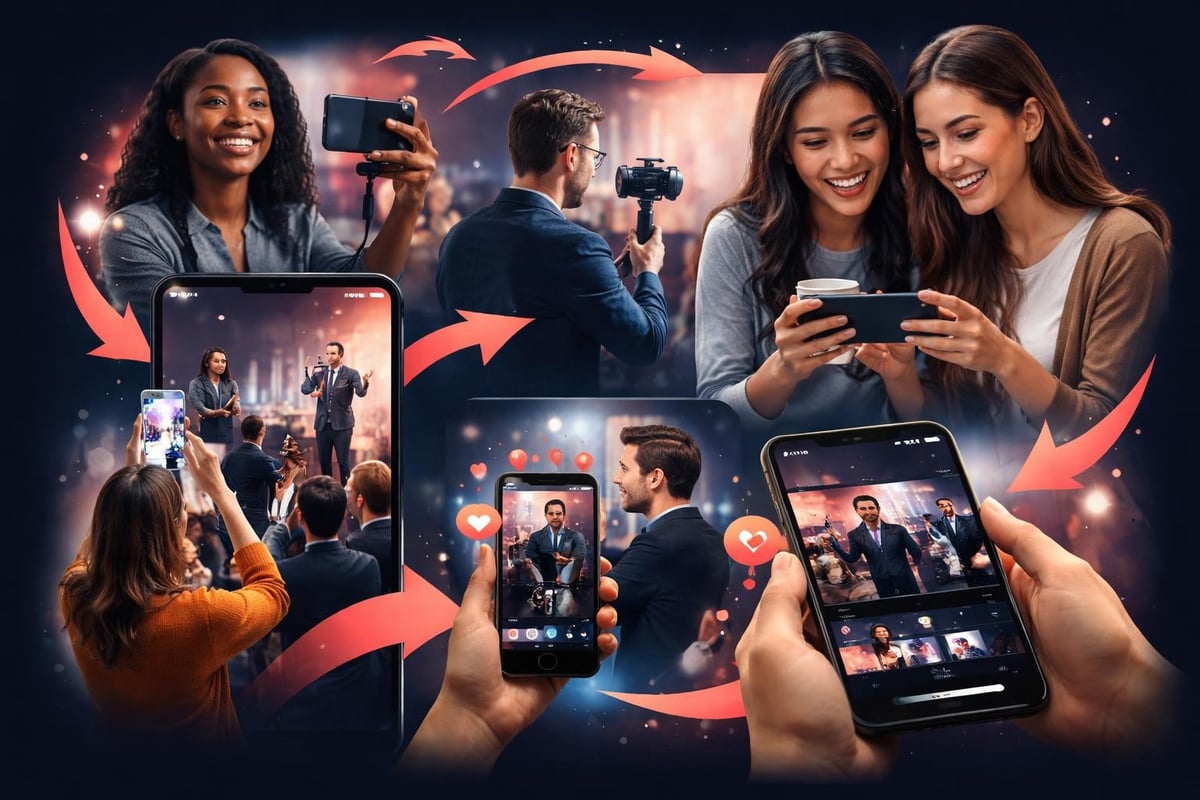
Professional video production costs thousands per minute of final content. A single event might require multiple camera crews, editors, and weeks of post-production. Meanwhile, your attendees are already filming. They're already creating. You're just not using it.
What It Actually Saves You
Traditional ProductionUGC Video ApproachDifference£5,000-£15,000 per eventPlatform costs + curation time70-90% cost reduction2-4 weeks turnaroundReal-time to 48 hours10x faster delivery5-10 final assets50-200+ authentic clips20x more contentSingle perspectiveMultiple viewpointsRicher narrative
Those numbers change the conversation entirely. You're not choosing between professional video and nothing. You're choosing between one polished perspective and dozens of authentic moments that spread organically.
The Content Volume Problem That Fixes Itself
Social media demands constant feeding. One professional video doesn't cut it anymore. You need content for Instagram, TikTok, LinkedIn, YouTube Shorts, and wherever your audience lives next month. UGC video solves the volume problem naturally because you're working with what people are already creating.
Events generate hundreds of potential clips. Most go unseen because there's no system to collect, curate, and deploy them. That's the gap platforms designed for UGC video fill: turning scattered moments into coordinated content strategies.
Quality Versus Authenticity: The Wrong Debate
People obsess over video quality metrics. Resolution, lighting, sound design, colour grading. None of that matters if the content doesn't connect. And here's the thing: smartphone cameras in 2026 are absurdly good. The technical quality gap between professional gear and phones has collapsed for most applications.
What hasn't collapsed is the authenticity gap. Professional productions feel produced. That's not a bug in your perception, it's a feature of the format. UGC video feels real because it is real.
When "Good Enough" Is Actually Better
Technical quality you actually need:
That's it. Modern phones handle all four without thinking about it. Everything beyond that is preference, not requirement.
The fine-grained quality assessment of UGC videos confirms what marketers already know: technical perfection doesn't correlate with engagement or conversion. Relevance and authenticity do.

How to Actually Implement This at Events
Theory's nice. Implementation matters more. You can't just tell attendees to "share their experience" and expect coordinated results. You need structure without killing spontaneity.
The Three-Phase Approach That Works
Before the event:
During the event:
After the event:
This isn't complicated, but it does require intention. Random ugc video collection gives you random results.
The Curation Challenge Everyone Underestimates
You'll get more content than you can use. That's the point. But sorting through hundreds of clips to find the gems takes time. This is where smart tools actually help without replacing the human judgment that makes UGC video valuable.
Sorting the Signal From Noise
Modern content curation tools can filter by:
The platform handles the first pass. You make the final call. That balance keeps the content authentic while making curation manageable at scale.
Curation StageTool RoleHuman RoleInitial filteringRemove technical failuresDefine quality thresholdsContent sortingCategorize by theme/topicSelect narrative threadsEdit preparationAuto-crop, stabilize, enhanceChoose emotional beatsFinal selectionSuggest top performersMake brand-aligned decisions
Platform-Specific Realities Nobody Mentions
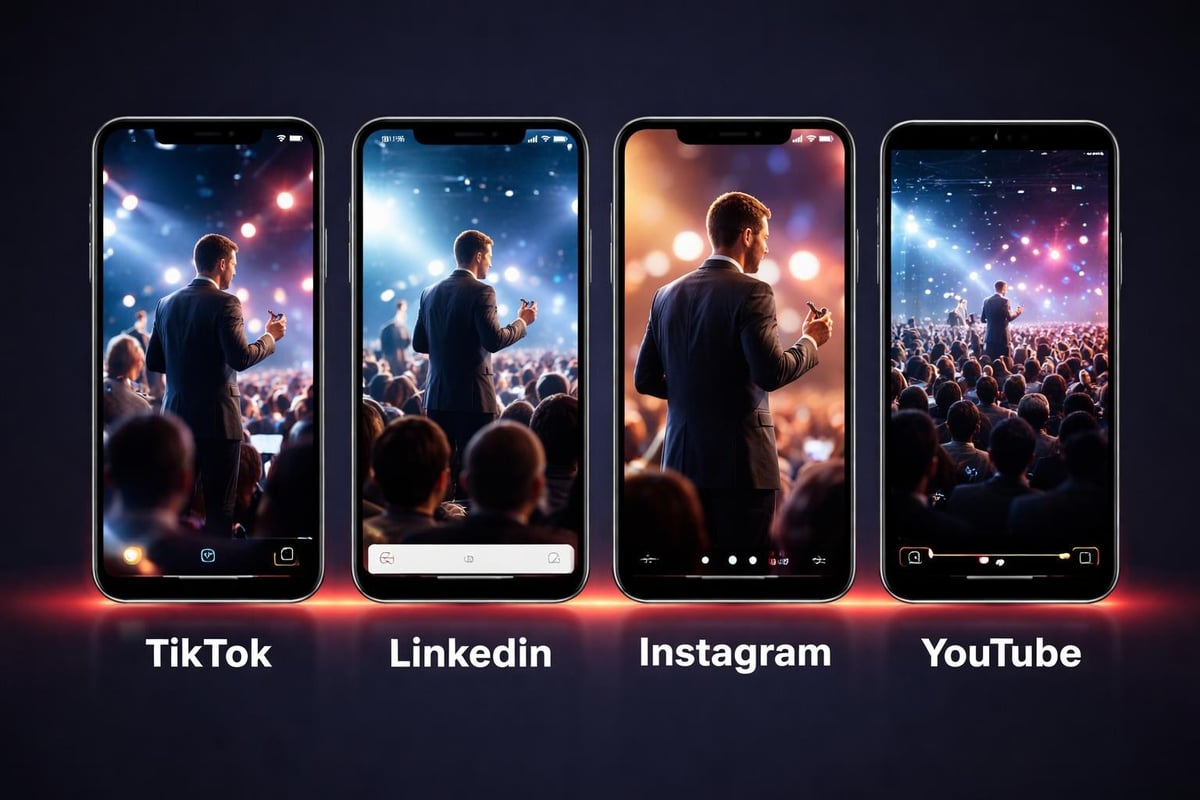
UGC video isn't one thing. It's different on every platform because audiences expect different things. What works on TikTok dies on LinkedIn. What performs on Instagram Stories gets ignored on YouTube.
Matching Content to Platform Context
TikTok and Instagram Reels:
LinkedIn:
YouTube Shorts:
Understanding video trends for 2026 means recognising these platform differences aren't preferences. They're requirements for visibility.
Rights, Permissions, and the Boring Stuff That Matters
You can't just use footage people create without permission. That's obvious. What's less obvious is how to handle permissions at scale when you're collecting content from hundreds of attendees.
The Permission Framework That Actually Works
On upload:
In practice:
This protects you and respects creators. Skip it and you're building risk into every post.
The Organic Reach Multiplier Effect
Here's where ugc video economics get interesting. When you share professional content, it reaches your audience. When attendees share their content, it reaches their audiences. Then their audiences share it, reaching even more people.
How the Multiplier Actually Works
One attendee with 500 connections shares their event experience. Even with modest 5% engagement, that's 25 people seeing authentic content about your event. If 100 attendees participate, you've reached 2,500 people organically. Those people don't know your brand well, but they trust the person who shared. That's worth more than paid impressions.
The influence of user-generated content on video trends shows this multiplier effect compounds over time as content gets reshared and algorithms recognise genuine engagement patterns.
Typical reach multiplication:
Those aren't guarantees, but they're realistic ranges based on how social platforms actually work in 2026.
What Not to Do (Because People Keep Doing It)
Most UGC video strategies fail because they either over-control or under-curate. You need the middle ground.
Common Mistakes That Kill Results
Over-controlling:
Under-curating:
Missing the point:
The balance point: light touch curation with clear guidelines and genuine appreciation for contributors.
Building This Into Your Regular Workflow
UGC video can't be a one-off experiment. It needs to become part of how you operate events, not a special project you try once.
The Integration Checklist
When this becomes routine, you stop thinking about whether to collect UGC video and start optimising how you use it.
The Creator Economy Intersection
UGC video isn't separate from influencer marketing anymore. They've merged. Your attendees are micro-influencers. They might have 500 followers or 5,000, but within their networks, they have influence.
Working With Micro-Influencer Attendees
Identify people at your events who already create content regularly. They're usually obvious (they're the ones filming everything anyway). Give them slightly more guidance and possibly early access or special experiences to document.
What they get:
What you get:
This isn't exploitation if you're providing genuine value to creators and respecting their work.
The Smart Tools Role (Without the Nonsense)
Software doesn't create authentic ugc video. People do. But smart tools help manage, curate, and optimise what people create. That distinction matters. The innovations in UGC platforms focus on moderation and analytics, not content generation.
Where Smart Tools Actually Help
Where they don't help: replacing human judgment about what's authentic, what tells your story, and what resonates with your specific audience.
Measuring What Actually Matters
View counts don't tell you much. Half those views might be three seconds of accidental scrolling. You need metrics that indicate actual impact.
The Metrics Worth Tracking
MetricWhy It MattersTarget RangeAverage watch timeShows actual engagement40-60% completionShare rateIndicates resonance5-10% of viewersClick-through on CTAsDrives business outcomes2-5% for awareness contentSentiment in commentsMeasures emotional response80%+ positiveEarned media valueQuantifies organic reach3-5x paid equivalent
Track these over time to see if your ugc video strategy improves. Monthly comparisons matter more than individual post performance.
Future-Proofing Your Approach
Platforms change. Formats evolve. What stays constant is people's response to authenticity. Build your UGC video strategy around that truth and you won't have to rebuild every time TikTok changes its algorithm or a new platform emerges.
The Principles That Last
Focus on real moments over manufactured ones. Respect the people creating content for you. Make participation easy and rewarding. Curate thoughtfully without killing spontaneity. Measure impact, not vanity metrics. Iterate based on what works.
Those aren't trendy tactics. They're foundational approaches that work regardless of which social platform dominates next year.
UGC video works because it's what people already do, channeled toward business outcomes. You're not creating something artificial; you're organising something natural. The brands winning with this approach in 2026 aren't the ones with the biggest budgets. They're the ones who figured out how to turn attendees into advocates and moments into movements. If you're running events and not systematically capturing what your attendees experience, you're leaving the best marketing material unused. SureShot handles the collection, curation, and deployment so you can focus on creating events worth documenting in the first place.