
Short Form Video Definition: Length, Formats, vs Long-Form
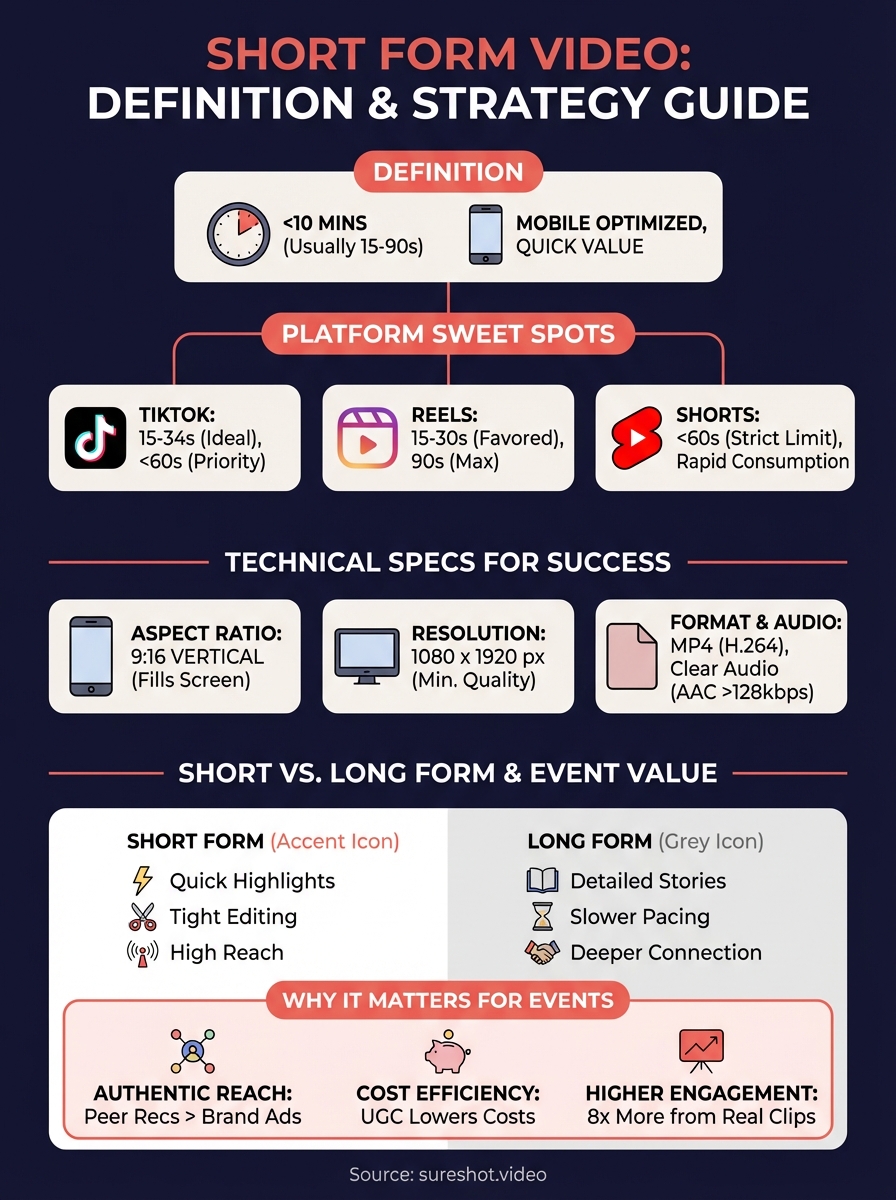
Short form video refers to video content under 10 minutes, though most platforms favour clips between 15 and 90 seconds. These quick videos are built for mobile viewing and social media sharing, designed to grab attention immediately and deliver value fast. You see them everywhere on TikTok, Instagram Reels, YouTube Shorts, and even LinkedIn.
This guide breaks down exactly what counts as short form video, why it matters for event organisers, and how to use it effectively. You'll learn the specific length requirements for each major platform, the technical specs your clips need to meet, and how short form differs from long form content. Whether you're capturing attendee moments at a music festival or promoting your next conference, understanding these fundamentals helps you create content that actually gets watched and shared.
Why short form video matters for events
Your attendees already create dozens of short clips during your events. They capture crowd reactions, stage moments, and behind-the-scenes experiences on their phones, then share them with friends and followers. This behaviour transformed how events reach new audiences because short form content spreads organically in ways traditional event marketing cannot match. Understanding the short form video definition helps you recognise why these brief clips work so well for event promotion and attendee engagement.
Short form video drives authentic reach
Event organisers struggle to capture every angle of their experience with a small production team. Short form clips from attendees solve this problem by showing your event from multiple perspectives simultaneously. A single concert might generate hundreds of authentic 30-second videos that showcase different moments, stages, and crowd energy. These clips perform better on social platforms than polished promotional content because viewers trust peer recommendations over brand messaging.
When attendees post their experiences, they expand your event's visibility to their networks without additional advertising spend. Each shared video acts as a personal endorsement that reaches potential attendees you could never target through paid advertising. This organic distribution builds credibility and excitement around your brand in ways that traditional marketing budgets cannot replicate.
Authentic attendee videos generate 8 times more engagement than branded content because viewers see real experiences from real people.
Cost and production efficiency matter
Professional video production for events costs thousands of dollars and requires extensive planning, equipment, and editing time. Short form crowd footage eliminates most of these expenses while providing more diverse footage. Your attendees become voluntary content creators who document experiences you could never afford to capture otherwise. The clips under 90 seconds require minimal editing and post-production work, meaning you collect ready-to-share content that needs only basic review and curation before publication. This efficiency lets smaller event teams compete with major festivals that have large marketing budgets and dedicated video crews.
How to use short form video in your strategy
Applying the short form video definition to your event strategy requires intentional planning before, during, and after your event. You need systems that encourage attendees to capture moments, processes that help you identify the best clips, and workflows that turn raw footage into promotional assets. The most successful event organisers treat attendee-generated short form content as a core marketing channel rather than an afterthought.
Set up collection points before your event
Create clear pathways for attendees to submit their video clips during your event. You should establish a dedicated platform or system where people can upload content using simple access codes or event-specific identifiers. Make this process frictionless by eliminating complicated registration requirements or lengthy upload forms. The easier you make participation, the more content you collect from diverse perspectives across your venue.
Promote your video collection initiative through pre-event communications and on-site signage. Tell attendees exactly what types of moments you want captured, such as artist performances, crowd reactions, or unique installations. This guidance helps participants understand what content adds value while giving them creative freedom to showcase their personal experiences.
Curate content strategically during collection
Review incoming clips for quality and relevance as they arrive rather than waiting until after your event ends. You want to identify standout moments quickly so you can amplify them while your event still generates buzz on social platforms. Look for videos that capture energy, showcase unique perspectives, or highlight aspects of your event that official cameras might miss.
Events that curate and share attendee videos within hours of capture see 3 times higher engagement than those posting days later.
Filter content based on technical standards like lighting quality, audio clarity, and composition before considering any clip for your promotional channels. You should also verify that submitted videos align with your brand values and event atmosphere. This curation process ensures you maintain quality standards while leveraging the authentic nature of crowd footage.
Distribute clips across multiple channels
Repurpose selected short form videos for different platforms and purposes throughout your marketing calendar. A single 30-second attendee clip from your festival stage can work as an Instagram Reel, a TikTok post, and a testimonial on your website. You maximise the value of each piece of content by adapting it to match platform-specific requirements and audience expectations.
Schedule your short form content distribution to maintain momentum between events. Release attendee videos as part of your regular social media calendar to keep your community engaged and remind potential attendees why they should register for your next event. Mix these authentic clips with your official announcements and promotional content to create a balanced feed that builds trust and excitement simultaneously.
Short form video length by platform
Each social platform defines the short form video definition differently based on their algorithms and user behaviour patterns. You need to understand these specific requirements because a clip optimised for TikTok might get cut off or rejected on Instagram Reels. Platform specifications determine not only maximum length but also ideal durations that perform best with each algorithm. Creating content that matches these parameters ensures your attendee videos reach maximum viewers without technical issues or reduced visibility.

TikTok video length standards
TikTok accepts videos up to 10 minutes for verified accounts, but the platform built its reputation on much shorter content. Your best results come from clips between 21 and 34 seconds, which align with viewer attention patterns and algorithm preferences. Videos under 60 seconds receive priority in the For You feed, making them ideal for event highlights and crowd reactions. When attendees capture moments at your event, encourage them to keep clips under one minute to maximise potential reach on this platform.
TikTok videos under 30 seconds generate 45% more completion rates than longer clips because viewers watch them multiple times.
The platform allows full-screen vertical video that fills mobile screens completely, creating immersive viewing experiences. Your attendee content should take advantage of this format by capturing stage performances, venue atmospheres, and crowd energy in ways that feel native to the platform. Clips longer than three minutes rarely perform well unless they offer exceptional value or storytelling.
Instagram Reels duration limits
Instagram sets a 90-second maximum for Reels, positioning them as slightly longer than TikTok's sweet spot but still firmly in short form territory. The platform favours content between 15 and 30 seconds in its recommendation algorithm, making this range ideal for your event promotion strategy. You can capture complete song performances, venue tours, or testimonials within this timeframe while maintaining viewer engagement throughout the clip.
Reels integrate with Instagram Stories and feed posts, giving your content multiple distribution pathways simultaneously. Your attendee videos can appear in the dedicated Reels tab, user feeds, and Explore pages based on performance metrics. This cross-platform visibility makes Instagram particularly valuable for event marketing and community building.
YouTube Shorts specifications
YouTube defines Shorts as vertical videos under 60 seconds in length, creating clear boundaries within the short form video definition. The platform displays these clips in a dedicated Shorts feed separate from traditional YouTube content. Your event footage works well here because viewers expect rapid content consumption without committing to longer videos.
Shorts compete directly with TikTok and Instagram Reels but offer unique advantages through YouTube's existing infrastructure. Your content remains permanently accessible rather than disappearing after 24 hours, and you can link Shorts to longer event recap videos on your channel. This creates natural pathways for interested viewers to explore more of your content.
LinkedIn and Facebook parameters
LinkedIn allows videos up to three minutes while still categorising them as short form, giving you more flexibility for professional event content. Facebook supports clips up to 60 seconds in Stories and longer durations in feed posts. Both platforms prioritise native uploads over shared content from other networks, so you should upload directly rather than cross-posting. Your B2B event content and conference highlights perform particularly well on LinkedIn when they fall between 30 and 90 seconds.
Formats and specs for short form clips
Technical specifications determine whether your attendee videos display correctly across platforms or get rejected during upload. You need to understand resolution requirements, aspect ratios, and file formats before collecting content from participants. These standards directly impact how your clips appear to viewers and whether algorithms promote them effectively. Understanding the short form video definition includes knowing these technical parameters because format affects both upload success and viewer experience.
Aspect ratio requirements
Vertical video dominates short form content with a 9:16 aspect ratio that fills mobile screens completely. Your attendee clips should capture footage in this portrait orientation rather than traditional landscape format. Instagram Reels, TikTok, and YouTube Shorts all prioritise vertical content in their feeds, while horizontal videos appear letterboxed with black bars that reduce visibility. When you instruct participants on content creation, emphasise shooting vertically to maximise impact.
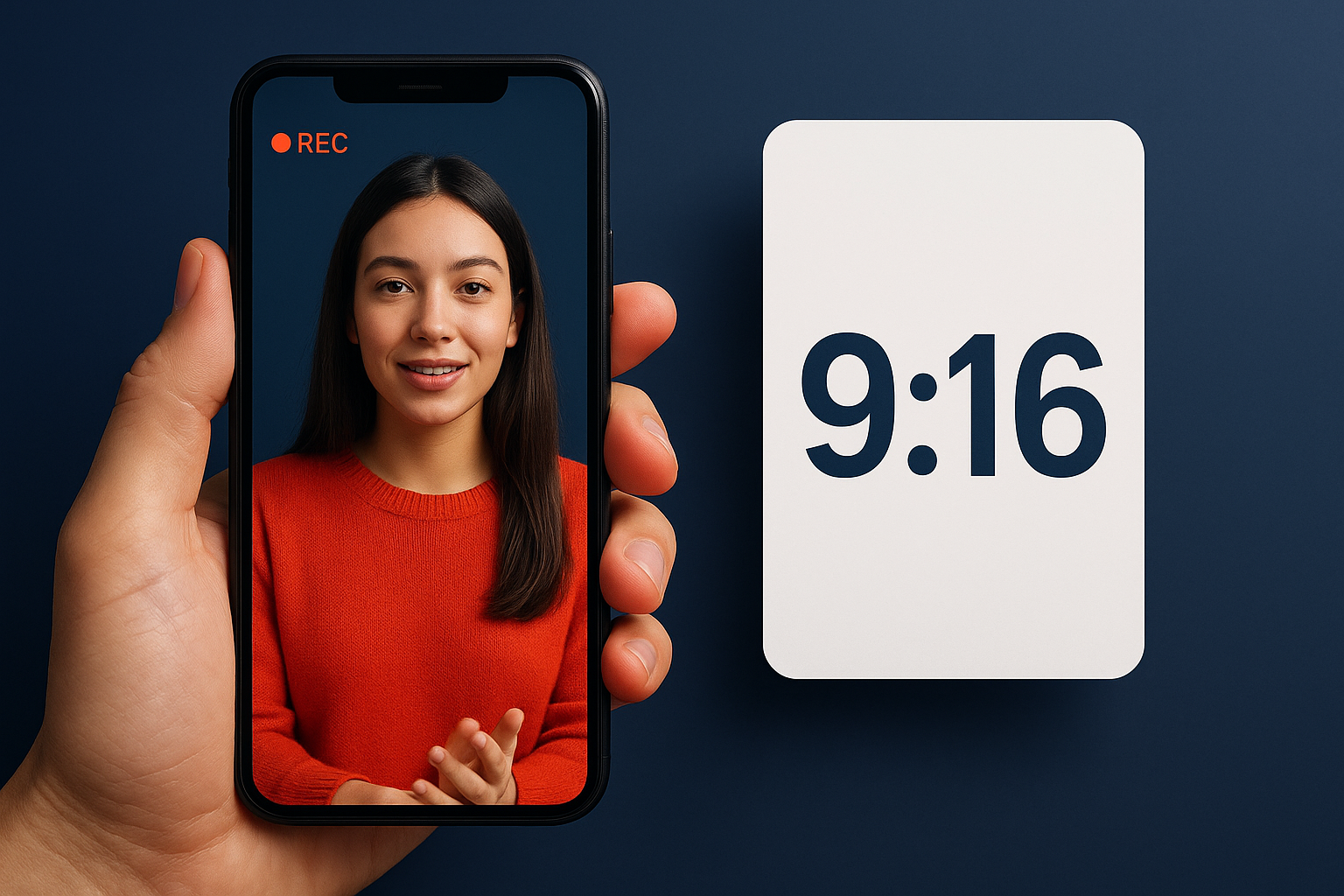
Square formats using 1:1 aspect ratio work as secondary options on platforms like Instagram feed posts, though they perform worse in dedicated short form sections. Landscape videos with 16:9 ratios rarely succeed in short form feeds because mobile users scroll past content that does not fill their screens. Your collection system should flag or reject horizontal submissions to maintain consistency across your promotional channels.
Resolution and file format standards
Modern platforms require minimum 1080 x 1920 pixel resolution for vertical videos, with many creators shooting at higher resolutions for better quality. Your attendees likely capture footage at these specifications automatically on recent smartphones, but older devices might produce lower quality clips. You should set minimum quality thresholds during your curation process to maintain professional standards across your content library.
Videos uploaded at 1080p resolution receive 2.5 times more shares than lower quality clips because viewers perceive them as more professional.
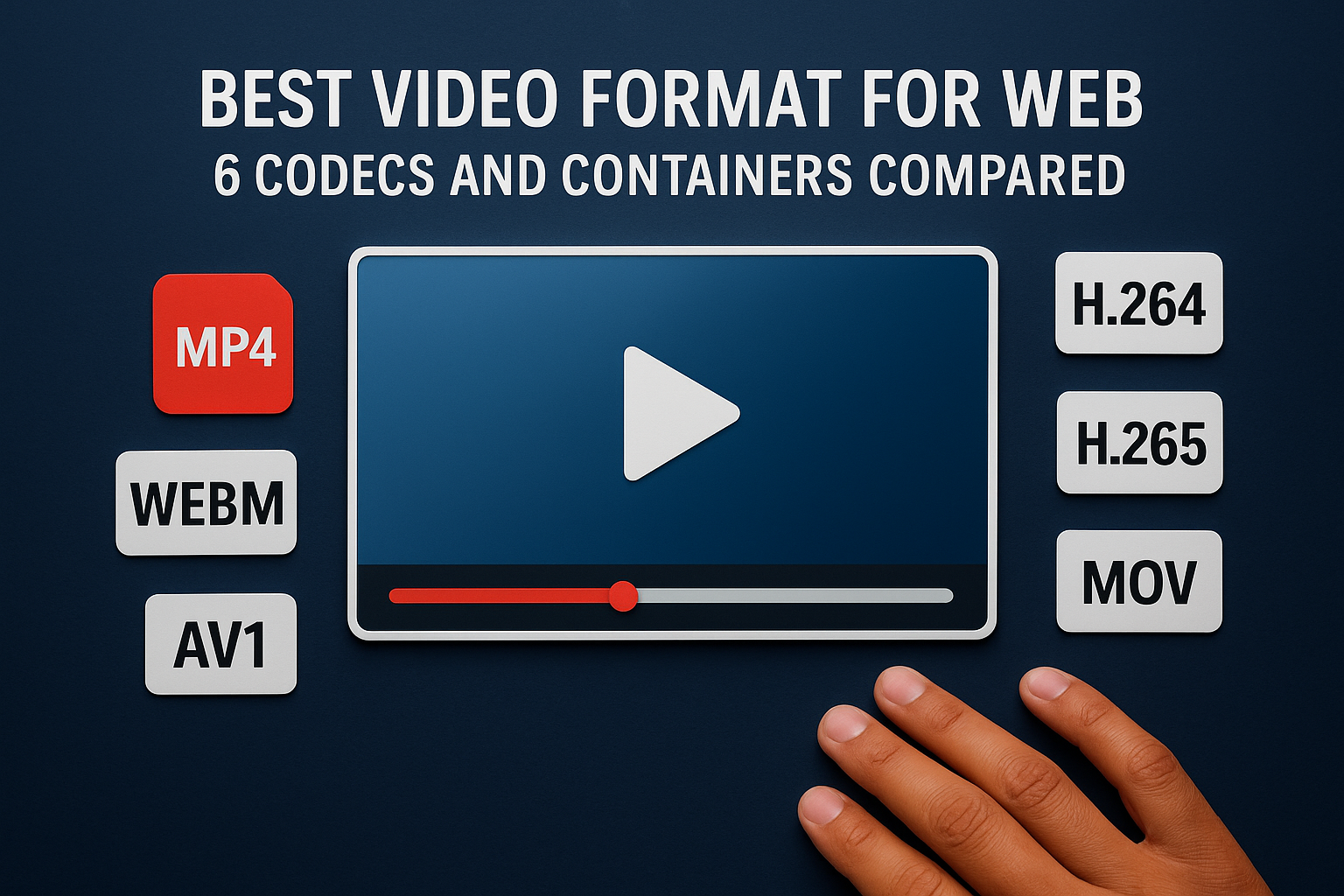
MP4 files using H.264 codec offer the best compatibility across all major platforms while maintaining reasonable file sizes. MOV formats work but require larger storage and longer upload times. Your collection platform should accept multiple formats but convert everything to MP4 for distribution efficiency. Maximum file sizes typically range from 30MB to 4GB depending on the platform, with most short clips falling well below these limits.
Audio and compression guidelines
Clear audio matters as much as visual quality because viewers abandon videos with distorted sound or excessive background noise. Your platform should preserve audio quality during upload and processing rather than compressing it to unusable levels. AAC audio codec at 128kbps or higher maintains clarity for speech and music without creating massive files.
Bitrate settings between 3,500 and 5,000 kbps provide sharp video quality without unnecessary file bloat. Higher bitrates improve visual clarity but create longer upload times and storage challenges. Your technical specifications should balance quality against practical limitations of mobile uploads from event venues with variable internet connectivity.
Short form vs long form video explained
The short form video definition draws a clear line at 10 minutes, while long form content extends beyond this threshold into territory where viewers commit significant time and attention. Your event content strategy needs both formats because they serve different purposes and reach audiences in distinct ways. Short clips capture immediate attention and spread quickly across social feeds, whereas longer videos allow for detailed storytelling and comprehensive event coverage that builds deeper connections with invested viewers.
Duration and format distinctions
Short form videos stay under 10 minutes but typically run between 15 and 90 seconds on most platforms. Long form content starts at 10 minutes and can extend to hours for webinars, panel discussions, or full concert recordings. Your attendee-generated clips naturally fall into short form territory because people capture spontaneous moments rather than planned productions. These brief videos work on mobile devices where users scroll quickly through feeds, while longer content requires viewers to stop scrolling and dedicate focused attention to watching.
Purpose and viewer expectations
Short clips deliver immediate value through quick entertainment, highlights, or single ideas that viewers consume rapidly. Your audience watches these videos while waiting in line, during commutes, or between tasks without planning dedicated viewing time. Long form content serves different needs by providing comprehensive coverage, tutorials, interviews, or complete performances that require sustained engagement. Event recaps, speaker sessions, and behind-the-scenes documentaries work better as long form because they build narrative arcs that short clips cannot support.
Long form videos generate 62% higher watch time per viewer but reach 5 times fewer people than short form content on social platforms.
Production and editing approaches
Short form requires tight editing that eliminates all unnecessary footage to maintain rapid pacing and immediate impact. You cut directly to the most engaging moments without lengthy introductions or transitions. Long form allows for slower pacing, context building, and complete story development that gives viewers time to absorb complex information. Your editing workflow for attendee clips focuses on selecting the best 30-second moments, while long form projects might require hours of footage compiled into coherent narratives that showcase your event's full scope.
Key takeaways on short form video
The short form video definition centres on clips under 10 minutes, with most platforms favouring content between 15 and 90 seconds. You capture maximum attention by creating vertical videos at 1080 x 1920 resolution that fill mobile screens completely. Your event strategy benefits from understanding platform-specific requirements because TikTok, Instagram Reels, and YouTube Shorts each have distinct preferences for duration and format.
Attendee-generated short form content reduces production costs while dramatically expanding your organic reach across social platforms. You collect authentic perspectives from dozens of participants simultaneously, creating promotional assets that traditional marketing budgets cannot replicate. This approach transforms your attendees into voluntary content creators who document experiences and share them with their networks.
SureShot helps event organisers collect, curate, and actively utilise these short form videos through our smart curation tools. Book a demo to see exactly how our platform streamlines attendee video collection for your next event.