
User Generated Content (UGC): What It Is and How to Use It
User generated content (UGC) is any content created by your customers or audience rather than your brand. It shows up as photos from events, video clips shared on social media, product reviews, or even blog posts about your business. Instead of spending thousands on professional production, you get authentic material directly from the people who matter most.
This guide breaks down everything you need to know about UGC. You'll learn why it works better than traditional marketing, how to collect and use it legally, and what types deliver the best results. We'll cover practical strategies for requesting content from your audience, managing permissions, and turning attendee footage into marketing gold. Whether you run festivals, conferences, or corporate events, you'll discover how to tap into the content your attendees already create and transform it into promotional material that actually converts.
Why user generated content matters
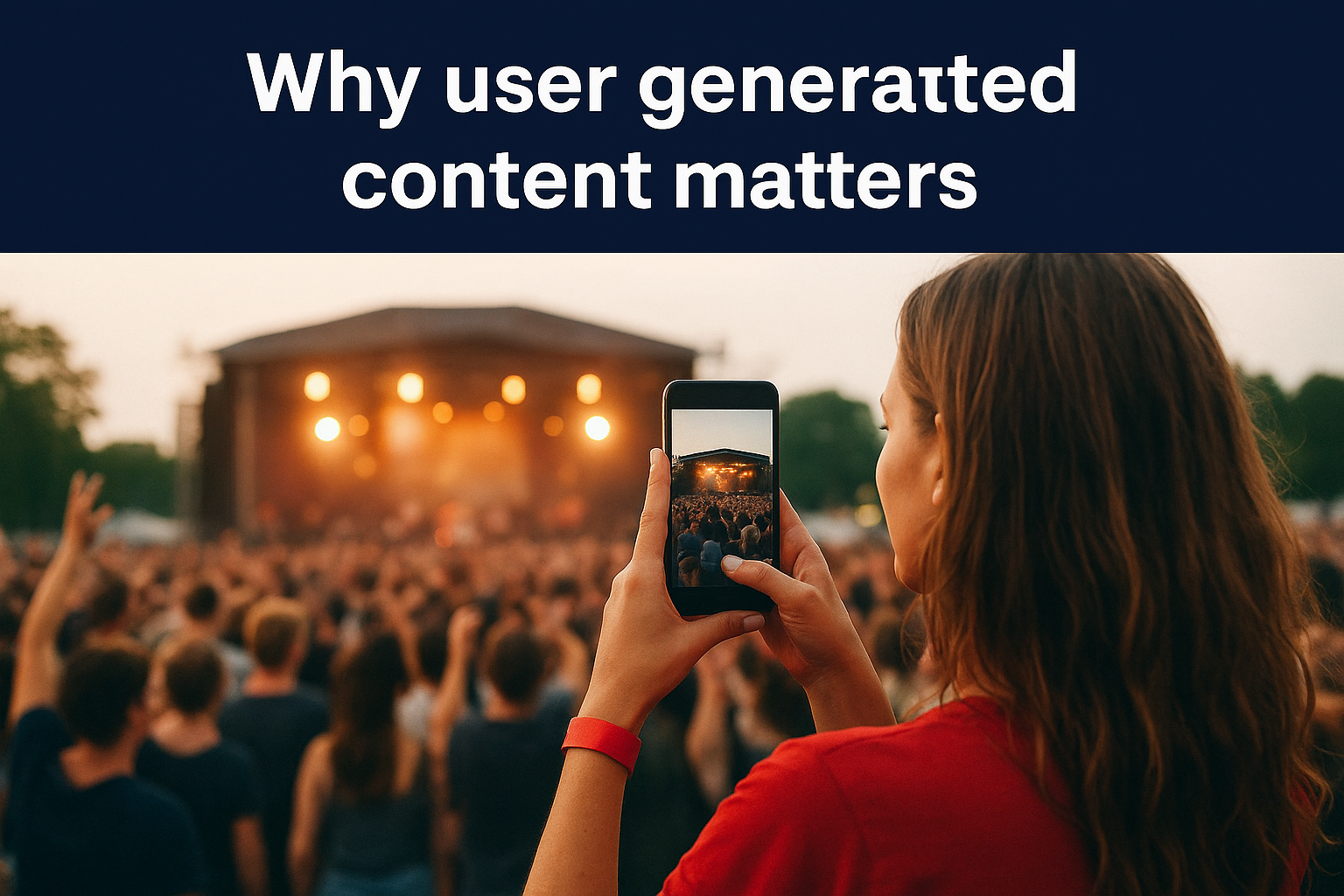
Your audience trusts real people more than your marketing team. When potential attendees see authentic footage from actual participants, they believe what they see. Traditional promotional content gets ignored because people recognise the polish and perfection as manufactured. User generated content cuts through that skepticism with genuine moments captured by people who paid to be there.
Authenticity builds trust
Consumers make purchasing decisions based on social proof more than any other factor. When someone watches a shaky phone video of a festival crowd losing their minds to a headliner, that moment carries more weight than a professionally edited highlight reel. The imperfections make it believable. You get credibility that no marketing budget can buy because the content comes from sources with nothing to gain from embellishing the experience.
Cost efficiency and scale
Professional video production costs thousands of dollars per shoot and requires weeks of planning. UGC gives you hundreds of clips from multiple angles without paying a film crew. Your attendees already capture these moments for their own social channels. Instead of producing one polished video, you collect dozens of perspectives that showcase different aspects of your event simultaneously. The production value might be lower, but the volume and variety more than compensate.
Research shows that marketing campaigns using UGC achieve 29% higher conversion rates than campaigns without it, according to industry data from Adweek.
Extended reach and engagement
Each piece of content your attendees create reaches their personal networks, not just yours. When someone posts event footage to their Instagram or TikTok, their friends see it. Those friends trust recommendations from people they know far more than branded advertisements. You multiply your promotional reach without spending extra on distribution. The content also performs better algorithmically because platforms prioritise authentic user posts over obvious marketing material. Your event gets discovered by audiences you could never target directly through paid campaigns.
How to use user generated content
Using user generated content effectively requires strategy and systems, not just hoping people share their experiences. You need to create clear pathways for collection, establish proper permissions, and organise the incoming material so you can actually use it. Most organizations fail because they try to manually hunt down content after their events end. The successful approach involves planning your UGC strategy before your event starts and making contribution as simple as possible for your attendees.
Create clear collection systems
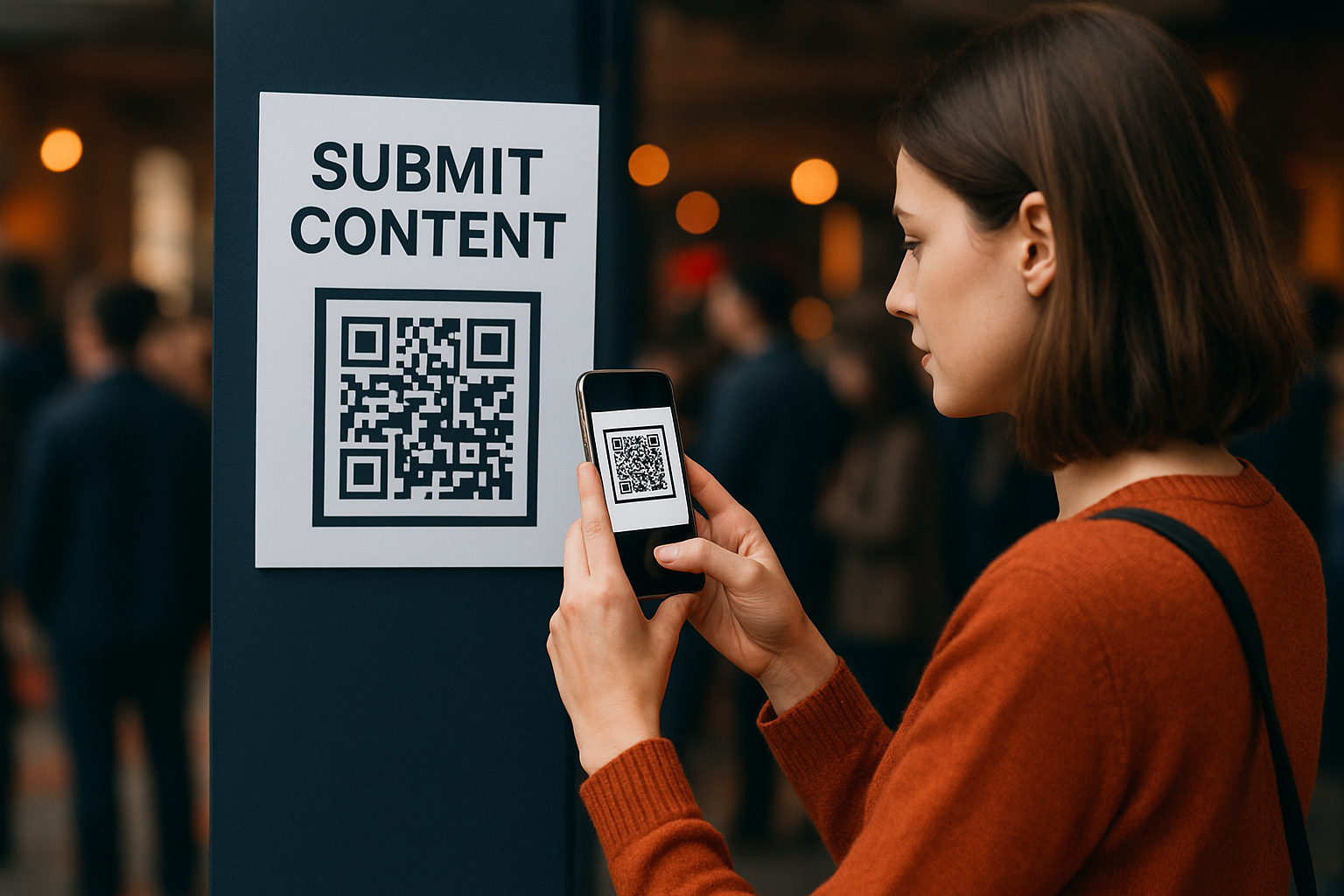
Your attendees need an obvious, frictionless way to share their content with you. Posting instructions on your website or mentioning it once during announcements won't cut it. You should create a dedicated submission method that works on mobile devices since that's where people capture event footage. QR codes displayed throughout your venue give instant access to upload portals without requiring attendees to remember URLs or download multiple apps.
Making submission worthwhile increases participation dramatically. Give contributors early access to tickets, exclusive merchandise, or recognition on your social channels. People want to know their effort matters. When you clearly state what's in it for them, you convert passive attendees into active content creators who deliberately capture shareable moments throughout your event.
Request permission properly
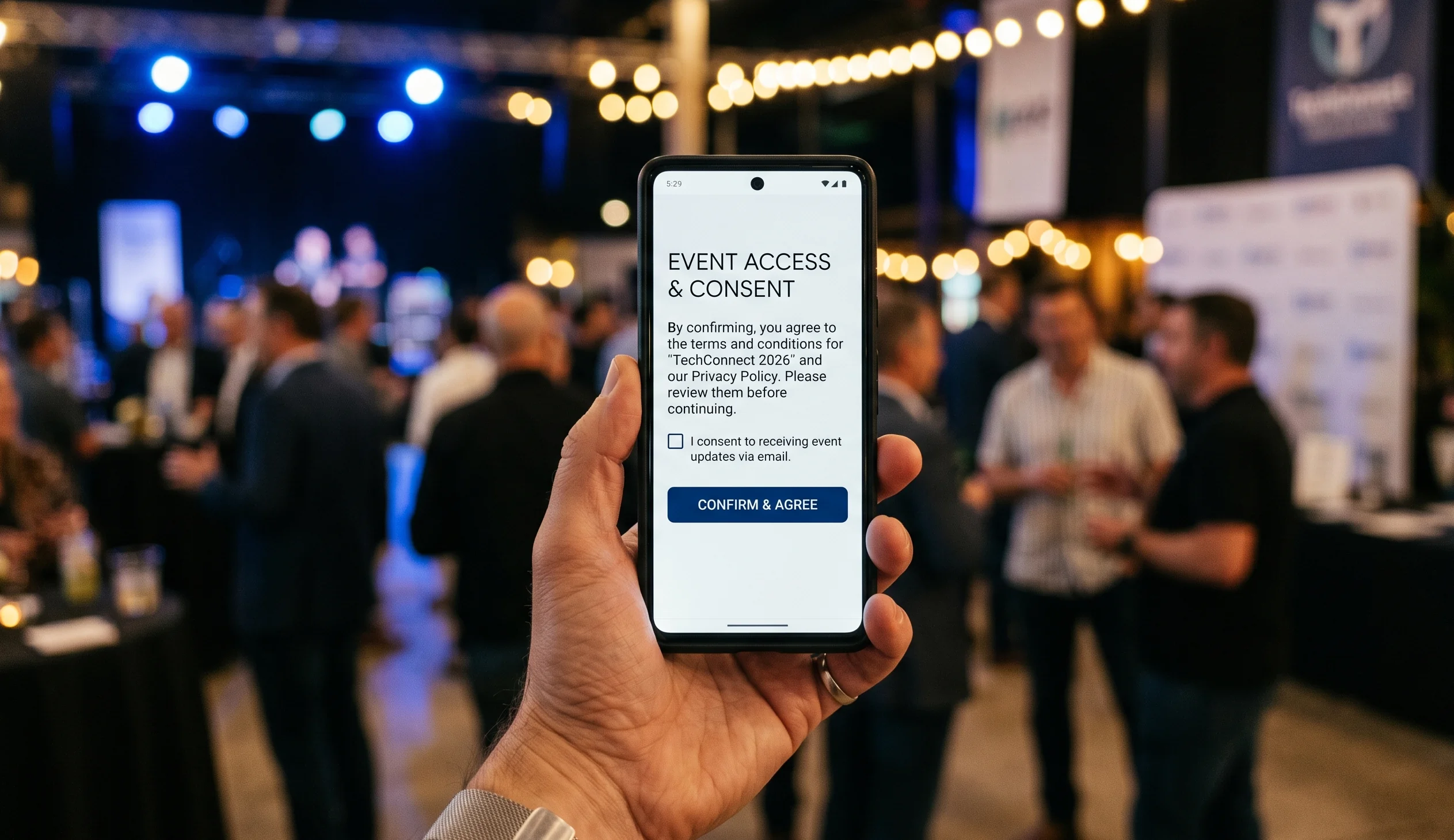
Every piece of content you collect requires explicit permission before you can use it for marketing. Simply hoping that a branded hashtag grants you usage rights creates legal liability. You need attendees to agree to specific terms that cover commercial use, editing rights, and distribution across your promotional channels. Build this consent directly into your submission process so people understand exactly what they're agreeing to when they upload.
Your permission system should clearly explain how you'll use the content and how long you'll keep it. Vague language about "promotional purposes" doesn't protect you. Specify whether you'll use footage in paid advertisements, on your website, in future event promotions, or for sponsor materials. Transparency about usage builds trust and reduces the likelihood of contributors retracting permission later when they see their content in unexpected places.
According to data privacy regulations in most countries, you must obtain clear consent before using anyone's image or voice for commercial purposes, making proper permission systems non-negotiable.
Curate and organise effectively
Collecting hundreds of clips means nothing if you can't find the best moments when you need them. You should establish tagging systems that categorize content by date, location, performer, or mood immediately upon upload. Waiting until after your event to organise material turns content management into an overwhelming task that never gets completed. Real-time organization while memories are fresh produces better categorization and faster turnaround for post-event marketing.
Automated tools can handle initial sorting, but human review identifies the truly compelling moments that connect emotionally. Look for genuine reactions, unexpected angles, and candid interactions that professional crews miss. The shakiest phone video often captures more authentic energy than perfectly stabilized footage. Your curation process should prioritise emotional impact and authenticity over technical quality when selecting content for promotional use.
Distribute across channels
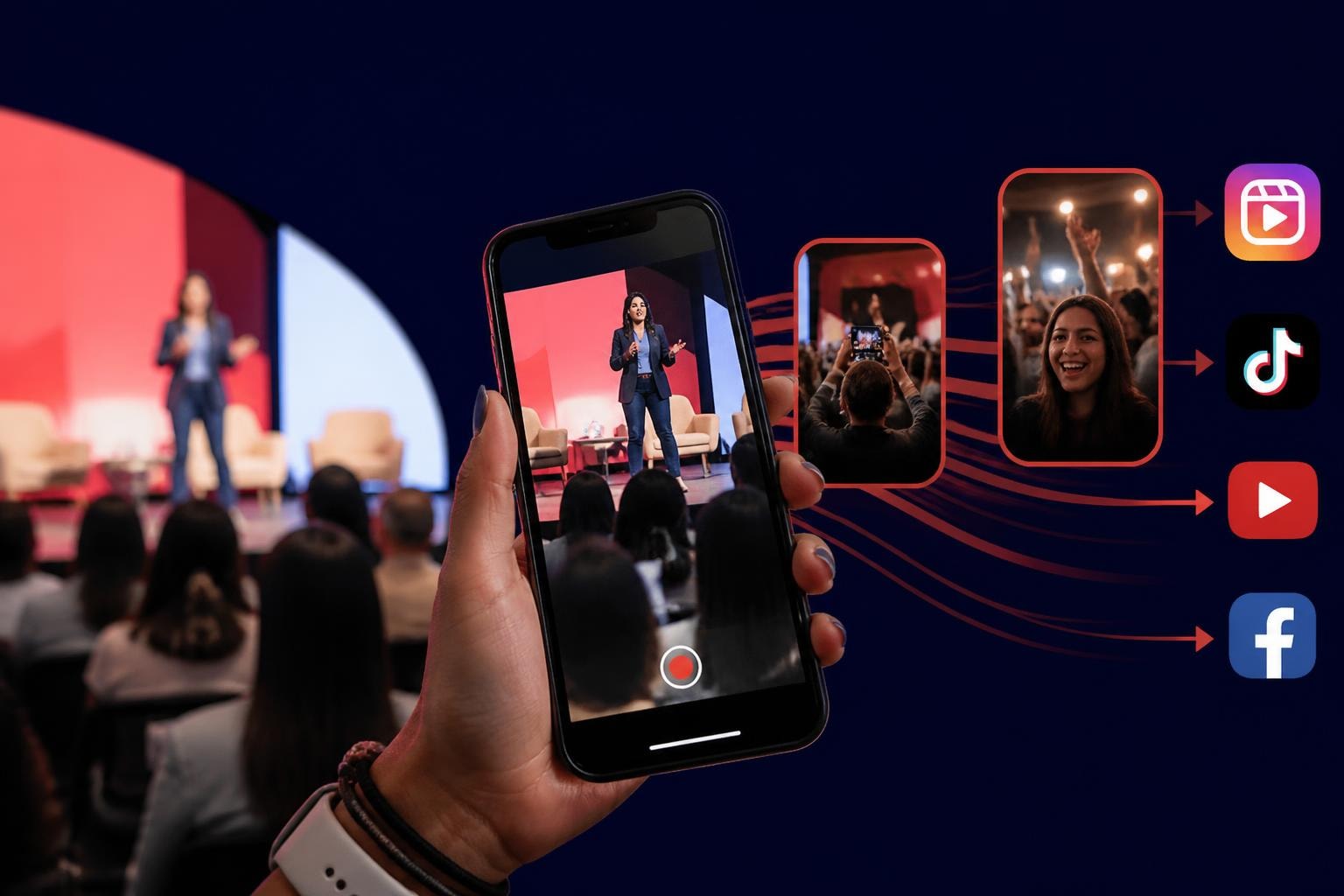
Different platforms require different content formats and strategies. A two-minute compilation works for your website, but social platforms demand shorter, punchier clips that stop scrolling. You should repurpose your collected content into multiple assets rather than posting identical material everywhere. Pull the most energetic fifteen-second moment for TikTok, create a behind-the-scenes montage for Instagram Stories, and assemble a comprehensive highlight reel for YouTube.
Timing your distribution maximizes impact and maintains momentum between events. Post fresh UGC immediately while your event is still happening to build FOMO among people who didn't attend. Continue releasing curated content throughout the following weeks to keep your audience engaged and remind them why they need tickets for your next event. Strategic distribution turns a single weekend into months of promotional material that continues attracting new attendees long after your venue closes.
Common types of user generated content
Different formats serve different purposes depending on your marketing goals and platform requirements. Understanding which types of user generated content work best for your situation helps you focus your collection efforts and create targeted submission prompts that yield usable material. Your event type and audience demographics also influence which formats your attendees naturally gravitate toward, so matching your strategy to their preferences increases participation rates.
Photos and images
Still photography remains the most accessible format for audience contribution because every smartphone captures decent images without special skills. Attendees share photos of stages, food, crowds, merchandise, and candid moments that collectively document your event from hundreds of perspectives. These images work perfectly for Instagram grids, website galleries, and promotional materials where you need visual variety without investing in professional photography.
Quality varies dramatically in submitted photos, but authenticity matters more than technical perfection. A slightly blurry crowd shot taken during a peak moment often carries more emotional weight than a perfectly composed image that feels staged. You should encourage attendees to capture genuine reactions and unique angles rather than trying to replicate professional photography they've seen in your marketing materials.
Video clips
Short video content delivers the highest engagement rates across social platforms and captures energy that static images can't convey. Attendees naturally record their favourite performances, reactions to surprises, and walkthroughs of your venue. These clips provide raw material for highlight reels, testimonial montages, and social media content that showcases actual attendee experiences rather than curated brand messaging.
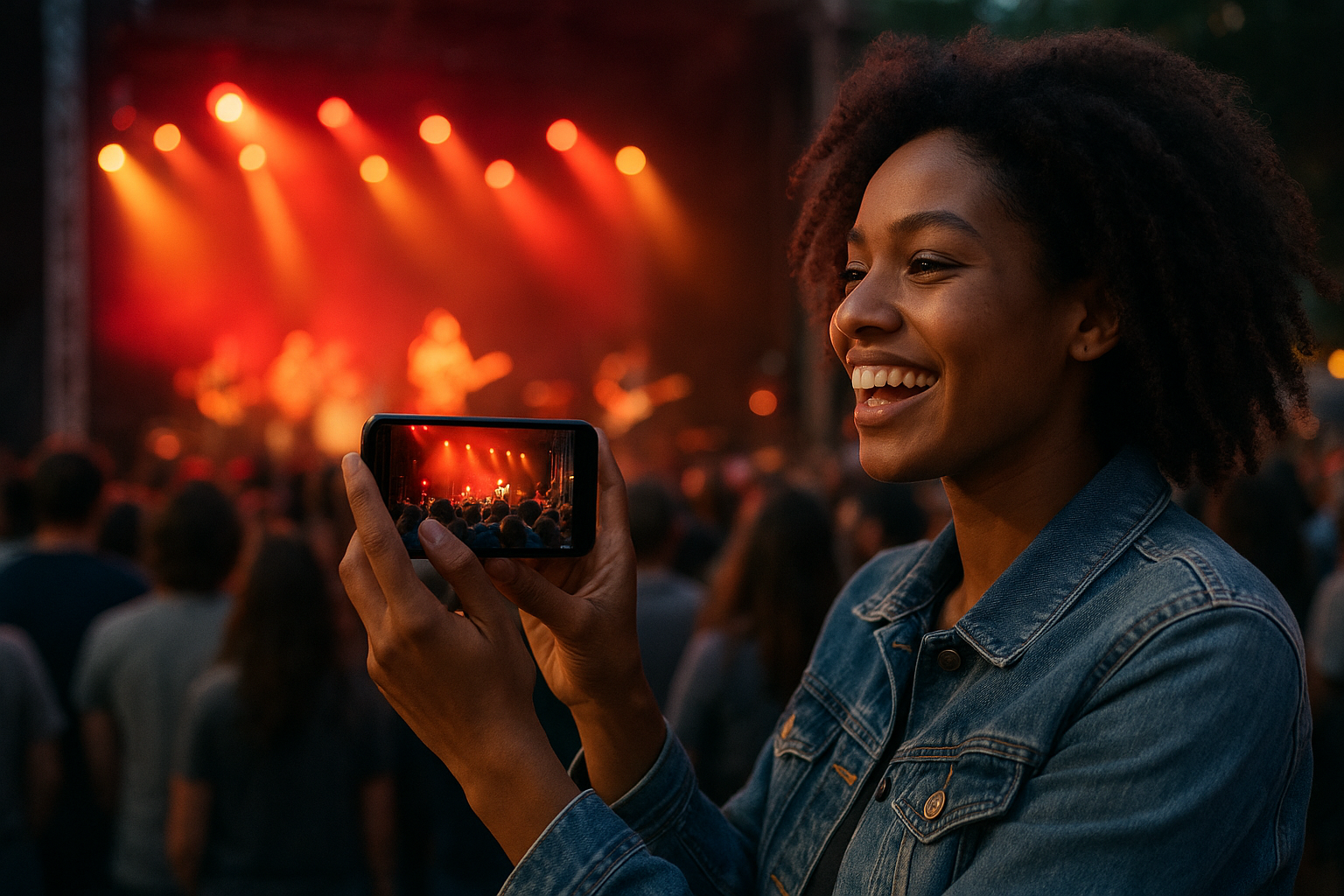
Video content from real attendees generates 70% higher engagement than brand-created videos, making it the most effective format for social media marketing campaigns.
The spontaneous nature of attendee footage creates authenticity you can't script. People capture genuine excitement, unexpected moments, and honest reactions that professional videographers often miss while following shot lists. Your marketing becomes more relatable when it features real people having real experiences instead of actors following directions.
Reviews and testimonials
Written feedback provides specific details and personal perspectives that visual content can't communicate. Attendees who take time to write reviews typically highlight particular moments, performers, or aspects of your event that made their experience memorable. You can repurpose these testimonials for website copy, email campaigns, and social proof that addresses specific objections potential attendees might have about purchasing tickets.
Text-based content also supports your search visibility and provides context for visual materials. When you pair attendee quotes with photos or videos, you create richer storytelling that appeals to different learning styles and consumption preferences.
Social media posts
Platform-native content from attendees reaches audiences you can't access through your own channels. When people post about your event on their personal accounts, they expose your brand to their followers who trust recommendations from friends more than advertisements. These organic mentions multiply your reach without requiring additional marketing spend and provide social proof that influences purchasing decisions among extended networks.
Best practices and legal basics
Collecting user generated content without proper legal safeguards creates serious liability risks that can outweigh any marketing benefits. You need clear permission systems, transparent usage terms, and documented consent before repurposing attendee footage for promotional purposes. Following established best practices protects both your organization and the people who contribute content while building trust that encourages future participation.

Get explicit permission first
You must obtain written consent from every contributor before using their content commercially. Verbal agreements or assumptions based on hashtag usage don't hold up legally. Your submission process should include clear terms of use that specify exactly how you'll distribute the content, whether you can edit it, and how long you retain usage rights. People need to understand what they're agreeing to when they click submit.
Building permission into your upload workflow prevents legal headaches later. Your collection platform should display terms and conditions that contributors must actively accept rather than passively scrolling past. Include specific language about commercial use, editing rights, geographic distribution, and duration of the licence you're requesting. The more transparent you are about intended usage, the less likely contributors will object when they see their footage in your marketing materials.
Legal experts recommend obtaining perpetual, worldwide, royalty-free licences for marketing content to avoid needing to re-contact contributors years later when you want to reuse popular clips.
Understand copyright boundaries
Contributors own the copyright to content they create, which means you need their permission even if the footage features your event. You can't assume that hosting an event grants you automatic rights to everything attendees capture. Your licence agreement should explicitly state that contributors grant you non-exclusive rights to use, modify, and distribute their submissions across your promotional channels without additional compensation.
Third-party content within attendee footage creates additional complications. If someone's video includes copyrighted music or captures other attendees who didn't consent to appearing in marketing materials, you inherit those legal issues when you repurpose the content. Your terms should require contributors to confirm they have necessary rights to all elements within their submissions and that identifiable people visible in the footage have consented to public distribution.
Respect privacy and data protection
Personal information collected during submission falls under data protection regulations like GDPR regardless of where your organization operates. You must explain what data you collect, how you store it, and who can access it. Simply collecting email addresses to credit contributors requires privacy disclosures and documented consent separate from content usage permissions. Failing to handle personal information properly results in significant fines and damages your reputation with the audience you're trying to engage.
You should implement secure storage systems that protect contributor information from unauthorized access and establish clear data retention policies. Delete personal information you no longer need rather than keeping everything indefinitely. Transparency about your data practices builds trust and demonstrates that you value contributor privacy as much as you value their content.
Using UGC video from events
Events generate massive amounts of video content that most organizers never capture or utilize effectively. Your attendees already pull out their phones during peak moments, recording performances, crowd reactions, and spontaneous experiences. Instead of letting this footage disappear into private camera rolls, you can systematically collect it and transform these clips into powerful promotional assets for future events. The key lies in making collection easy during the event itself rather than trying to chase down content afterward.
Set up collection points throughout your venue
You should place QR codes and signage at strategic locations where attendees naturally congregate or experience memorable moments. Position collection prompts near stages, food areas, photo opportunities, and exit points where people feel motivated to share their excitement. Physical visibility reminds attendees to contribute content while memories stay fresh and phones stay charged. Digital collection systems that work instantly on mobile devices remove friction from the submission process and increase participation rates dramatically.
Making contribution visible also creates social momentum where attendees see others scanning codes and uploading clips, which encourages additional participation. You multiply your content volume when submission becomes a visible part of the event experience itself.
Use AI to speed up review and selection
Manual review of hundreds or thousands of video clips becomes impossible at scale without automated assistance. Artificial intelligence tools can scan uploaded footage to identify the most engaging moments based on factors like crowd energy, audio peaks, and visual composition. You get initial categorization and quality filtering that narrows thousands of clips down to the few hundred worth human review, cutting curation time from weeks to hours.
AI-assisted content review can reduce manual curation time by up to 90%, allowing organizers to publish highlight reels within hours instead of weeks after events conclude.
Automated systems also flag potential issues like poor lighting, excessive camera shake, or inappropriate content before you waste time reviewing unusable material. Your team focuses effort on selecting the best moments from pre-filtered options rather than watching every single submission from start to finish.
Key takeaways on user content
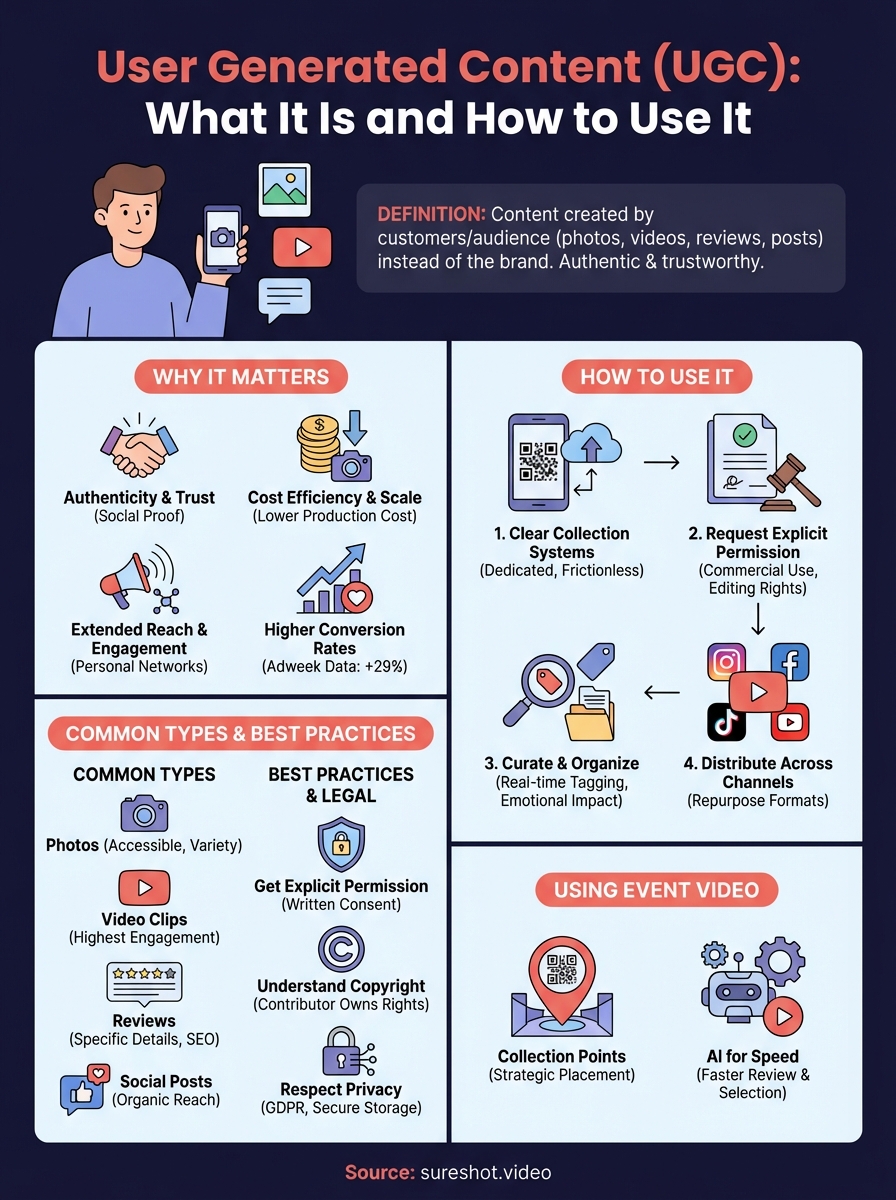
User generated content transforms your attendees into marketing assets who create authentic promotional material you could never produce on your own. You get cost-effective, trustworthy content that outperforms traditional advertising while building stronger community connections with the people who attend your events. The most successful approach combines clear collection systems, proper legal permissions, and strategic curation that turns raw footage into compelling narratives.
Your event already generates the content you need. The challenge lies in systematically capturing it rather than letting valuable footage disappear into private camera rolls. When you make contribution easy during your event and use AI tools to handle initial review, you convert thousands of clips into usable assets within hours instead of weeks.
Ready to capture every moment from your next event? Book a demo to see how SureShot helps you collect, manage, and activate attendee-created video content that drives ticket sales and builds loyalty between events.