
Event marketing used to mean hiring a production crew, spending thousands on professional content, and hoping people would share your polished videos. That model's broken. The best content from your event isn't coming from your media team anymore. It's coming from the people who paid to be there. They're filming it anyway, they're sharing it anyway, and they're doing it with more credibility than your brand ever could. That's why use ugc for event marketing has shifted from a nice-to-have to your primary content strategy.
Your attendees are already your production team
Walk into any conference, festival, or product launch. Everyone's got their phone out. They're filming panels, photographing installations, recording their mates trying your product. This isn't a problem to manage. It's a resource you're ignoring.
You don't need to teach people to create content. They already know how. TikTok, Instagram, Snapchat have trained an entire generation to frame shots, edit clips, and understand what makes something shareable. User-generated content has become the default way people document experiences, not the exception.
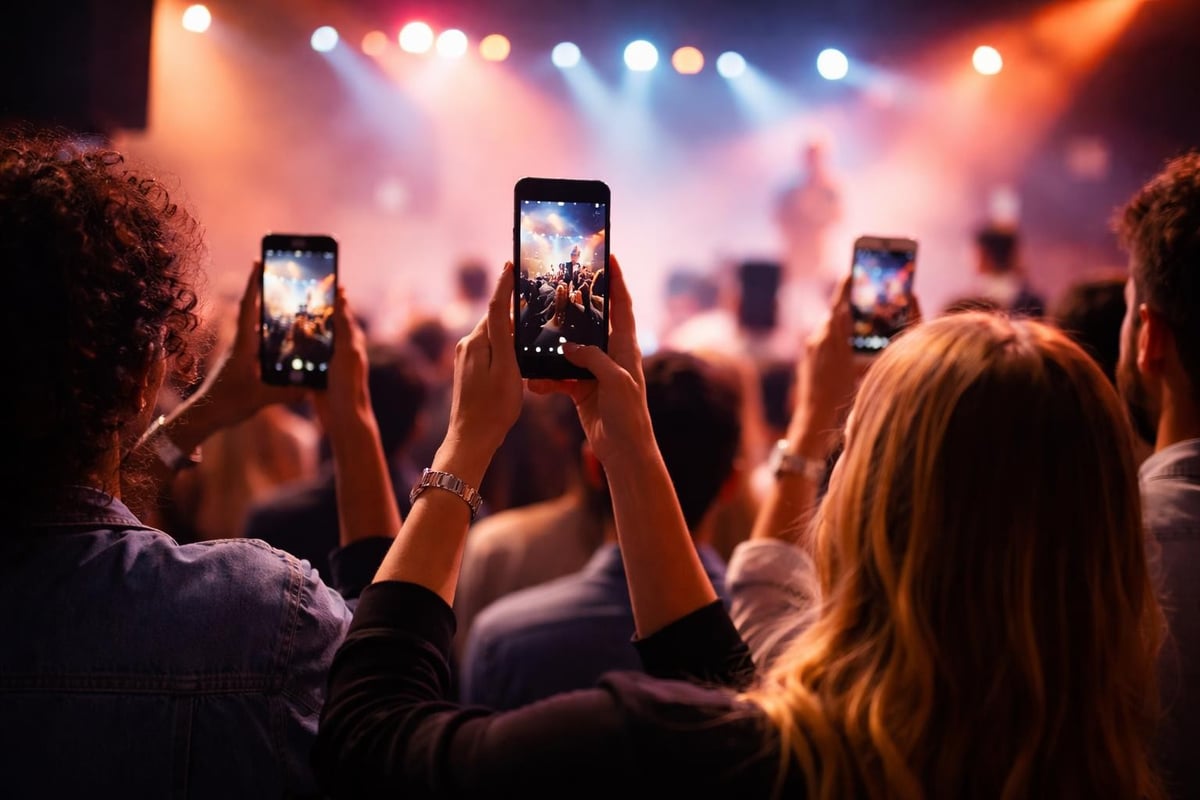
The question isn't whether they'll create content. It's whether you'll capture it or let it disappear into their camera rolls.
Production costs drop to nearly nothing
Let's talk numbers. A professional event video crew costs anywhere from £2,000 to £10,000+ for a single day, depending on equipment and editing. You'll get maybe 3-5 polished videos out of that investment.
With attendee-generated video, your production cost is basically zero. You're not paying for cameras, crew, or editing time. You're letting your audience do what they were going to do anyway, just giving them a reason to share it with you. The savings alone answer why use ugc for event marketing for most event organizers working with tight budgets.
Here's what that cost comparison actually looks like:
| Approach | Cost per event | Content volume | Authenticity rating |
|---|---|---|---|
| Professional crew | £5,000-£10,000 | 3-5 polished videos | Medium |
| UGC collection | £0-£500 | 50-500+ clips | Very high |
| Hybrid model | £2,000-£3,000 | 10-200 clips | High |
The hybrid model works well for events that need some professional footage for sponsors but want the authenticity and volume of UGC. But pure UGC? That's where the real value sits.
Authenticity you can't buy or fake
Professional videos look professional. That's their problem. They're too polished, too perfect, too obviously branded. People scroll past them because they feel like ads. They are ads.
UGC doesn't have that problem. When someone films themselves at your event, genuinely excited about what they're experiencing, that enthusiasm is impossible to manufacture. It reads as real because it is real. According to research on user-generated content in marketing, consumers trust peer recommendations far more than brand messaging.
You can spend £50,000 trying to create "authentic" branded content, and it'll still feel less genuine than a shaky phone video from someone who genuinely loves what you've built. That's not a criticism of production teams. It's just how human psychology works. We trust other humans more than we trust brands.
Social algorithms favour genuine engagement
Here's something most event marketers miss: social platforms are built to promote content that keeps people engaged. Professional brand content gets tagged as promotional and suppressed. UGC from real accounts doesn't trip those same filters.
When an attendee shares a video from your event, their network sees it. When those people engage, the algorithm pushes it further. You're not fighting for organic reach. You're riding it. That's the mechanical reason why use ugc for event marketing delivers better results than paid distribution for most events.
The reach multiplier is real:
- Professional brand video: typically reaches 2-5% of your followers
- Attendee-shared UGC: can reach 15-30% of their network
- Multiple attendees sharing: compounds that reach exponentially
You're not paying for impressions. You're earning them.
Volume creates options
One professional video gives you one angle, one narrative, one way to tell your event's story. Fifty attendee videos give you fifty different perspectives, moments, and stories. Some will be rubbish. Most will be decent. A few will be brilliant.
That volume matters more than you'd think. Different segments of your audience connect with different types of content. The corporate sponsors might love the keynote clips. The younger attendees might share the afterparty footage. The industry veterans might appreciate the networking moments. With UGC, you get all of it.

Using a social media content curation tool helps you sort through the volume and find the gems worth amplifying. Without curation, you're drowning in footage. With it, you're mining for gold.
Real moments beat scripted ones
The best event moments aren't the ones you planned. They're the unexpected interactions, the spontaneous reactions, the behind-the-scenes bits that happen when people forget cameras exist. Professional crews miss these because they're focused on the scheduled content. Your attendees catch them because they're living them.
Those unscripted moments are what people actually remember about events. They're what makes someone decide to come back next year. When you're wondering why use ugc for event marketing instead of sticking with traditional production, it's because UGC captures what actually happened, not just what you planned to happen.
Trust builds faster through peers
People trust people who are like them. If you're targeting tech startup founders, they'll trust another tech startup founder's opinion of your event more than your marketing copy. If you're running a music festival, attendees trust other music fans, not your brand messaging.
This isn't theoretical. Studies on benefits of user-generated content consistently show higher conversion rates from peer-created content than from branded content. The trust gap between the two isn't small. It's massive.
When someone watches an attendee video and thinks "that person's like me, and they're having a great time," you've already won. They're not evaluating your marketing claims. They're seeing themselves in that experience.
Your content calendar fills itself
Here's a practical benefit nobody talks about enough: UGC solves your content problem for months. One event can generate enough material to fuel your social channels until the next one.
You're not scrambling for post-event content. You're not recycling the same three professional videos. You've got fresh material that actually resonates because it came from your community. When planning how to promote an event, having a bank of authentic attendee content from previous years makes your job significantly easier.
The content lifecycle looks like this:
- Pre-event: Share UGC from last year to build excitement
- During event: Encourage real-time sharing and collection
- Post-event: Curate and share the best moments for 2-3 weeks
- Long-term: Use select clips for ongoing promotion until next event
That's 12 months of value from content that cost you nothing to produce.
AI helps you manage, not create
Here's where the tech actually matters. You don't need AI to generate fake content. You need it to sort through hundreds of real clips and find the ones worth sharing. That's a curation problem, not a creation problem.
The workflow that actually works:
- Attendees film and upload their moments
- AI tags and organizes content based on content, quality, and relevance
- You review and approve the best clips
- Publish across your channels with proper attribution
The AI handles the grunt work. You handle the editorial decisions. The content itself? That came from real humans having real experiences. Tools focused on automating event video curation make this process manageable at scale.
Community strengthens when people contribute
When someone creates content for your event, they've invested in it. They're not just an attendee anymore. They're a contributor. That shift matters.
Contributors come back. They bring friends. They defend your event when someone criticizes it online. They're not customers anymore. They're community members. And communities are what turn one-off events into annual traditions.
The mechanics are straightforward: give people tools to capture and share their experiences, recognize their contributions, and watch them become invested in your event's success. This approach to building a brand community works because people care more about things they help create.

Rights and permissions actually matter
Here's the unglamorous bit: you can't just grab and use any content people post. You need proper permissions. This isn't optional. It's legal requirement.
The good news is most people are happy to let you use their content if you ask and give credit. The bad news is doing this manually across hundreds of clips is a nightmare. That's why platforms exist to handle consent and licensing automatically.
What you need in place:
- Clear terms when people upload content
- Automated consent collection
- Proper attribution when you share
- Easy opt-out for anyone who changes their mind
Getting this right protects you legally and maintains trust with your community. Getting it wrong can tank your reputation fast. A solid consent management platform isn't optional if you're serious about UGC.
Quality varies but volume compensates
Not every piece of UGC will be usable. Some will be poorly lit, badly framed, or incomprehensible without context. That's fine. You're not using all of it. You're cherry-picking the best stuff.
Professional productions have a higher hit rate. Maybe 80% of what they shoot is usable. But they shoot less overall. UGC might only have a 10% hit rate, but when you've got 500 clips instead of 20, you end up with more usable content.
| Content source | Total clips | Usable % | Final usable clips |
|---|---|---|---|
| Professional crew | 20 | 80% | 16 |
| UGC collection | 300 | 15% | 45 |
| Professional + UGC | 320 | 19% | 61 |
The math works in UGC's favour, even accounting for the lower quality ratio. And honestly, "professional quality" matters less than you think. People don't scroll past videos because the lighting's imperfect. They scroll past because the content's boring.
Curation is where the work happens
The bottleneck isn't collection. It's curation. Sorting through hundreds of clips to find the good ones takes time. That's where having the right tools matters.
You need systems that can:
- Auto-tag content by type, quality, and subject
- Flag the highest-quality submissions
- Identify potential rights issues
- Make batch editing and publishing simple
Without these systems, UGC becomes overwhelming. With them, it's manageable. Choosing the best UGC platform for your needs determines whether you'll actually use the content you collect or let it sit unused.
Events amplify reach naturally
Physical events already have momentum. People are excited. They want to share. They're looking for ways to extend the experience beyond the venue. UGC taps into that existing energy instead of fighting against it.
You're not asking people to do something unnatural. You're giving structure to something they'd do anyway. That's why leveraging user-generated content in experiential campaigns works so well. It aligns with existing behaviour instead of trying to create new habits.
The network effects compound quickly. When one person shares, their friends see it. When enough people share, it starts trending. When it trends, people who weren't there wish they were. That's how you sell out next year's event.
Time saved scales with event size
Small events might generate 50 clips. Large ones might hit 500+. The more attendees you have, the more content you collect, and the better your final library becomes. But your time investment doesn't scale linearly. You're still curating, not creating.
Compare that to traditional production. Bigger events mean bigger production budgets, more crew, more coordination, more complexity. UGC flips that equation. Larger events create more content automatically, without proportionally increasing your costs or effort.
That scalability is why enterprise event organizers are shifting strategies. When you're running dozens of events per year, the cumulative savings from UGC are massive. That's the practical answer to why use ugc for event marketing at scale.
It works across event types
This isn't just for festivals and conferences. It works for:
- Product launches: Customer reactions carry more weight than your messaging
- Corporate events: Employee perspectives humanize your brand
- Trade shows: Attendee walkthroughs showcase what exhibitors can't
- Workshops: Participant testimonials prove value better than descriptions
- Networking events: Captured connections demonstrate community strength
The format adapts to the context. The principle stays the same: authentic perspectives from real participants beat manufactured brand content.
Different event types require different approaches, but the core strategy holds. Understanding various event video formats and how UGC fits into each helps you adapt the approach to your specific needs.
Long-term value exceeds immediate ROI
The immediate benefits are obvious: content for social, reduced production costs, authentic marketing material. The long-term benefits matter more.
Year one, you're building a library. Year two, you've got last year's content to promote this year's event. Year three, you've established a pattern where attendees expect to contribute. By year five, content creation is built into your event culture. New attendees see veterans filming and sharing, and they join in automatically.
That cultural shift is what transforms one-off tactics into sustainable strategy. You're not just collecting videos. You're building a community that documents itself and in doing so, markets your event better than you ever could alone. This understanding of user-generated content for event marketing as a long-term strategy rather than a one-time tactic separates successful implementations from failed experiments.
The shift to UGC isn't about following trends. It's about recognizing that your attendees are already creating better, more trusted, more shareable content than your production budget can buy. SureShot gives you the platform to collect, curate, and use that content without drowning in footage or wrestling with rights management. Your attendees want to share their experiences. You just need to make it easy.