

You've seen it everywhere. Someone records a moment at a gig, posts it, and suddenly thousands of people are watching. That's fan video. Not polished corporate content. Not influencer partnerships. Just real people capturing what matters to them. And here's the thing: it works better than most marketing departments want to admit. When attendees become storytellers, you get authenticity you can't manufacture. You also get reach you didn't pay for.
Why Fan Video Actually Matters
Professional event videos cost money. Lots of it. You hire a crew, manage logistics, wait for edits, then push content that feels... produced. Meanwhile, someone in the crowd has already posted a clip that's getting shared because it feels real.
Fan-created content has been around for decades, but smartphones changed everything. Now every attendee is a potential content creator. They've got 4K cameras in their pockets and direct access to platforms where their friends actually pay attention.
The shift isn't just technical. It's cultural. People trust content from other people more than they trust brands. A shaky clip from row fifteen tells them more about your event than your highlight reel ever will.
What Makes Fan Video Different
Here's what you're actually getting:
- Genuine perspectives: Multiple angles, unscripted reactions, real-time commentary
- Instant distribution: Content hits social media whilst your event is still running
- Zero production costs: Your attendees are doing the work
- Built-in endorsement: When someone shares your event, they're vouching for it
Compare that to traditional event coverage. You spend thousands, wait days for delivery, then hope people engage. With fan video, the content is live before your official recap even exists.
The Legal Bits Nobody Wants To Talk About
Let's be direct: if you're collecting fan video, you need proper rights management. People don't think about this until lawyers get involved.
When someone films at your event and shares it, who owns that content? They do. If you want to use it, you need permission. This isn't theoretical. Legal battles over fan content happen regularly, and they're messy.
Getting Rights Without Being Annoying
The old way was complex release forms and manual tracking. Nobody filled them out. The new way is platforms that handle consent management automatically. Attendees opt in when they upload. You get usage rights. Everyone moves on.
Key things you need:
- Clear terms upfront: Tell people what you'll do with their content
- Easy opt-in process: Make it simple or they won't bother
- Proper attribution: Credit creators when you use their work
- Usage boundaries: Define where and how you can share their content
The risks of not handling this properly aren't worth ignoring. Fair use doesn't cover everything people think it does, especially with commercial events.
How To Actually Use Fan Video
Collecting fan video is pointless if you can't do anything with it. Here's where most event organisers get stuck. They end up with hundreds of clips and no workflow.
Curation Over Creation
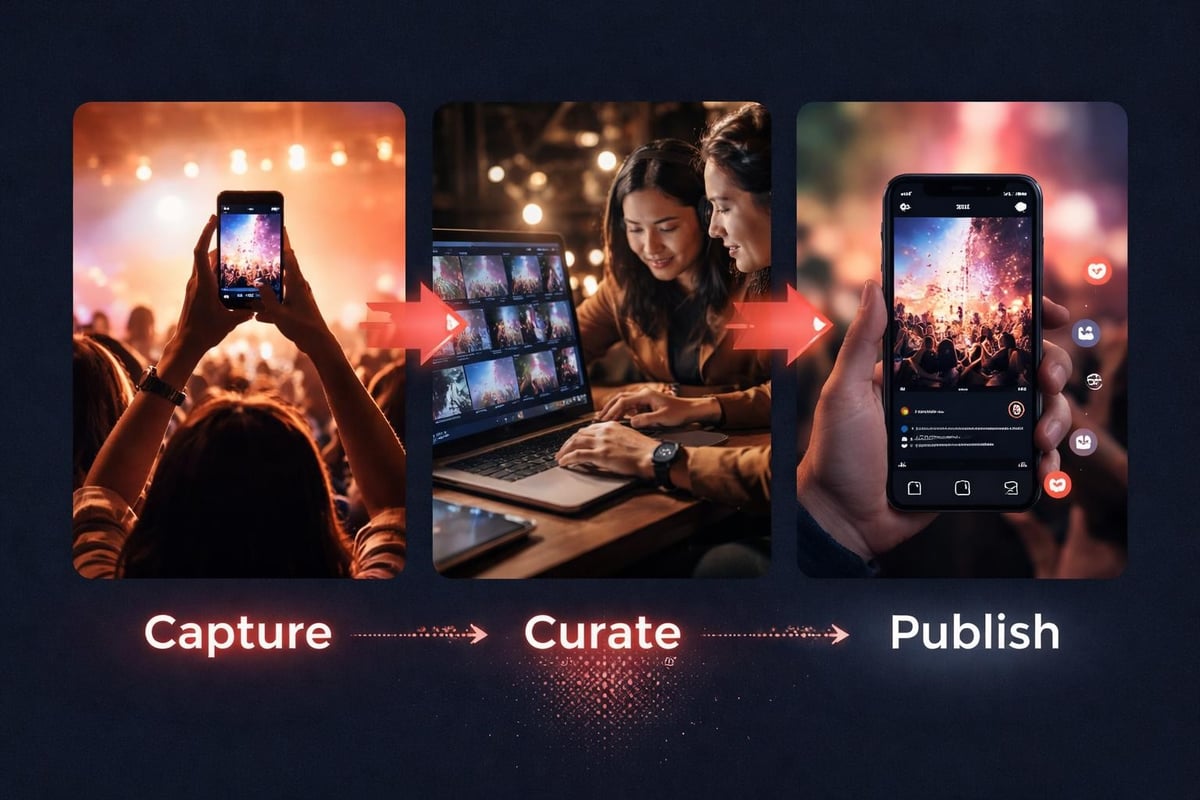
You don't need to create content anymore. You need to curate it. That's a different skill set. Instead of directing shots and managing talent, you're sorting through what your attendees already captured and finding the good bits.
This is where AI actually helps. Not by generating fake content, but by helping you find authentic moments faster. Think tagging, sorting, and quality filtering. The content stays real. The process just becomes manageable.
| Traditional Production | Fan Video Curation |
|---|---|
| Hire crew (££££) | Attendees film for free |
| Days to edit | Real-time content flow |
| One perspective | Multiple viewpoints |
| Scheduled release | Instant social proof |
| Professional polish | Authentic feel |
What Works In Practice
Events that do this well follow a pattern:
- Make filming easy: Clear calls-to-action, simple upload processes, maybe a dedicated app
- Encourage participation: Show people their content matters, feature good submissions
- Move fast: Share highlights whilst the event is still fresh
- Mix it up: Use fan video alongside (not instead of) your official content
The best UGC platforms handle the technical stuff automatically. You shouldn't need a developer to collect video from your attendees.
Why This Changes Event Marketing
Traditional event promotion happens before and after. Fan video changes that. It turns your event into ongoing content whilst it's happening.
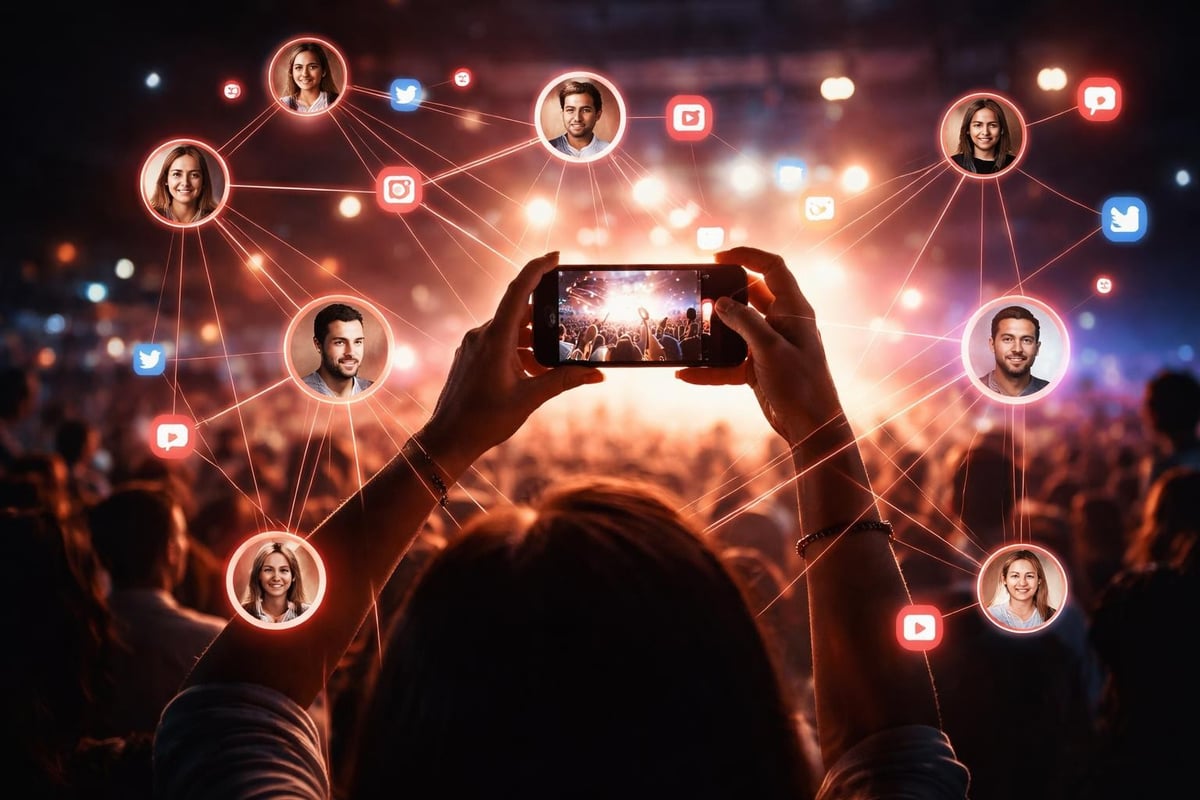
Someone posts a clip. Their network sees it. Those people share it. Suddenly you've got reach you didn't buy from audiences you didn't target. That's earned media, and it's worth more than paid ads because it comes with implied endorsement.
The Numbers That Matter
Forget vanity metrics. Here's what fan video actually delivers:
Cost reduction: You're spending less on content production because attendees are creating for you. That money goes elsewhere.
Faster turnaround: Content hits social media during your event, not three days later when nobody cares anymore.
Better engagement: User-generated content typically performs better than brand content. People trust it more.
Extended reach: Every creator has their own network. You're tapping into audiences you couldn't access otherwise.
Real Implementation Looks Like This
Pick an event. Any event. Here's the simple version:
- Set up a system where attendees can easily submit video
- Get proper consent during upload
- Use AI tools to automatically curate submissions
- Share the best content across your channels
- Credit creators and encourage more participation
You don't need fancy equipment. You need a workflow that actually works when hundreds of people are submitting clips simultaneously.
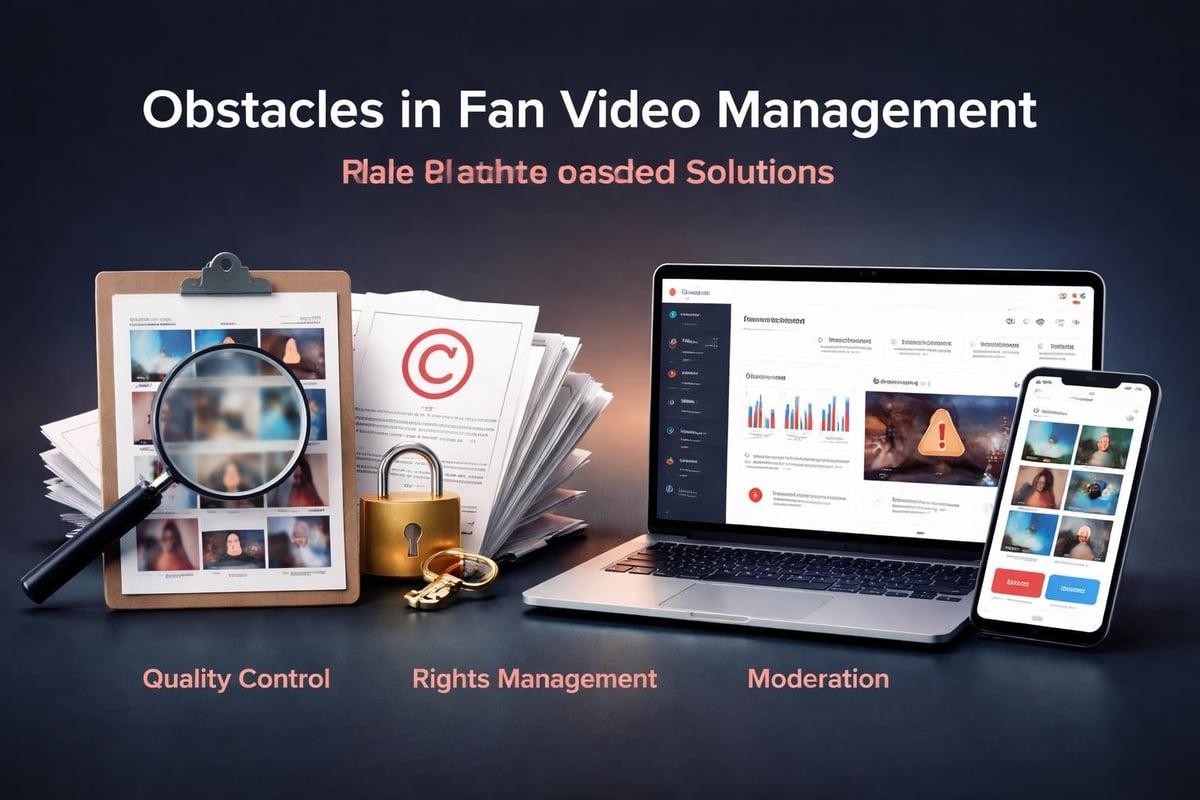
What Could Go Wrong (And How To Avoid It)
Let's talk about the problems nobody mentions in the case studies.
Quality control: Not every fan video is good. Some are unwatchable. You need filtering that doesn't require manually watching everything.
Rights management: Already covered, but worth repeating. Content licensing matters. Get it sorted upfront.
Brand safety: Someone might film something you don't want associated with your event. You need moderation.
Technical challenges: File formats, upload speeds, storage costs. These add up quickly if you're not prepared.
The solution isn't avoiding fan video. It's having systems that handle these issues automatically. Good platforms deal with format conversion, rights collection, and basic quality filtering without human intervention.
Making It Work For Your Events
Theory is useless without execution. Here's what actually matters when you're implementing fan video collection:
Start Small
Don't try to revolutionise your entire content strategy overnight. Pick one event. Test the workflow. See what breaks. Fix it before scaling.
Your first attempt won't be perfect. That's fine. You'll learn more from one real event than from six months of planning.
Set Clear Expectations
Tell attendees what you want. "Film your favourite moment" is better than "create content." Give them specific prompts. Make it obvious how and where to upload.
The easier you make this, the more participation you'll get. Friction kills user-generated content campaigns faster than anything else.
Build Feedback Loops
Show people their content being used. Feature creators. Say thank you. This encourages more submissions and builds community around your events.
When attendees see their fan video on your official channels, they share it. Their networks see it. You get more reach. Everyone wins.
Mix Content Types
Fan video shouldn't replace your professional content. It should complement it. Use both. The polished overview plus the authentic moments creates a fuller picture than either alone.
Think of it as showing what your event looked like versus what it felt like. Both matter.
The Shift Nobody Saw Coming
Five years ago, event video meant hiring a production company. Now it means turning your attendees into storytellers. The change happened faster than most marketing departments could adapt.
This isn't a trend. It's how content works now. People create. Platforms distribute. Audiences decide what matters. Your job is facilitating that process, not controlling it.
The organisations getting this right aren't fighting for control over their narrative. They're enabling attendees to tell their own stories and benefiting from the authentic reach that creates.
What Happens Next
Fan video will keep growing because the barriers keep dropping. Better cameras. Faster uploads. Smarter curation tools. It gets easier every year.
The question isn't whether to incorporate user-generated content into your event strategy. It's whether you're doing it efficiently or wasting time on manual processes that could be automated.
Your attendees are already filming. They're already posting. You're either capturing that value or letting it disappear into the social media void with no benefit to your organisation.
The difference between events that leverage fan video well and those that don't isn't budget. It's having the right systems in place to collect, curate, and deploy authentic content whilst it still matters.
Fan video transforms how events create and distribute content, replacing expensive production with authentic moments captured by attendees themselves. The key is having systems that handle collection, rights management, and curation without drowning you in manual work. If you're running events and want to turn attendees into content creators whilst actually reducing your production costs, SureShot handles the technical complexity so you can focus on your event.