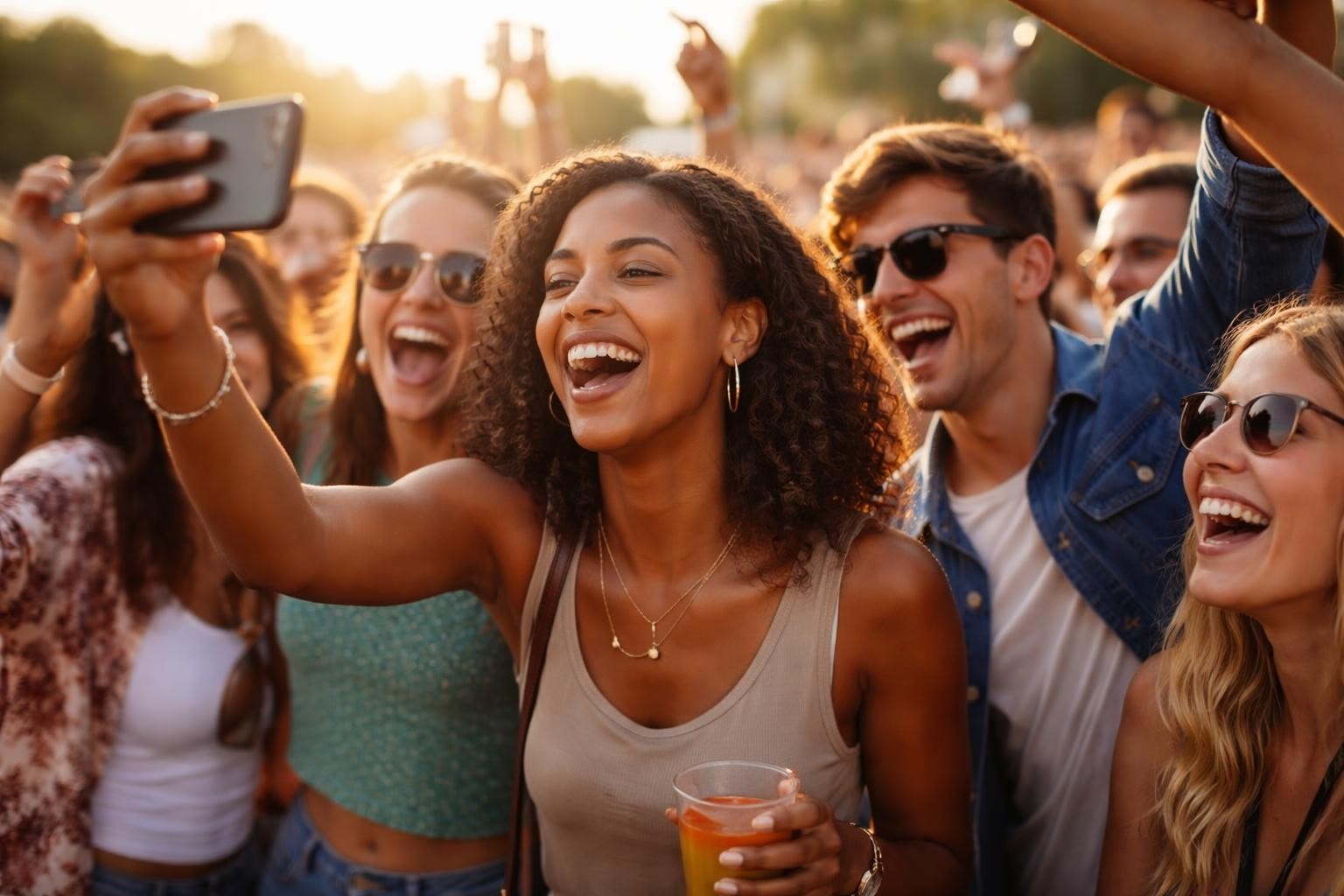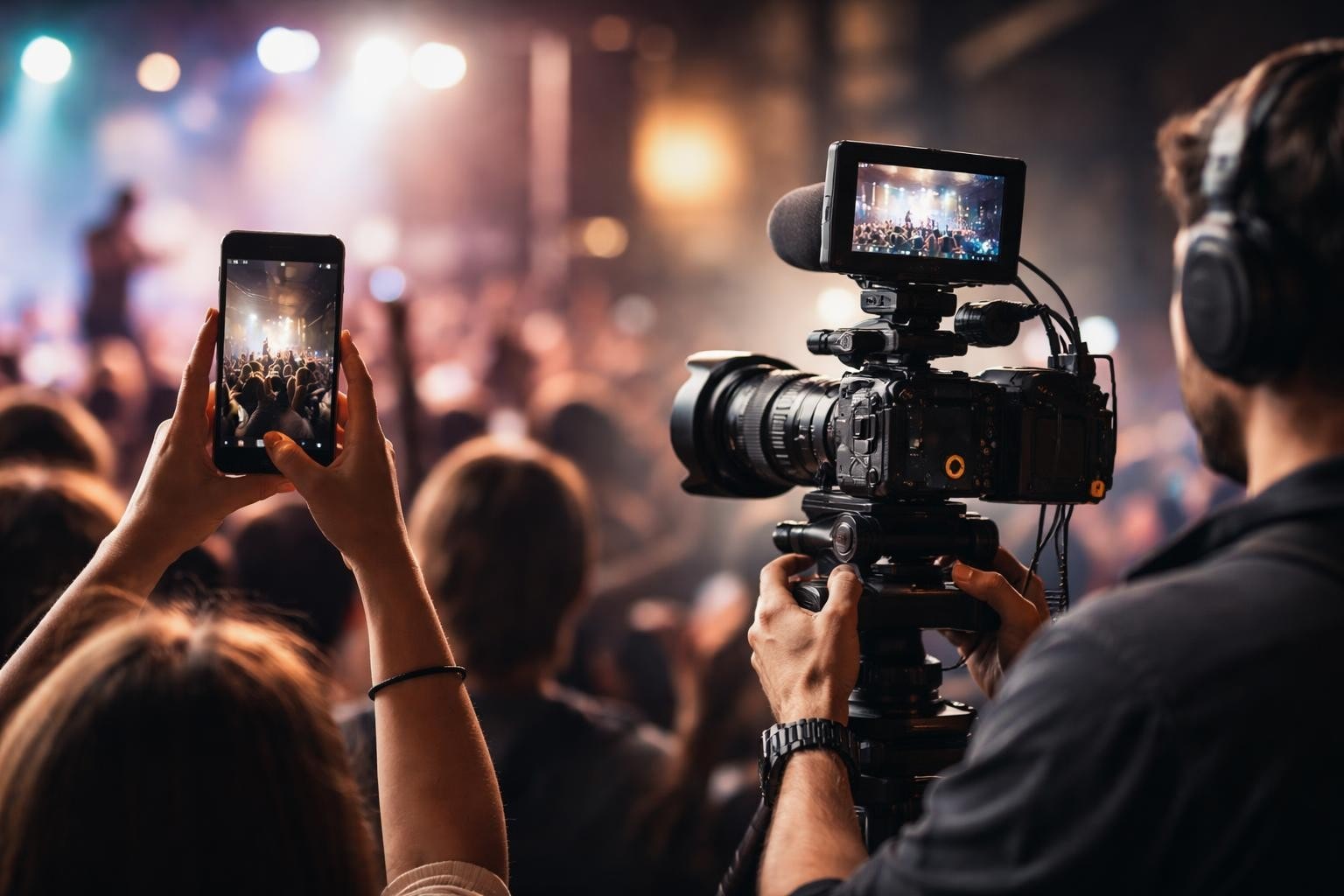

You've hired a videographer. You've got a content calendar. You've spent thousands on production. And somehow your event footage still feels staged, lifeless, or just... wrong. Here's what nobody tells you: the best content at your event isn't coming from your camera crew. It's already happening in your attendees' pockets. The trick is learning how to share with your team, your attendees, and your audience in a way that actually feels human.
Why Professional Video Fails Events
Professional videographers are good at what they do. But they're outsiders. They don't feel the energy in the room the way someone dancing does. They can't capture the exact moment something clicks for an attendee.
The footage looks polished. It also looks like every other corporate event video you've scrolled past this week.
Here's what goes wrong:
- Too much setup time means missed spontaneous moments
- Attendees act different when a camera crew appears
- Post-production takes weeks, killing momentum
- Final cuts feel manufactured, not authentic
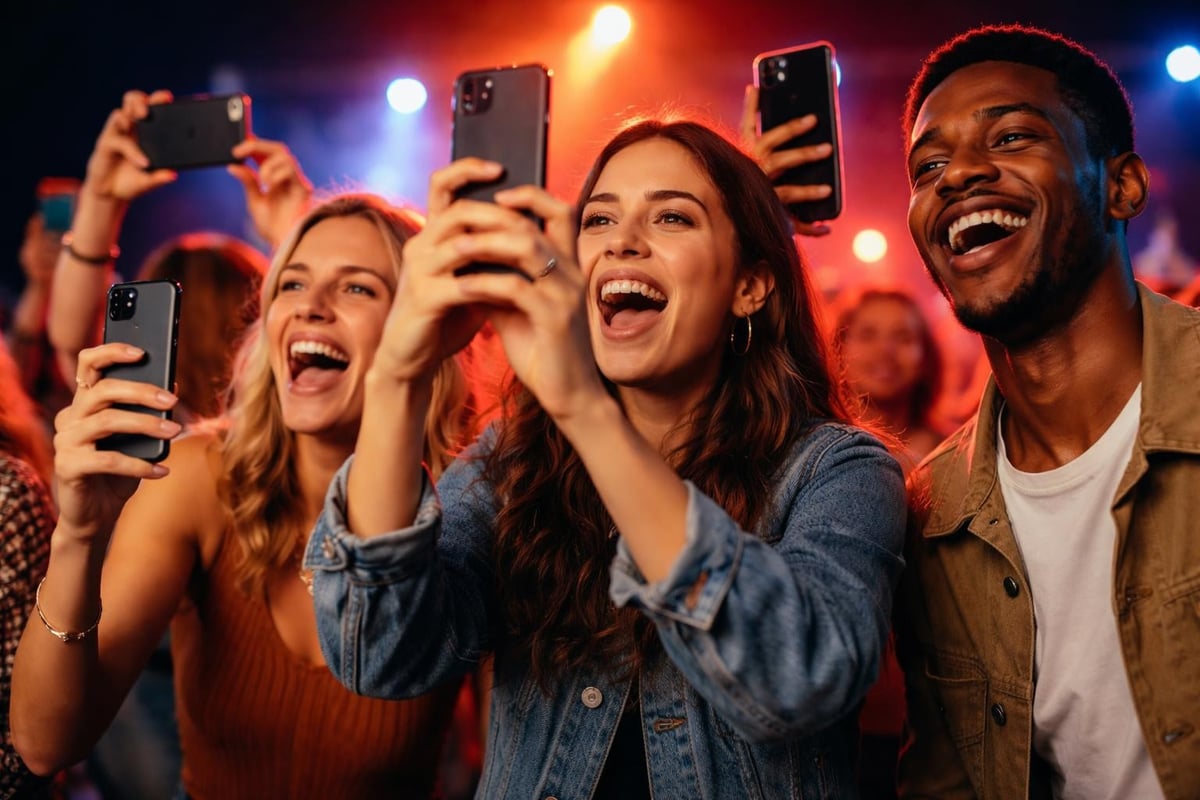
Meanwhile, your attendees are already filming. They're capturing reactions, sharing moments with friends, posting clips that get genuine engagement. You're just not in the loop.
The Shift: Share with Your Attendees First
Stop thinking about content creation as something you do to attendees. Start thinking about it as something you do with them.
When you share with your attendees, you're not asking them to be influencers or content creators. You're just making it ridiculously easy for them to capture what they're already experiencing and send it somewhere useful.
What This Actually Looks like
You set up a system before the event. Attendees get a simple way to film and upload clips straight from their phones. No app downloads, no complicated instructions, no friction.
They film what matters to them. A speaker who nailed a point. A networking moment. The view from their seat. Whatever felt real.
You collect it all in one place. Then you curate and edit with AI to pull out the actually good stuff. Not every clip makes the cut. That's fine. You're looking for the 10% that captures something true.
The result? Content that doesn't feel like marketing because it isn't. It's documentation of something that actually happened.
How to Share with Your Team Without Chaos
Giving attendees the power to create content sounds messy. It can be, if you don't set boundaries.
Structure matters:
- Clear upload guidelines before the event: Tell people what you're looking for. "Capture your favorite moment" works better than "film everything."
- Simple sharing process: One link, one upload flow. The harder it is, the fewer people do it.
- Quick turnaround: If you wait three weeks to use the content, the event's already forgotten.
- Consent baked in: Make sure uploads include automatic rights agreements. You can't use footage you don't legally own.
| Challenge | Old Approach | Better Approach |
|---|---|---|
| Getting quality footage | Hire expensive crew | Enable attendees to capture moments |
| Authenticity | Stage everything | Let real moments happen naturally |
| Post-production | Weeks of editing | AI-assisted curation in days |
| Engagement | Hope people watch | Use content people already relate to |
| Cost | £5k-15k per event | Fraction of traditional production |
When you share with your community properly, you're not drowning in unusable footage. You're getting targeted clips from people who were actually there.
Setting Up Your Collection System
This isn't rocket science, but it needs to be thought through.
Pick a platform that handles uploads, rights management, and basic curation. You want something that works on any phone, doesn't require downloads, and gives you control over what gets published.
Before the event, create a custom upload link. Test it. Make sure it works on older Android phones and iPhones equally well. Put that link everywhere: tickets, event app, signage, social posts.
During the event, remind people to upload. Not constantly. Just a few strategic moments when energy is high and something worth capturing just happened.
After the event, review what came in. Use AI to flag the best moments, then have a human make final calls. AI helps with the heavy lifting, but you still need someone who understands your brand making decisions.
The Organic Reach You're Missing
Here's where it gets interesting. When you share with your audience content that their peers created, something shifts.
People trust other attendees more than they trust your marketing team. Always have. Always will.
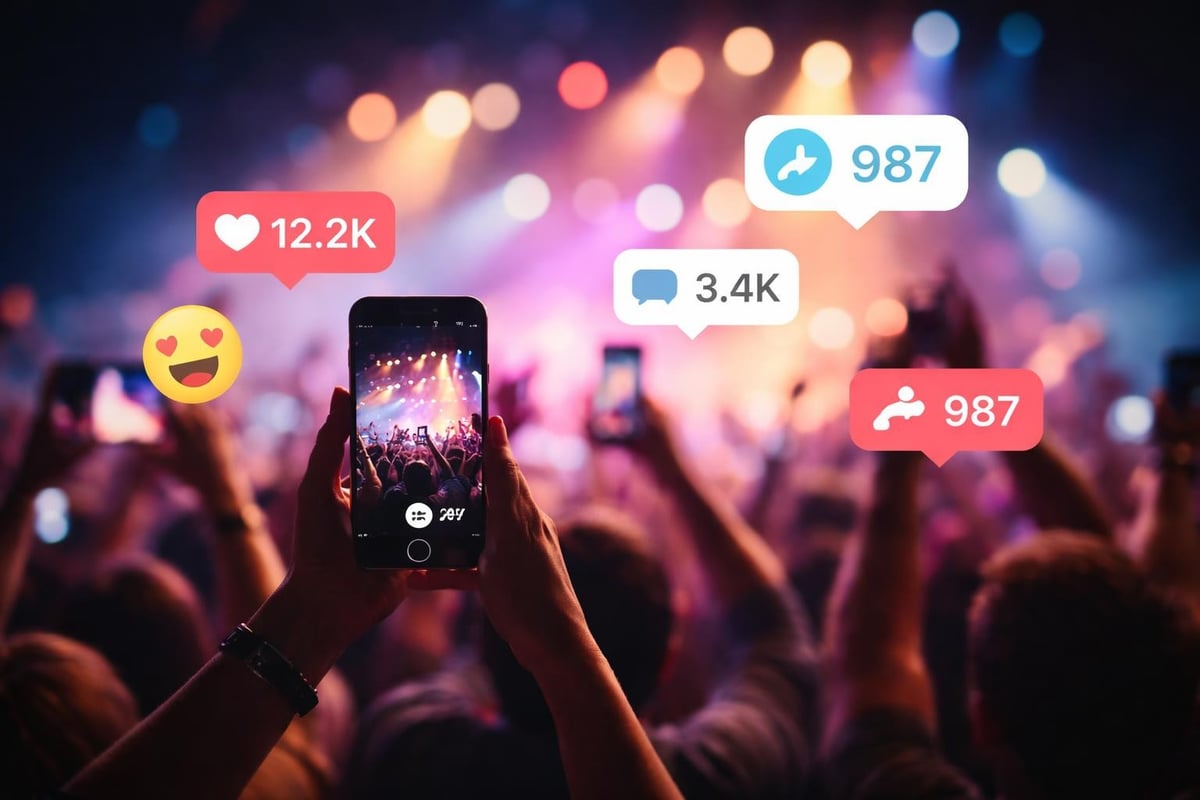
So when someone posts a clip from your event that their friend filmed, that's not an ad. That's social proof. Their network sees it and thinks "that looks actually good" instead of "skip ad in 5 seconds."
How Content Spreads Naturally
You don't need to buy ads when the content itself is shareable. User-generated videos from events spread because:
- They're short enough to watch
- They show real reactions, not scripted ones
- They're filmed from an attendee's perspective, not a stage
- People tag themselves and friends
- The algorithm actually likes authentic content
When you promote an event using last year's attendee footage, you're showing prospects what they'll actually experience. Not what your marketing team wishes they'd experience.
The multiplier effect:
- Attendee films clip → uploads to your platform
- You edit and publish → attendee sees their content featured
- Attendee shares to their network → you didn't pay for that reach
- Their network engages → algorithm shows it to more people
- New audience discovers your brand → next event sells easier
This is how you build an audience that actually cares. Not through paid ads. Through giving people something worth talking about and making it easy to share with your network.
What to Share with Your Platforms
Not everything goes everywhere. Different platforms need different approaches.
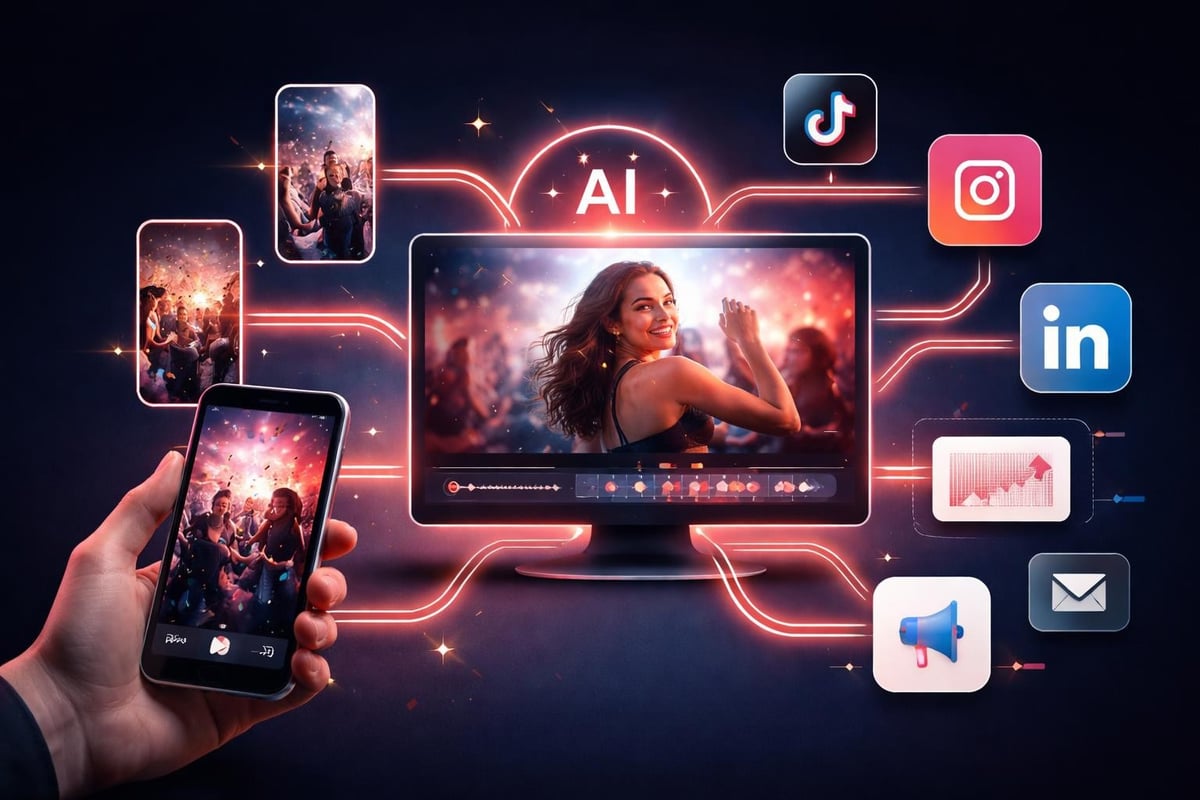
Instagram and TikTok want vertical, snappy, under 60 seconds. Pull the most energetic moments. The dancing, the reactions, the "I can't believe that just happened" faces.
LinkedIn needs context. Same clips, but with captions explaining what the event was about, why it mattered, what attendees learned. More professional framing, same authentic footage.
YouTube Shorts sits somewhere in between. You can go slightly longer, add text overlays, create mini-stories from multiple clips.
The beauty of user-generated content is you can repurpose the same source material across all these platforms. One attendee's 30-second clip becomes five different posts when you frame it right.
The Editing Question
You need to edit. Raw uploads rarely work as-is. But you're not doing Hollywood post-production here.
Trim the start and end where nothing's happening. Add captions for accessibility. Maybe overlay your event branding. That's it.
The best UGC platforms handle most of this automatically. You're just making final creative decisions, not spending hours in Premiere Pro.
Making Content Work After the Event
Most events waste their content. They post a highlights reel two weeks later, get a few likes, then move on.
That's leaving money on the table.
Use your attendee footage for:
- Event recap videos that actually get watched
- Testimonials for next year's marketing
- Social proof on your website
- Email campaigns to people who didn't attend
- Recruitment content if it's an industry event
- Training materials showing real examples
You spent money on the event. The content should work for months afterward, not just one news cycle.
| Content Type | Shelf Life | Best Platform | Production Time |
|---|---|---|---|
| Event highlight reel | 2-3 weeks | All platforms | 2-3 hours |
| Attendee testimonials | 6-12 months | Website, ads | 1 hour |
| Educational clips | Evergreen | YouTube, LinkedIn | 30 mins per clip |
| Behind-the-scenes | 1 month | Stories, TikTok | 1 hour |
| Speaker moments | 3-6 months | LinkedIn, blog | 2 hours |
When you share with your marketing team a library of authentic moments, they can build campaigns for months. Real footage from real people beats stock imagery every time.
The Legal Stuff Nobody Talks About
You can't just use any video someone uploads. Content licensing matters.
When attendees upload through your platform, they need to grant you rights. Not complicated legal agreements. Just clear terms that say "by uploading, you're letting us use this for marketing."
Most people are fine with this. They're sharing content anyway. They just want to know what you'll do with it.
Cover yourself:
- Get consent at upload time, not after
- Be clear about how you'll use the content
- Don't use footage that includes people who didn't consent
- Follow platform guidelines for user-generated content
- Keep records of permissions in case questions come up later
Documentation sharing best practices from tech companies apply here too. Clear terms, easy to understand, trackable.
When to Share with Your Speakers and Partners
If you're running a conference or branded event, your speakers and sponsors want content too.
Share with your speakers clips of their sessions. Most will post them. That's free promotion you didn't have to ask for.
Share with your sponsors footage that includes their branding. They paid for visibility. Give them assets they can actually use.
Share with your partners anything that makes them look good. Collaboration goes both ways.
Just make sure you're giving them formats they can actually use. Send vertical and horizontal versions, different lengths, with and without captions. Make it stupid easy for them to post.
The Cost Reality
Traditional event video production costs £5,000 to £15,000 for a single day. You get a few polished videos weeks later.
User-generated content platforms cost a fraction of that. You get hundreds of clips within hours. The ROI isn't even close.
Budget comparison:
- Professional crew: £8,000+ per event
- Video editing: £2,000+ per final video
- Usage rights: Often limited or expensive to extend
- Turnaround: 2-4 weeks
- Authenticity: Low
- Volume: 3-5 final videos
versus:
- UGC platform: £200-500 per event
- AI-assisted editing: Included
- Usage rights: Built into upload process
- Turnaround: 1-3 days
- Authenticity: High
- Volume: Unlimited uploads, 20-50 usable clips
You're not replacing professional video entirely. For keynote recordings or brand films, hire pros. But for social content, testimonials, and authentic moments, attendee footage wins every time.
Why This Works in 2026
Audiences are tired of polished marketing. They can smell corporate content from a mile away.
What they engage with is real. Messy. Slightly shaky. Filmed by someone who was actually there and gave a damn.
The platforms reward this now. TikTok's algorithm doesn't care about production value. LinkedIn is finally promoting video. Instagram wants Reels that feel native, not repurposed ads.
When you share with your attendees the tools to capture moments and with your audience the authentic results, you're working with how social media actually functions in 2026. Not fighting it with expensive content that looks like 2015.
The events that grow are the ones that build communities, not just attendee lists. Community is built through shared experiences. Video just documents those experiences in a way that others can feel.
Getting Started This Week
You don't need to overhaul your entire content strategy tomorrow. Start small.
Next event, try this:
- Set up a simple upload system (even just a Google Form with file upload works for testing)
- Tell 20 attendees you trust to film one moment each and upload it
- Edit the best three clips
- Post them across your channels
- Track engagement compared to your usual content
That's it. Test the concept before you commit.
Odds are, those three authentic clips will outperform your last five professional posts combined. Then you'll know this actually works for your audience.
From there, expand. Add more attendees. Improve your upload flow. Build templates for faster editing. But start by proving the concept with minimal investment.
The goal isn't perfection. It's learning whether your audience responds to authentic moments the way most audiences do. (They will.)
Stop filming events like it's a production shoot. Your attendees are already capturing the good stuff. You just need to share with your team and audience what they're seeing. SureShot makes this simple by turning your event attendees into storytellers, giving you authentic video content that spreads naturally and costs a fraction of traditional production. Set it up once, and every event becomes a content goldmine.