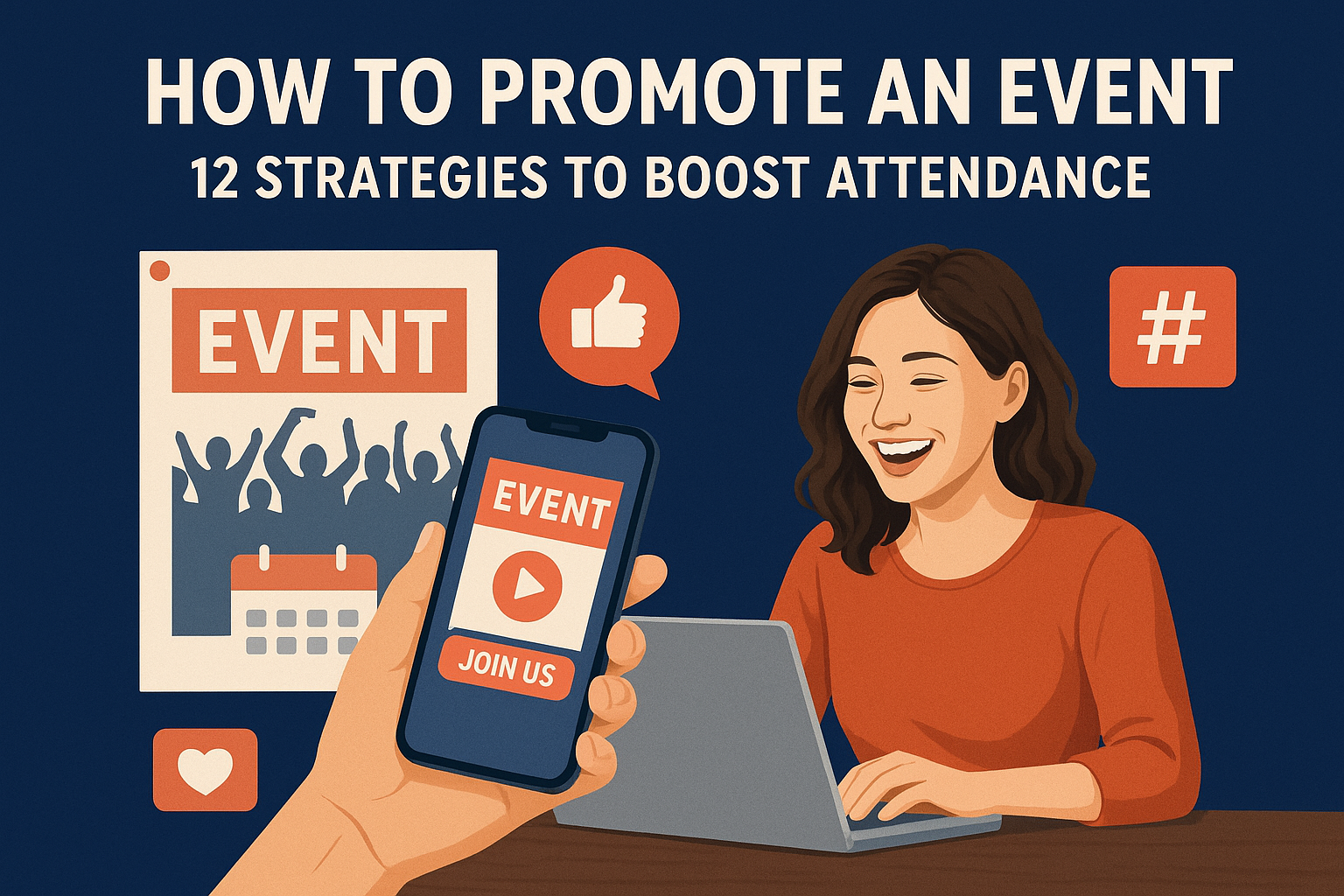

How to Promote an Event: 12 Strategies to Boost Attendance
You've spent months planning your event. The venue is locked in, speakers are confirmed, and your agenda is set. Now you face the toughest challenge: getting people to actually show up. Figuring out how to promote an event effectively feels overwhelming when you're juggling limited budgets, tight timelines, and countless marketing platforms all competing for your attention. The stakes couldn't be higher. Poor turnout means more than just empty seats. You're looking at lost ticket revenue, disappointed sponsors, damaged brand reputation, and a significantly tougher sell when it comes time to promote your next event.
This guide breaks down 12 actionable promotion strategies that deliver real results. You'll discover both no-cost organic methods and smart paid tactics, from collecting authentic crowd video to launching precision-targeted advertising campaigns. Each strategy comes with specific implementation steps you can start using today. Whether you're running a music festival, tech conference, product launch, or corporate gathering, these approaches will help you maximise attendance and build lasting excitement around your event.
1. Tap into crowd video from your attendees
Your attendees already film your event on their phones. They capture authentic moments, candid reactions, and unique perspectives that professional crews miss entirely. Instead of letting this valuable content disappear into personal camera rolls, you can harness it to supercharge your promotion efforts. Crowd video transforms your attendees into active storytellers who extend your event's reach far beyond your own marketing channels. This strategy works because people trust content from real attendees more than polished brand messaging, making it one of the most powerful tools when learning how to promote an event effectively.
Why crowd footage drives organic reach and trust
Crowd footage performs better than branded material across every social platform. Your attendees' videos feel authentic and relatable, cutting through the scepticism that surrounds traditional marketing. When someone shares a video from your event, their entire network sees genuine enthusiasm rather than a sales pitch. These personal endorsements carry significantly more weight than any advertisement you could create. Each attendee who posts effectively becomes a micro-influencer for your brand, reaching audiences you couldn't access otherwise.
"Crowd footage receives 8.7 times higher engagement than branded content on social platforms."
The ripple effect multiplies your promotional reach exponentially. One attendee's video reaches their friends, who share it with their networks, creating organic viral potential without spending a dollar on paid promotion. This authentic content also provides social proof that convinces hesitant prospects to purchase tickets for your next event.
How to automate video collection with SureShot
Collecting scattered videos from hundreds of attendees sounds logistically impossible. SureShot solves this problem by providing a centralised platform where attendees upload their clips through a simple PIN-based system. You create your event in the dashboard, share the access code, and videos flow directly to your organised library without chasing people down after the event ends.
The platform's built-in tools review uploaded content automatically, identifying the most compelling moments and saving you countless hours of manual sorting. You maintain full licensing rights to use, edit, and share these videos across your marketing channels. This streamlined approach turns your attendees into a content creation team, giving you an abundant supply of promotional material for current and future events without the expense of professional videographers.
2. Build a high-converting landing page
Your event needs a dedicated landing page that does one job: convert visitors into registered attendees. Sending potential attendees to your general website or social media profile creates confusion and dilutes your message. A focused landing page removes distractions, presents compelling reasons to attend, and makes registration effortless. This single page becomes the central hub for all your promotional efforts, where every email link, social post, and advertisement directs traffic. Understanding how to promote an event effectively means giving prospects a clear, frictionless path from interest to commitment.
Why a dedicated page increases registrations
Generic pages force visitors to hunt for information. Your dedicated landing page puts every critical detail in one place, reducing friction and eliminating the decision paralysis that kills conversions. When prospects find everything they need without clicking through multiple pages, they register immediately instead of getting distracted and never returning.
"Dedicated landing pages convert up to five times better than general website pages for event promotion."
The focused design removes competing calls to action that pull attention away from your registration button. Visitors see exactly what your event offers and why they should attend right now.
Key elements for an effective event page
Your landing page needs specific components to maximise conversions:
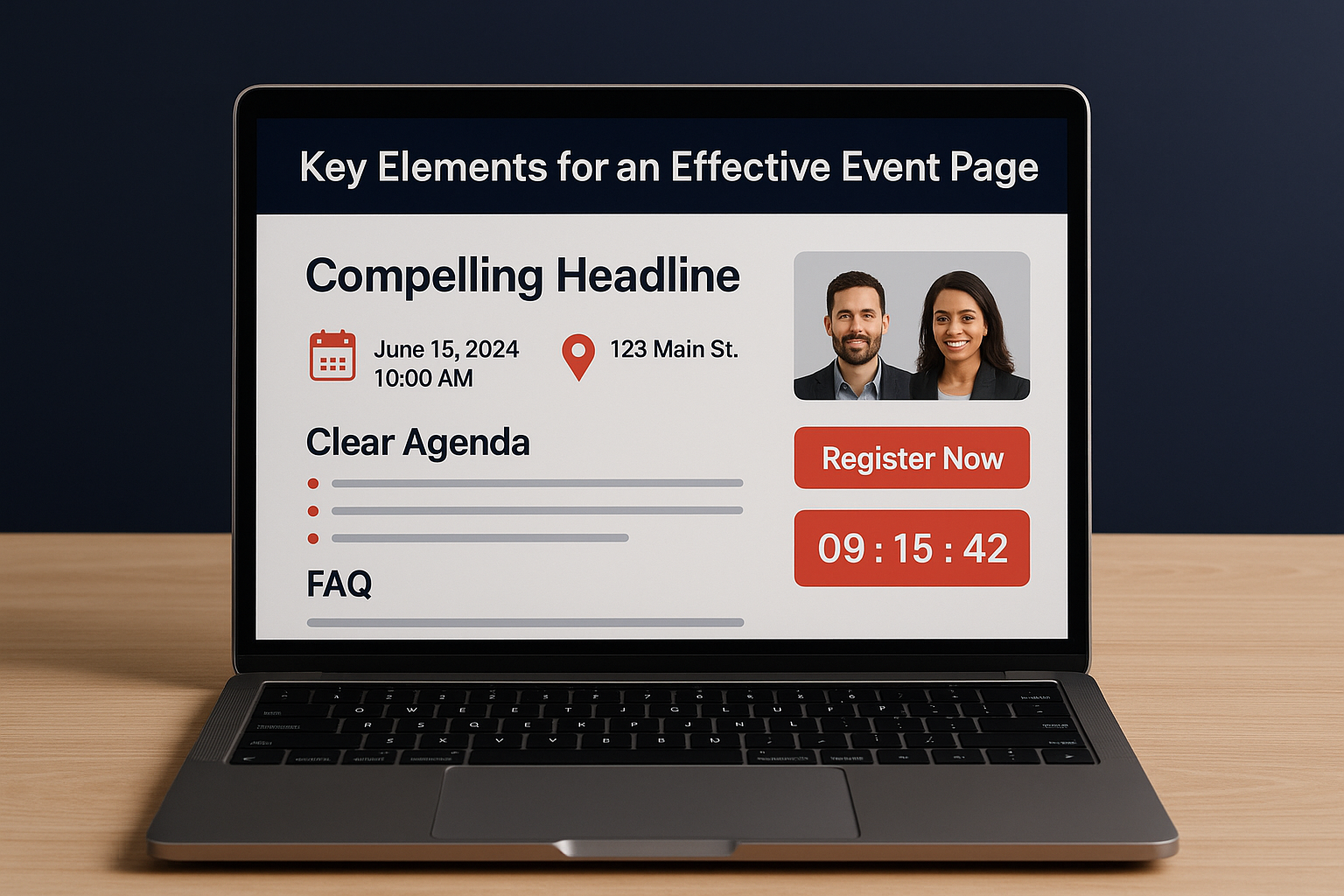
- Compelling headline that immediately communicates the event value and target audience
- Date, time, and location displayed prominently above the fold
- Speaker photos and credentials that establish authority and expertise
- Clear agenda or schedule showing what attendees will experience
- Social proof including testimonials, past attendance numbers, or media mentions
- Multiple registration buttons placed strategically throughout the page
- Countdown timer creating urgency as the event date approaches
- FAQ section addressing common objections before they become barriers
Place your most important information where visitors see it first without scrolling.
3. Execute a segmented email campaign
Email delivers direct access to interested prospects who have already shown intent by subscribing to your list. Unlike social media algorithms that hide your content, email lands straight in the inbox of people who want to hear from you. Segmenting your audience lets you send tailored messages based on past attendance, interests, or engagement levels. When you learn how to promote an event through email effectively, you create multiple touchpoints that nurture prospects from awareness to registration without relying on paid advertising.
Why email remains a top conversion channel
Email consistently outperforms every social platform when measuring actual ticket sales and registrations. Your subscribers have given explicit permission to contact them, creating a relationship built on trust rather than interruption. This direct line bypasses algorithms and reaches people when they're actively checking their messages. Email also allows for detailed information that social posts can't accommodate, letting you address objections and showcase value comprehensively.
"Email marketing generates $42 for every $1 spent, making it the highest ROI channel for event promotion."
The measurability of email gives you clear insights into what drives registrations. You see exactly which subject lines, messages, and calls to action produce results.
Best practices for event email sequences
Your email sequence should span multiple messages leading up to your event. Start with a save-the-date announcement sent 6-8 weeks before, followed by speaker reveals, agenda details, and early bird offers. Segment based on behaviour: send different messages to those who opened but didn't register versus those who haven't engaged at all. Create urgency with countdown timers and limited-time pricing in the final week. Each email needs a single, clear call to action that directs recipients to your landing page without competing distractions.
4. Host social media contests and giveaways
Social media contests transform passive followers into active participants who spread your event message across their networks. When you offer free tickets or exclusive experiences as prizes, people tag friends, share posts, and create genuine excitement that algorithms favour. This strategy works because contests tap into psychological triggers like competition, social belonging, and the thrill of winning. Understanding how to promote an event through contests means turning your audience into willing promoters who expand your reach organically while building anticipation for your event.
Why contests create viral buzz
Contests naturally encourage sharing behaviours that amplify your promotional reach exponentially. Each participant who enters by tagging friends exposes your event to entirely new audiences without additional ad spending. The competitive element creates urgency and excitement that static posts never achieve. Platforms prioritise content with high engagement, meaning your contest posts reach more people organically than standard promotional content.
"Social media contests generate 34% more engagement than standard promotional posts, dramatically increasing event visibility."
Your contest becomes a conversation starter that keeps your event top of mind throughout the promotional period. People check back repeatedly to see if they won, maintaining continuous engagement with your brand.
Ideas for engaging ticket giveaways
Structure your contest with clear entry requirements that maximise exposure. Ask participants to follow your account, tag three friends, and share your event post to their stories. Create tiered prizes where first place wins a VIP experience package, while runner-ups receive standard admission. Launch themed contests that align with your event content, such as asking attendees to submit videos explaining why they want to attend. Run weekly giveaways leading up to your event rather than a single contest, maintaining sustained momentum and giving multiple chances to win. Partner with sponsors to provide additional prizes that increase the perceived value without impacting your ticket inventory.
5. Partner with influencers and speakers
Your speakers and industry influencers already have established audiences who trust their recommendations. When these partners promote your event, they lend their credibility to your brand and deliver your message to highly relevant followers. This collaboration creates a multiplier effect that extends far beyond your own marketing channels. Learning how to promote an event through partnerships means tapping into communities you couldn't reach alone, turning respected voices in your industry into active advocates who drive ticket sales through authentic endorsements.
Why partnerships expand your audience
Influencers and speakers bring their own loyal followings who value their opinions and recommendations. When they share your event details, their endorsement carries weight that paid advertising simply cannot match. You gain instant access to audiences who already care about your event topic, dramatically improving conversion rates compared to cold outreach. Each partner effectively becomes an extension of your marketing team, promoting to networks that overlap minimally with your existing reach. This strategy works particularly well when partners have genuine enthusiasm for your event and align naturally with your target audience.
"Events promoted by speakers and influencers see 3x higher registration rates than those relying solely on owned channels."
How to equip speakers to promote for you
Provide your speakers with ready-made promotional materials they can share immediately. Create custom graphics featuring their headshot and speaking topic, write social media copy they can post directly, and supply unique tracking links that let you measure their impact. Send these assets three weeks before your event with clear instructions and suggested posting schedules. Offer incentives like affiliate commissions or ticket bonuses for speakers who drive the most registrations. Make promotion effortless by drafting email templates they can send to their subscriber lists, ensuring your key messages stay consistent while respecting their voice and relationship with their audience.
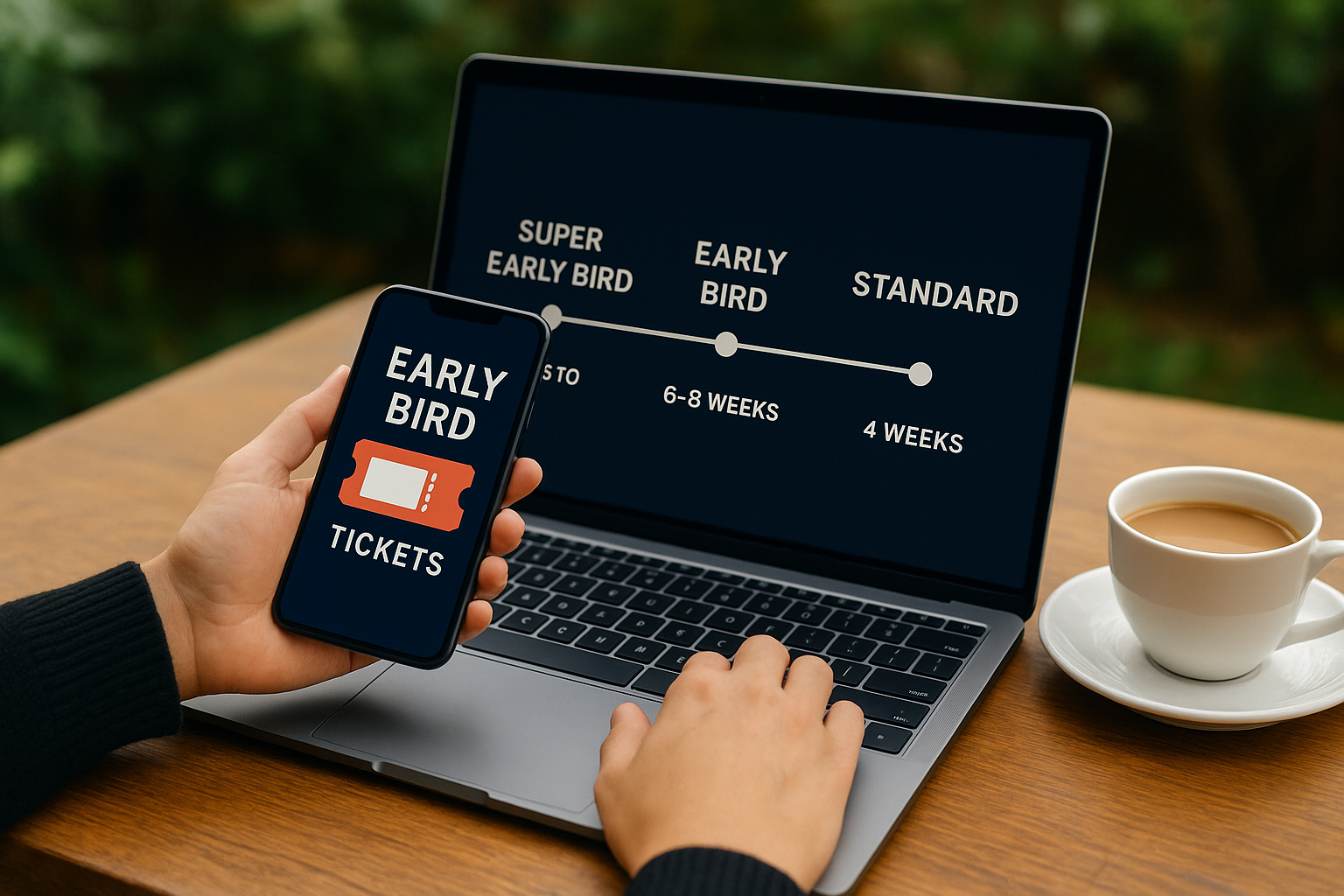
6. Drive urgency with early bird ticketing
Early bird pricing creates immediate incentive for prospects to register now instead of waiting until later. When you offer discounted tickets for a limited time, you tap into the fear of missing out that drives quick decisions. This strategy transforms how to promote an event by giving you committed attendees early who become advocates and create social proof before your event date arrives. The tiered pricing model also generates essential cash flow that covers upfront expenses while building momentum that makes future ticket sales easier.
Why tiered pricing boosts early sales
Tiered pricing triggers psychological urgency that overcomes procrastination and indecision. Your prospects see the price increasing over time and make faster purchasing decisions to avoid paying more later. This approach rewards your most engaged audience members who follow your updates closely and take action immediately. Early registrations give you financial security and validate your event concept before investing heavily in additional promotion.
"Events using early bird pricing see 40% more registrations in the first two weeks compared to flat-rate pricing models."
The early momentum creates visible social proof that convinces hesitant buyers to register as they see others committing.
How to structure your ticket release timeline
Release your tickets in three distinct tiers spaced evenly across your promotional timeline. Launch super early bird pricing 8-10 weeks before your event at 30-40% off, followed by regular early bird at 6-8 weeks with 20-25% savings. Switch to standard pricing 4 weeks out, then introduce final pricing increases during the last week. Announce each tier transition publicly through email and social media to create urgency spikes. Limit quantities for each tier or set firm deadlines to prevent your early bird period from extending indefinitely and losing its effectiveness.
7. Maximise visibility on event listing sites
Event directories and listing platforms put your event in front of actively searching audiences who are specifically looking for things to attend. These sites aggregate events by category, location, and date, making it easy for potential attendees to discover your gathering when they browse or search. Submitting your event to multiple directories creates additional entry points that complement your owned channels and social media efforts. When you understand how to promote an event through listing sites, you establish presence on platforms where motivated buyers actively seek events like yours, dramatically increasing your discoverability without ongoing advertising costs.
Why directories are essential for discovery
Event listing sites attract people with high purchase intent who are already in the mindset to find and register for events. These platforms rank well in search engines, meaning your event appears in results when people search for activities in your category or location. Directory listings also provide valuable backlinks to your registration page, improving your site's search visibility while driving direct traffic from qualified prospects.
"Events listed on major directories receive 25% more organic traffic than those promoted through owned channels alone."
Top platforms to list your event
Start with Eventbrite and Facebook Events, which dominate event discovery across all categories and demographics. Submit to Google's event markup through structured data on your landing page, ensuring your event appears in Google Search results with rich details. List on Meetup if your event fits community or networking themes, or LinkedIn Events for professional and B2B gatherings. Regional platforms like Time Out, Do312, or local tourism boards capture location-specific audiences. Industry-specific directories give you targeted exposure to niche communities aligned with your event topic, though these vary by vertical and location.
8. Run targeted paid social advertisements
Organic reach continues to decline across all social platforms, making paid advertising essential for cutting through the noise and reaching your ideal attendees. Paid social ads let you target prospects based on demographics, interests, behaviours, and location with precision that organic posts cannot achieve. You control your budget and timing, scaling spending up during critical promotional windows and pausing when needed. Understanding how to promote an event through paid social means combining specific audience targeting with compelling creative that drives registrations while tracking every dollar spent against actual ticket sales.
Why paid ads offer precise targeting
Social platforms collect detailed data about user interests, behaviours, and purchase patterns. You use this information to show your event ads only to people who match your ideal attendee profile, eliminating waste on unqualified audiences. Target users who follow similar events, belong to relevant professional groups, or have demonstrated interest in your event topic. Location targeting ensures you reach prospects within reasonable travel distance to your venue, improving conversion rates significantly.
"Targeted social media advertising delivers 3-5x higher ROI than untargeted campaigns by reaching qualified prospects."
The platforms' algorithms optimise your campaigns automatically, showing ads to users most likely to register based on past conversion patterns.
Strategies for retargeting interested visitors
Install tracking pixels on your landing page to capture visitors who viewed your event but didn't register. Create retargeting campaigns that follow these prospects across social platforms with reminder ads featuring countdown timers or testimonials. Segment your retargeting audiences based on actions taken, such as showing different ads to people who visited your pricing page versus those who only viewed the homepage. Exclude people who already registered to avoid wasting budget on converted attendees. Test multiple ad variations with different images, headlines, and offers to identify which combinations drive the most registrations from your retargeting pool.
9. Establish a unique event hashtag
A branded hashtag gives your event a unified identity across all social platforms and makes it easy for attendees to find related content. This simple tag becomes a rallying point that aggregates conversations, photos, and videos from multiple sources into a single searchable stream. Creating a recognisable hashtag early in your promotional timeline allows you to seed it across all marketing materials and build recognition before your event begins. When you learn how to promote an event effectively, establishing this digital hub transforms scattered social mentions into a cohesive narrative that amplifies your reach and creates lasting community beyond the event date.
Why hashtags unify your event community
Your unique hashtag creates a centralised conversation that connects attendees, speakers, and prospects in real-time across different platforms. People searching your tag discover authentic content from multiple perspectives, building trust and excitement that official marketing alone cannot achieve. The aggregated content provides social proof at scale, showing prospects exactly what they can expect from attending.
"Events with dedicated hashtags generate 300% more social media impressions than those without, creating sustained visibility."
This digital thread continues working after your event ends, letting past attendees reconnect and serving as promotional material for your next gathering.
Tips for promoting your tag before the event
Display your hashtag prominently on your landing page, email signatures, and all promotional graphics so people encounter it repeatedly. Include the tag in every social media post leading up to your event, training your audience to associate it with your brand. Challenge speakers and partners to use it when sharing event-related content, multiplying its visibility across their networks. Create graphics specifically designed for sharing that feature your hashtag alongside compelling event details or speaker quotes.
10. Cross-promote with sponsors and partners
Your event sponsors and partners already have established audiences who align perfectly with your target demographic. These relationships create opportunities for mutual promotion that benefits everyone involved. Instead of each organisation promoting independently, you combine forces to amplify your collective reach and share promotional costs. When you understand how to promote an event through strategic partnerships, you access audiences that trust your partners' recommendations while providing sponsors with valuable exposure that justifies their investment in your event.
Why collaboration multiplies your reach
Partner promotion extends your message to pre-qualified audiences who already care about your event topic or industry. Each sponsor reaches their customer base on your behalf, creating multiple touchpoints with prospects who might never encounter your direct marketing. This collaborative approach provides authentic third-party endorsements that carry more credibility than self-promotion, since sponsors only recommend events that reflect well on their brand.
"Co-marketing partnerships increase event reach by 250% on average while reducing individual promotional costs by up to 60%."
The shared investment means sponsors actively promote because your event's success directly impacts their return on investment and brand visibility.
Effective ways to co-market your event
Create co-branded promotional materials featuring both your event logo and sponsor brands prominently. Ask sponsors to promote through their email lists, social channels, and websites using content you provide. Arrange social media takeovers where sponsors post event content to their followers, or host joint webinars that preview your event topics while showcasing sponsor expertise. Give sponsors unique discount codes they can share with their audiences, creating trackable conversions while incentivizing their promotion. Include sponsor content in your promotional emails and feature their representatives in pre-event interviews or blog posts that provide value while building anticipation.
11. Share exclusive behind-the-scenes content
Behind-the-scenes content gives prospects a privileged view into your event preparation that transforms them from passive observers into invested participants. This strategy for how to promote an event works because people naturally gravitate toward exclusive access and insider perspectives. Showing the human side of your event planning builds genuine connections that polished marketing materials cannot achieve. Your audience sees the effort, creativity, and passion going into creating their experience, which increases perceived value and makes them more likely to register.
Why transparency builds anticipation
Pulling back the curtain creates an emotional investment that generic promotional content never achieves. When you share venue setup progress, speaker rehearsals, or menu tastings, you give prospects tangible reasons to get excited about attending. This transparency demonstrates that you're putting serious effort into delivering an exceptional experience. Your audience begins visualising themselves at the event, which psychologically commits them to attending before they even register.
"Events that share behind-the-scenes content see 45% higher engagement rates and stronger emotional connections with their audience."
Content ideas for pre-event engagement
Document your venue walkthrough showing the space transformation from empty room to finished setup. Film quick interviews with speakers discussing what they're preparing or why they're excited to present. Share production meetings, rehearsal clips, or catering tastings that showcase your attention to detail. Post time-lapse videos of stage construction or decoration installation. Give sneak peeks of swag bags, technology being set up, or special surprises you're planning. These authentic glimpses create conversation starters and give your audience shareable content that extends your promotional reach organically.
12. Produce FOMO-inducing highlight reels
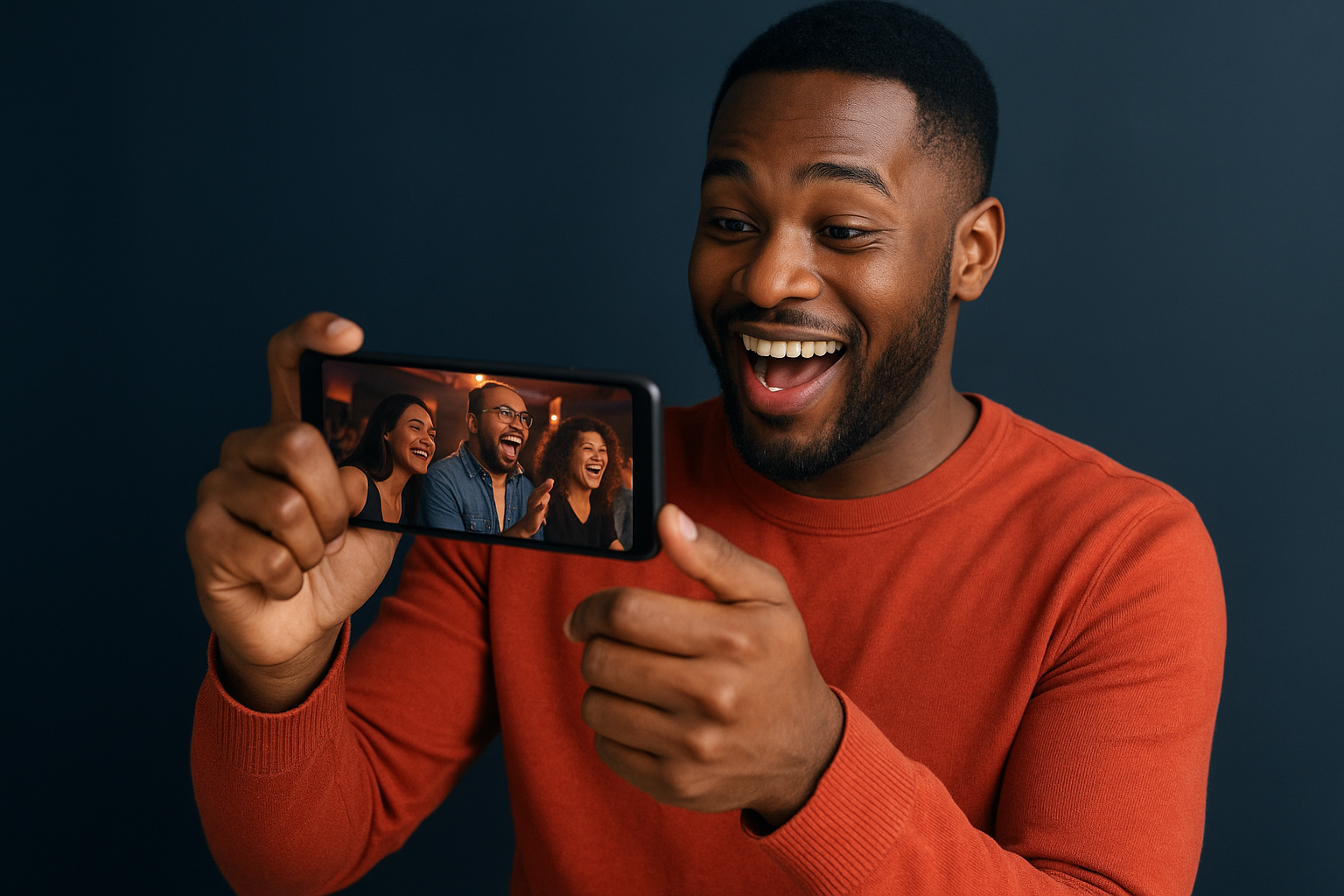
Your event ends, but your promotional opportunity continues. Compelling highlight reels transform past events into powerful marketing assets that sell tickets for your next gathering. These videos showcase the energy, connections, and experiences attendees enjoyed, creating intense fear of missing out among people who didn't attend. Understanding how to promote an event extends far beyond the current date because your recap content becomes evergreen proof that validates your event's value and attracts future attendees who want to experience what others clearly enjoyed.
Why recap videos sell future tickets
Highlight reels provide concrete evidence of your event's impact that promotional promises cannot match. Potential attendees see real people having genuine experiences, which eliminates scepticism about whether your event delivers on its marketing claims. These videos capture authentic emotions, standout moments, and tangible outcomes that resonate emotionally with prospects considering registration for your next event.
"Events that share highlight reels from previous editions see 60% higher early registration rates for subsequent events."
The social proof concentrated in a 60-90 second video delivers more persuasive power than any written description could achieve.
How to repurpose content for continuous promo
Edit your highlight reel into multiple formats for different platforms and purposes. Create a full-length recap for your website and email campaigns, then cut shorter versions optimised for Instagram Stories, TikTok, and Facebook feeds. Pull individual standout moments into separate clips that you share weekly between events, maintaining visibility and keeping your brand top of mind. Feature these videos prominently on your landing page when promoting your next event, and include them in email sequences to prospects who showed interest but didn't register previously.
Start promoting your event today
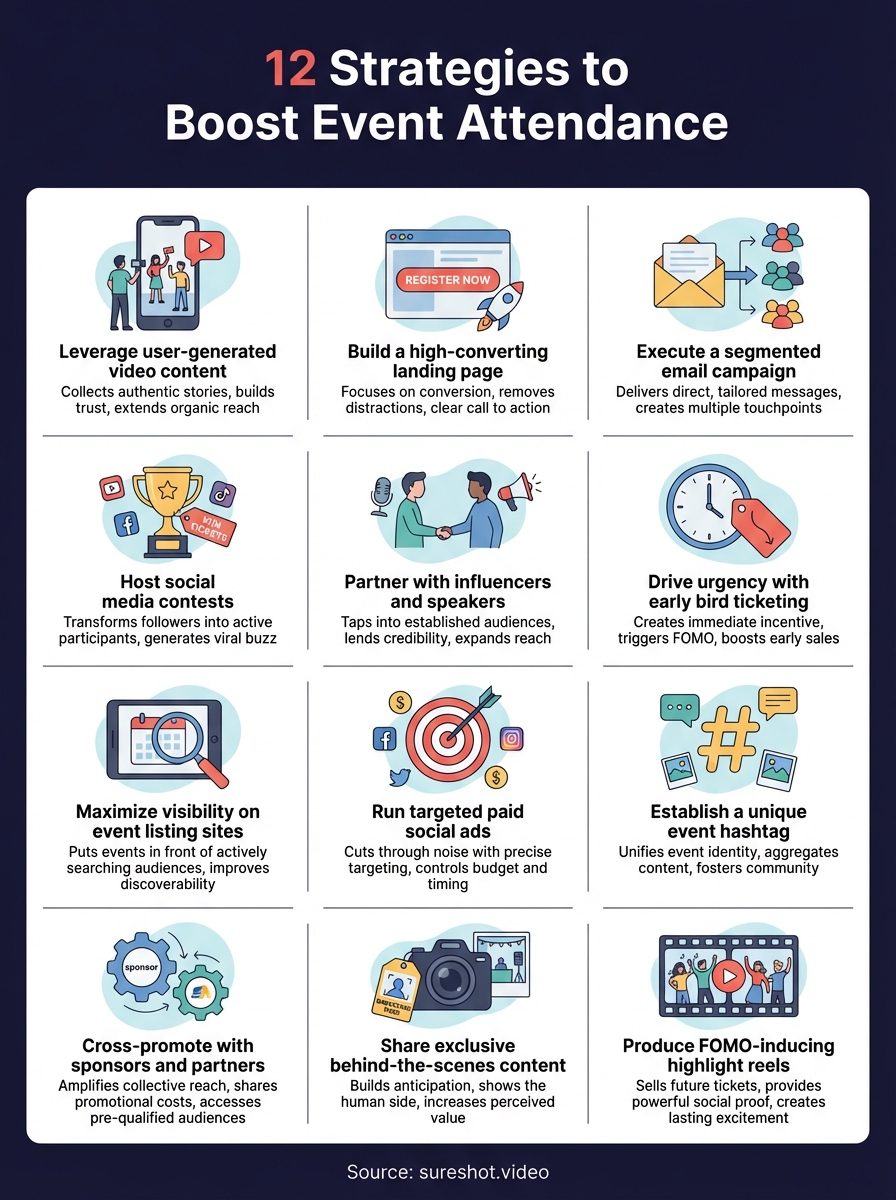
You now have 12 proven strategies that transform empty venues into packed events filled with engaged attendees. Each tactic addresses a specific aspect of promotion, from collecting authentic crowd footage to running precision-targeted advertisements. The most successful event organisers combine multiple approaches rather than relying on a single channel, creating promotional momentum that builds steadily until your event date arrives.
Start implementing these strategies immediately rather than waiting until the last minute. Your timeline matters enormously when learning how to promote an event effectively. Begin with the foundational elements like your landing page and email sequence, then layer in social media contests, influencer partnerships, and paid advertising as your event date approaches. The earlier you start, the more opportunities you create for word-of-mouth growth and organic sharing.
Ready to collect authentic video content from your attendees? Book a demo with SureShot to see how automated crowd footage collection transforms your event promotion strategy.