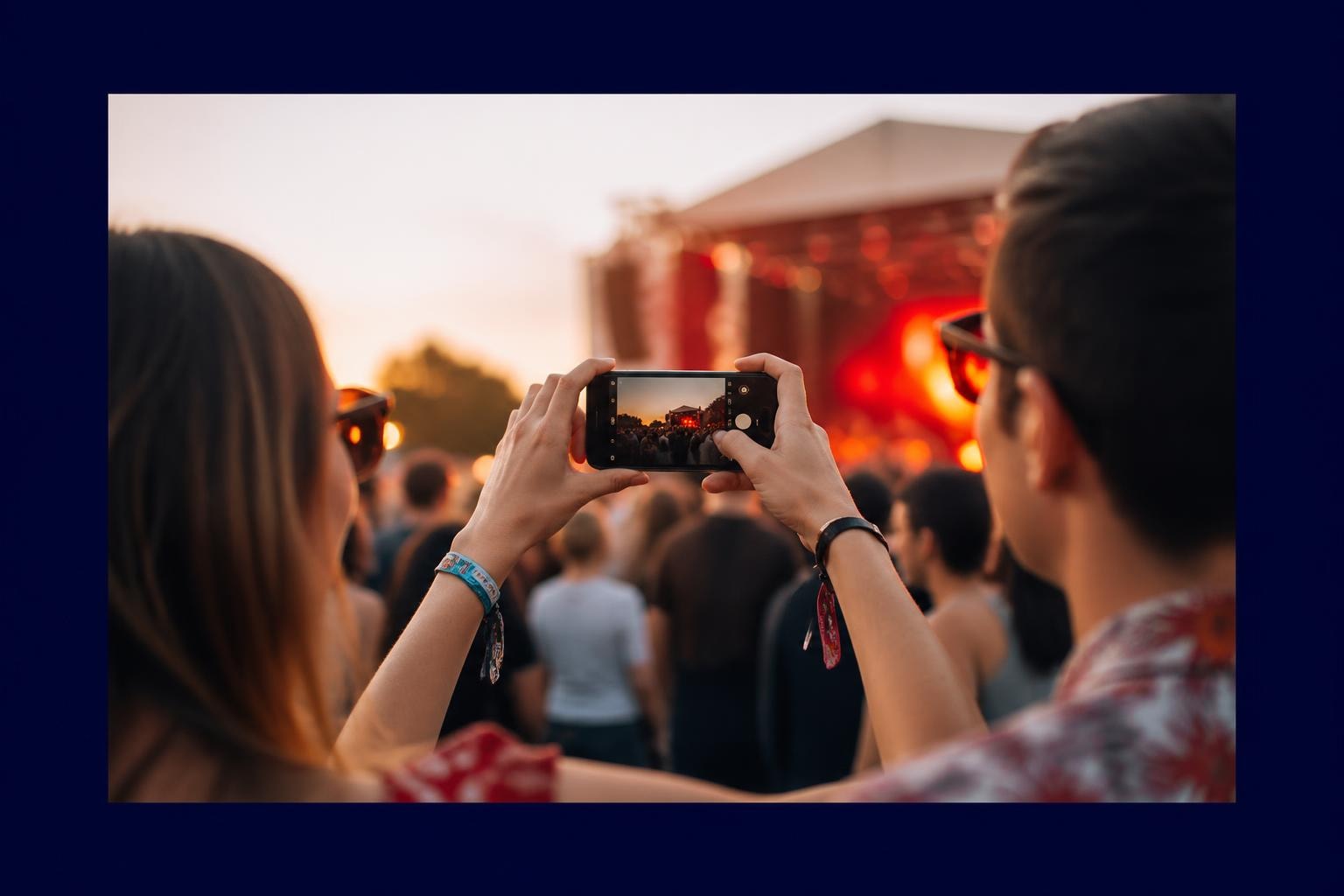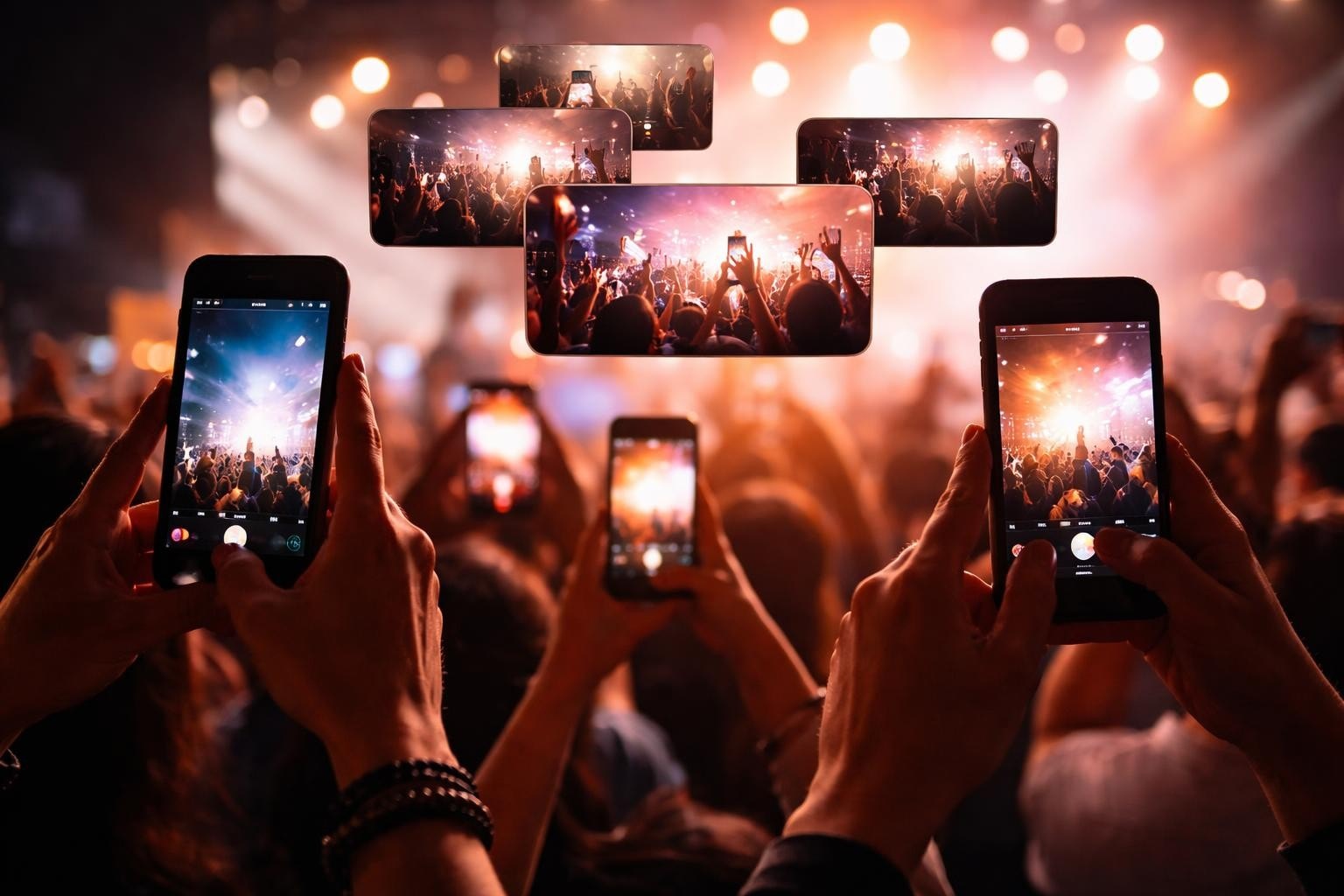

Videos use at events has shifted from a nice-to-have to a necessity. Not because of some marketing trend, but because attendees are already filming everything anyway. The difference now is whether you're harnessing that energy or watching it scatter across social media with no connection to your brand. Smart event organisers are turning their attendees into content creators, capturing authentic moments that no professional crew could script. The result? More content, lower costs, and genuine stories that actually resonate.
Why Traditional Event Videos Use Falls Short
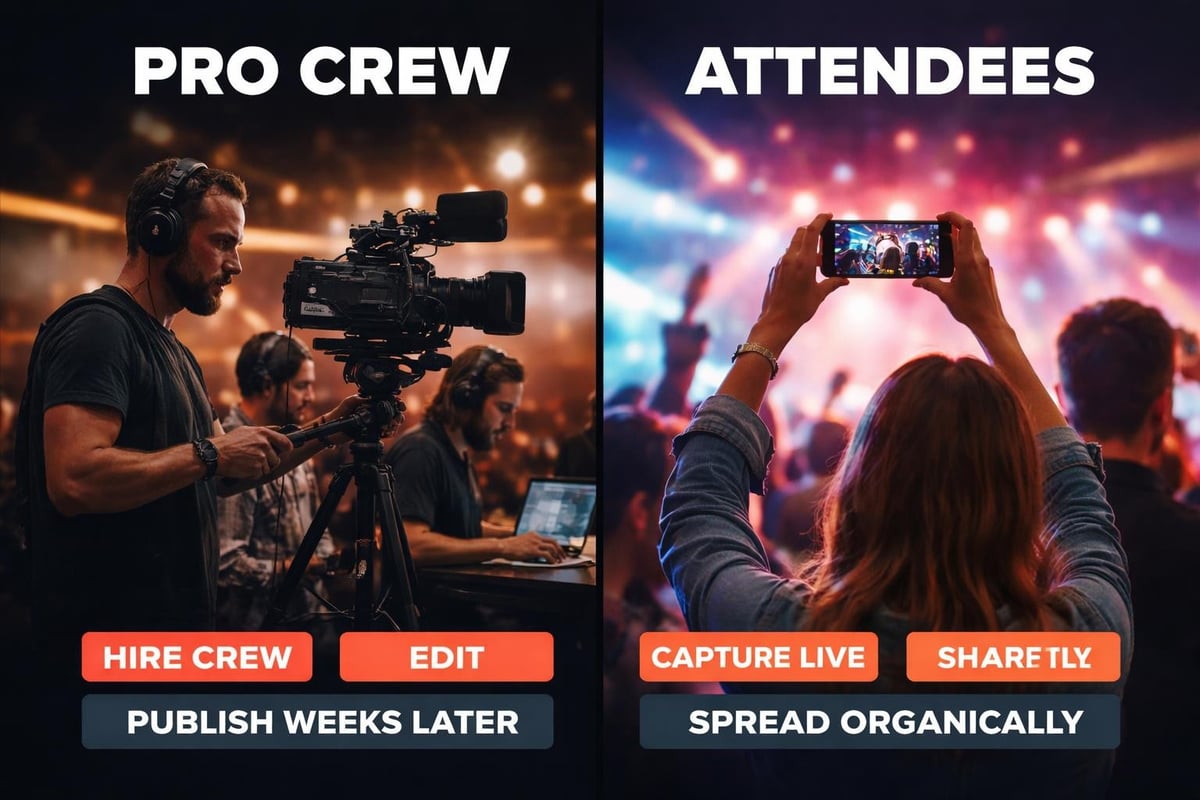
You hire a video crew. They show up, shoot b-roll, get some interviews, pack up, and send you three polished videos six weeks later. By then, the event's momentum is dead.
Traditional videos use at events follows a predictable pattern. Professional videographers capture what they think matters. They edit it into something that looks good but feels staged. You post it. A few people watch it. Everyone moves on.
Here's what that approach misses:
- The authentic reactions happening in real-time
- The perspectives from 200 different angles
- The moments between the scheduled programming
- The content that attendees actually want to share
You're paying premium rates for a fraction of the story. Meanwhile, your attendees are capturing the real narrative on their phones, posting it to their personal accounts, and generating engagement you'll never see on your branded channels.
How Attendee-Driven Videos Use Actually Works
Give people a reason and a platform to share their footage. That's it.
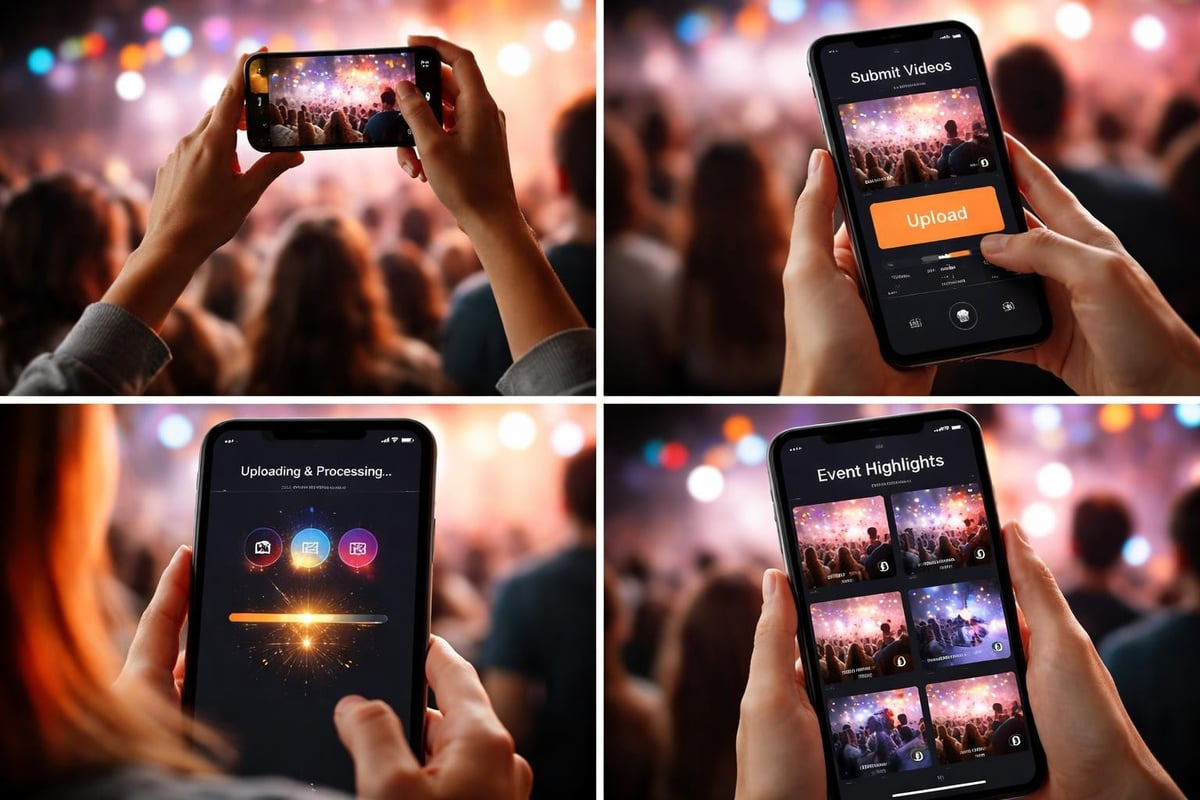
When attendees become your content creators, you're not asking them to produce professional-grade material. You're asking them to capture what they're already filming, through a system that makes it easy to submit, grants you usage rights automatically, and potentially rewards them for participation.
The Mechanics Are Simple
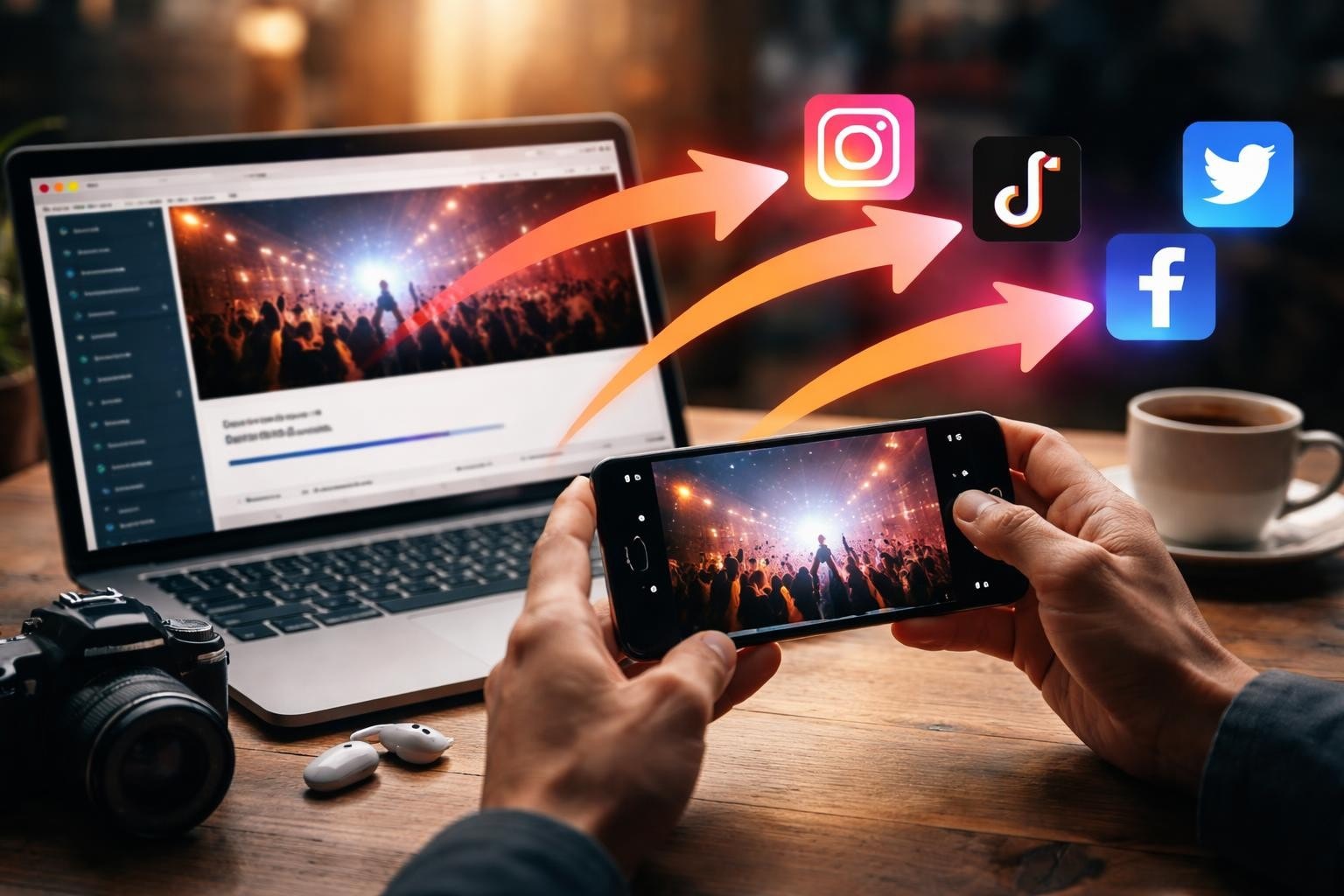
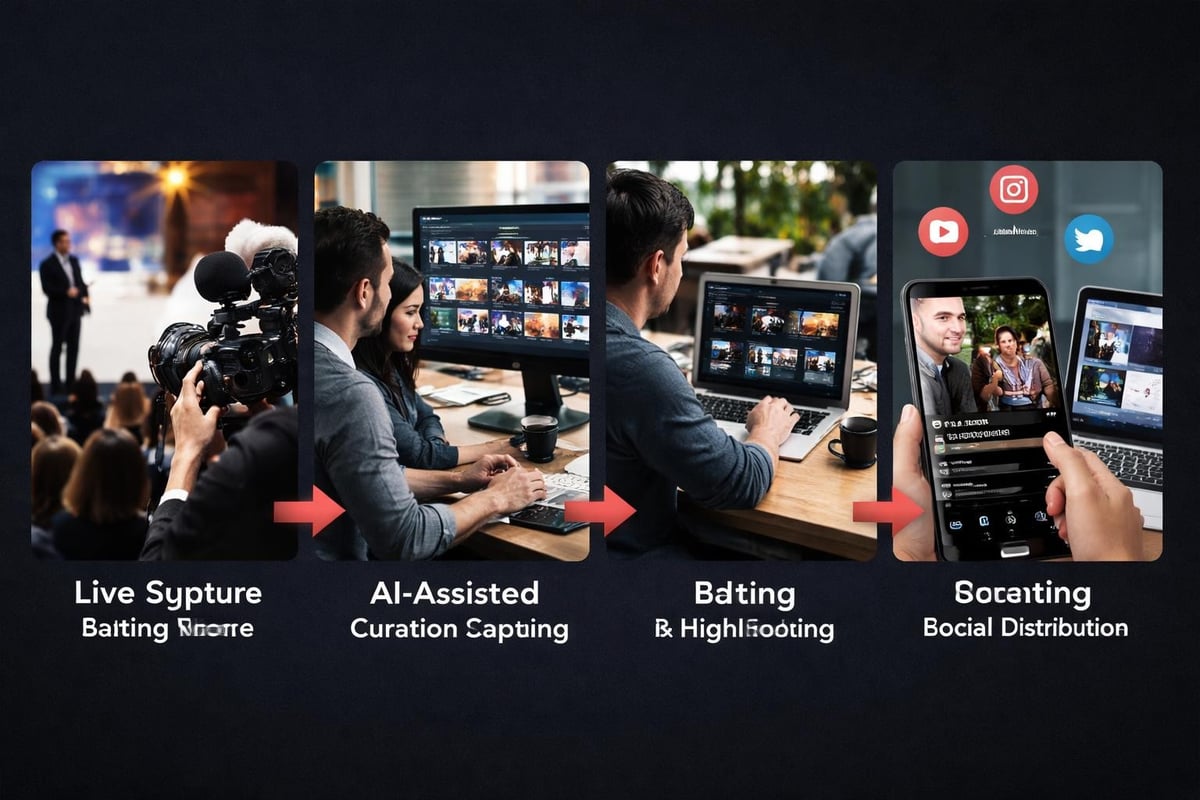
Someone captures a moment at your event. They submit it through your platform. You get the rights to use it. AI helps you sort through submissions and flag the good stuff. You curate the best clips into shareable content while it's still relevant.
This isn't about replacing professional videography entirely. It's about complementing it with volume and authenticity. One professional crew captures maybe 8 hours of footage. 200 attendees capture thousands of hours from perspectives a crew could never access.
The advantage compounds when you consider:
| Traditional Video | User-Generated Videos Use |
|---|---|
| Single perspective | Hundreds of viewpoints |
| Delayed publication | Real-time sharing |
| High per-minute cost | Distributed cost |
| Limited social reach | Natural amplification |
| Professional but sterile | Authentic and relatable |
The best UGC platform solutions handle the technical bits, consent management, and curation workflow, so you're not drowning in raw footage with no clear path to publication.
What Videos Use Strategy Delivers For Events
Lower costs matter, but they're not the main point. The real value is in what authentic videos use does for your event's reach and community.
Organic Reach That Actually Scales
When attendees share their own footage, they're sharing it with their networks. Those networks trust them more than they trust your brand account. Each share extends your reach without ad spend. Video marketing strategies emphasize integration across channels, and user-generated content does that automatically.
You're not paying for impressions. You're creating content people want to share because they're in it, their mates are in it, or it captures a moment they experienced.
Content Volume Without Burnout
Producing video content in-house burns out creative teams fast. One event might generate 5-10 professional videos if you're pushing hard. The same event with strategic videos use from attendees generates hundreds of clips you can repurpose for months.
Think about what that volume enables:
- Daily social posts for weeks after the event
- Testimonial content from real attendees
- Behind-the-scenes footage you'd never stage
- Highlight reels that show genuine energy
- Year-round content for promoting the next event
You're not asking your team to produce more. You're giving them more material to work with. The best content curation tools help sort through submissions efficiently, so volume becomes an asset rather than a burden.
Making Videos Use Work In Practice
Theory's great. Implementation matters more.
Set Clear Expectations Up Front
Tell attendees before the event that you're encouraging video sharing. Make it part of the event experience, not an afterthought. Create a simple call-to-action: "Capture your favorite moment and submit it through the app."
When crowdsourcing event video, clarity beats creativity. People need to know what you want, how to submit it, and what's in it for them.
Build Incentives That Actually Motivate
Prize draws work. Feature walls showing submitted content work better. Public recognition of the best submissions works best. People want their moment of fame more than they want a free t-shirt.
Consider gamification elements like leaderboards for most submissions or best engagement. Just keep it simple enough that participation doesn't require a manual.
Handle Rights Management Automatically
Nobody's reading terms and conditions at an event. Build consent into the submission process. Make it clear that submitting content grants you usage rights. Use technology that captures that consent automatically with each upload.
The best consent management platforms handle this in the background, so you're not chasing people for permissions weeks after the event.
Content Types Videos Use Generates
Not all user-generated content is created equal. Different videos use cases serve different purposes.
| Content Type | Best Use | Authenticity Level |
|---|---|---|
| Reaction shots | Social proof, testimonials | Very high |
| Activity footage | Event highlights, recaps | High |
| Venue walkthroughs | Next year's promotion | Medium |
| Speaker moments | Educational content, clips | Medium-high |
| Behind-the-scenes | Community building | Very high |
Reaction shots are gold. Someone capturing their genuine response to an announcement, performance, or surprise moment beats any scripted testimonial. That's the stuff that makes people watching think, "I need to be there next year."
Activity footage shows your event in motion. Professional crews stage these shots. Attendees capture them happening naturally. The difference is palpable.
Short-Form Content Wins Distribution
Most attendee footage comes in short bursts. That's perfect for short-form video platforms where your content needs to live. You're not asking people to film 10-minute documentaries. You want 15-60 second clips that capture a specific moment.
Those clips become Instagram Reels, TikToks, YouTube Shorts, and Facebook Stories without additional editing. When you're working with video marketing statistics showing the dominance of short-form content, having a library of authentic clips is your distribution advantage.
Technical Considerations For Videos Use
The tech side needs to work invisibly. If your platform creates friction, people won't participate.
Mobile-First Always
Nobody's pulling out a laptop to submit event footage. Your entire videos use workflow needs to function perfectly on mobile devices. Upload speeds matter. Interface simplicity matters more.
Consider file sizes and formats too. Most phones shoot in formats that eat mobile data. Automatic compression on upload saves everyone headaches. Understanding video formats for web helps you optimize without quality loss.
Curation Tools That Scale
Manually reviewing 500 video submissions isn't feasible. You need AI-assisted tools that flag quality issues, identify faces, detect inappropriate content, and surface the best clips based on engagement metrics and visual quality.
Automating event video curation means your team reviews only the top 20% of submissions instead of every single upload. That's the difference between spending three hours curating and spending two weeks.
Storage And Processing Pipeline
Videos use generates massive file volumes quickly. Cloud storage costs add up fast if you're not strategic about retention policies and compression.
Build a pipeline that processes uploads, extracts metadata, generates thumbnails, creates preview clips, and organizes content automatically. Your team shouldn't touch technical file management.
Building Community Through Videos Use
The strategic value goes beyond content production. Videos use creates participant investment in your event's success.
When someone submits footage, they're publicly associating themselves with your event. They're telling their network, "I was here, and it mattered enough to share." That social proof compounds across hundreds of participants.
Creating Shared Narratives
Professional event coverage tells your story. Attendee footage creates a shared narrative where everyone's perspective contributes. People see themselves as part of something larger, not just passive consumers.
This builds the kind of brand community that drives repeat attendance and word-of-mouth promotion. Your event becomes a collective experience rather than a transaction.
Year-Round Engagement Opportunities
Most events go dark for 50 weeks of the year. User-generated videos use gives you authentic content to maintain engagement between editions. Share throwback clips, anniversary posts, countdown content, and community highlights.
Each piece of shared content reminds people why they attended and why they should come back. It keeps your event top-of-mind without feeling like constant promotion.
Measuring Videos Use Impact
Track what matters. Vanity metrics are noise.
Metrics that actually indicate success:
- Submission rate (percentage of attendees who participate)
- Content reuse frequency (how often you're deploying UGC)
- Organic reach from shared content
- Cost per usable video minute compared to professional production
- Attendee return rate year-over-year
Social engagement numbers on individual posts matter less than aggregate reach across all shared content. You're measuring ecosystem impact, not individual performance.
Attribution Gets Messy
Someone sees their mate's Instagram story from your event. Three months later, they buy a ticket. How do you attribute that sale to videos use strategy? You don't, precisely. But you can track correlation between UGC volume and ticket sales patterns.
Build cohort analysis comparing events with strong videos use programs versus those without. The difference in organic reach and attendee acquisition costs tells the story numbers can't capture directly.
Common Videos Use Mistakes To Avoid
The strategy's simple but easy to mess up.
Don't make these errors:
- Announcing the program too late (tell people before they arrive)
- Making submission too complicated (one tap or bust)
- Ignoring content until after the event (real-time sharing drives participation)
- Failing to showcase submissions publicly (recognition motivates)
- Skipping rights management (legal headaches aren't worth it)
The biggest mistake is treating videos use as a side project. If you're not committed to building it into your event experience, don't bother. Half-measures generate half-results and frustrate everyone involved.
Over-Curation Kills Authenticity
Some organisers try to maintain the same quality bar for UGC as professional content. That defeats the purpose. Attendee footage should look like attendee footage. Slight camera shake, imperfect framing, genuine reactions-that's the value.
Curate for appropriateness and basic quality, not perfection. If you're polishing user content until it looks professional, you've lost the authenticity that made it valuable.
Integration With Broader Content Strategy
Videos use doesn't exist in isolation. It's part of your overall content curation strategy alongside professional footage, still photography, and written content.
Think of it as your volume layer. Professional video handles brand messaging and polished highlights. User-generated videos use fills everything else: social proof, behind-the-scenes, attendee perspectives, and real-time moments.
The two approaches complement rather than compete. Professional content sets the standard and tells your official story. User content proves that story is real and shows what attending actually feels like.
Cross-Platform Distribution
Each platform has different content needs. Instagram wants vertical video. LinkedIn prefers thought leadership clips. TikTok demands authenticity above all. User-generated footage adapts to all these contexts better than branded content.
A single event can generate enough attendee footage to feed all your social channels for months without repetition. That's the scalability professional production can't match at any budget.
What's Next For Videos Use
Technology keeps improving. Phones keep getting better cameras. AI keeps getting better at curation. The barrier to participation keeps dropping while quality keeps rising.
Expect real-time compilation where the best event video highlights publish while the event's still happening. Imagine a constantly updating highlight reel pulling the best attendee moments as they're submitted. That's where we're heading.
Virtual and hybrid events add another dimension. Remote attendees submitting reaction videos from their homes. In-person participants capturing the physical experience. All flowing into one narrative that tells the complete story.
The organisations winning with videos use in 2026 won't be the ones with the biggest budgets. They'll be the ones who make participation feel natural, valuable, and fun. Technology solves the how. Culture solves the why.
Strategic videos use transforms passive attendees into active content creators, multiplying your event's reach while cutting production costs. The footage is more authentic, the distribution is organic, and the community investment is real. If you're ready to turn your next event into a content engine, SureShot ApS provides the platform to capture, curate, and share those authentic moments at scale. Your attendees are already filming-give them a way to contribute.