
How Long Is a Short Form Video? TikTok, Reels, and Shorts
A short form video runs anywhere from 15 seconds to 3 minutes. Most platforms cap these videos at 60 seconds, though some have recently expanded their limits. The format thrives on quick hits of content that you can watch, share, and forget in the time it takes to wait for coffee. Think TikTok clips, Instagram Reels, and YouTube Shorts. These bite-sized videos dominate social feeds because they demand almost nothing from viewers while delivering entertainment, information, or inspiration.
This guide breaks down the specific length limits for each major platform and helps you figure out the sweet spot for your content. You'll learn why video length matters more than you might think, how different durations serve different goals, and what works best for event content specifically. Whether you're capturing festival highlights or promoting your next conference, understanding these length constraints means you can create videos that actually get watched instead of scrolled past.
Why short form video length matters
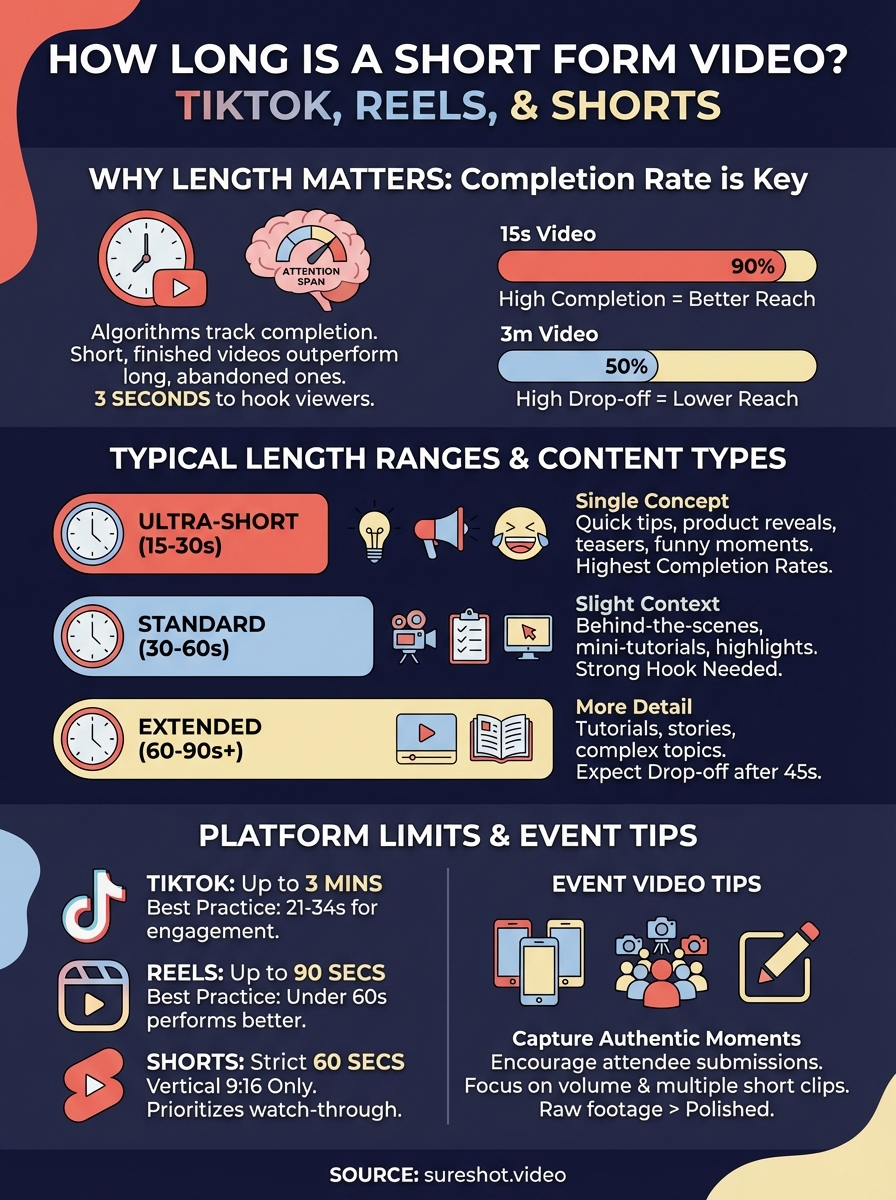
Your video's length directly controls whether viewers stick around or scroll away. Platform algorithms track completion rates with obsessive precision, and a 15-second video that 90% of viewers finish will always outperform a 3-minute video that most people abandon halfway through. Every extra second you add increases the risk that someone bails before your message lands, which means choosing the right duration affects your reach more than almost any other factor.
The completion rate game
People scroll through short form content at incredible speeds, giving you roughly 3 seconds to hook them before they move on. Platforms reward videos that keep viewers watching until the end because high completion rates signal quality content worth showing to more people. A 60-second video needs multiple compelling moments to prevent drop-off, while a 15-second clip can survive on one strong opening. TikTok favours replayed videos, Instagram prioritizes completion rates in the first hour, and YouTube Shorts tracks watch-time percentage. Understanding how long is a short form video matters less than understanding what length your content can sustain while maintaining that crucial completion metric.
The difference between a video that gets shared and one that gets skipped often comes down to whether you honored the viewer's time.
How to choose the right short video length
Your content's purpose determines the ideal video length, not arbitrary time limits. Match your duration to your message complexity rather than defaulting to the maximum allowed time. A product teaser works perfectly at 15 seconds, while explaining how to choose the right short video length might need 60 to 90 seconds. Start by outlining your key points, then time how long it takes to deliver them naturally without rushing or padding.
Match length to viewer context
Different viewing contexts demand different lengths. Videos on your event page or website can run longer because viewers arrived with intent and expect more information. Social media feeds require tighter clips since people scroll with minimal attention spans. Event recaps perform well at 30 to 45 seconds, behind-the-scenes content holds attention for 15 to 30 seconds, and tutorial-style videos need 60 to 90 seconds to feel complete. Consider where your audience will see the video first, then optimise for that specific context.
Test and adjust based on data
Your actual performance data matters more than industry averages. Track completion rates for videos at different lengths to identify patterns in your specific audience behavior. Drop-off points reveal whether your content drags or moves too fast. Platform analytics show you exactly when viewers lose interest, letting you trim future videos to that sweet spot.
Your best performing video length is whatever keeps your specific audience watching until the end.
Most event organizers find their ideal range after creating 10 to 15 videos and analysing which durations consistently earn higher engagement and shares.
Typical short form video length ranges
Short form videos fall into three distinct duration categories that serve different content types. Understanding these ranges helps you match your message to the format that performs best, rather than guessing or maxing out every platform's time limit. Most creators find their sweet spot within these established patterns after testing which length delivers the strongest completion rates for their specific content style.

The ultra-short range (15-30 seconds)
Videos in this bracket work best for single-concept content that hits fast and hard. Product reveals, quick tips, funny moments, and event teasers thrive here because they deliver one clear message without requiring viewers to invest serious attention. This range consistently earns the highest completion rates since most viewers stick around for content that respects their scrolling habits. When someone asks how long is a short form video that actually gets watched, 15 to 30 seconds represents the safest bet across all platforms.
The standard range (30-60 seconds)
Content that needs slight context or multiple points lives in this middle zone. Behind-the-scenes clips, mini-tutorials, and event highlights perform well at these durations because you have enough time to build interest and deliver payoff. Videos approaching 60 seconds require stronger hooks and pacing since viewer drop-off increases significantly after the 45-second mark.
The best video length is always the shortest one that fully delivers your message.
Platform limits for TikTok, Reels, and Shorts
Each major platform enforces different maximum lengths, though all three have expanded their limits recently to compete for creator attention. Knowing these specific caps prevents you from creating content that gets rejected or cropped, and understanding when to use the full limit versus stopping short helps you maximise engagement across multiple platforms simultaneously.
TikTok's expanding limits
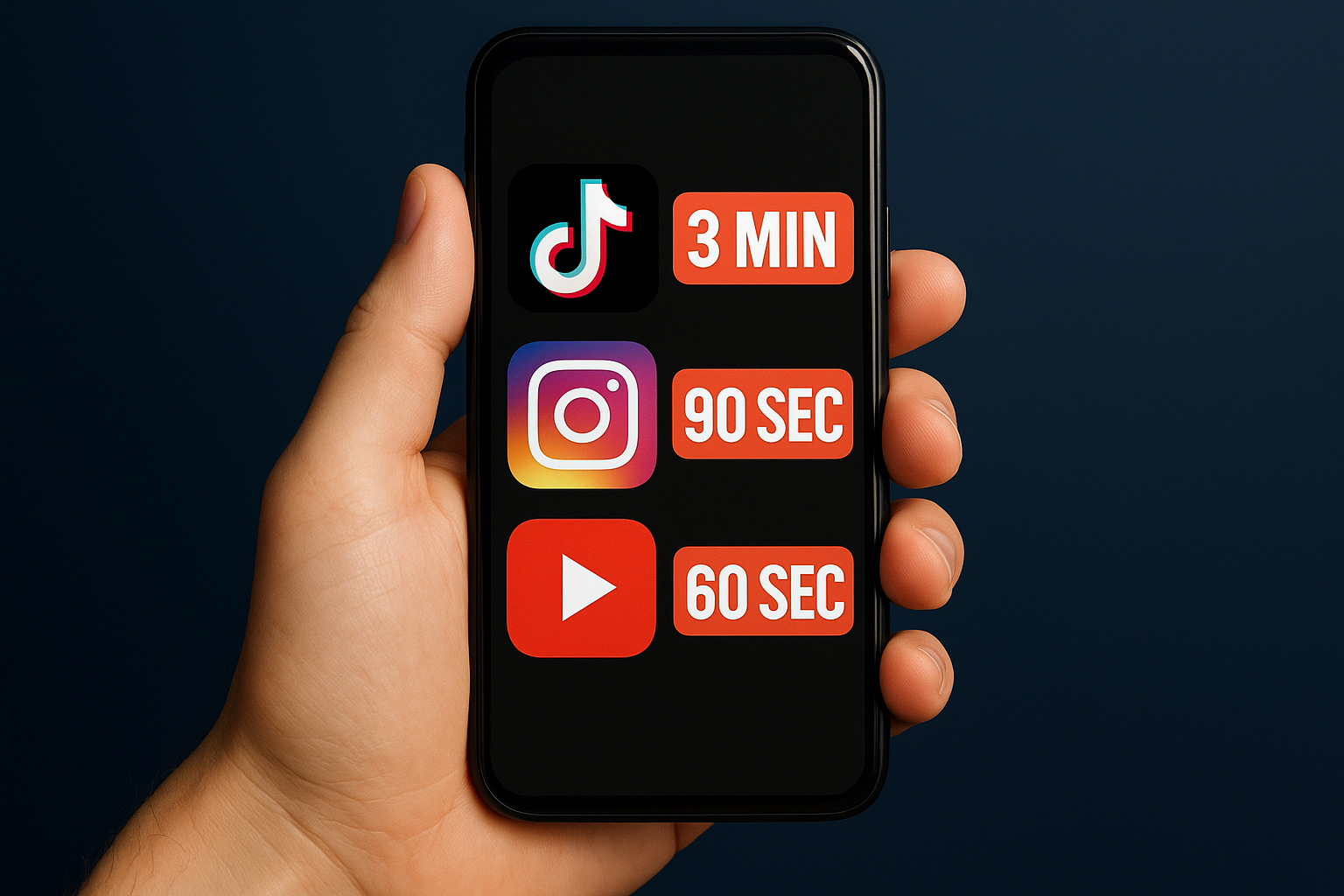
TikTok now allows videos up to 3 minutes long, tripling its original 60-second maximum that defined the platform's early identity. You can upload longer content, but completion rates drop significantly after 60 seconds since TikTok's audience expects quick hits. The platform still favours shorter videos in its algorithm, making the expanded limit more useful for specific content types like tutorials or storytelling rather than general entertainment. Most successful TikTok creators still aim for 21 to 34 seconds because that range consistently delivers the highest engagement and sharing rates.
Instagram Reels restrictions
Instagram caps Reels at 90 seconds, positioning itself between TikTok's brief origins and YouTube's longer formats. The platform originally launched with a 15-second limit before expanding to match creator demands. Videos under 60 seconds perform better in the Instagram algorithm, particularly when posted during peak hours. Reels also appear in multiple places across Instagram including the main feed, Explore page, and dedicated Reels tab, which means understanding how long is a short form video matters less than creating content that works across these different contexts.
YouTube Shorts boundaries
YouTube Shorts maintains a strict 60-second maximum with no plans to expand despite competitor changes. Content must be filmed vertically in a 9:16 aspect ratio to qualify as a Short rather than a regular video. The platform's recommendation algorithm treats Shorts differently from standard YouTube uploads, prioritising watch-through rate over total watch time, which makes every second count toward keeping viewers engaged until the final frame.
Platform limits tell you the maximum allowed length, but your audience attention span tells you the optimal length.
Short form video tips for events
Event content performs best when you capture authentic moments as they happen rather than staging elaborate productions that interrupt the experience. Your attendees already create hundreds of short videos during events, and tapping into that natural behavior through a simple collection system delivers better results than hiring a full production crew. Keep your approach lean, focus on genuine reactions, and prioritise volume over perfection since raw authenticity outperforms polished corporate footage in short form formats.
Capture multiple angles quickly
Getting diverse perspectives matters more than perfect composition when filming events. Set up your collection system before the event starts so attendees know how to submit videos immediately when exciting moments happen. Encourage people to film different areas and activities rather than everyone capturing the same main stage view. Multiple 15 to 20 second clips from various spots give you better editing options than one long static shot, and shorter submissions mean higher completion rates when you share the content later.
The best event videos come from attendees filming what genuinely excites them, not what you told them to capture.
Key takeaways
Understanding how long is a short form video gives you strategic control over completion rates and algorithm performance across all major platforms. Most platforms cap videos at 60 seconds to 3 minutes, but your best length matches your message rather than maxing out available time. Videos between 15 and 30 seconds consistently earn the highest completion rates, while 60 to 90 seconds work when your content needs extra context or multiple points to land effectively.
Event organizers benefit most from collecting authentic attendee footage at these shorter durations instead of investing in traditional long-form production. The real competitive advantage comes from content volume and perspective variety rather than expensive production quality. Platform algorithms reward videos people actually finish watching, which means shorter often performs better than longer. Book a demo to see how SureShot helps you collect and manage short form video content from your event attendees without complicated workflows or technical headaches.