
You've seen it. The perfectly lit, professionally shot event video that gets 47 views and zero shares. Then there's the shaky phone footage from someone in the crowd that somehow gets passed around for weeks. That's the difference between content you made and content people actually care about. Videography content in 2026 isn't about production budgets or fancy equipment. It's about authenticity, and it's about giving people the tools to capture what matters to them.
Why Most Event Videos Don't Work
Professional videography looks great in a portfolio. It doesn't perform on social media.
The problem isn't quality. It's perspective. When you hire a videographer, you get one angle, one story, one carefully curated version of what happened. That's fine for a highlight reel, but it's not how people experience events.
Real experiences are messy. They're multiple perspectives, unexpected moments, reactions you didn't plan for. Local content is seeing increased viewership precisely because it feels real, not manufactured.
The Authenticity Problem
People scroll past ads. They stop for their mate's story.
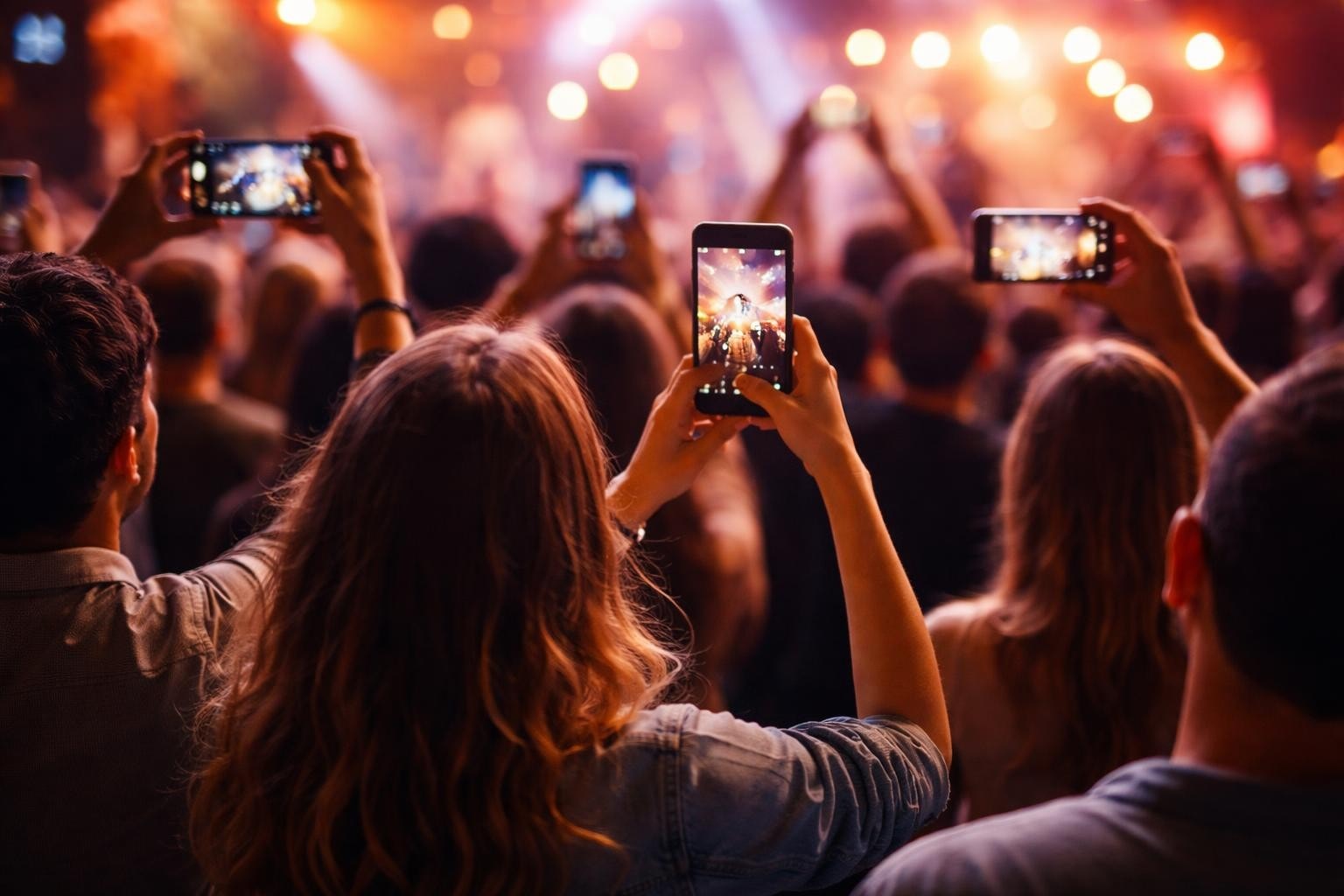
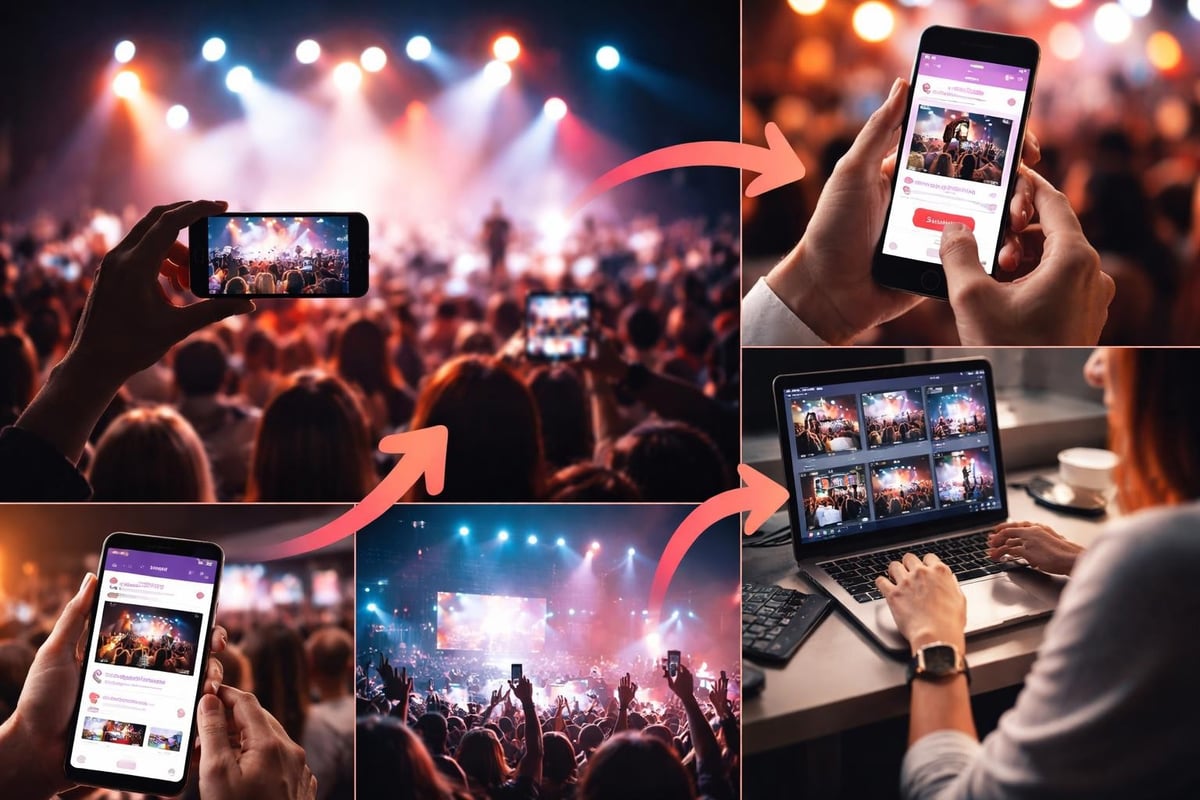
Your attendees are already filming. They're capturing moments that matter to them, from angles you'd never think to shoot. That content has something your professional footage doesn't: it's theirs. They're invested in it. They'll share it.
The shift isn't coming. It's here. User-generated videography content outperforms branded content because it doesn't feel like marketing. It feels like proof.
What Actually Makes Videography Content Spread
Short answer: people share what makes them look good or feel something.
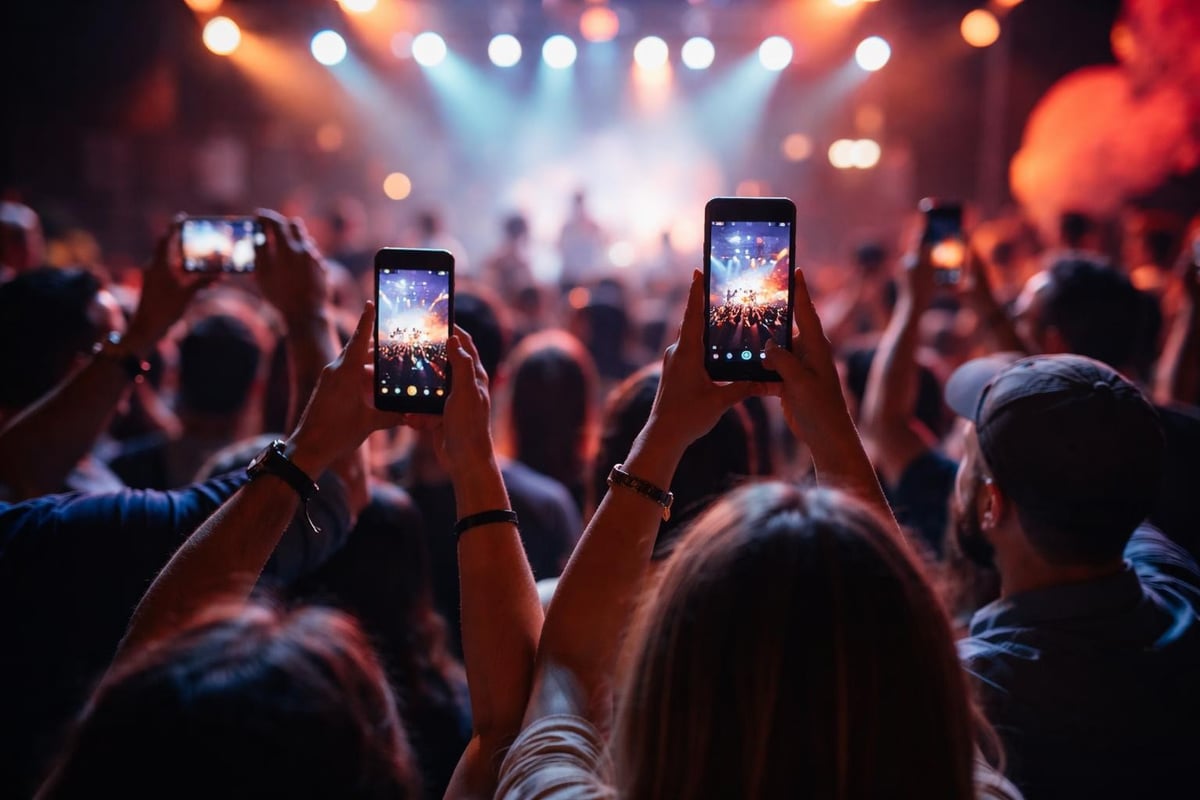
Your professionally shot recap might be beautiful. But the clip someone took of their reaction to a surprise performance? That's shareable. It's personal. It tells a story they're part of.
Here's what works:
- Multiple perspectives: Ten people filming the same moment creates ten different stories
- Emotional authenticity: Real reactions beat scripted content every time
- Social proof: When attendees share, their networks see genuine endorsement
- Reduced friction: Make it easy to capture and share, and people will
The rise of silent videos and smart workflows shows how consumption habits are changing. People watch on mute. They want quick, digestible moments. User-generated content already fits that format.
The Economics of Real Content
Professional event videography costs money. Lots of it. You're paying for equipment, crew, editing time, revisions. Then you get one video, maybe a few cuts for different platforms.
User-generated content flips that model. Your attendees bring the cameras. They do the shooting. You just need a system to collect, curate, and distribute what they capture.
| Traditional Approach | User-Generated Approach |
|---|---|
| Single perspective | Multiple viewpoints |
| High production cost | Minimal cost |
| One final video | Dozens of clips |
| Limited reach | Organic social spread |
| Weeks to deliver | Real-time sharing |
The math is simple. More content, less money, better reach.
Building a System That Works
You can't just ask people to film and email you clips. That doesn't work. You need infrastructure.
The best UGC platforms handle three things: collection, curation, and distribution. Your attendees need an easy way to submit content. You need an easy way to sort through it. And you need an easy way to get the good stuff out to the world.
Collection Mechanics
Give people a reason to film. Make it part of the experience, not an afterthought.
QR codes work. Simple instructions work. "Film your reaction and share it" works less well than "Capture this moment and you might see yourself in our highlight reel." Incentives matter. Recognition matters.
The technical bits matter too. People won't upload via email. They need a mobile-first submission flow that works in three taps. Video production guidelines emphasize quality standards, but for user content, you're balancing quality with volume. You want enough footage to choose from.
Key collection requirements:
- Mobile-optimized submission
- Clear instructions at the event
- Minimal friction (no account creation)
- Immediate confirmation they've submitted
- Optional: small incentive for participation
Curation Without Crying
Here's where most organisations fail. You get 200 video clips. Half are sideways. Quarter are too dark to use. The rest are a mix of gold and garbage.
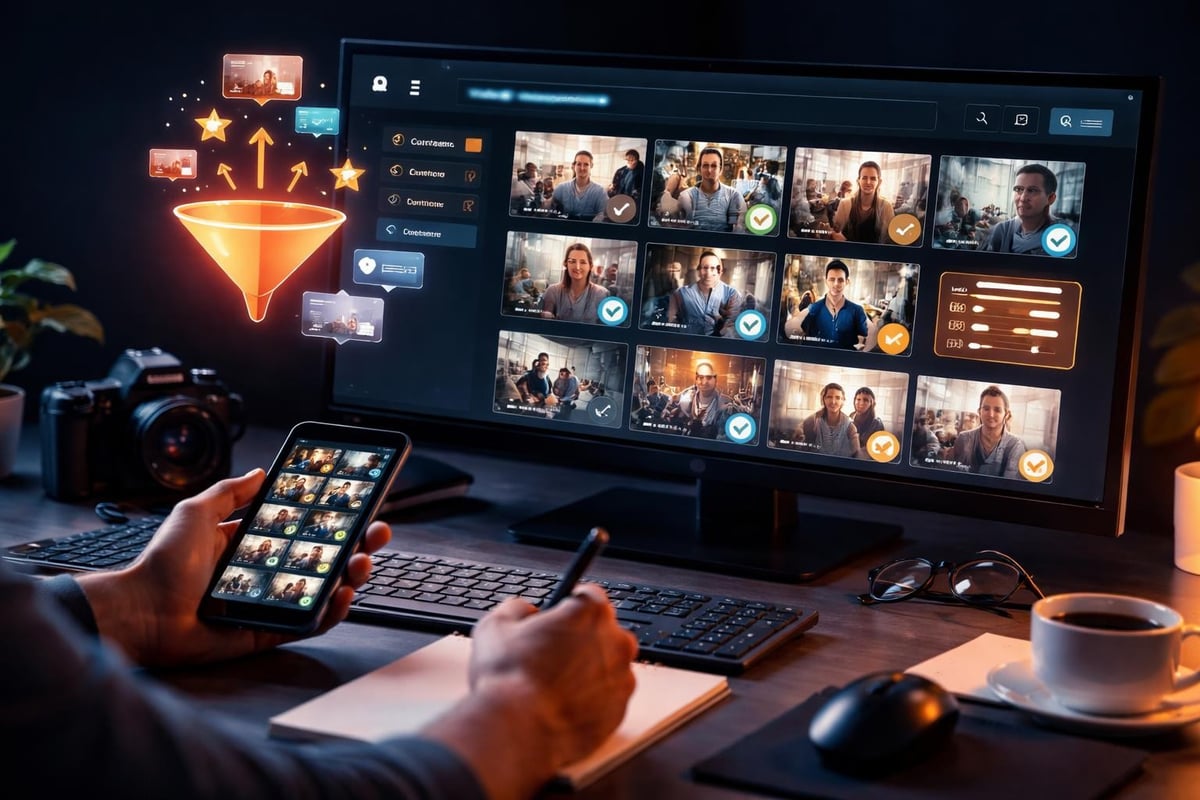
You need smart tools to help sort, but humans to decide. Smart filtering can flag technical issues, identify faces, and spot duplicate shots. It can't tell you which moment captures the vibe you're after. That's still you.
Automating event video curation means letting tech handle the heavy lifting so you can focus on storytelling. The platform sorts. You select. Then you edit together something that feels cohesive but still authentic.
Distribution Strategy That Actually Works
You've curated great content. Now what?
Most people make one video and call it done. That's leaving value on the table. You've got dozens of clips. Each one is a potential post, story, or reel.
Platform-Specific Cuts
What works on LinkedIn doesn't work on TikTok. Different platforms, different audiences, different formats.
Short-form dominates everywhere now. Video marketing trends confirm what you already know: people want quick hits. But "short" means different things on different platforms.
- Instagram Reels: 15-30 seconds, vertical, punchy
- TikTok: 10-60 seconds, trend-aware, personality-driven
- LinkedIn: 30-90 seconds, professional context, value-focused
- Facebook: 60 seconds, broader appeal, more storytelling
You're not making four videos. You're cutting the same content four ways. The source material is identical. The presentation changes.
Timing and Cadence
Post during the event. Post after the event. Keep posting weeks later.
Real-time sharing builds FOMO. Post-event recaps extend the conversation. Throwback content keeps you visible. With enough source material, you can drip-feed content for months.
How to promote an event isn't just about pre-event marketing. Post-event content builds anticipation for next time. People see authentic footage and think "I want to be there."
The Technical Bits You Can't Ignore
Authenticity matters. So does not looking terrible.
You're working with phone footage. Quality varies. Lighting varies. Audio is usually rough. But there are baseline standards you can enforce without losing the authentic feel.
Quality Thresholds
Set minimums, not maximums. You want vertical video, reasonable lighting, and audible audio. You don't need 4K, professional color grading, or studio sound.
Technical checklist:
- Minimum 1080p resolution
- Vertical orientation (9:16) or square (1:1)
- Audible dialogue/sound
- Stable enough to watch (some shake is fine)
- Adequate lighting (faces visible)
Video format best practices vary by platform, but for user-generated content, you're usually working with MP4 files shot on phones. That's fine. That's what people expect.
Rights and Consent
This isn't optional. You need explicit permission to use someone's content.
When people submit footage, they're granting you rights. Make that clear upfront. Simple terms, no legal jargon. "By submitting, you give us permission to edit and share your video" works better than a paragraph of legalese.
Best consent management practices ensure you're covered legally while keeping the process smooth for participants. People are generally happy to share if they know what you're doing with their content.
Making It Part of Your Event Strategy
Videography content isn't a side project. It's a core component of modern event marketing.
Plan for it from the start. Budget for a platform. Brief your attendees. Create moments worth filming. The best user-generated content comes from events designed to be captured.
Pre-Event Setup
Tell people they're expected to film. Make it part of the experience.
Include it in your event communications. "Bring your phone, capture the moments that matter to you, share them with us." Simple. Clear. Actionable.
Set up submission infrastructure before the event. Test it. Make sure it works when 50 people try to upload at once. Social media content curation tools need to handle volume without breaking.
During the Event
Prompt people to film. Give them specific moments to capture.
"We're about to announce the winner. Get your phones ready." That kind of direction works. You're not staging it. You're just making sure people don't miss the moment.
Have visible QR codes for submission. Make uploading as easy as filming. The less friction, the more content you'll get.
Post-Event Workflow
You've got the footage. Now you need a system to process it quickly.
Post-event timeline:
- Day 1: Platform sorts submissions, flags best clips
- Day 2-3: Human review, select hero moments
- Day 4-5: Edit platform-specific cuts
- Day 6-7: Begin distribution across channels
- Ongoing: Drip-feed content over following weeks
Speed matters. The longer you wait, the less relevant it becomes. But rushed editing looks sloppy. Find the balance.
Real Results From Real Events
Theory is nice. Results matter.
Events using user-generated videography content see measurable improvements across key metrics. More social shares. Higher engagement rates. Lower production costs. Better brand recall.
| Metric | Traditional Video | User-Generated Content |
|---|---|---|
| Avg. shares per post | 12-30 | 85-200 |
| Engagement rate | 2-4% | 8-15% |
| Production cost | £2,000-5,000 | £200-800 |
| Content volume | 1-3 videos | 20-100+ clips |
| Time to publish | 2-4 weeks | 1-3 days |
The numbers tell the story. More content, lower cost, faster turnaround, better performance.
Common Mistakes to Avoid
You'll mess this up the first time. Everyone does. Here's how to mess up less.
Don't:
- Wait until after the event to set up infrastructure
- Accept every piece of footage regardless of quality
- Ignore platform-specific formatting requirements
- Forget to get proper consent and rights
- Over-edit to the point it loses authenticity
Do:
- Test your submission system before go-live
- Set clear quality baselines and stick to them
- Create multiple cuts optimised for each platform
- Have airtight consent processes built in
- Keep edits minimal and authentic-feeling
The biggest mistake is treating user-generated content like a backup plan. It should be your primary strategy, with professional footage as the supplement.
What's Next for Videography Content
The trend is clear. Authentic beats polished. Multiple perspectives beat single viewpoint. User-generated beats brand-generated.
In 2026, the organisations winning at event marketing are the ones making their attendees the stars. Not hiring expensive crews. Not spending weeks in post-production. Just giving people the tools to capture what matters and sharing those stories.
Creating brand communities happens when people feel ownership. When their content gets featured, they become invested. They tell their networks. They come back next time.
The technology is there. The platforms exist. The audience expectations have shifted. What's missing is the willingness to let go of control and trust your attendees to tell your story. Because here's the thing: their version is probably better than yours anyway.
Videography content works when it's real, and it's real when it comes from the people who were there. Stop trying to control every frame and start giving your attendees the tools to become storytellers. SureShot handles the technical complexity while keeping the authentic feeling intact, turning event footage into content that actually spreads. Your attendees bring the cameras. We'll help you turn their moments into marketing.