
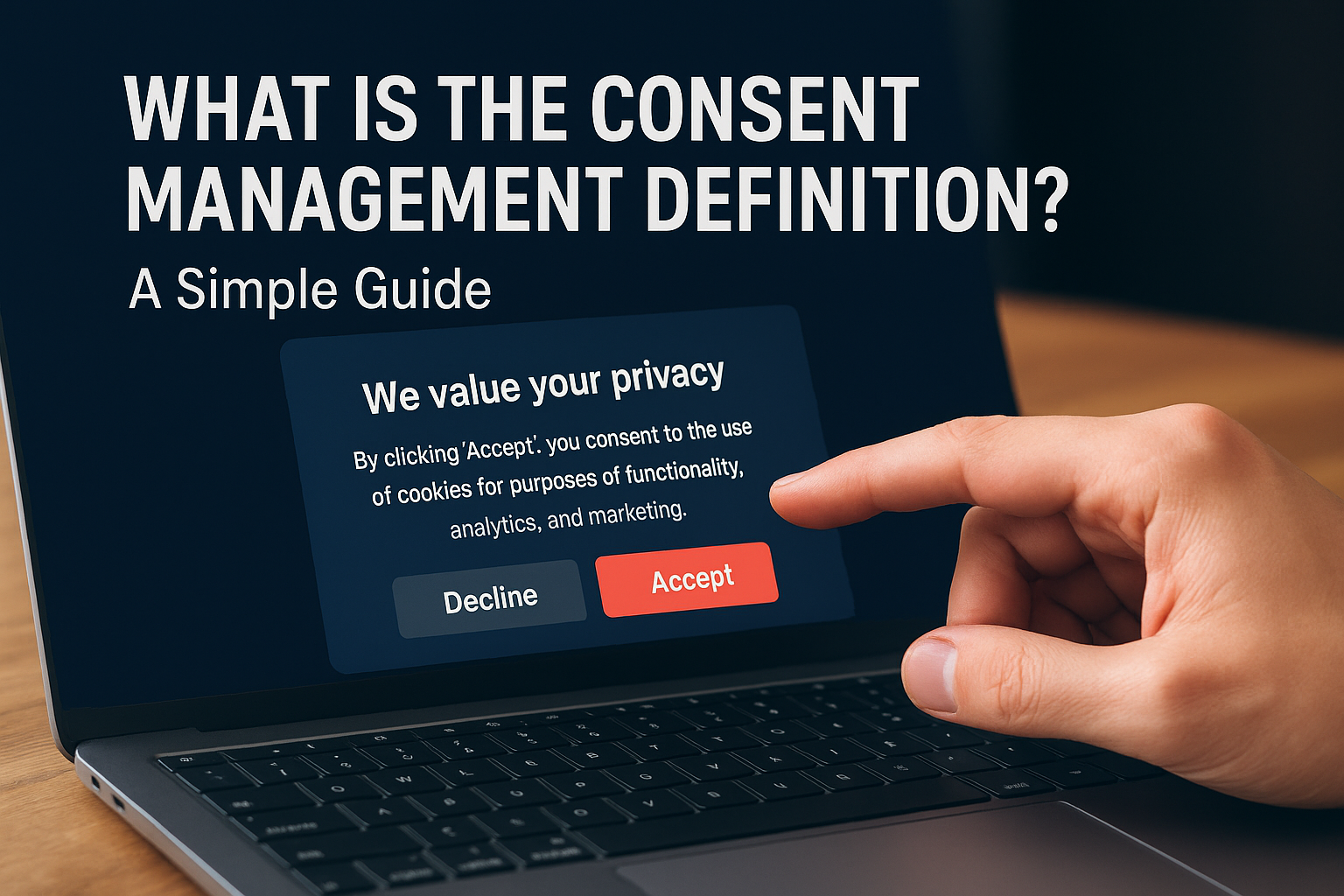

What Is the Consent Management Definition? A Simple Guide
Consent management is the process of asking people for permission before you collect or use their personal data. It includes getting their approval, recording their choices, and letting them change their mind later. Think of it as the system that powers those cookie banners you see on websites or the permission requests you get when downloading an app. When someone agrees to let you use their information, you need to track that decision and honour it.
This guide breaks down everything you need to know about consent management. You'll learn why it matters for your business, how to implement it correctly, and what tools can help you stay compliant with privacy laws like GDPR. We'll also cover the key concepts you should understand and explain what consent management platforms actually do. If you run events or collect user videos, we'll show you how consent management applies to your specific situation. By the end, you'll have a clear picture of how to handle user permissions the right way.
Why consent management matters
You face serious legal risks if you ignore consent management. Privacy regulations like GDPR in Europe and CPRA in California require you to get explicit permission before collecting personal data. Companies that skip this step can face fines up to €20 million or 4% of their annual revenue, whichever is higher. Beyond the financial penalties, you risk damaging your reputation when news of privacy violations spreads. Your business needs a clear system to document every permission you receive.
Legal compliance protects your business
Regulatory bodies actively enforce consent requirements across multiple jurisdictions. When you operate internationally, you must comply with different privacy laws in each region where your users live. The consent management definition covers not just the initial permission, but also your ability to prove that permission was given freely and can be withdrawn at any time. Regulators check your records during audits, so you need timestamped proof of every consent decision. Your documentation should show who gave permission, when they gave it, what they agreed to, and how they were informed.

Proper consent management turns compliance from a legal burden into a competitive advantage.
Trust builds stronger relationships
People share more information when they trust how you'll use it. By explaining clearly what data you collect and why, you show respect for your users' privacy. Transparent consent processes increase the likelihood that people will opt in to your services. Studies show that users prefer brands that give them control over their data. Your consent management system lets people update their preferences easily, which builds long-term loyalty. When users know they can revoke permission anytime, they feel safer engaging with your platform and sharing authentic content.
How to implement consent management
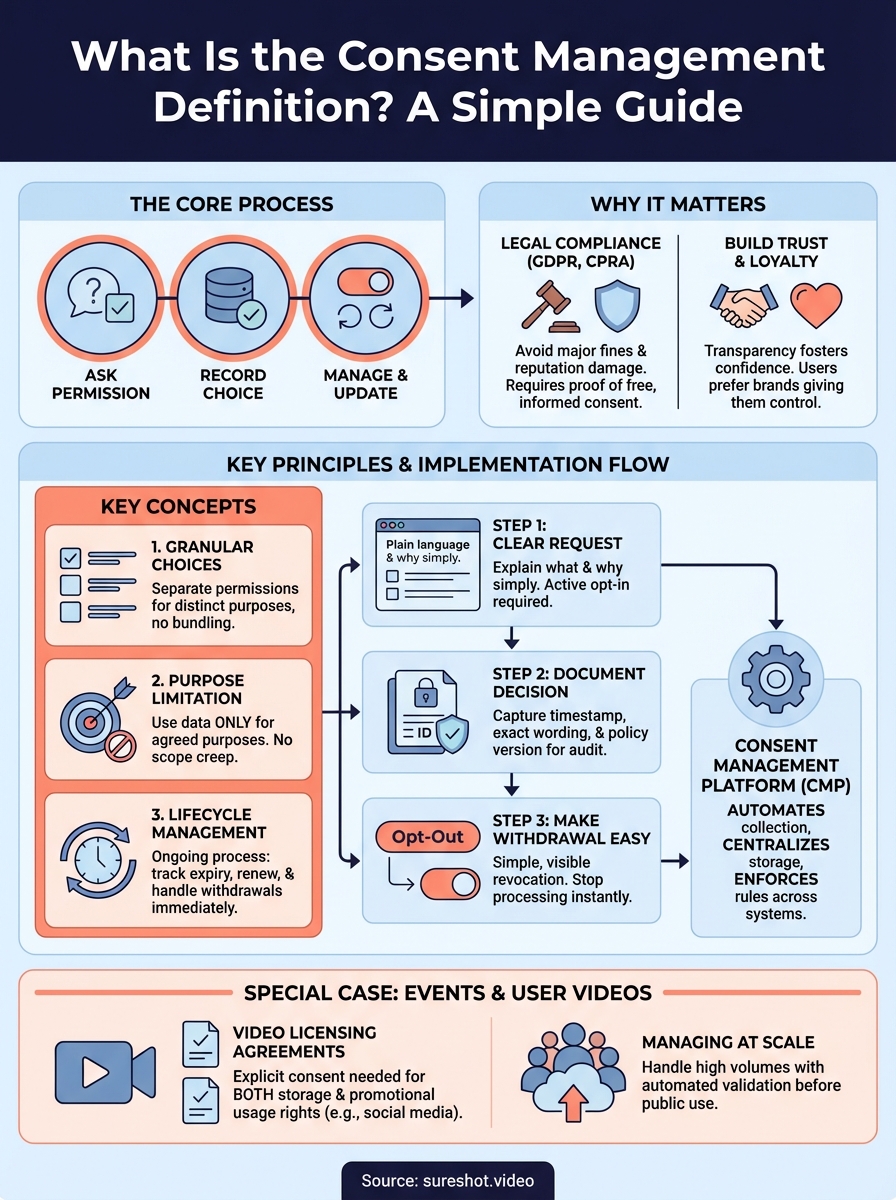
You need a systematic approach to handle consent properly. Start by mapping all the personal data you collect and identify the legal basis for processing each type. Your consent management system should cover every touchpoint where you interact with users, from website visits to app downloads to event registrations. Build your implementation around three core steps: requesting consent clearly, documenting decisions accurately, and making changes simple for users.
Start with a clear consent request
Your consent request needs to explain exactly what you're asking for in plain language. Avoid legal terminology that confuses people and focus on describing what data you'll collect and how you'll use it. Break down multiple purposes into separate checkboxes so users can choose what they're comfortable with. Pre-checked boxes don't count as valid consent under most privacy laws, so users must take an active step to agree. Include specific examples that illustrate your data use, like "We'll use your email to send event updates" instead of vague phrases like "marketing purposes."
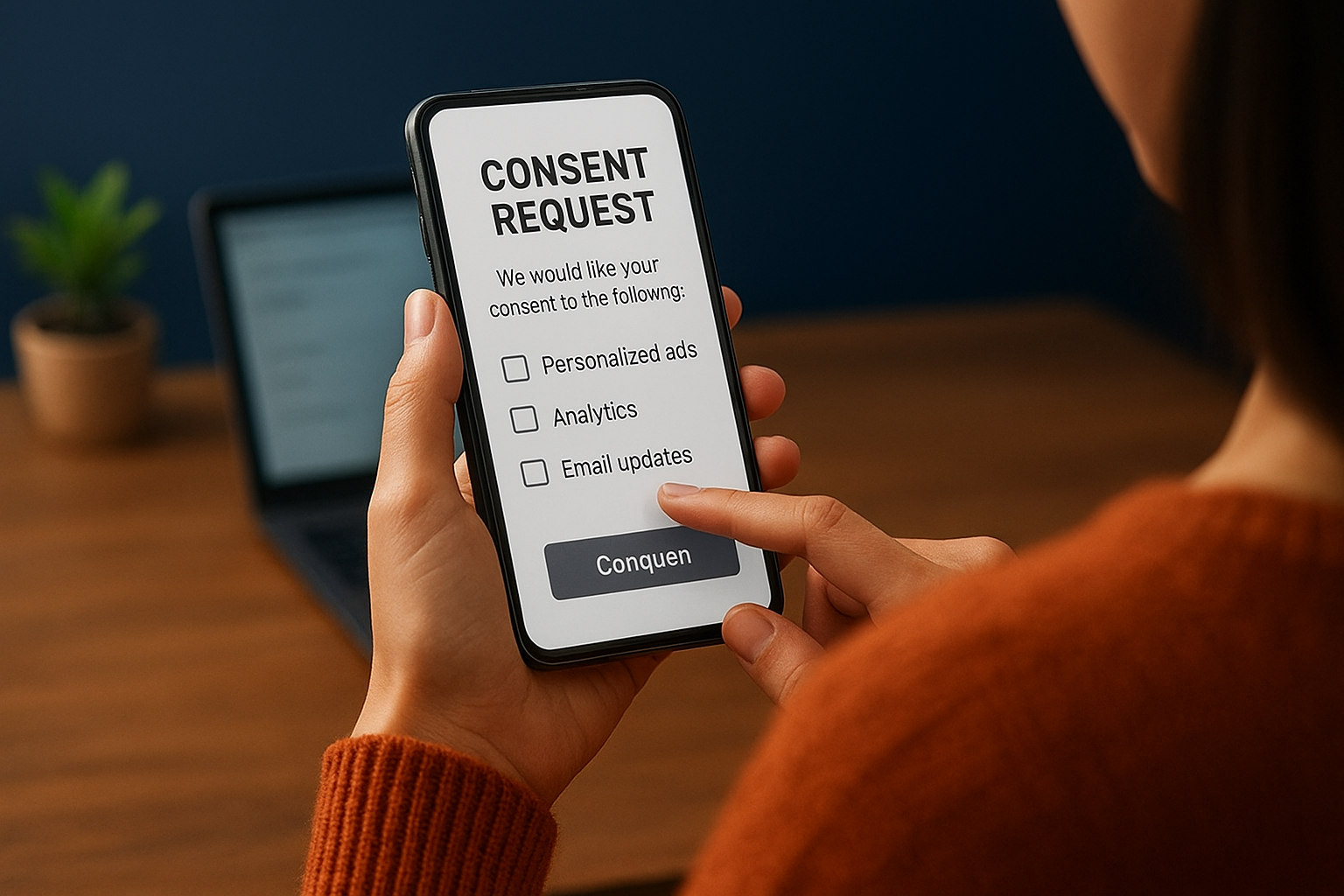
Clear consent requests turn privacy compliance into an opportunity to build trust with your users.
Document every decision
Recording consent properly protects both you and your users. Capture the timestamp when someone gives permission, along with the exact wording they saw when they agreed. Your system should store which version of your privacy policy was active at that moment and track any changes users make to their preferences over time. Create a unique identifier for each consent record so you can prove compliance during audits. The consent management definition includes this documentation requirement because regulators need to see evidence that permission was freely given. Store these records securely and make them accessible when users request their data.
Make withdrawal easy
Users must be able to revoke consent as simply as they gave it. Add a visible link in every communication that lets people update their preferences or opt out completely. Your consent management interface should show users all the permissions they've granted and allow them to toggle each one individually. Process withdrawal requests immediately and stop using their data for that purpose within your systems. Send confirmation when you've updated their preferences so they know the change took effect. Build automated workflows that remove users from relevant data processing activities as soon as they withdraw consent.
Key concepts in the consent management definition
Several fundamental principles shape how you should handle user permissions. The consent management definition includes specific requirements that go beyond simply asking for approval. You need to understand granular consent, purpose limitation, and lifecycle management to build a compliant system. These concepts work together to protect user privacy while giving you clear guidelines for data collection. Each principle addresses a different aspect of the relationship between you and your users.
Granular consent choices
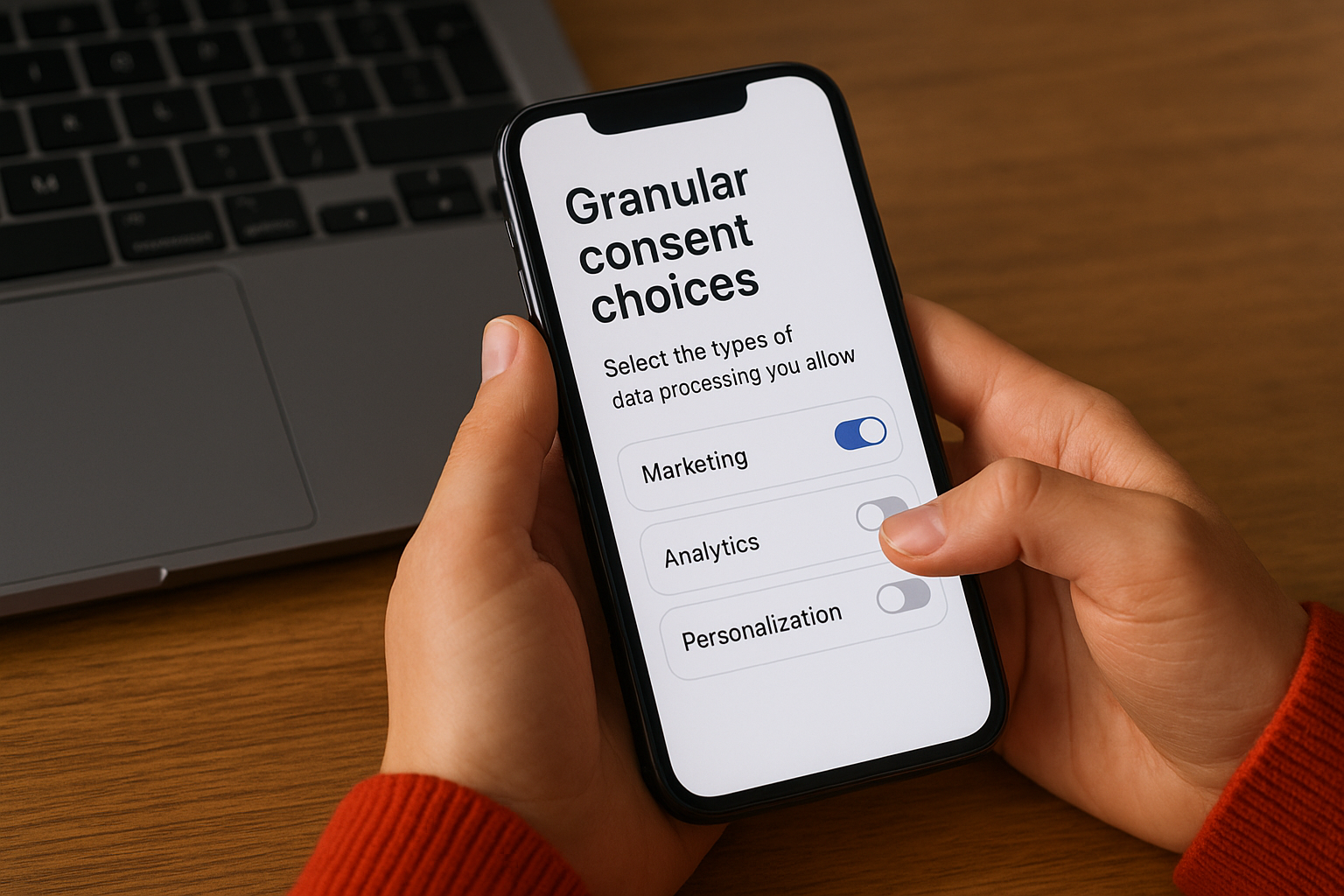
Users deserve control over different types of data processing activities. You cannot bundle all permissions into a single agreement and expect people to accept or reject everything at once. Instead, you must offer separate choices for each distinct purpose, like analytics, marketing, or personalization. Breaking consent into specific categories lets users opt in to the services they value while declining others. For example, someone might agree to let you use their video content for event promotion but refuse permission for advertising partnerships. Your system needs checkboxes or toggles for each category so users can select exactly what they're comfortable with.
Purpose limitation
You can only use personal data for the specific purposes users agreed to. The consent management definition requires you to state your intentions upfront and stick to them without expanding into new uses later. When you collect email addresses for event notifications, you cannot suddenly start sending promotional offers without asking for additional consent. Each purpose needs its own permission, and you must respect the boundaries users set. Courts have ruled that vague language like "improving our services" fails to meet this standard because it doesn't tell users what you'll actually do with their information.
Purpose limitation prevents scope creep and keeps your data use aligned with user expectations.
Consent lifecycle management
Consent isn't a one-time event but an ongoing relationship. You must track when permissions expire and request renewal at appropriate intervals, especially when your data practices change. Your system should send reminders before consent lapses and update records when users modify their preferences. Lifecycle management includes handling withdrawals, which means immediately stopping data processing for revoked purposes. The consent management definition covers this entire timeline because regulators expect you to maintain current, accurate records throughout your relationship with each user.
What a consent management platform does
A consent management platform handles the technical and administrative work of collecting, storing, and enforcing user permissions. These platforms automate consent requests across your digital properties and keep detailed records of every decision users make. Instead of building custom solutions from scratch, you can deploy a platform that understands privacy regulations and adapts to changes in the law. The software sits between your data collection systems and your users, ensuring that every interaction respects the permissions people have granted. Most platforms offer pre-built interfaces, integration tools, and compliance dashboards that reduce the burden on your technical team.
Automates consent collection
Platforms generate customizable consent forms that appear at the right moments in your user journey. You configure the platform to show permission requests when someone visits your website, downloads your app, or registers for an event. The system presents options in a clear format that meets legal requirements without requiring legal expertise from you. Automation ensures consistency across all your touchpoints, so users see the same professional consent experience whether they interact with your mobile app or desktop site. The platform tracks which version of your consent form each user saw, creating an audit trail that proves compliance.
Automation transforms consent management from a manual chore into a reliable, scalable system.
Centralizes preference storage
Your platform creates a single source of truth for all consent records. Every permission gets stored with metadata that includes timestamps, IP addresses, and the specific language users agreed to. This centralized database lets you query consent status before processing any personal data. Teams across your organization can check whether someone has granted permission for a particular purpose without manually searching through scattered records. The consent management definition requires this level of organization because regulators expect instant access to proof of permission during audits.
Enforces compliance rules
Platforms monitor your data activities and block actions that would violate user preferences. The system integrates with your analytics tools, email platforms, and advertising services to prevent unauthorized data use. When someone withdraws consent, the platform automatically propagates that decision across connected systems. Built-in rules check that your consent requests meet standards for different jurisdictions, updating automatically when regulations change. You receive alerts when consent is about to expire or when users need to reconfirm their choices.
Consent management for events and user videos
Events that collect user-generated videos require specific consent management practices. When attendees upload video clips from your event, you need explicit permission to use that content for promotional purposes, social media sharing, or archival documentation. The consent management definition extends beyond data collection to include intellectual property rights and content licensing. Your system must capture not just approval to store the video, but also clear agreements about how you can edit, distribute, and monetise the content. Event organizers face unique challenges because attendees create content in real time, often through mobile apps, which requires immediate and accessible consent workflows.
Video licensing agreements
You need separate consent for video storage and video usage rights. Attendees must understand that uploading a clip grants you specific permissions to feature their content in marketing materials or event recaps. Your consent interface should list each intended use clearly, such as "posting on social media," "including in promotional videos," or "sharing with event sponsors." Build checkboxes for different usage types so people can choose whether they want their videos used publicly or kept private. The platform should display consent terms before upload begins, not after the video is already submitted. Capture the attendee's identity along with their approval so you can prove who granted permission for each piece of content.
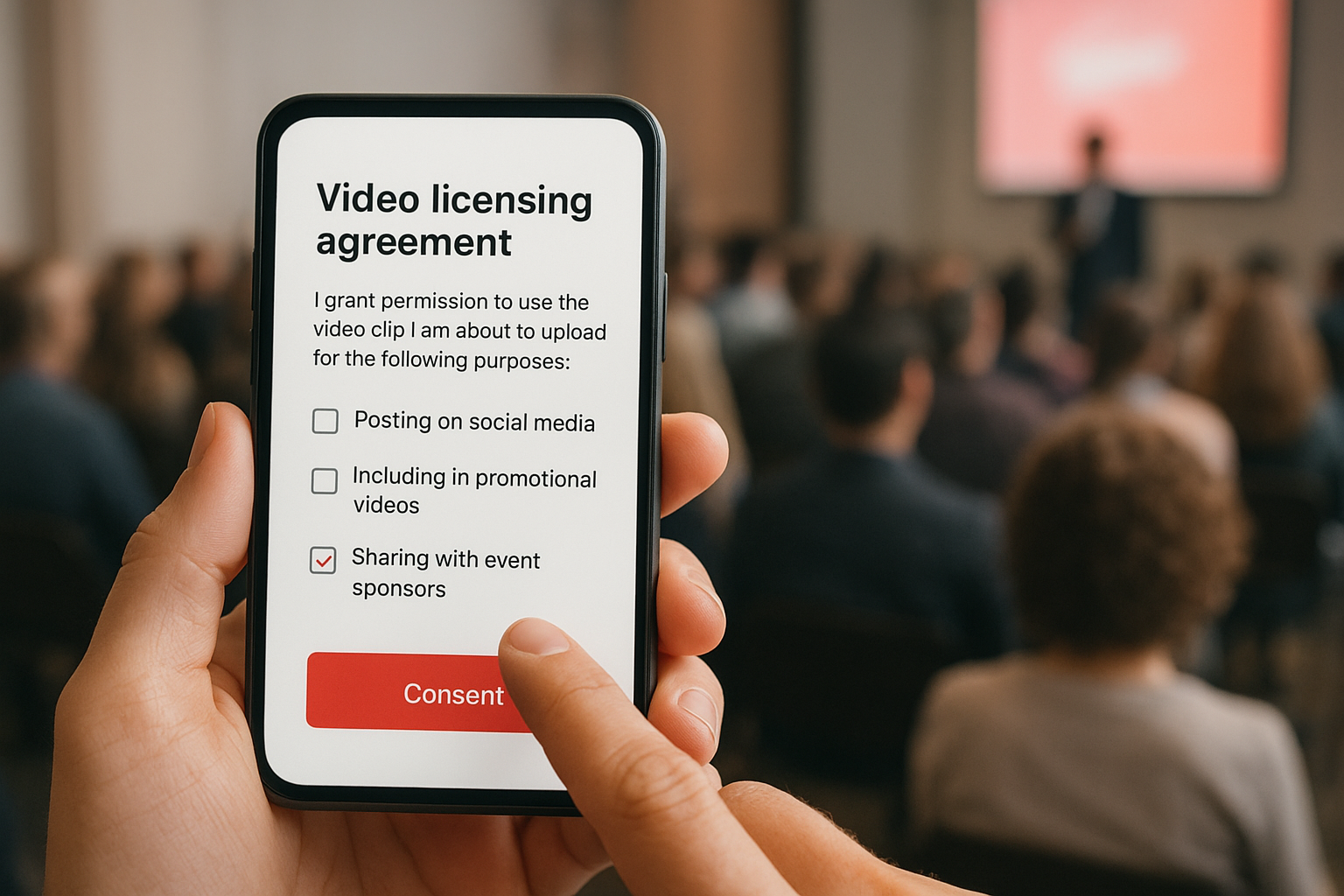
Clear video licensing consent protects both your promotional activities and your attendees' rights.
Managing consent at scale
Large events generate hundreds or thousands of video clips from multiple attendees. Your consent management system must handle volume without creating bottlenecks that slow down content collection. Automated workflows should validate that every uploaded video has proper consent attached before you use it in any public-facing materials. Track which videos have full commercial rights versus those with limited permissions so your team knows what content is available for each purpose.
Next steps with consent management
You now understand the consent management definition and how it applies to your data collection activities. Start by auditing your current practices to identify where you collect personal information and whether you have proper permissions in place. Review your consent requests to ensure they use clear language and offer granular choices that let users control their preferences. Document your processes so you can prove compliance if regulators ask for evidence.
If you run events and collect user-generated videos, you need a specialized approach that handles both data privacy and content licensing. Most generic consent platforms do not address the unique requirements of event video collection. For a plain-language breakdown of what those requirements actually are, see GDPR consent for event video.
SureShot built consent management specifically for event organizers who collect attendee videos. Book a demo to see how our platform handles video permissions, automates licensing agreements, and keeps you compliant while maximising the authentic content your attendees create.