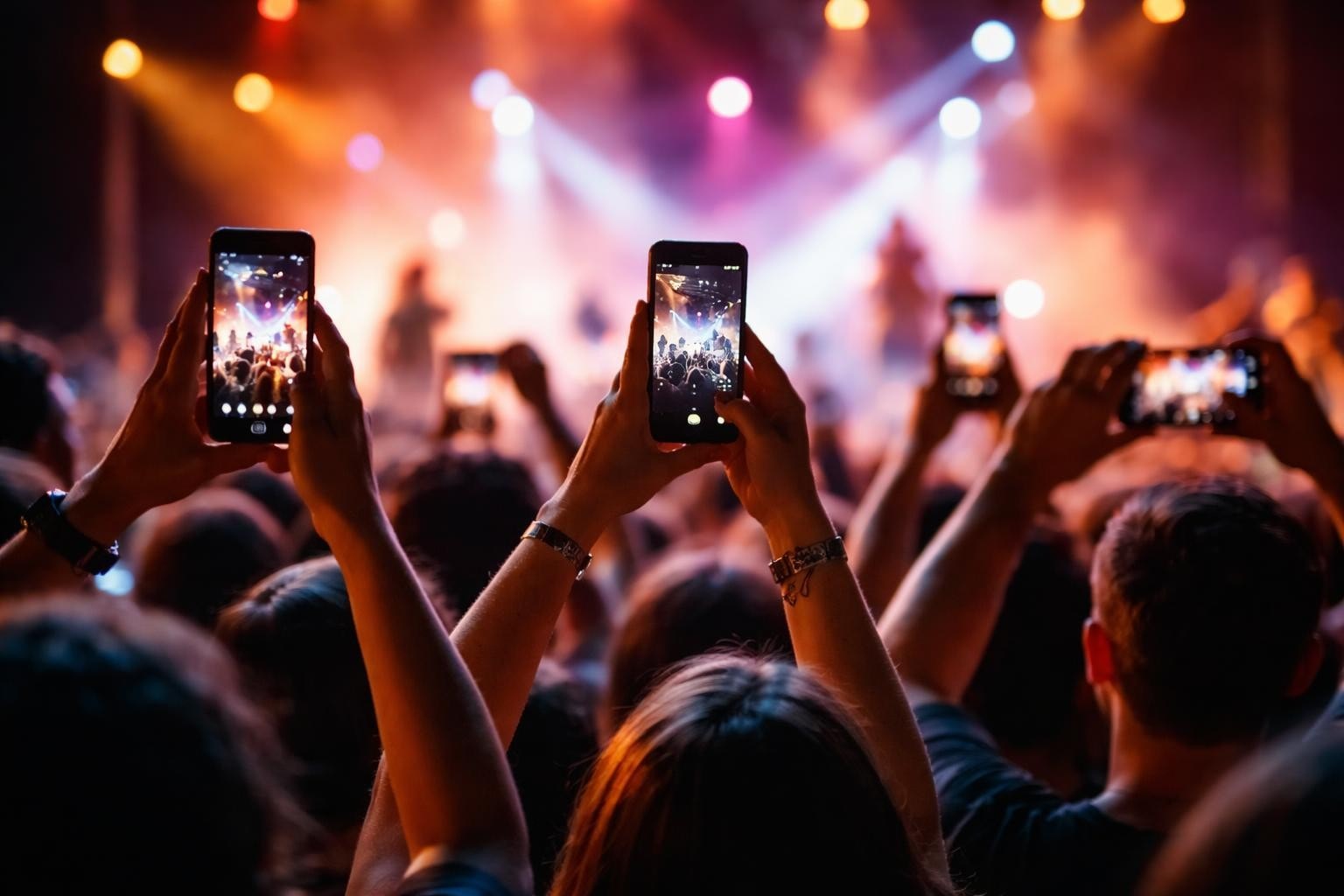

You don't need a film crew to make your video content work. The best footage often comes from people who were actually there, experiencing the moment. When event attendees pull out their phones and capture what's happening around them, they're creating something polished corporate videos can't replicate: authenticity. That's the shift happening right now in how brands and event organisers think about video content.
Why Attendee-Created Content Works Better
People trust other people more than they trust brands. Simple as that.
When someone shares a video from an event they attended, their mates don't see it as marketing. They see it as a genuine recommendation. That's why user-generated content platforms have become essential tools for event organisers who want their content to actually spread.
The production quality argument is dead. Viewers would rather watch slightly wobbly footage from someone genuinely excited about an experience than another over-produced corporate video that feels like everyone else's over-produced corporate video.
Here's what makes attendee footage valuable:
- It shows real reactions in real time
- It reaches networks you'd never access through paid promotion
- It costs a fraction of traditional video production
- It generates content at scale without scaling your team
- It builds community around your event or brand
The Economics Actually Make Sense
Hiring a video production team for a multi-day event? You're looking at thousands, maybe tens of thousands. And you'll get a highlights reel.
When you make your video strategy around attendee contributions instead, you're getting dozens or hundreds of unique perspectives. Each person becomes a camera operator, each phone becomes a production unit.
The maths works differently. Instead of paying for hours of a professional crew's time, you're providing the infrastructure that lets attendees share what they're already filming anyway. They're going to record it regardless. You're just making it easy for them to share it with you.
Setting Up Attendees for Success
You can't just ask people to "send us your videos" and expect quality results. You need a system.
First, make it stupid easy. If someone needs to email a large file or figure out a file transfer service, they won't bother. Mobile apps designed for event video solve this by putting everything in one place.
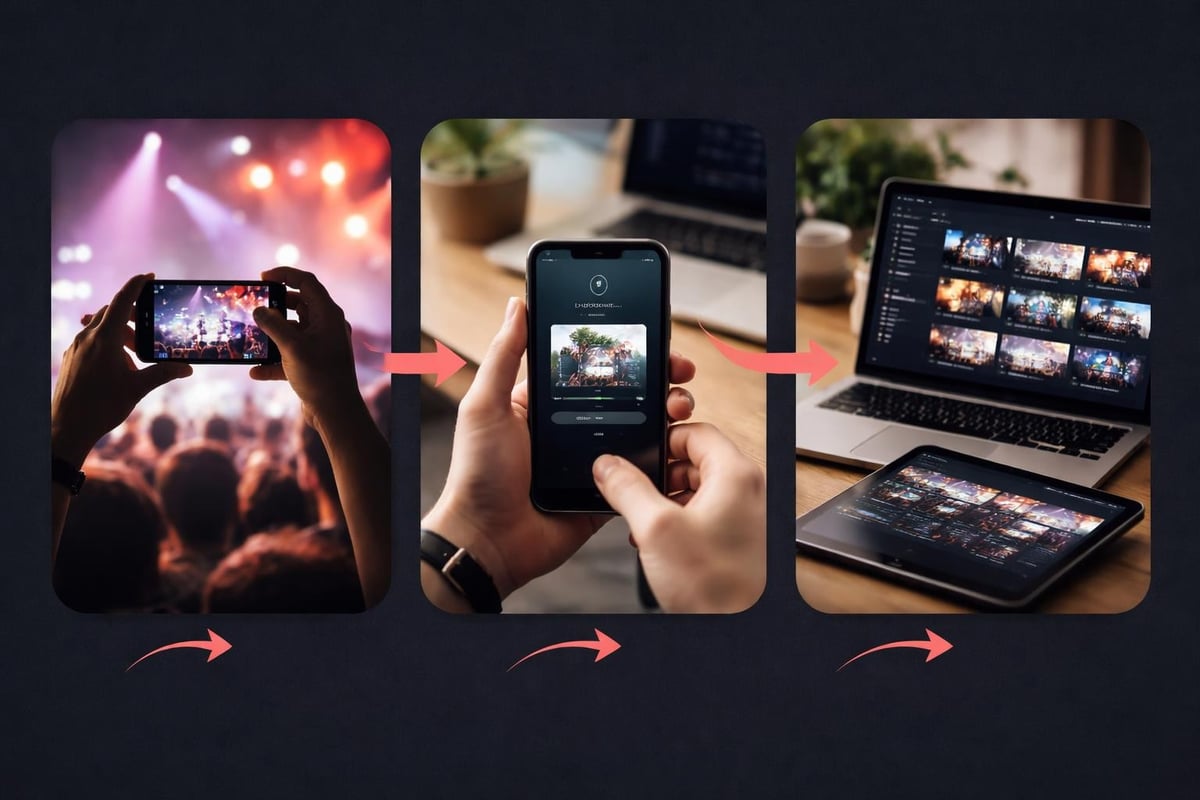
Second, give them direction without being prescriptive. Tell them what moments matter. "Capture your reaction when the headliner comes on" is better than "film the stage." Specific prompts get specific results.
Technical Stuff That Actually Matters
Most people aren't videographers. They need basic guidance, not a film school education.
Recording quality video comes down to a few fundamentals that work whether you're using a professional camera or an iPhone:
- Hold your phone steady (or brace it against something)
- Make sure there's enough light on your subject
- Get closer instead of zooming in
- Film horizontally for most content, vertically for social
- Check your audio levels matter more than you think
Sound quality separates watchable content from stuff people skip. Audio-first strategies aren't just for podcasters anymore. Even short event clips need clean sound.
That doesn't mean professional microphones. It means being aware of background noise, recording closer to your subject, and avoiding windy outdoor spots when possible.
Curating Without Killing the Vibe
Here's where most organisations mess up: they either post everything (and bore everyone) or they're so selective nothing gets published quickly enough to matter.
You need middle ground. And you need it automated.
When you make your video curation process manual, you create a bottleneck. Someone has to watch every clip, decide what's good, get approval, edit it, schedule it. By the time it goes live, the event's over and the moment's gone.
Smart content curation tools use AI to handle the first pass. They can identify clips with good lighting, steady camera work, clear audio, and actual content. They flag duplicates. They sort by timestamp and location.
| Manual Curation | AI-Assisted Curation |
|---|---|
| Hours per event | Minutes per event |
| Limited by team size | Scales with content volume |
| Inconsistent quality checks | Standardised criteria |
| Delayed publishing | Real-time or near-real-time |
| High labour cost | Lower operational cost |
You still make the final call on what represents your brand. But you're choosing from pre-filtered options instead of drowning in raw footage.
The Consent Conversation
You can't just grab people's content and use it. That's not how this works.
Clear consent management matters legally and ethically. When attendees submit content, they need to know exactly how you'll use it. Will it appear in promotional materials? Social media? Future event marketing?
Consent management platforms handle this without making it bureaucratic. People can grant usage rights as part of the upload process. Everything's documented. Everyone's protected.
Some organisers worry this creates friction. It doesn't. People want to share. They just want to know the terms.
Distribution That Doesn't Feel Forced
You've got the content. Now what?
The lazy approach is posting every video to your brand channels and hoping something sticks. That treats social media like a dumping ground.
Better approach: let the content spread organically first, then amplify what's already working.
When attendees share videos from your event to their own networks, watch what gets traction. Which clips get the most engagement? Which ones get shared beyond the original poster's followers? Those are your winners.
Smart distribution looks like:
- Attendees post to their channels first (authentic, reaches their networks)
- You monitor and identify high-performers
- You reshare the best content with credit to the creator
- You create compilations that tell a larger story
- You use different formats for different platforms
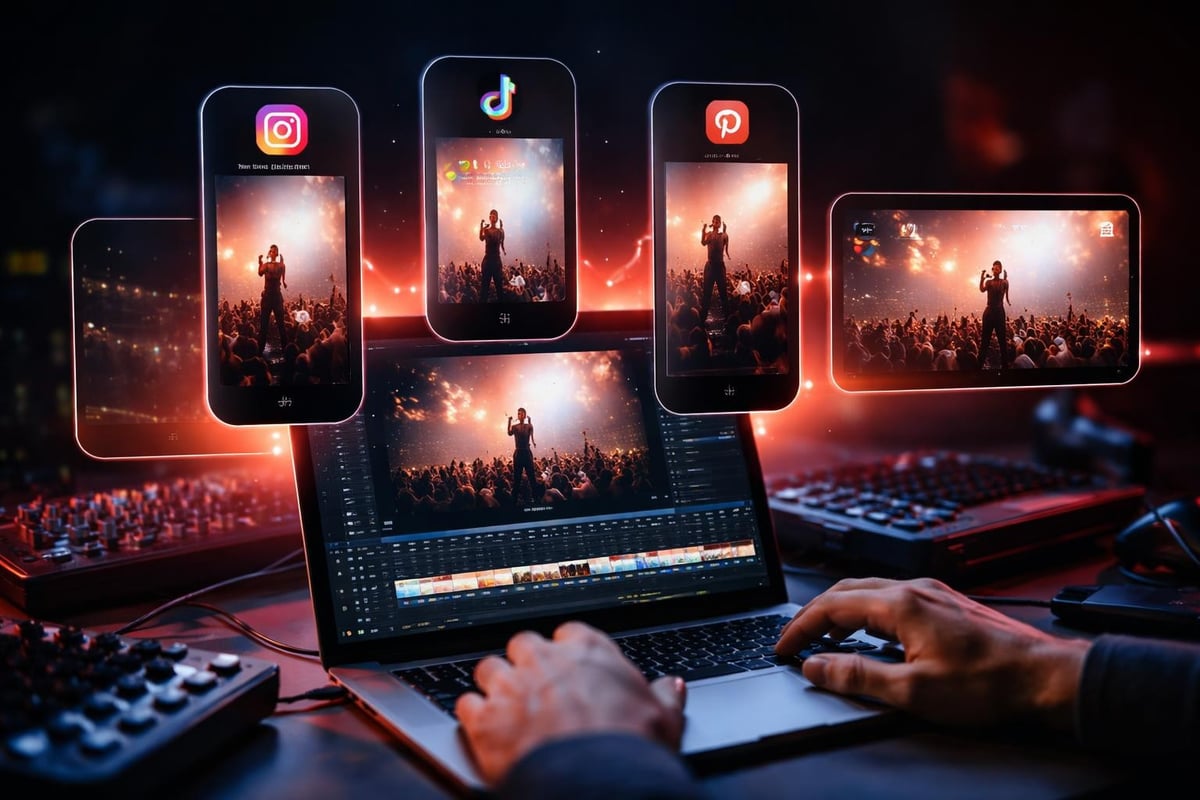
Speaking of formats, vertical versus horizontal matters more now than ever. Instagram Reels, TikTok, and YouTube Shorts want vertical. YouTube proper and Facebook still favour horizontal. Same event, different cuts.
Making It Work at Scale
One event with attendee video? That's manageable manually. Ten events? Fifty? You need systems that scale.
This is where automating event video curation becomes non-negotiable. You can't hire proportionally more people every time you add another event to your calendar.
Automation handles the repetitive stuff: ingesting videos, checking formats, applying basic quality filters, tagging by event and timestamp, generating thumbnails, creating initial cuts.
You handle the creative stuff: choosing which stories to tell, deciding on messaging, maintaining brand voice, engaging with creators.
The Ongoing Relationship
Here's what separates organisations that do this well from ones that don't: they treat content creators like community members, not content suppliers.
When someone contributes great footage, acknowledge it. Tag them when you share it. Include them in follow-up communications. Invite them to future events.
Building a brand community around your events means people show up already planning to create content. They're not just attendees anymore. They're storytellers who happen to be at your event.
That shift changes everything. Instead of begging for content, you're managing abundance.
Quality Control Without Being a Control Freak
Yes, you need standards. No, you don't need to micro-manage every frame.
Set clear guidelines for what you can't use: anything with competitor branding, content that violates someone's privacy, footage that misrepresents your event or brand, poor quality that reflects badly on everyone involved.
Beyond that? Let it breathe.
Some of the best event content has wonky framing or unexpected moments. That's the point. It's real. Understanding best practices for video production helps, but don't let perfect become the enemy of published.
Technical Standards Worth Enforcing
You do need minimum technical thresholds. Not because you're picky, but because unusable footage helps no one.
| Must Have | Nice to Have |
|---|---|
| Minimum resolution (720p) | 4K quality |
| Acceptable audio levels | Professional sound |
| Stable footage | Gimbal-smooth motion |
| Correct orientation | Perfect framing |
| Clear subject matter | Creative composition |
The "must have" column is about watchability. The "nice to have" column is bonus points.
When you make your video standards too rigid, you exclude great content that doesn't meet arbitrary criteria. When you have no standards, you publish unwatchable rubbish. Find your middle ground based on your audience and platforms.
Platform-Specific Considerations
Every social platform has its own culture and technical requirements. What works on LinkedIn bombs on TikTok and vice versa.
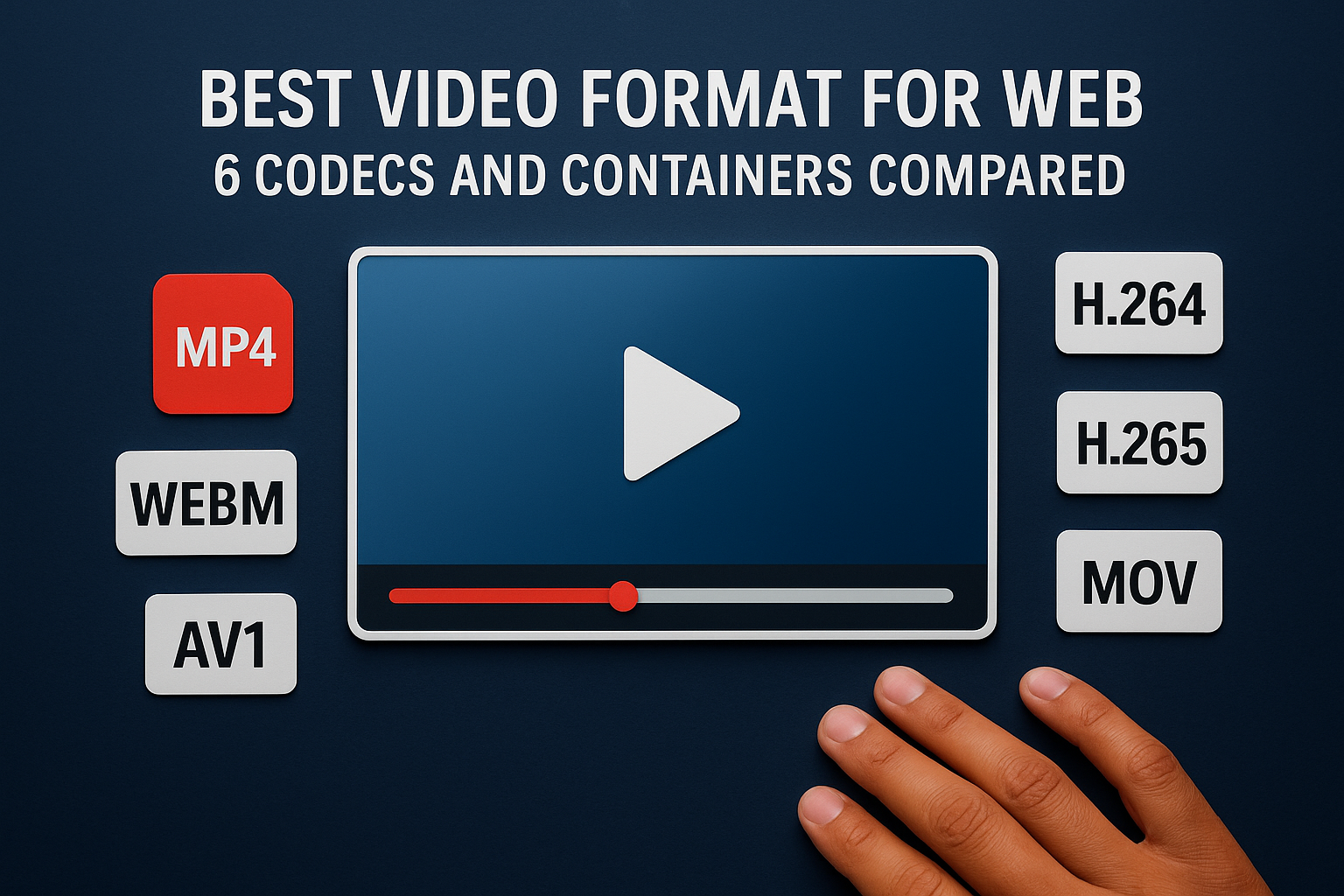
Choosing the best video format for web and social isn't about picking one option. It's about understanding where each piece of content will live and optimising accordingly.
Instagram wants vertical video under 90 seconds. YouTube Shorts wants vertical under 60 seconds. LinkedIn accepts longer form but performs best under two minutes. Facebook's algorithm favours native uploads over links to other platforms.
Same event, different edits. Converting horizontal video to vertical isn't just about cropping anymore, it's about reframing the story for a different viewing context.
The Codec Conversation Nobody Wants
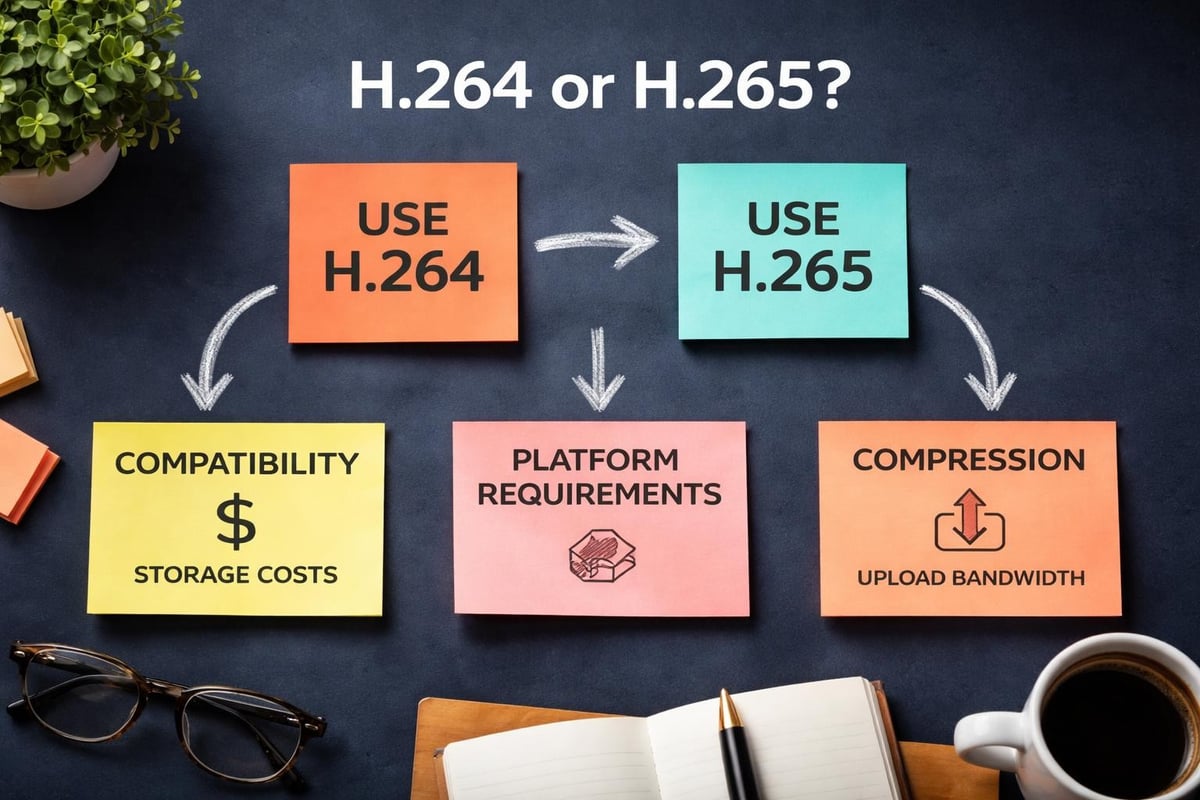
But here's the thing: H.264 versus H.265 actually matters when you're processing hundreds of videos.
H.264 has better compatibility. Nearly everything plays it. H.265 offers better compression, meaning smaller file sizes for the same quality. That matters when you're storing and transferring lots of content.
For user-generated content, H.264 remains the safer choice. Most phones export in H.264 by default. Most platforms accept it without conversion. Fewer compatibility headaches.
Measuring What Actually Matters
Vanity metrics are easy to track and meaningless to optimise.
"We got 50,000 views!" Okay, and? Did anyone watch past three seconds? Did it drive ticket sales for your next event? Did it strengthen relationships with attendees?
Metrics worth tracking:
- Average watch time (not just view count)
- Shares and saves (stronger than likes)
- Comments and conversations generated
- Traffic to event registration or sales pages
- Repeat content contributors
When you make your video strategy about authentic attendee content, success looks different than traditional marketing. You're not measuring impressions. You're measuring engagement and community growth.
The Long Game
Event video isn't just about that event. It's about the next one, and the one after that.
Every event where attendees create content, you're building a library. You're also building relationships with creators who'll show up again.
Content curation versus content creation used to be either/or. Now it's both/and. You curate what attendees create, then create compilations and stories from that curated content.
That footage from last year's event? Still valuable for promoting this year's. Those attendees who contributed great content? They're your superfans. Treat them accordingly.
Rights and Licensing Done Right
Content licensing gets complicated fast if you don't establish clear terms upfront.
When someone uploads content through your platform, what rights are they granting? Can you use it in paid advertising? For how long? In what territories? Can you edit it? Create derivatives?
Sort this out before you need the content, not after. Standard terms that are fair to creators and useful to you make everything easier.
Most attendees are happy to grant broad usage rights if they're credited and it's clear what they're agreeing to. Where people get upset is finding their content used in ways they never anticipated.
What This Actually Requires
Let's be honest about what it takes to make your video strategy work with user-generated content.
You need: a platform that makes uploading dead simple, clear guidelines for contributors, automated tools for curation and quality control, a system for managing rights and consent, someone (or a small team) to oversee the process, and a distribution strategy that respects the content and the creators.
What you don't need: massive budgets, film crews at every event, professional editing for every clip, or perfect control over every piece of content.
The shift is from controlled production to curated collaboration. From paying for content creation to enabling it. From broadcasting to facilitating conversation.
Some organisations struggle with that. They want message control. They want polish. They want everything on-brand and on-message.
But audiences don't want that anymore. They want real. They want authentic. They want to see themselves and people like them in your content.
When you make your video content around what attendees actually experience and want to share, you're giving audiences what they're already looking for. You're just making it easier to find.
The mechanics of video production haven't changed that much, but who's behind the camera has. When you empower event attendees to capture and share their experiences, you're not just generating content, you're building community and proving your events deliver genuine value. SureShot ApS provides the infrastructure that makes this possible, turning every attendee into a potential storyteller while giving you the tools to curate, manage rights, and distribute authentic content that actually spreads.