
YouTube Shorts vs TikTok vs Reels: Which Wins in 2026?
Short-form video dominates digital marketing, but choosing where to post isn't straightforward. The debate around YouTube Shorts vs TikTok vs Reels comes down to understanding each platform's strengths, audience behavior, and how they fit your specific goals. For event organizers sitting on a goldmine of attendee-generated footage, picking the right platform can mean the difference between content that spreads organically and content that disappears into the void.
At SureShot, we help event organizers collect authentic video content directly from their attendees. But gathering great footage is only half the equation, knowing where to distribute it matters just as much. Each platform offers distinct advantages for reaching different demographics, and what works for a music festival might fall flat for a corporate conference. The algorithms, audience expectations, and monetization paths vary significantly across all three.
This comparison breaks down what actually matters in 2026: user demographics, engagement rates, content discoverability, and earning potential. Whether you're repurposing crowd-sourced clips or building a content strategy from scratch, you'll walk away knowing exactly which platform serves your audience best, or why using all three might be your smartest move.
Why the right platform mix matters in 2026
Your content distribution strategy directly affects how many people see your event footage and how much engagement you generate. Posting the same clip everywhere without understanding platform-specific algorithms and audience behaviors wastes time and tanks performance. Each platform rewards different content styles, video lengths, and posting frequencies, which means your strategy needs tailoring, not duplication.
The multi-platform advantage for event content
Spreading your best moments across multiple platforms amplifies reach without requiring completely unique content for each destination. User-generated video from attendees naturally fits the authentic, raw aesthetic that performs well everywhere, but each platform surfaces content differently. TikTok's For You Page prioritizes new creators and trending sounds, while YouTube Shorts leverages your existing subscriber base and recommends content based on longer video history.
Instagram Reels integrates seamlessly with Stories, posts, and DMs, making it the strongest platform for building ongoing conversations with your community. When you post event highlights across all three, you're not competing with yourself. You're meeting different audience segments where they already spend time, and the cross-pollination effect means viewers on one platform often discover you elsewhere.
Distributing strategically across platforms increases total reach by 3-5x compared to focusing on a single channel, according to recent creator economy data.
Avoiding the single-platform trap
Betting everything on one platform puts your entire content strategy at risk. Algorithm changes, policy updates, or sudden shifts in user demographics can crater your reach overnight. TikTok faced potential bans in multiple markets throughout 2024 and 2025, and creators who relied solely on that platform scrambled to rebuild audiences from scratch.
Diversification protects your investment in content creation. When you capture authentic attendee footage through platforms like SureShot, that raw material works across multiple destinations with minimal editing. Building presence on YouTube Shorts, TikTok, and Reels simultaneously means algorithm changes on one platform don't kill your entire distribution model.
Platform-specific content opportunities
Each platform in the youtube shorts vs tiktok vs reels comparison offers unique features that unlock different content possibilities. TikTok's duet and stitch functions let attendees remix your official event content, creating organic user-generated campaigns that spread without paid promotion. Reels' music library and Instagram's shopping tags connect directly to ticket sales and merchandise for future events.
YouTube Shorts bridges the gap between short clips and longer content, allowing you to tease full event recaps or panel discussions that live on your main channel. The platform's search functionality means your Shorts appear in Google results, giving event content a longer shelf life than the hyper-temporal feeds of TikTok and Instagram.
Smart event organizers recognise that attendee-generated content naturally suits all three platforms because authenticity transcends algorithmic preferences. Your real decision isn't picking one winner but understanding which content types perform best where and how to sequence your posting strategy. The platforms that win in 2026 are the ones you actually use strategically, not the ones with the biggest headline numbers.
TikTok vs Reels vs Shorts at a glance
Understanding the fundamental differences between these platforms saves you from trial-and-error content strategies that waste time and budget. While all three focus on vertical video under 90 seconds, they operate within drastically different ecosystems that affect everything from upload limits to how users discover content. Each platform serves distinct user behaviors, making the youtube shorts vs tiktok vs reels decision less about picking a winner and more about matching platform strengths to your event content goals.
Platform specifications that shape your strategy
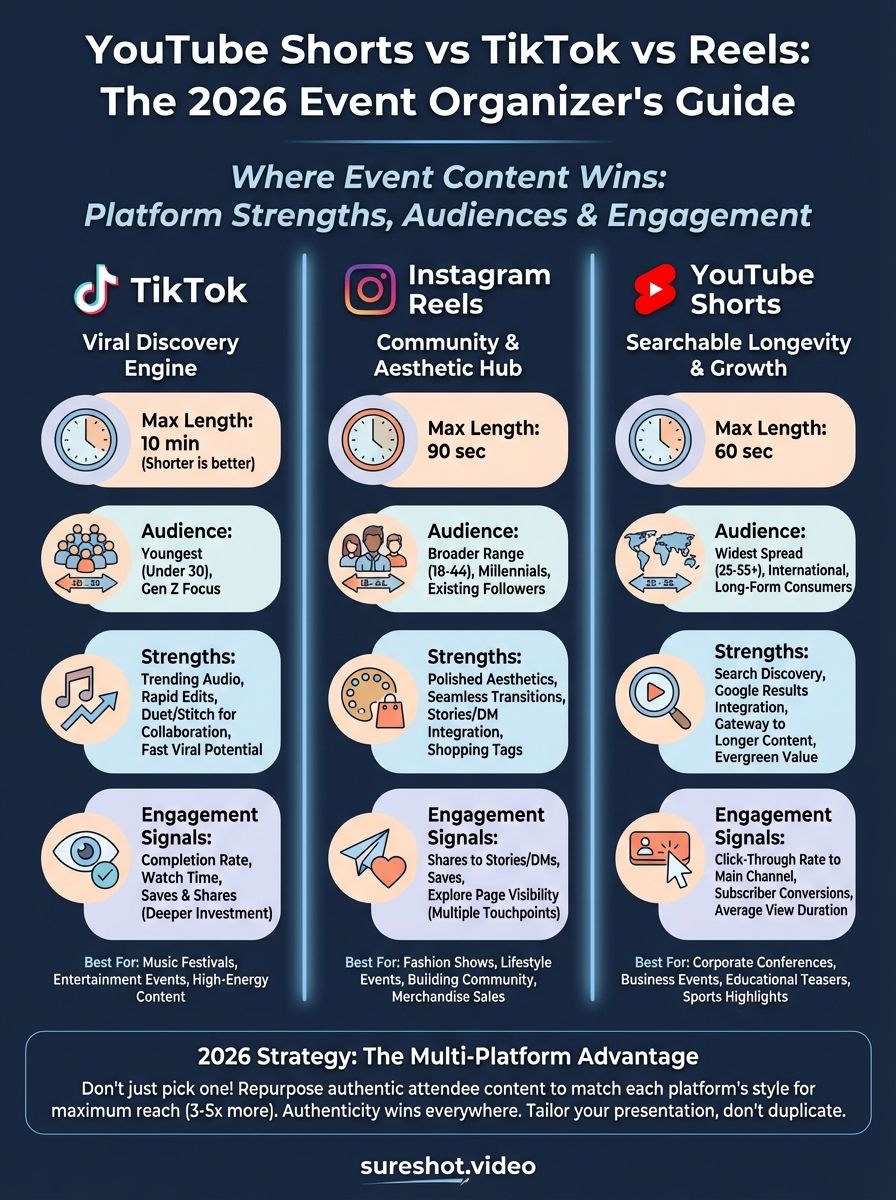
The technical constraints of each platform dictate what content you can actually post and how much effort goes into optimization. YouTube Shorts accepts videos up to 60 seconds with 9:16 vertical format, while TikTok extends that limit to 10 minutes (though shorter performs better). Reels currently caps at 90 seconds but Instagram frequently adjusts these limits based on competitive pressure.
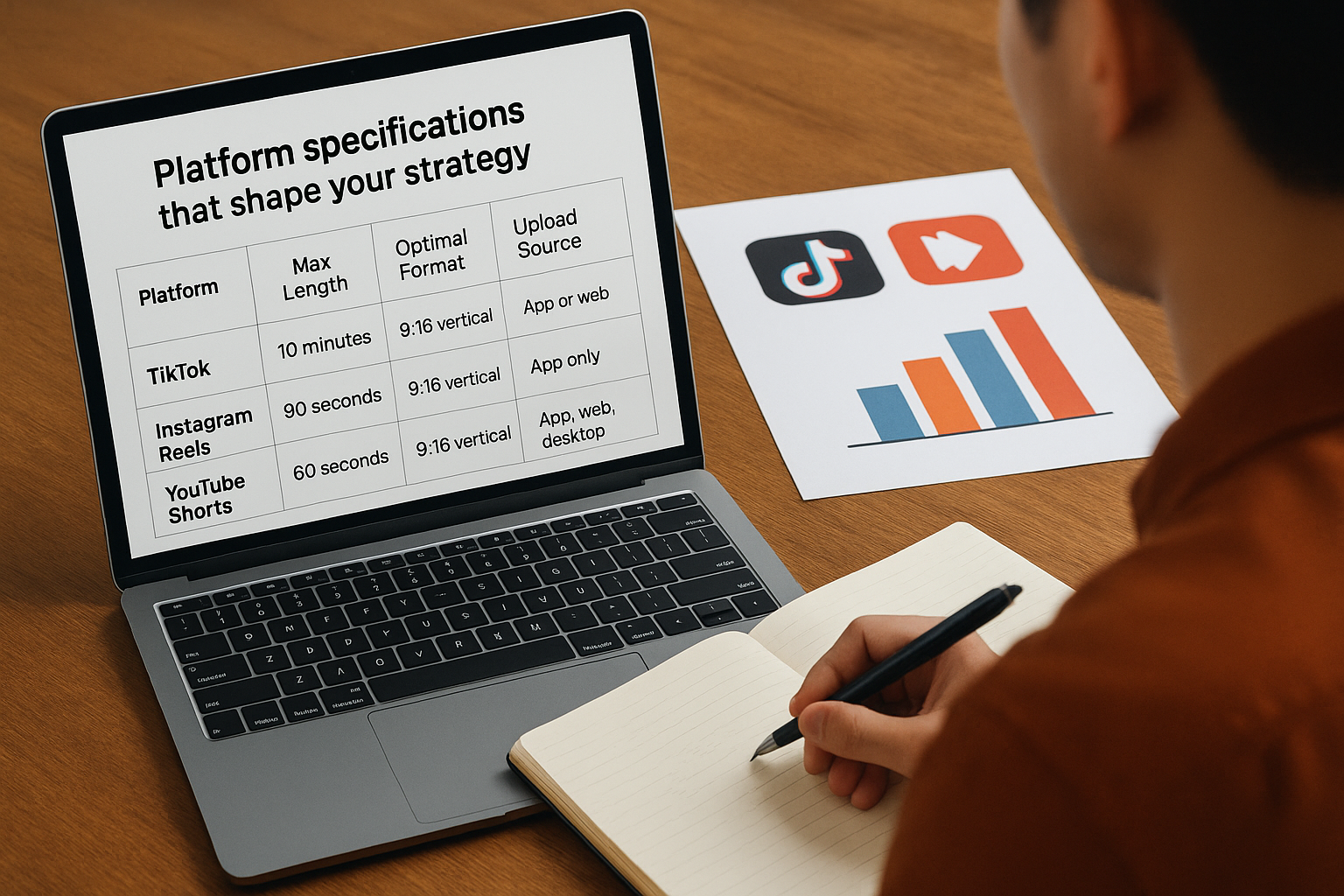
| Platform | Max Length | Optimal Format | Upload Source | Parent Ecosystem |
|---|---|---|---|---|
| TikTok | 10 minutes | 9:16 vertical | App or web | Standalone platform |
| Instagram Reels | 90 seconds | 9:16 vertical | App only | Meta social network |
| YouTube Shorts | 60 seconds | 9:16 vertical | App, web, desktop | Google video ecosystem |
Your choice of platform affects which devices attendees can use to view and share content. TikTok and Reels push mobile-first experiences, while YouTube Shorts appears across desktop browsers and smart TVs, giving event content longer viewing lifespans beyond the initial posting window.
Content style and format requirements
TikTok rewards trending audio, text overlays, and rapid editing that matches current meme culture. Your attendee footage performs best when you add popular sounds and participate in existing content formats rather than creating entirely original concepts. The platform's duet and stitch features turn individual clips into collaborative content chains that spread organically across user networks.
Reels prioritizes polished aesthetics and seamless transitions that fit Instagram's visual-first culture. Event organizers see stronger performance when they colour-grade footage consistently and use Instagram's built-in editing tools rather than uploading pre-edited content. The platform surfaces Reels through Explore, Stories, and the dedicated Reels tab, creating multiple discovery pathways within a single app.
YouTube Shorts performs best with straightforward, information-focused content that doesn't rely on trending sounds or complex editing tricks.
Shorts attracts viewers searching for specific topics or creators rather than endless scrolling through algorithmic feeds. Your event content needs clear titles and descriptions because YouTube's search function drives significant traffic. Unlike TikTok's ephemeral culture, Shorts remain discoverable for months, making them ideal for evergreen event highlights that promote future ticket sales.
Audience and discovery: where each platform wins
Your event content reaches different people depending on where you post it, and understanding demographic splits prevents you from missing your core audience entirely. The youtube shorts vs tiktok vs reels debate matters most when you consider who actually watches content on each platform and how they find new creators. Discovery mechanisms vary wildly across these three options, which means your best performing content type on one platform might never surface on another, even with identical posting strategies.
Age and demographic splits that guide platform choice
TikTok skews youngest with 60% of users under 30 years old, making it the strongest choice for reaching Gen Z attendees and promoting events targeting college students or young professionals. The platform's user base actively searches for authentic, unpolished content that feels peer-generated rather than brand-produced, which perfectly matches the raw footage you collect from attendees through platforms like SureShot.
Instagram Reels attracts a broader age range from 18 to 44, with particularly strong engagement among millennials who already use Instagram for following friends, brands, and creators. Your event content benefits from existing follower relationships because Reels appear in main feeds alongside traditional posts, creating multiple touchpoints with the same audience. The platform works best when you target urban professionals and lifestyle-focused communities rather than purely entertainment-seeking viewers.
YouTube Shorts reaches the widest demographic spread, with significant viewership across ages 25 to 55 and strong international audiences outside English-speaking markets. The platform attracts users who consume longer content on the main YouTube platform, meaning your Shorts can capture viewers interested in deeper event coverage or educational content about your industry.
Platform demographics shift annually, so verify current age distributions before committing your primary content budget to a single channel.
Discovery algorithms and content surfacing
TikTok's For You Page democratizes content distribution by showing new creator videos to small test audiences regardless of follower count, then expanding reach based on initial engagement rates. Your attendee footage gets immediate visibility without requiring an established account, making TikTok the fastest path to viral content. The algorithm prioritizes watch time and completion rate over follower counts, rewarding compelling content from unknown accounts.
Reels discovery happens through multiple entry points including the dedicated Reels tab, Explore page, and main feed insertions among Stories. Instagram weights recommendations toward accounts you already follow and content from similar creators, making growth slower but more targeted. Your event highlights reach users who engage with related event content, building a qualified audience rather than random viral spikes.
YouTube Shorts leverages search intent and subscription relationships, surfacing your content to viewers who previously watched similar topics or subscribed to your main channel. The platform's recommendation system considers your entire YouTube presence, meaning Shorts act as gateways to longer event recaps or panel discussions. Discovery happens through homepage feeds, search results, and suggested videos, giving content multiple chances to find relevant viewers beyond the initial posting window.
Engagement and performance metrics that matter
Comparing raw view counts across platforms tells you almost nothing about actual performance because each platform calculates engagement differently and attracts audiences with distinct consumption patterns. Your event content succeeds when you track the right metrics for each destination rather than applying universal benchmarks that ignore platform-specific user behavior. The youtube shorts vs tiktok vs reels comparison gets meaningful only when you understand which numbers actually predict content success and audience growth on each platform.
Platform-specific engagement benchmarks
TikTok measures success primarily through completion rate and watch time, with the algorithm rewarding videos that viewers watch multiple times or finish entirely. Your attendee footage performs well when 80% or more of viewers watch to the end, regardless of total view count. Likes and comments matter less than shares and saves, which signal deeper audience investment in your content. Expect average engagement rates between 5-8% for accounts under 10,000 followers, dropping to 3-5% as you grow.
Instagram Reels prioritizes shares to Stories and direct messages as primary engagement signals, treating these actions as stronger indicators of content value than simple likes. Your event highlights need to generate 2-4% engagement rates to maintain algorithmic favour, with shares carrying significantly more weight than comments. Reels that appear in Explore typically maintain 30-50% completion rates, lower than TikTok but still indicating strong performance.
YouTube Shorts tracks click-through rate to your main channel and subscription conversions alongside traditional metrics like likes and comments. Your content succeeds when viewers move from Shorts to longer videos, making the platform ideal for converting casual viewers into dedicated followers. Expect lower engagement percentages overall, with 1-2% considered strong performance, but watch for subscriber growth as the critical success indicator.
Engagement rate thresholds vary dramatically by follower count, so compare your metrics against accounts of similar size rather than established creators.
Metrics that predict long-term growth
View velocity in the first hour after posting tells you whether algorithms will continue pushing your content to broader audiences. TikTok rewards videos gaining 1,000 views within 60 minutes, while YouTube Shorts needs 100-200 views to trigger additional distribution. Track average view duration rather than completion rate alone because platforms surface content that keeps viewers watching, even if they don't finish every video.
Follower conversion rate matters more than total reach for building sustainable audiences that engage with future posts. Calculate what percentage of viewers actually follow your account after watching, aiming for 0.5-1% on TikTok and Reels, and 2-3% on YouTube Shorts where subscription signals stronger commitment. Your attendee-generated content should drive these conversions by showcasing authentic event experiences that make viewers want updates about future events.
Save rates indicate content with lasting value that viewers want to reference later, making this metric critical for event organizers promoting ticket sales. Content saved by 3-5% of viewers typically receives extended algorithmic distribution because platforms interpret saves as quality signals. Track which event moments generate saves versus simple likes to understand what content drives actual business outcomes rather than vanity metrics.
How to pick and repurpose content across platforms
Your platform selection depends on matching event content type with platform strengths rather than chasing the largest audience numbers. Start by analysing where your target attendees already spend time watching video, then build distribution strategies around those habits. The youtube shorts vs tiktok vs reels decision becomes clearer when you consider what actions you need viewers to take, whether that's buying tickets, sharing experiences, or following your brand for future updates.
Choose your primary platform based on event type
Music festivals and entertainment events perform strongest on TikTok because the platform rewards high-energy, music-driven content that attendees naturally create. Your crowd footage fits the platform's aesthetic without requiring heavy editing, and trending sounds amplify reach beyond your existing followers. Corporate conferences and business events see better results on YouTube Shorts and LinkedIn where professional audiences actively search for industry insights and educational content.
Fashion shows and lifestyle events thrive on Instagram Reels because visual polish and aesthetic consistency drive engagement within the platform's design-focused community. Your attendee content benefits from Reels' shopping integration and story crossposting, creating direct paths from event highlights to merchandise sales or ticket purchases. Sports events and competitions gain traction across all three platforms but YouTube Shorts provides the longest shelf life for highlight reels that fans rewatch throughout seasons.
Platform selection matters more than production quality when your content authentically matches where your audience naturally consumes similar material.
Adapt content for each platform's strengths
Repurposing doesn't mean posting identical clips everywhere. Extract different moments from the same source footage to match platform expectations and user behavior patterns. Your TikTok content needs fast cuts and trending audio overlays, while YouTube Shorts benefits from longer takes that showcase complete moments without frantic editing. Instagram Reels requires attention to visual composition and colour grading that fits seamlessly into curated feeds.
Add platform-specific elements rather than creating entirely new content from scratch. Your TikTok versions need text overlays explaining context, duet-friendly framing that invites participation, and hooks within the first second that stop scrolling. YouTube Shorts require descriptive titles and relevant hashtags because search drives discovery alongside recommendations. Reels perform better with seamless transitions between clips and strategic music choices that enhance mood without overwhelming authentic audio.
Batch your editing workflow by organising attendee footage into content buckets based on emotion and pacing rather than chronological order. Create high-energy clips for TikTok, polished highlights for Reels, and informative behind-the-scenes content for YouTube Shorts, all pulled from the same raw material you collect through platforms like SureShot. This approach maximizes your content investment while respecting each platform's unique audience expectations.
Next steps for your 2026 short-form plan
Your youtube shorts vs tiktok vs reels strategy works best when you test content across all three platforms simultaneously rather than committing everything to a single channel. Start by uploading five pieces of attendee-generated footage to each platform this week, tracking which content types generate the strongest engagement on each destination. The data you collect in the first 30 days reveals patterns that guide your long-term distribution strategy.
Batch your content creation workflow so you can repurpose effectively without starting from scratch for each platform. Focus on collecting authentic event footage that performs well everywhere, then adapt the presentation layer to match platform-specific expectations. Your attendee videos already provide the raw material needed for this approach.
Ready to turn your event attendees into content creators? SureShot makes collecting authentic video footage effortless so you can focus on strategic distribution instead of production logistics. Book a 30-minute demo to see how event organizers capture moments that spread organically across every platform.