
The Complete Guide to TikTok Intellectual Property Policy
TikTok intellectual property policy is the platform's official set of rules that protects creators' copyrights and trademarks. It defines what content you can post, how to use music and logos legally, and what happens when someone uses your work without permission. The policy applies to all TikTok users including creators, businesses, and TikTok Shop sellers. You need to understand these rules whether you're posting videos, running ads, or selling products on the platform.
This guide walks you through everything you need to know about TikTok's IP policy. You'll learn how to avoid copyright strikes, when you can use branded content, how to report infringement, and what makes TikTok Shop different from regular posting. We'll cover the official reporting process, dispute procedures, and practical steps to protect your own content. By the end, you'll know exactly how to create content that follows TikTok's rules while safeguarding your intellectual property rights.
Why TikTok intellectual property policy matters
You risk losing your account, facing legal action, or damaging your brand reputation if you ignore TikTok's IP rules. The platform removes millions of videos each year for copyright and trademark violations, and repeat offenders get permanently banned. Your content disappears instantly when rights holders report infringement, and TikTok can share your contact information with the people you allegedly violated. This matters whether you're a casual creator posting dance videos or a business running marketing campaigns.
Protection for your original content
The tiktok intellectual property policy gives you legal tools to stop others from stealing your work. When someone copies your videos, uses your brand name, or impersonates your business, you can file official reports through TikTok's enforcement system. Your registered copyrights and trademarks carry more weight in these disputes, making TikTok act faster on removal requests. Content creators who understand these protections can monetise their work safely and build authentic audiences without worrying about theft.
TikTok's policy protects your creative rights while holding you accountable for respecting others' intellectual property.
Business consequences of violations
Your company faces serious financial and reputation risks when you misuse intellectual property on TikTok. Brands that post content with unlicensed music lose advertising privileges, and companies selling products with unauthorized logos get banned from TikTok Shop. Legal costs pile up quickly when rights holders sue for damages, and your marketing budget disappears on settlements instead of growth. Event organizers who rely on user-generated content need to understand these rules to avoid liability for attendee uploads.
How to follow TikTok intellectual property rules safely
You protect yourself from IP violations by creating original content, obtaining proper licences, and documenting all permissions before posting. The tiktok intellectual property policy requires you to respect copyright and trademark rights at every stage of content creation, from choosing background music to featuring branded products. Your safest approach involves understanding what content you can legally use and keeping proof of your rights to share it. These practices prevent account suspensions, legal disputes, and content takedowns that damage your reach and credibility.
Create original content or obtain proper licences
You minimise IP risks when you produce videos using your own footage, voice, and creative concepts. Original content gives you full ownership rights and eliminates concerns about using someone else's protected work. Record your own audio, film your own scenes, and develop unique concepts that showcase your brand personality. Event organizers benefit from this approach by capturing authentic moments through attendee-generated content rather than relying on copyrighted material.
Your content stays compliant when you secure written licences for any third-party elements you include. Contact copyright holders directly to request permission before using their music, artwork, or video clips. Many creators and companies offer licensing agreements that specify how you can use their work, including commercial purposes. Save these agreements in a dedicated folder because TikTok may request proof if someone challenges your content.
Verify rights before using music and audio
You access TikTok's Commercial Music Library for business accounts to find pre-cleared tracks that won't trigger copyright claims. Personal accounts have broader music options, but business and promotional content requires commercially licensed audio. Check each track's usage rights in the TikTok sound library before adding it to your video. Your account type determines which sounds you can legally use, so verify your status in account settings.
Using unlicensed music in promotional content leads to instant removal and repeat offenses trigger permanent account restrictions.
Creators who want specific songs need to purchase sync licences from music publishers or use royalty-free music platforms. These licences grant explicit permission to synchronise audio with visual content. Popular songs from major artists require expensive licences, while independent artists often offer affordable options through direct negotiation.
Document permissions and keep records
You build a defensible position by maintaining detailed records of every licence, permission, and original work you create. Screenshot licensing agreements, save email confirmations from rights holders, and store contracts in cloud storage for easy access. Your documentation proves compliance if TikTok requests verification or if someone files a false infringement claim against your content.
Register your own copyrights and trademarks to strengthen your legal standing when protecting your intellectual property. Registration creates official records with government agencies that TikTok recognizes in disputes. This step proves invaluable for businesses and content creators who develop valuable brands and original content worth protecting from copycats.
Key parts of TikTok copyright and trademark rules
You need to understand two main protection categories in the tiktok intellectual property policy: copyright for creative works and trademarks for brand identifiers. Copyright covers original content like videos, music, sound recordings, and visual artwork that you create or own. Trademarks protect distinctive brand elements including logos, slogans, product names, and packaging designs that identify your business. Both types receive legal protection under TikTok's enforcement system, but they cover different aspects of intellectual property and require different proof standards when you report violations.
Copyright protection for videos and audio
Your videos automatically receive copyright protection the moment you create them, covering both the visual elements and any original audio you produce. TikTok prohibits users from uploading, sharing, or streaming content that infringes someone else's copyright without permission. This includes using copyrighted music clips, movie scenes, TV show footage, or other creators' videos without proper licensing. The platform responds to Digital Millennium Copyright Act (DMCA) takedown notices by removing infringing content and notifying account holders of violations.
Copyright owners must prove ownership of the original work and demonstrate that your content uses their protected material without authorization. TikTok requires detailed information in copyright reports including URLs of infringing videos, descriptions of copyrighted work, and proof of ownership. Your account faces strikes for copyright violations, and three strikes typically result in permanent account termination. Repeat infringers lose access to TikTok's monetization features even before reaching the three-strike threshold.
TikTok's copyright system prioritizes protecting original creators while giving accused users the right to file counter-notifications if they believe the claim is invalid.
Trademark protection for brands and logos
Trademarks prevent others from using your business name, logo, or distinctive visual elements in ways that create confusion about brand affiliation or endorsement. TikTok removes content that violates trademark rights when rights holders submit valid complaints through the official reporting system. Your trademark claim succeeds when you show valid trademark registration and demonstrate that the accused content uses your mark without permission in a misleading way.
Businesses face restrictions on using competitor brands, celebrity names, or product logos in content that suggests partnerships or endorsements that don't exist. TikTok Shop sellers receive additional scrutiny because trademark violations in product listings harm both brands and consumers. You can reference trademarks in comparative reviews, educational content, or parody as long as you don't imply false associations or sell counterfeit goods.
Fair use limitations on TikTok
Fair use allows limited use of copyrighted material for commentary, criticism, news reporting, education, or parody without obtaining permission from rights holders. TikTok acknowledges fair use as a legal defence but doesn't make fair use determinations itself. Your content may still face removal even if you believe it qualifies as fair use, because only courts can officially decide fair use questions. Creators who receive copyright strikes can file counter-notifications citing fair use, which restores content unless the copyright holder pursues legal action within 10 business days.
Reporting and disputing IP infringement on TikTok
You protect your intellectual property by filing official reports through TikTok's enforcement system when someone uses your copyrighted content or trademarked brands without permission. The tiktok intellectual property policy provides dedicated reporting forms for copyright and trademark violations that you access through TikTok's legal help centre. Your report must include specific evidence of ownership and clear identification of the infringing content to trigger TikTok's review process. The platform investigates valid complaints and removes content that violates IP rights, often within 24 to 48 hours of receiving a complete report.
How to file an IP infringement report
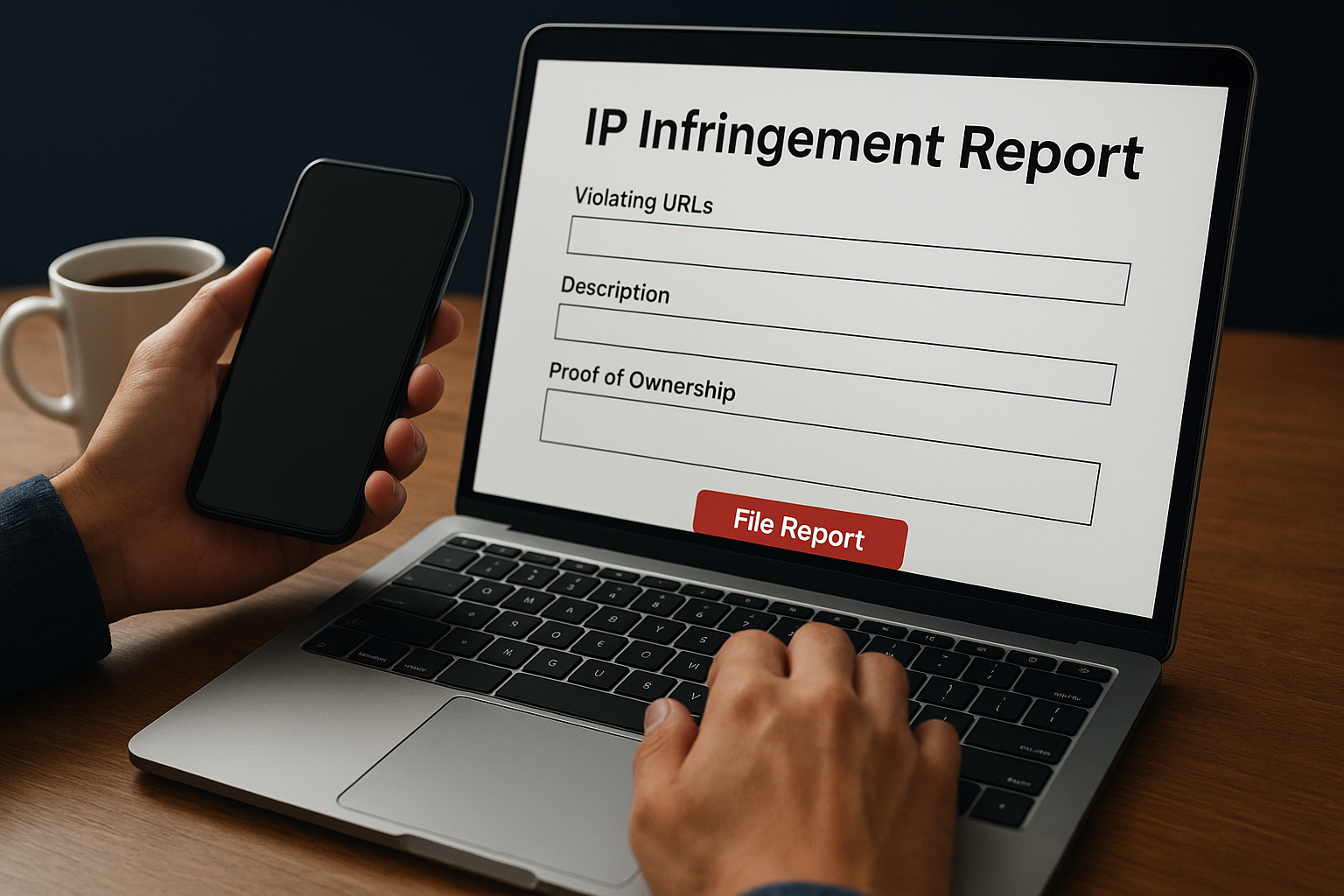
You submit copyright claims using TikTok's Copyright Infringement Report form which requires URLs of violating videos, descriptions of your original work, and proof of ownership. Fill out every required field with accurate information because incomplete reports delay the review process and may result in rejection. Your registered copyrights strengthen your position, but TikTok accepts reports from unregistered copyright holders who can demonstrate clear ownership through creation dates, original files, or publication records.
Trademark violations require a separate Trademark Infringement Report form where you provide your trademark registration number, jurisdiction of registration, and explanation of how the content misleads users. Include screenshots showing unauthorized logo use, fake brand accounts, or counterfeit product listings. TikTok prioritizes trademark reports from verified rights holders with government-issued registrations over unregistered claims.
Filing accurate IP reports protects your rights while maintaining platform integrity, but false claims can result in account penalties and legal liability.
Disputing false infringement claims
You challenge incorrect takedowns by submitting a counter-notification within 10 business days of receiving the violation notice. Your counter-notice must state that you believe the content was removed by mistake and include your contact information and a statement accepting jurisdiction in federal court. TikTok forwards your counter-notification to the original complainant, who then has 10 business days to file a lawsuit or your content gets restored automatically.
Counter-notifications work best when you have documented proof of fair use, valid licences, or original ownership that disproves the infringement claim. Save all licensing agreements, purchase receipts, and creation timestamps before disputing claims because you'll need this evidence if the case escalates to legal proceedings.
TikTok Shop intellectual property guidelines
TikTok Shop operates under stricter IP enforcement than regular content because you're selling physical products for profit. The tiktok intellectual property policy for TikTok Shop prohibits using third-party trademarks on products, in listings, in promotional content, or in your shop name without explicit authorization from rights holders. Your seller account faces immediate suspension when TikTok detects counterfeit goods or unauthorized brand usage because these violations harm both consumers and legitimate brand owners. Sellers must verify ownership or licensing rights for every branded item they list, and TikTok reserves the right to request proof at any time during your account's lifetime.
Product listing restrictions
You cannot list products that feature protected logos, brand names, character images, or patented designs unless you hold proper licences or manufacture the items as an authorized distributor. TikTok removes listings that advertise counterfeit goods, knockoff versions, or products that infringe design patents and copyrights. Your product titles, descriptions, and images must avoid misleading references to brand names that suggest false affiliations or endorsements from trademark holders.
TikTok Shop's automated systems scan listings for trademark violations and flag suspicious products for manual review before they reach consumers.
Sellers who create generic products can't use competitor brand names in comparison marketing or search optimization within their TikTok Shop listings. Reference major brands only in honest comparative reviews posted as regular TikTok content, not in product descriptions that drive sales. Your shop name must reflect your own brand identity rather than mimicking established trademarks that attract customers through confusion.
Enforcement and penalties for sellers
Your TikTok Shop account receives immediate suspension when rights holders report trademark or copyright infringement in your product listings. Platform moderators remove violating listings within hours of receiving valid complaints and restrict your ability to add new products until you resolve the dispute. Repeat violations result in permanent shop closure and potential legal action from brand owners who pursue damages for counterfeit sales.
Key takeaways
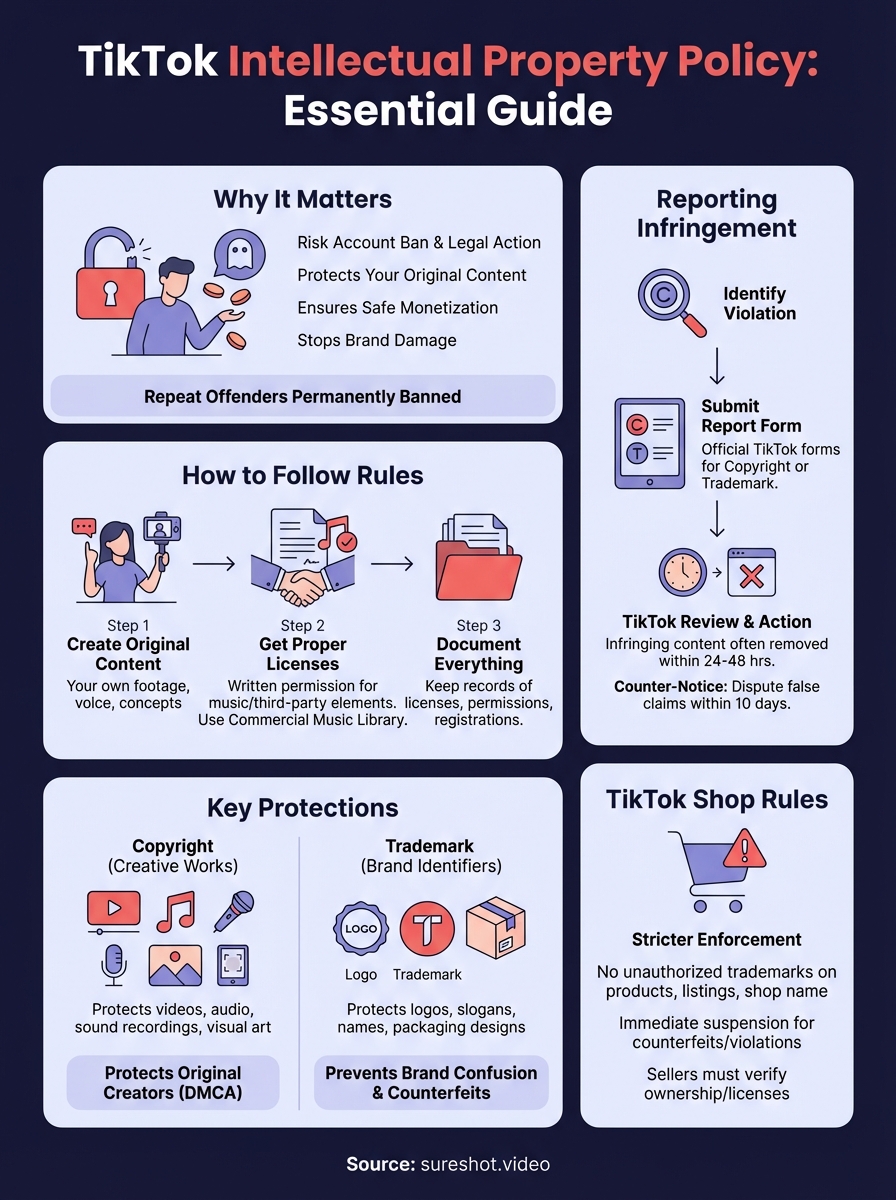
The tiktok intellectual property policy protects both your original content and the rights of other creators through strict copyright and trademark enforcement. You safeguard your account by creating original content, obtaining proper licences for third-party material, and keeping detailed documentation of all permissions. TikTok removes infringing content quickly and permanently bans repeat offenders, making compliance essential for your brand's long-term success on the platform.
Event organizers who collect user-generated content need clear processes for managing IP rights when attendees submit videos. Your platform should handle content licensing transparently while protecting both creator rights and your organization's legal position. SureShot helps you collect and curate attendee videos with built-in licensing agreements that give you clear usage rights while respecting contributor ownership. Book a demo to see how our platform manages user-generated video content legally and efficiently for your next event.