
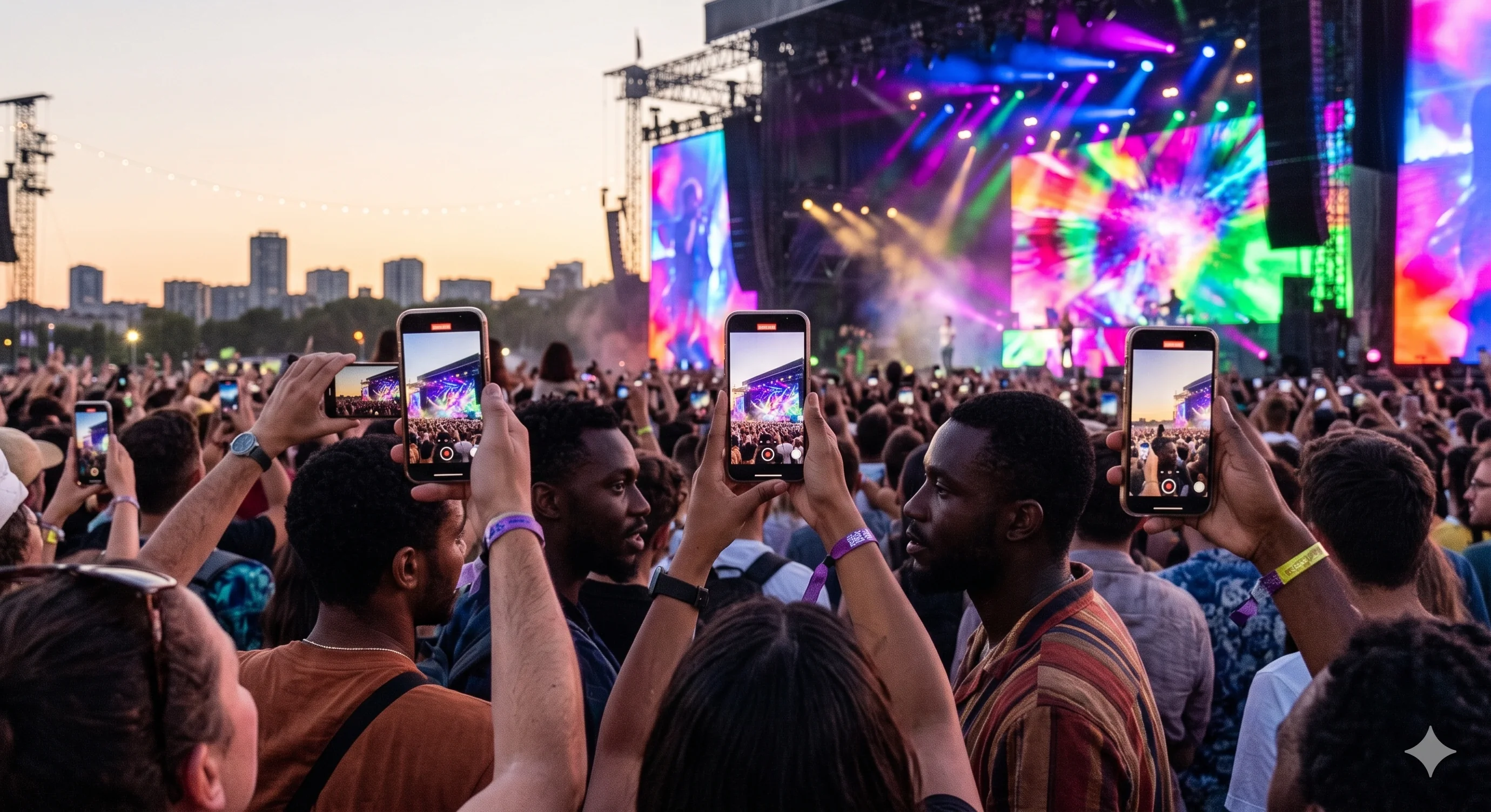

UGC stands for user-generated content
It's any photo, video, or clip created by the people attending an event, rather than by a hired photographer or production crew. At a music festival, it's the footage on 20,000 phones. At a football match, it's every goal celebration captured from the stands. At a corporate event, it's the spontaneous clips that never make it into the official highlights reel.
The term comes from digital marketing, where brands use content made by real customers instead of polished advertising. In the events world, UGC means something more specific: crowd footage that captured moments your production team wasn't positioned to catch.
Why it matters for live events
A professional camera crew covers maybe 10–20% of what actually happens at an event. They're set up at the main stage, not roaming the crowd. They're filming the headline act, not the reaction in row 47 when the lights drop.
Your attendees collectively cover everything else. They're inside the moment, phone in hand, capturing angles and reactions that no hired crew could replicate. The problem has never been the footage. It's always been collecting it.
The difference between UGC and just asking people to post on Instagram
A lot of event organisers already encourage attendees to tag the official account or use a hashtag. That's not the same thing as collecting UGC for your own use.
Social media posts belong to the people who made them. You can reshare them with permission, but you don't own the content and it's not organised in a way you can work with. A proper UGC workflow means attendees upload footage directly to a platform the organiser controls, where it can be reviewed, curated, and used.
That's the distinction that makes UGC useful as a production tool rather than just a marketing gesture.
What organisers actually do with UGC
Once you have footage from your crowd, there are a few common uses:
Event films. Edit the best clips into a highlights film that shows the event from the inside. This looks completely different from a polished produced video, and that's the point.
Social content. Short clips from real moments perform better than anything that looks too produced. The authentic reaction is what stops the scroll.
Sponsor activation. Sponsors want reach, not just a logo on a banner. A video that shows your crowd engaging with a brand moment is worth more than any print placement.
Press and PR. Journalists covering events increasingly use crowd footage because it shows what the event was actually like, not the version the organiser wanted to present.
What UGC isn't
UGC isn't surveillance. It's not collecting footage of your attendees without their knowledge. Any proper UGC platform handles consent at the point of upload, where attendees actively choose to contribute their footage and agree to how it's used.
It also isn't a replacement for professional video. The two work together. A production crew gets the clean, controlled shots. The crowd gets the raw, real moments. Combined, they give you a complete picture of what happened.
The practical barrier most organisers hit
The footage exists. What's usually missing is a simple way for attendees to get it to you. Without a clear upload channel, clips stay on phones, get posted to personal Instagram stories, and disappear in 24 hours.
That's the problem SureShot was built to solve. Attendees get a simple app to upload their clips. Organisers get all the footage in one place, organised by time and tag, ready for the team to review and cut.
If you're running events and want to understand how the collection process works in practice, the Vig Festival case study is worth reading. It shows exactly what 640 attendees uploading footage looks like from the organiser's side. When you're ready to evaluate platforms, the UGC platform guide covers what to look for.
Book a demo to see how it works for your event.