

You've seen it happen. Someone pulls out their phone at an event, captures something brilliant, and it's everywhere by morning. That's user generated videos doing what million-pound marketing campaigns can't: feeling real. No scripts, no actors, no staged lighting. Just people recording what actually matters to them. For event organisers and brands, this shift isn't just interesting, it's essential. Because user-generated video content costs less, spreads faster, and gets trusted more than anything you'll produce in-house.
Why User Generated Videos Actually Work
Professional video production has its place. But when someone at your event films something on their phone and shares it with their mates, that's worth more than your polished promo reel.
The maths is simple. Authenticity wins. People scroll past ads. They stop for content that feels like it came from someone like them. When attendees create videos at your event, they're not selling anything. They're sharing an experience. That difference is everything.
Here's what makes user generated videos powerful:
- Trust factor: People believe other people more than brands
- Cost: You're not paying production crews or agencies
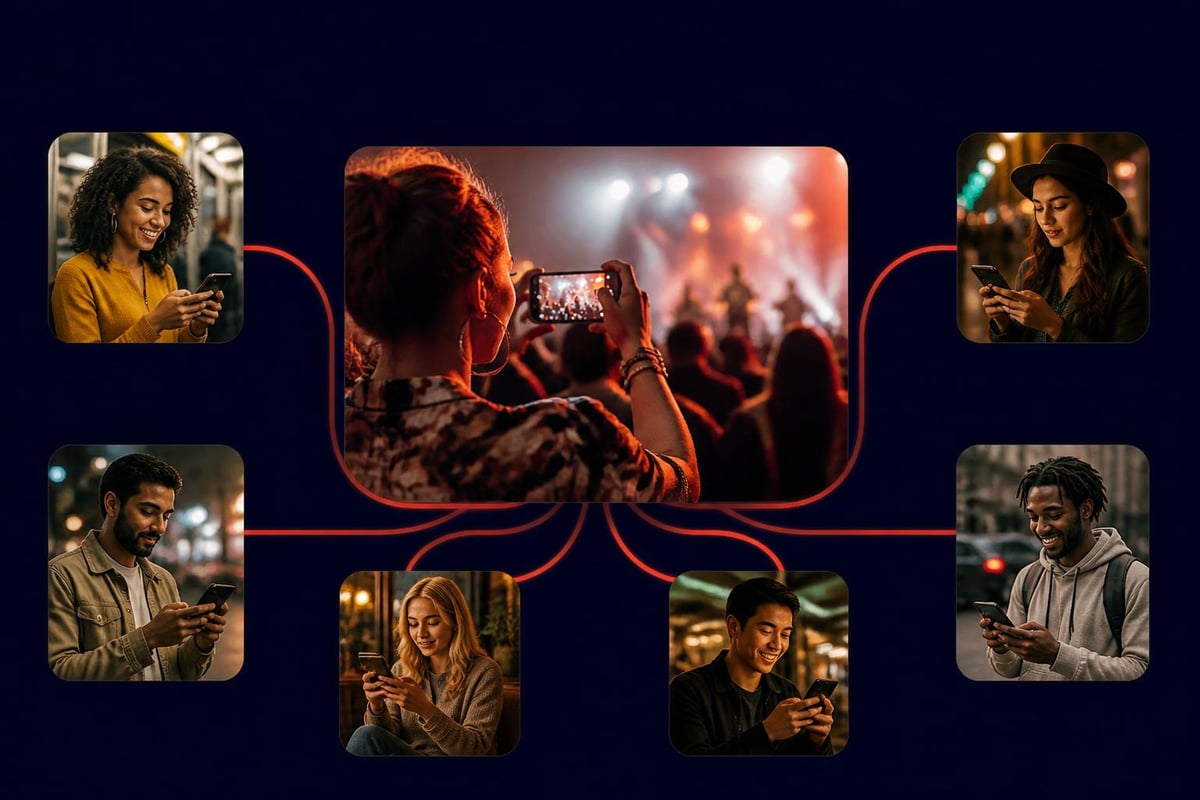
- Reach: Every person filming becomes a distribution channel
- Variety: Multiple perspectives instead of one official narrative
- Speed: Content goes live whilst the event's still happening
A single professionally produced video might cost you thousands and take weeks. Meanwhile, fifty attendees filming on their phones give you fifty pieces of content, fifty different audiences, and zero production budget. You're not choosing between the two, but knowing when each works matters.
The Technical Bits That Actually Matter
Quality concerns are valid. Someone filming on their phone in dodgy lighting won't match your broadcast standards. But here's the thing: it doesn't need to.
Understanding video quality assessment for user-generated content shows that technical perfection isn't the goal. Authenticity is. That shaky footage from the front row? That's more valuable than your static wide shot from the sound booth.
| Technical Aspect | Professional Video | User Generated Videos |
|---|---|---|
| Production cost | £2,000-£10,000+ | £0-£500 |
| Time to publish | 2-4 weeks | Hours or minutes |
| Perspective | Single, controlled | Multiple, varied |
| Audience trust | Lower | Higher |
| Distribution reach | Limited by budget | Organic, exponential |
Modern platforms handle the technical heavy lifting. When you're working with the best UGC platform for your needs, you're automating the messy bits. Curation, editing, format conversion, that all happens without your team doing manual work.
Making Sense of the Footage
You'll get rubbish. That's part of it. Ten people filming means eight mediocre clips, one decent one, and one absolute gem. The trick is finding that gem without watching everything manually.
This is where AI-powered content curation saves you. Instead of someone sitting through hours of footage, smart systems flag the best moments based on movement, audio quality, duration, and engagement patterns. You review highlights, not everything.
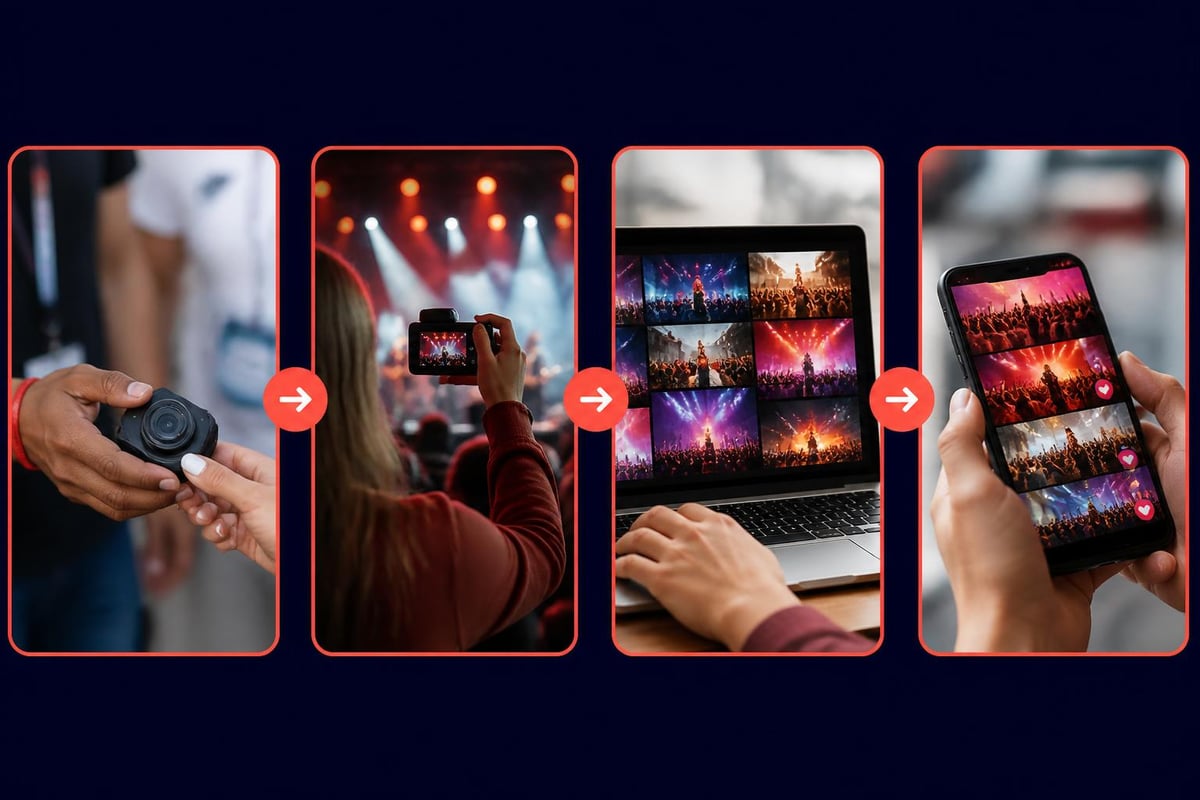
The workflow looks like this:
- Capture: Attendees film using their own devices
- Upload: Content flows into a central platform automatically
- Curate: AI filters and ranks footage by quality and relevance
- Edit: Quick touches to format and optimise for social
- Distribute: Content goes out across channels whilst it's still fresh
None of this requires a production team. You need a platform that handles it, and people willing to film. That's it.
What Events Actually Get From This
Let's talk results instead of theory. When events enable user generated videos properly, three things happen consistently.
Reach expands organically. Every video shared is a personal endorsement. If 100 attendees each share with their networks, you've just multiplied your audience without spending on ads. Content curation for social media becomes a distribution strategy, not just an archiving task.
Production costs drop significantly. You're still investing in the platform and some light editing, but compared to hiring video crews? It's not close. Events that previously budgeted £15,000 for video content find themselves spending a fraction whilst getting more usable footage.
Engagement metrics improve. People interact with content from other attendees differently than branded content. Comments, shares, saves, all trend higher when the source is peer-level rather than corporate.
The Authenticity Advantage
Here's what brands miss: people can smell marketing from miles away. They've got finely tuned BS detectors. But when someone genuinely excited about your event films themselves experiencing it, that reads as real because it is real.
This matters for future events too. Prospective attendees researching whether to buy tickets don't trust your promotional video. They trust the wobbly footage from last year showing actual people having actual fun. That's your best sales tool.
Getting People to Actually Film
You can't force authenticity. But you can make it easier for people to contribute.
The barrier isn't usually willingness, it's friction. People already film at events. They just don't always share it where you can use it. Remove the obstacles and you'll get content.
Simple access matters most. If uploading requires downloading an app, creating an account, and navigating five menus, you'll get nothing. If it's scan a QR code and tap upload, you'll get flooded. The platform you choose needs to prioritise zero-friction contribution.
Give people a reason that benefits them:
- Feature the best clips on your main social channels (with credit)
- Run competitions for most creative or most viewed videos
- Offer early ticket access or discounts for contributors
- Create a shared highlight reel everyone can access and share
None of these cost much. They just align your goals with what attendees want anyway: recognition and shareable memories.
What to Encourage (and What to Avoid)
Some content works better than others. Guide without being prescriptive.
Encourage these moments:
- Reactions during key performances or announcements
- Behind-the-scenes glimpses attendees discover
- Group experiences and crowd energy
- Unexpected or spontaneous highlights
- Personal takeaways and testimonials
Don't push for:
- Scripted testimonials (feels forced)
- Overly promotional content (people ignore it)
- Footage that requires special access (creates inequality)
- Anything that interrupts their actual experience
The best user generated videos happen when people are enjoying themselves, not when they're thinking about your content needs. Create the conditions, then step back.
Rights, Permissions, and the Boring Legal Stuff
You need permission to use people's content. Always. This isn't optional, and trying to skip it creates problems you don't want.
Make the process simple and transparent. When someone uploads a video, they should clearly understand:
- What you might use it for
- Where it could appear
- How they'll be credited
- Their rights to withdraw consent
Best practices for consent management aren't about covering yourself legally (though that too). They're about respecting contributors. Do this properly and people are happy to share. Do it badly and you'll face backlash when their video shows up somewhere they didn't expect.
The standard approach: explicit opt-in during upload, clear terms, easy withdrawal process. If someone changes their mind later, remove their content immediately. Building trust matters more than keeping one clip.
| Permission Aspect | What You Need | Why It Matters |
|---|---|---|
| Content usage rights | Written/digital consent | Legal protection |
| Attribution | Credit policy | Respects creators |
| Withdrawal option | Easy removal process | Maintains trust |
| Commercial use | Explicit permission | Avoids disputes |
| Privacy considerations | Face/voice consent | Protects individuals |
Verifying What's Real
User generated videos can be manipulated or misrepresented. When you're curating content from multiple sources, verification becomes essential.
For events, the risk is usually lower than news organisations face. But you still need to confirm content actually comes from your event and represents what it claims.
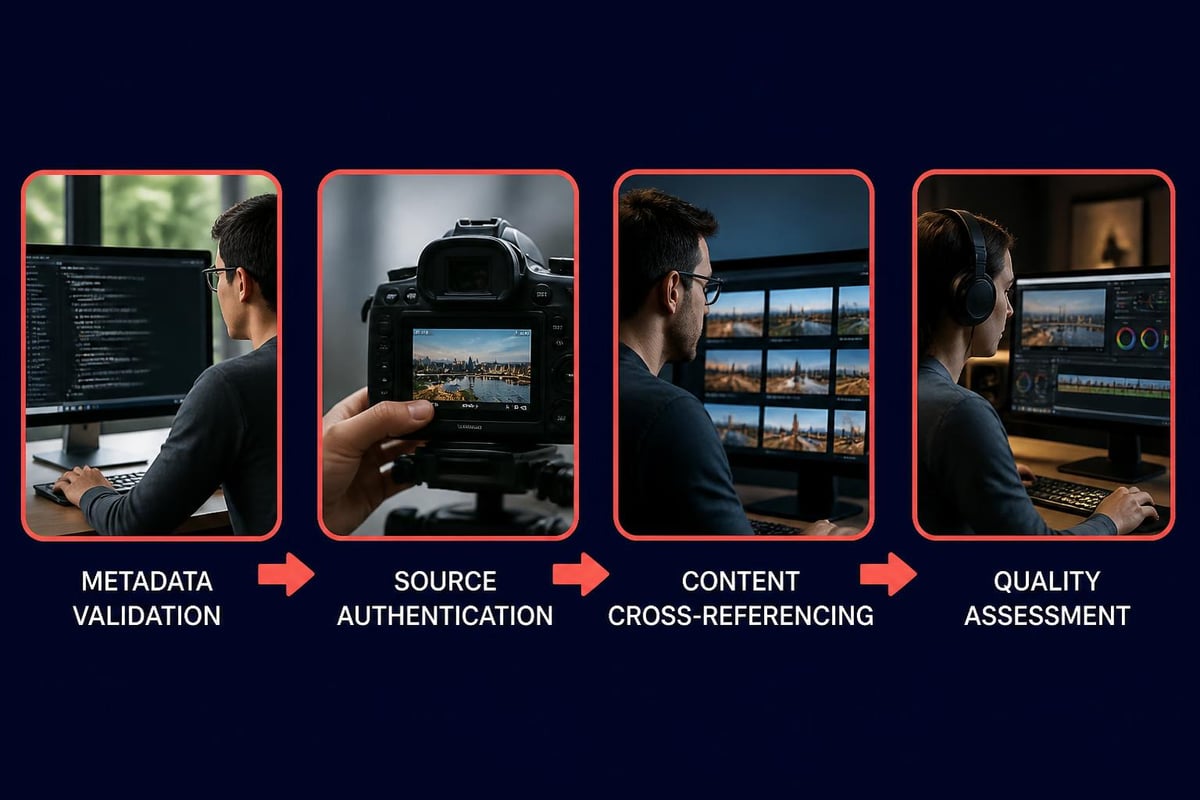
Basic verification steps:
- Check metadata: Timestamps and location data should match your event
- Cross-reference: Does the footage show recognisable elements from your venue/programme?
- Source verification: Can you confirm who uploaded it?
- Content review: Does anything seem edited or misrepresented?
Most platforms handle metadata automatically. Your job is spotting the obvious fakes and mismatches before they go out with your brand attached.
Format and Distribution Strategy
People film in portrait. Your Instagram needs portrait. Your website might prefer landscape. This isn't complicated, but it needs handling.
Modern editing tools can convert horizontal video to vertical without losing the important bits. You're not manually reformatting everything. The system does it based on platform requirements.
Distribution checklist:
- Instagram Reels: 9:16 vertical, 90 seconds max
- TikTok: 9:16 vertical, under 3 minutes
- YouTube Shorts: 9:16 vertical, 60 seconds
- Facebook: Square (1:1) or vertical works
- Website: Landscape (16:9) or square depending on placement
You don't need separate uploads for each. Good video content curation software handles the reformatting automatically. You approve the content once, it deploys everywhere in the right format.
Understanding best video formats for web helps too, but honestly, that's mostly automated now. Focus on what matters: getting the right content to the right platforms whilst it's still relevant.
When This Approach Makes Sense
User generated videos aren't suitable for everything. Know when to use them and when to stick with traditional production.
Where UGV excels:
- Live events (festivals, conferences, sports)
- Product launches with attendee experiences
- Community-driven brand campaigns
- Authentic testimonials and reviews
- Behind-the-scenes and culture content
Where it doesn't:
- Detailed product demonstrations requiring precision
- Content needing specific messaging or compliance
- High-stakes brand announcements
- Technical tutorials requiring clear instruction
The difference is control versus authenticity. When you need tight message control, produce it yourself. When you need genuine emotional connection, let your community create it.
Measuring What Matters
You need metrics, but not everything that's measurable matters.
Useful metrics:
- Number of contributors (are people participating?)
- Content volume per event (is output increasing?)
- Engagement rates (likes, shares, comments per video)
- Reach expansion (how far beyond your followers does it travel?)
- Cost per piece of content (versus traditional production)
- Conversion metrics (do viewers become attendees/customers?)
Vanity metrics to ignore:
- Total views without context
- Raw follower counts
- Likes without engagement
- Content volume without quality consideration
The goal isn't maximum content. It's maximum useful content that drives actual outcomes. Five brilliant user generated videos beat fifty mediocre ones every time.
Making It Sustainable
One-off campaigns won't build momentum. Sustainable user generated video programmes become part of how your events run.
This means consistent platform access, clear contributor guidelines, regular recognition of creators, and continuous improvement based on what works. You're building a habit among your community, not running a temporary promotion.
The community videos approach works when contributors see ongoing value. Feature content consistently. Credit creators publicly. Make participation rewarding beyond a single event.
Event organisers who nail this find user generated videos become expected. Attendees arrive ready to film because they know their content matters. That's when it becomes truly powerful.
User generated videos work because they're real, and real content cuts through the noise that polished marketing can't touch. For events, this approach reduces costs whilst increasing reach and trust. If you're running events and not empowering attendees to become your storytellers, you're missing the opportunity. SureShot ApS handles the technical complexity so you can focus on creating experiences worth filming. The platform turns attendees into content creators, curates their footage automatically, and distributes it whilst it still matters.