
You've seen them. Those overproduced event recap videos that look like everyone hired the same agency. Perfect lighting, generic music, people pretending to have fun. They cost a fortune and get about twelve views. Community videos are the opposite. Real people, real phones, real moments. The kind of content that actually gets watched because it doesn't feel like marketing. It is marketing, obviously, but it works because it looks like what your mates would post.
Why Community Videos Actually Matter
Here's what happens when you hand professionals a brief: you get something that looks expensive and feels hollow. When you give attendees the tools to capture their own experience, you get mess and magic in equal measure. The mess you can edit out. The magic you can't manufacture.
The numbers tell the story. User-generated content gets shared more, trusted more, and costs less to produce. Event organisers spend thousands on crews who capture what they think happened. Community videos show what actually happened, through dozens of perspectives you'd never think to film.
The practical benefits stack up fast:
- Production costs drop to nearly nothing
- Content volume increases by multiples
- Organic reach expands through attendees' networks
- Authenticity improves because it's not staged
- You get footage professional crews would never capture
But here's the bit that matters most: people trust it. When someone's mate posts a video from your event, that's worth more than any ad you could buy. It's participatory video at scale, and it changes how events create content.
What Makes Community Videos Different
The difference isn't just who holds the camera. It's about intent and perspective. Professional videographers capture what you tell them to capture. Attendees capture what they care about. Sometimes that's the main stage. Often it's the queue for toilets, the random conversation in the smoking area, the moment someone's phone died and everyone rallied to help.
Traditional event video follows a script. Community videos follow interest. That's why they work on social platforms where attention is earned, not assumed.
| Traditional Event Video | Community Videos |
|---|---|
| Single perspective | Multiple viewpoints |
| High production cost | Minimal investment |
| Staged moments | Spontaneous captures |
| Limited footage | Hours of content |
| Professional polish | Authentic feel |
| Controlled narrative | Emergent stories |
The editing is where AI helps without ruining it. You're not generating fake content, you're sorting through real moments to find the ones worth sharing. That's content curation, not content creation. The difference matters.
Getting People to Actually Film
The biggest challenge isn't technical. It's motivational. Why would someone film content for your event when they're trying to enjoy it?
Make it easy. Give them a reason. Show them what you'll do with it.
Simple tactics that work:
- Clear prompts at specific moments
- Immediate preview of how their content looks
- Easy sharing to their own channels
- Recognition for contributors
- No complicated apps or processes
People film anyway. They're already posting to their Stories. You're just giving them a target and making it slightly more useful. The moment it feels like work, they'll stop. Keep it lighter than that.
Building Community Through Video Content
This is where most guides veer into corporate nonsense about "fostering engagement" and "creating meaningful connections." Forget that. People connect when they have something to connect about. Video content for community engagement works because it gives people shared reference points.
Someone posts a video from your event. Their friend was there, comments, tags someone else. That third person wasn't there but now wants to come next time. That's how communities actually grow, not through discussion forums about brand values.
The content itself becomes the conversation starter. Not in a forced way. In the way that any shared experience creates connection. You just need enough of it, from enough perspectives, that different people find different ways in.
Content Volume vs Quality
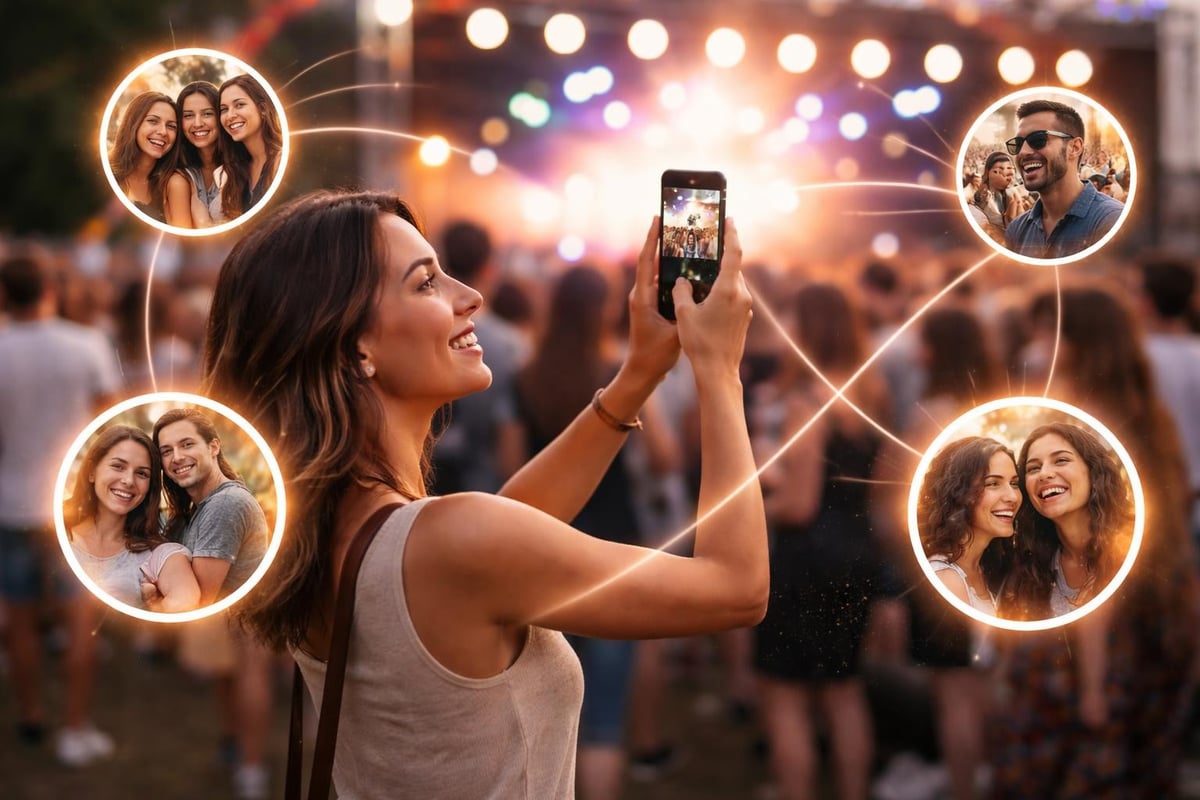
You need both, but not how you think. Volume gives you options. Quality comes from curation, not from each individual clip being perfect.
Fifty mediocre clips can become one brilliant video. One professionally shot clip is just... one clip. The mathematics of user-generated content platforms work in your favour when you have material to work with.
What to prioritize when curating community videos:
- Genuine emotion over technical quality
- Unique perspectives over standard angles
- Energy over production value
- Variety over consistency
- Authenticity over polish
This is where AI-assisted curation earns its keep. Sorting through hours of footage to find the thirty seconds that matter. That's grunt work. Let the algorithms handle it while you focus on the editorial decisions that actually require judgment.
Making Community Videos Work at Scale
Small events can manage community videos manually. You get twenty clips, watch them all, pick the best ones. Fine. At scale, that breaks down fast. A festival with two thousand attendees might generate five hundred clips. Good luck watching those without help.
The process needs structure without feeling structured to participants:
- Collection: Make uploading brain-dead simple
- Sorting: Auto-tag by time, location, content type
- Curation: AI suggests best moments, you decide
- Editing: Quick assembly of selected clips
- Distribution: Push to platforms where people actually watch
Each step needs to be faster than doing it manually, or you'll just do it manually and burn out. Automating event video curation isn't about removing humans from decisions. It's about removing humans from tedious sorting so they can focus on creative choices.
Legal Bits That Actually Matter
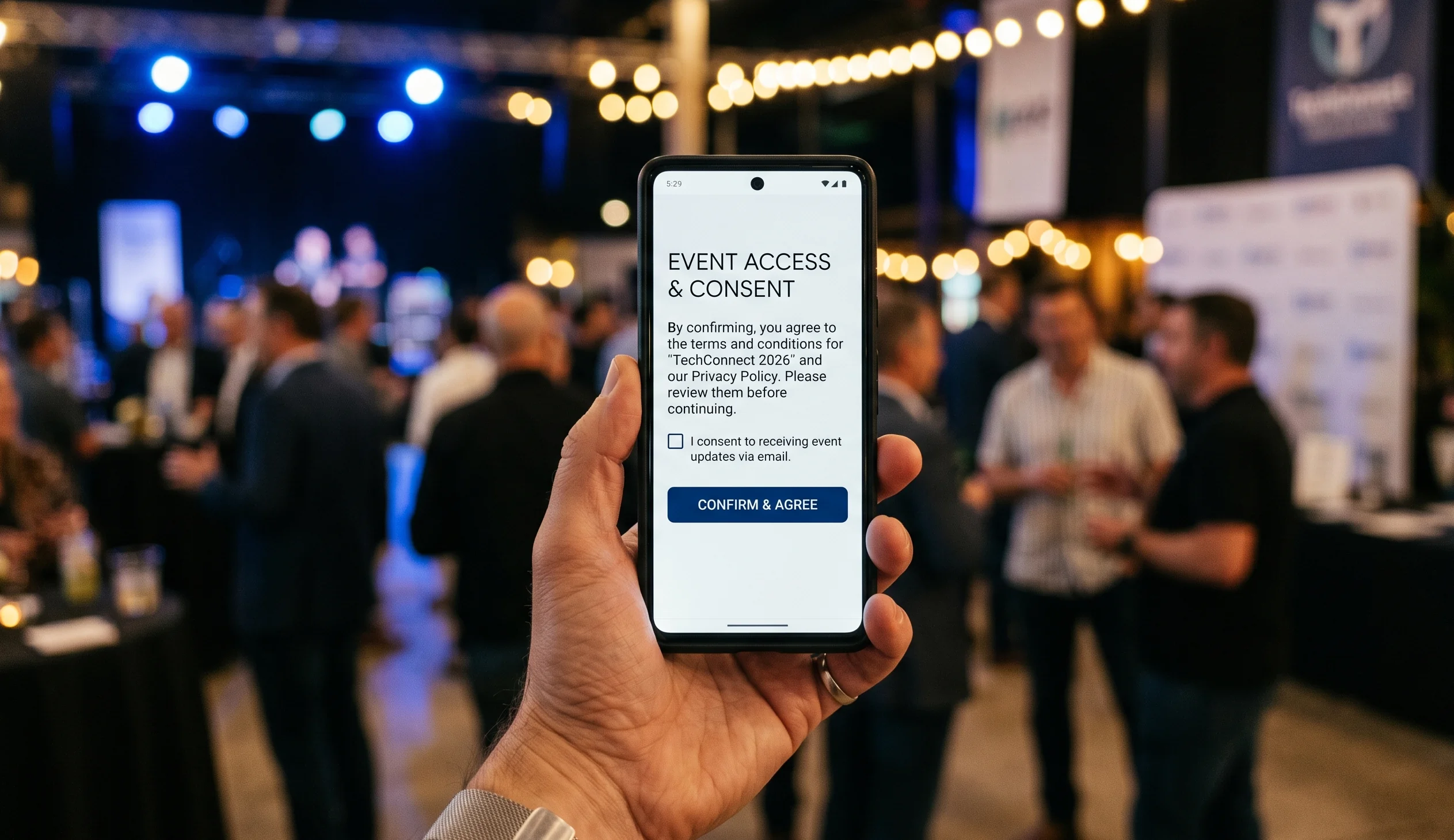
Everyone filming at your event creates a consent nightmare if you're not careful. You can't just grab people's footage and use it commercially without permission. That's how you end up in legal trouble or, worse, on Twitter for the wrong reasons.
Sort this before your event starts:
- Clear terms when people submit content
- Proper consent management for people appearing in videos
- Rights to use, edit, and distribute
- Credit requirements if any
- Geographic or platform restrictions
Consent management platforms handle this systematically. Don't rely on a checkbox buried in terms no one reads. Make consent explicit, simple, and revokable. People appreciate transparency, and you avoid headaches later.
The best practices for building communities apply here too. Trust is foundational. Break it with dodgy rights management and you won't get a second chance.
Platform-Specific Considerations
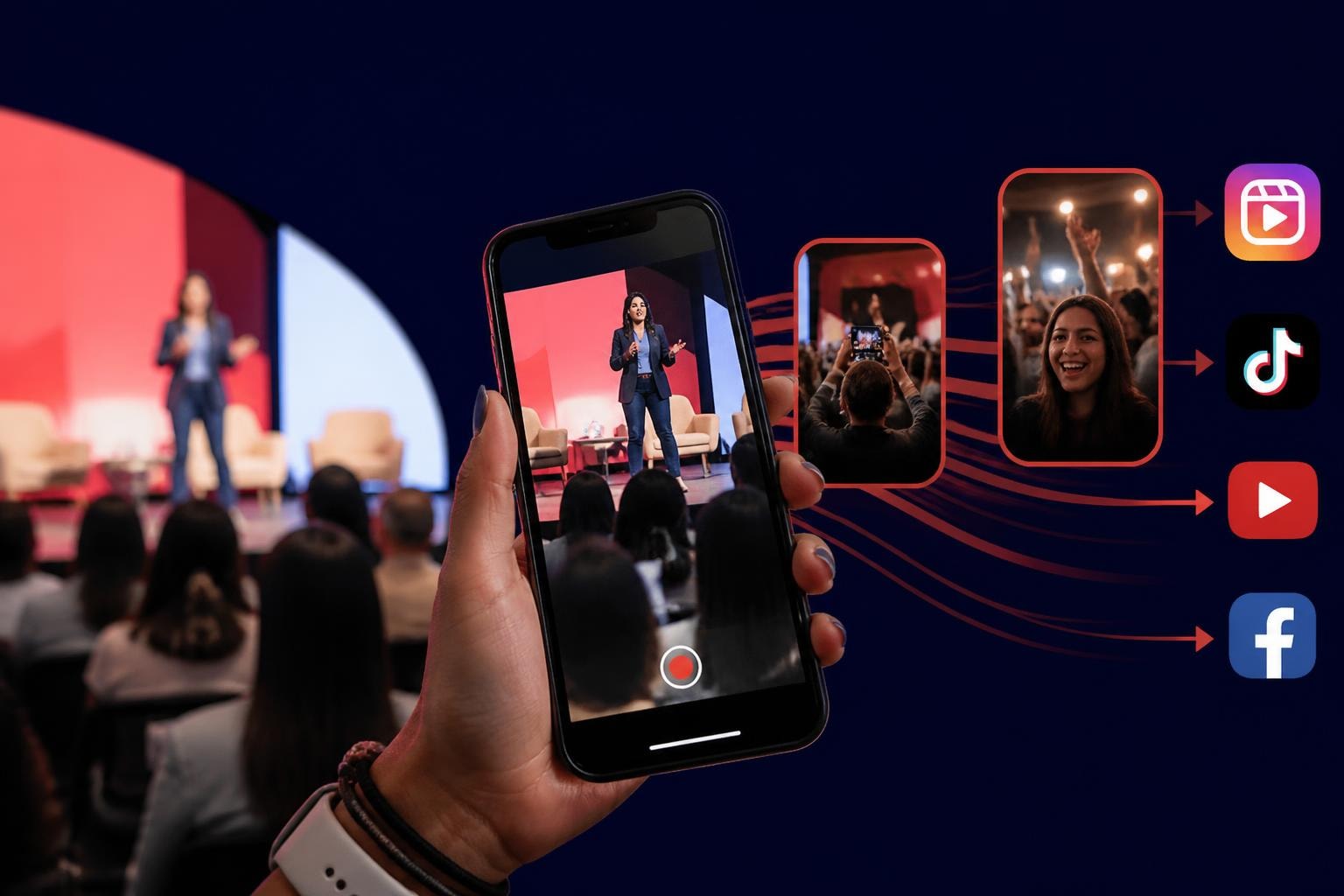
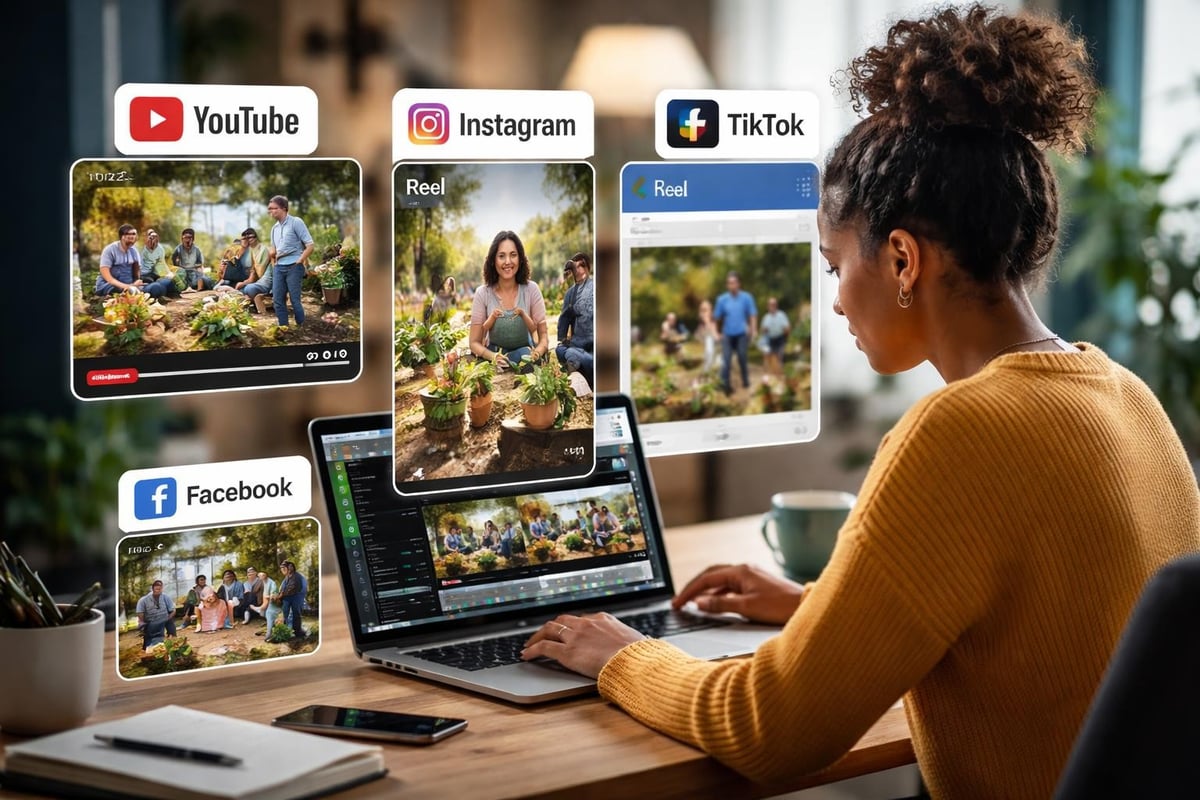
Community videos don't live in one place. They scatter across platforms where your attendees actually spend time. Each platform has quirks that matter.
| Platform | Optimal Length | Key Feature | Best For |
|---|---|---|---|
| 15-60 seconds | Stories/Reels | Quick moments | |
| TikTok | 15-60 seconds | Native editing | Viral potential |
| YouTube | 3-10 minutes | Long-form | Event recaps |
| 30-90 seconds | Professional | B2B events | |
| 1-3 minutes | Community features | Older demographics |
Understanding LinkedIn video best practices matters if you're running professional events. Knowing how to make short-form video work matters everywhere else. The content might be the same, but the packaging changes.
Don't try to be everywhere at once. Pick two platforms where your audience actually exists and do those properly. You can expand later once the workflow runs smoothly.
What Success Actually Looks Like
Metrics matter, but not the vanity ones. Views are nice. Shares matter more. Comments matter most.
Track what indicates real engagement:
- Share rate (not just share count)
- Comment quality (not just volume)
- Traffic to event pages from videos
- Ticket sales attributed to content
- Returning contributors
The last one's important. If someone films at one event and comes back to film at the next, you've built something. If they don't, you probably annoyed them with complicated processes or ignored their contribution.
Success also looks like reduced workload. If you're spending less time creating content and more time curating it, the system works. If you're working harder than before, something's broken in your workflow.
Common Mistakes to Avoid
Most people overcomplicate this. They want branded templates, strict guidelines, approval processes. That kills spontaneity, which kills authenticity, which kills the whole point.
What actually derails community videos:
- Making submission too complicated
- Taking too long to share finished content
- Ignoring contributors after they submit
- Over-editing until it looks corporate
- Forgetting to close the content loop
That last point trips up nearly everyone. Someone films something, submits it, then never sees what happened with it. They won't submit again. Show people their content in the final edit. Tag them. Give them something to share. Close the loop.
The best practices for creating impactful community videos emphasize this feedback cycle. It's not complicated. It just requires you to remember that real people took time to create something for you.
Technical Requirements Worth Meeting
You don't need much, but you need some things done right. Shaky footage is fine. Audio you can't hear isn't. Dark video no one can see isn't. Motion sickness from unstabilized clips isn't.
Set minimum standards:
- Adequate lighting (phone cameras can handle most situations)
- Usable audio (or plan to add music over it)
- Stable enough to watch (basic stabilization fixes most issues)
- Correct orientation for platform (vertical for mobile, typically)
- Reasonable file size (compress without destroying quality)
Understanding video formats for web helps when you're processing hundreds of clips from different devices. You'll get everything from 4K iPhone footage to questionable Android uploads. Your workflow needs to handle that variety without breaking.
Where Community Videos Fit Your Strategy
This isn't a replacement for all event content. It's a supplement that often becomes your primary content because it works better than the alternative. Professional highlight reels still have their place. But the bulk of your social content should come from community videos because that's what people actually watch and share.
Think about your event marketing plan holistically. Community videos handle social reach and authenticity. Professional content handles the polished brand moments. Together they tell a complete story that neither could alone.
The shift is moving from "we create, you consume" to "you create, we curate, everyone benefits." That's not a philosophical statement. It's a practical acknowledgment that your attendees have better access to authentic moments than any crew you could hire.
Making It Sustainable
Running this once is easy. Running it for every event requires systems. Not complicated systems. Just reliable ones.
Build these habits:
- Consistent submission process across events
- Standard curation workflow
- Template-based editing for speed
- Regular contributor recognition
- Documented learnings between events
Content curation best practices apply directly to community videos. You're curating authentic moments, not creating artificial ones. The skills transfer.
The goal is reaching a point where community videos become automatic. Attendees know they can film and submit. You know you'll get usable content. The workflow handles the tedious bits. Everyone focuses on the creative decisions that actually matter.
That's when community videos stop being a project and become infrastructure. When they're just how your events create content, not something special you're trying out.
Community videos work because they're real. People film what matters to them, and that's almost always more interesting than what you'd script. The technical challenges are solved. The workflow challenges are manageable. What's left is deciding whether you trust your attendees to tell your event's story better than you could alone. SureShot provides the platform to make that trust practical, turning your attendees into storytellers and their authentic moments into the content that actually spreads. Worth exploring if you're tired of expensive videos no one watches.