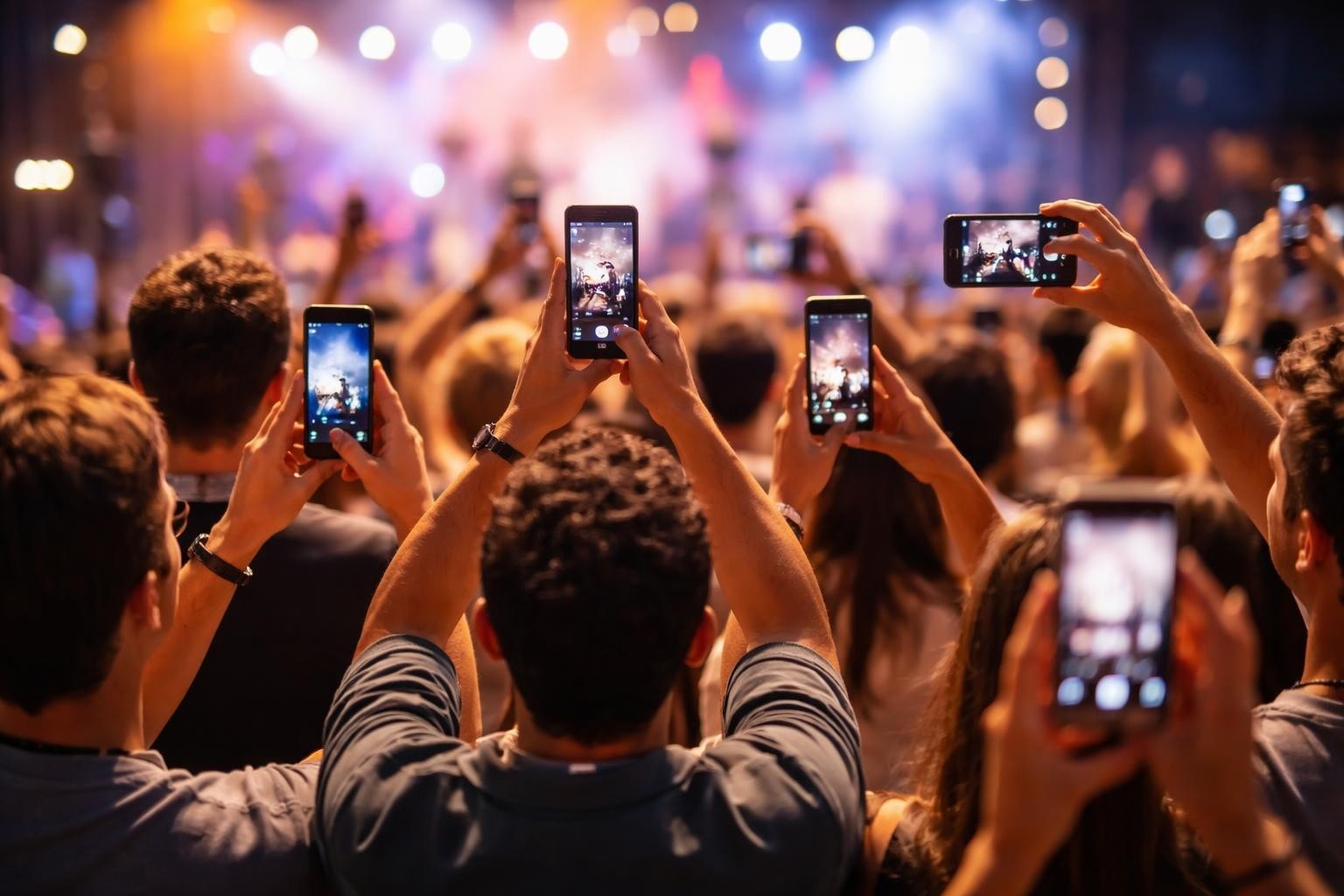

You've probably noticed it at every event you attend. People aren't just passive spectators anymore. They're filming, sharing, and creating content in real-time. The interesting bit? When you get people to create video together, something shifts. It's not about one polished promotional clip. It's about dozens of authentic perspectives merging into something that actually represents what happened. This is where the real value sits for event organisers in 2026, and it's changing how we think about video content creation entirely.
Why Creating Video Together Beats Solo Production
Traditional event video means hiring a crew, shooting all day, editing for weeks, and posting something nobody watches because it feels like an advert. That model's broken.
When attendees create video together, you're collecting genuine moments from people who actually want to be there. They're not performing for a camera operator. They're sharing what excites them with their mates.
The benefits stack up quickly:
- Production costs drop to nearly zero
- Content spreads organically through attendees' networks
- You get multiple angles and perspectives automatically
- Authenticity replaces polish (which audiences prefer anyway)
- Content appears in real-time, not weeks later
A festival in Denmark ran this experiment last year. Instead of their usual video team, they gave attendees a simple way to upload clips. They ended up with 400+ videos showing everything from backstage moments to crowd reactions. The reach? Triple their previous year's professionally produced content. The cost? A fraction.
The Technical Stuff That Actually Matters
You need a platform that handles the messy bits. People film on different phones, in different formats, at different quality levels. Some understand best video format for web, most don't.
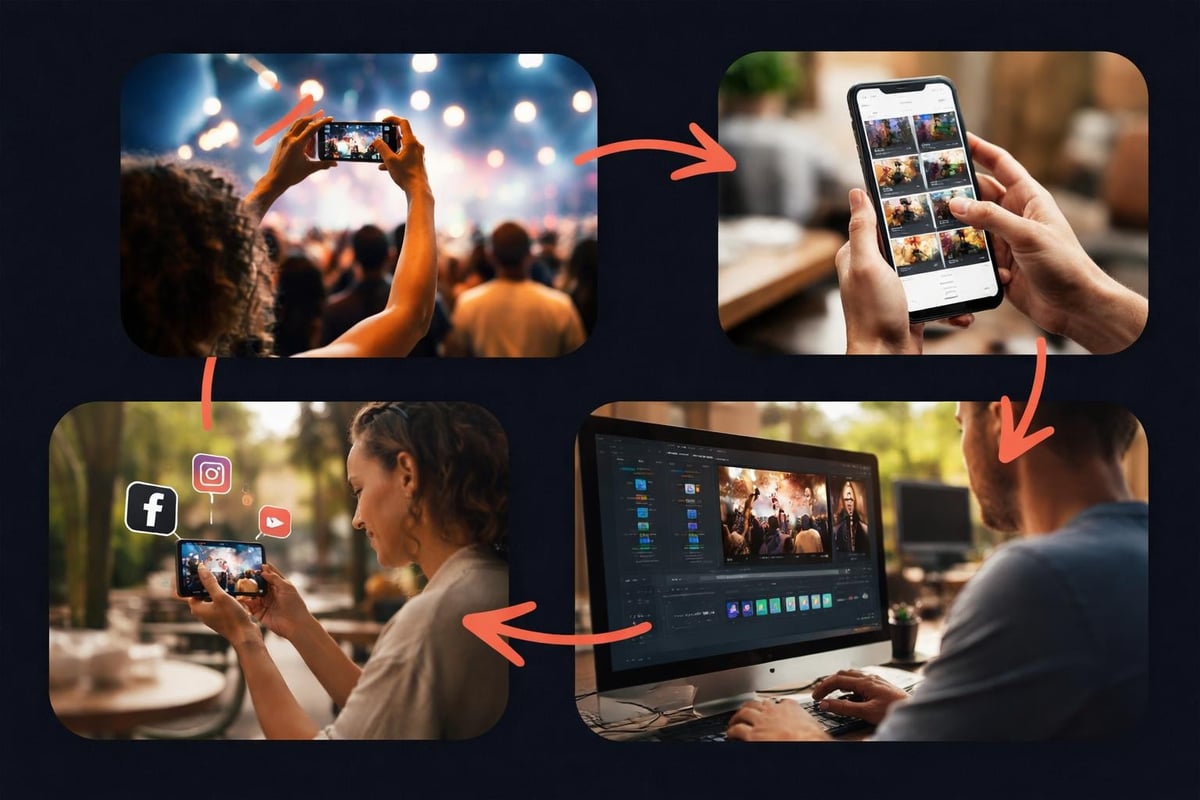
The system needs to:
- Accept uploads from any device
- Handle consent management automatically
- Sort through hundreds of clips without manual review
- Combine footage into something coherent
- Distribute to social platforms in the right formats
| Challenge | Traditional Approach | Video Together Approach |
|---|---|---|
| Getting footage | Hire camera crew | Attendees use their phones |
| Editing time | Days to weeks | Hours with smart curation |
| Authenticity | Staged and polished | Raw and genuine |
| Reach | Brand channels only | Attendees' networks included |
| Cost per video | £2,000-£10,000 | £200-£500 |
Watching Video Together: The Other Half
There's another angle to video together that's worth exploring. Apps built around shared viewing experiences show us something useful: when people watch video together, even remotely, they're more engaged. Comments happen in real-time. Reactions are immediate. It's not passive consumption.
For events, this matters because post-event engagement often dies within 48 hours. But if you're releasing curated highlight reels and letting attendees watch them together, you extend that engagement window.
Building Community Through Shared Content
The value isn't just in creating content, it's in the shared experience of viewing it.
Think about conferences. The networking happens between sessions, not during them. Same principle applies to video content. When you give attendees a reason to gather (virtually or physically) around event videos, you're creating additional touchpoints.
A tech conference ran this brilliantly: they not only encouraged attendees to film together but also organised watch parties for the compiled footage. Engagement stayed high for three weeks post-event instead of the usual two days.
Merging Individual Clips Into Cohesive Stories
The real skill is turning 200 random clips into something watchable. You can't just stick them end-to-end. That's unwatchable.
What works:
- Theme-based compilation: Group clips by topic (keynote moments, networking, entertainment)
- Chronological narrative: Follow the event timeline with varied perspectives
- Highlight reels: Best moments from multiple viewpoints
- Attendee spotlight: Feature individual storytellers' perspectives
Various video merge tools let you combine clips sequentially or side-by-side. But the real challenge isn't technical. It's editorial.
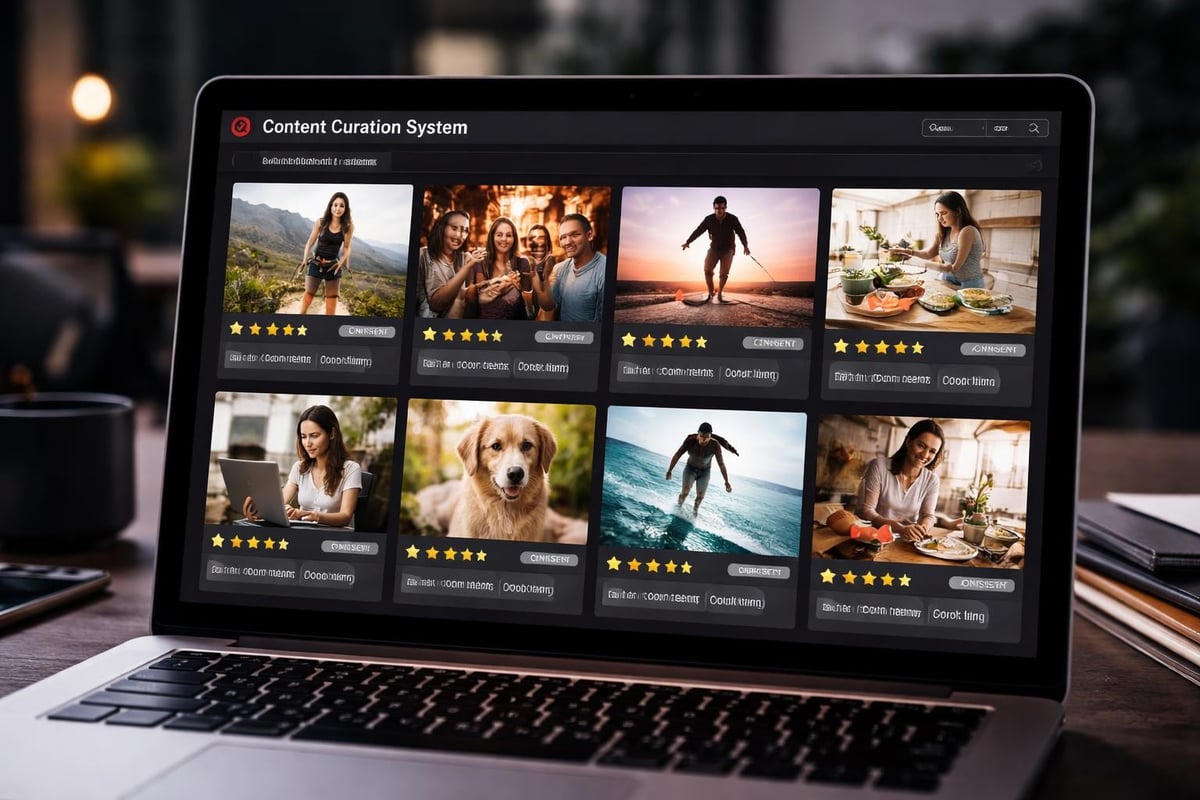
You need smart tools to help sort through submissions and identify quality content. Manual curation at scale is impossible. When you're collecting video together from hundreds of people, automation isn't optional.
Quality Control Without Killing Authenticity
Here's the balance: you want authentic content, but you also can't publish everything. Some clips are unusable (terrible audio, unfocused shots, inappropriate content).
Your filtering criteria should focus on:
- Technical minimums (audible audio, steady footage, clear subject)
- Consent verification (everyone shown agreed to be filmed)
- Brand safety (nothing that damages your reputation)
- Narrative value (does it add something to the story?)
The best UGC platforms handle most of this automatically. They check consent, filter out low-quality submissions, and flag potential issues before human review.
Real-World Applications Beyond Events
Corporate training uses video together in clever ways. Instead of watching mandatory compliance videos alone, teams watch and discuss together. Completion rates jump from 60% to 95%.
Marketing teams collaborate on product launches by having different departments film their perspectives. Sales captures customer reactions. Product team shows development process. Support shows common questions. Merged together, you get a complete story instead of siloed content.
Remote teams build connection through shared video creation. Monthly all-hands meetings include pre-submitted clips from team members. It's low-effort but high-impact for culture building.
| Use Case | Participants | Output | Primary Benefit |
|---|---|---|---|
| Music festivals | 500-5,000 attendees | Daily highlight reels | Organic social reach |
| Corporate events | 50-500 employees | Recap videos | Internal engagement |
| Product launches | 10-50 stakeholders | Multi-perspective stories | Complete narratives |
| Training programmes | 20-200 learners | Interactive modules | Higher completion rates |
Technical Requirements You Can't Ignore
Mobile-first is mandatory. If your platform requires desktop uploads, you've already lost. People film on phones. They need to submit from phones.
Format compatibility matters more than you'd think. Understanding H264 vs H265 helps you balance quality and file size. Most submissions will be H264, but newer devices default to H265 for better compression.
Storage and bandwidth costs can spiral if you're not careful. Calculate based on average clip length (usually 15-60 seconds) and expected submission volume. For a 1,000-person event expecting 30% participation, plan for at least 300 clips.
Essential platform features:
- Native mobile apps (iOS and Android)
- Offline submission queuing
- Automatic format conversion
- Built-in consent collection
- Cloud storage with CDN delivery
- Social platform integration
- Analytics and reporting
Privacy and Consent Management
You can't publish video together without explicit consent from everyone who appears in frame. This isn't optional. GDPR in Europe and similar regulations worldwide make this legally required.
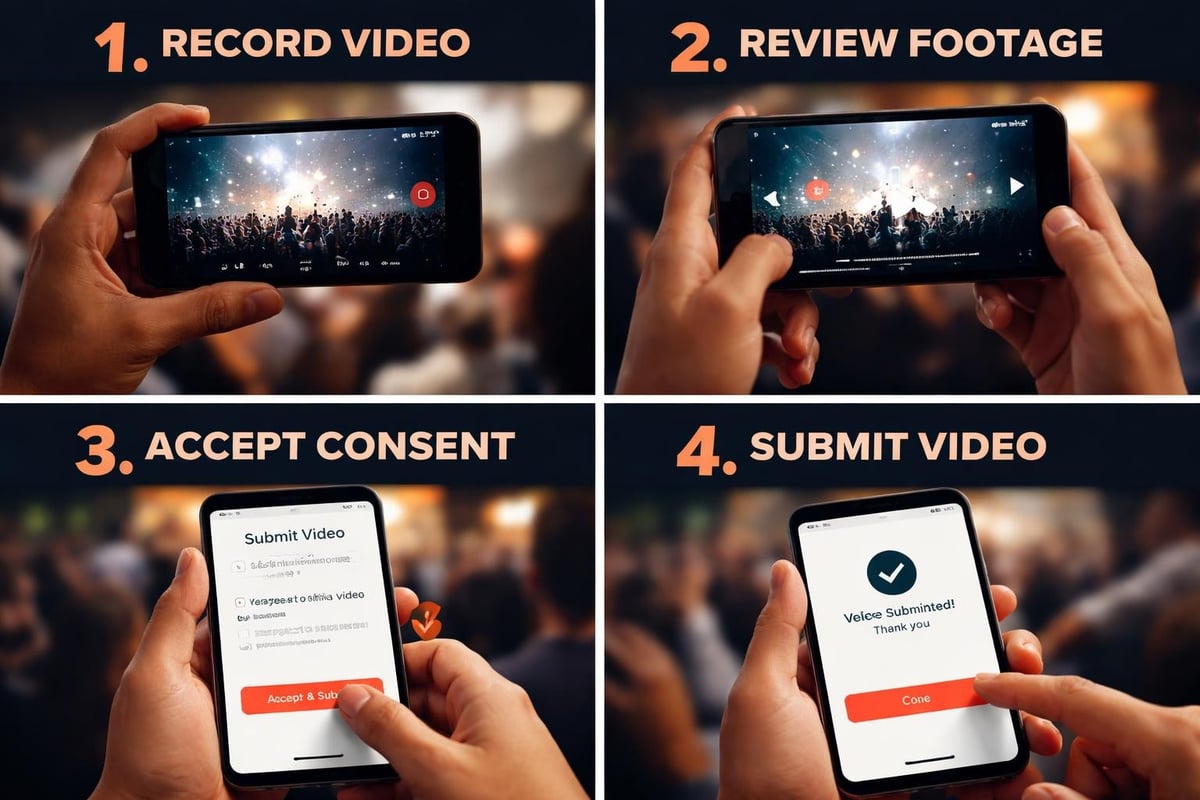
Best consent management platforms handle this at submission time. Before uploading, contributors confirm they have permission from anyone identifiable in their clip.
For events, this means:
- Clear signage about filming
- Opt-out zones where cameras aren't allowed
- Digital consent captured at upload
- Easy removal process if someone changes their mind
- Documented proof of permission for every published clip
When creating video from clips submitted by multiple people, you're responsible for every frame. One violation can tank your entire campaign and create legal headaches.
Distribution Strategy for Maximum Impact
Creating video together is pointless if nobody sees it. Your distribution plan matters as much as collection.
Multi-platform approach:
- Instagram Reels: 15-30 second highlights, posted daily during event
- LinkedIn: Longer thought leadership pieces for B2B events
- Facebook: Community-focused compilations
- YouTube: Full-length recaps and extended cuts
- TikTok: Trending format participation using event content
Each platform needs different formatting. What works for Facebook Reels won't work for LinkedIn video. Vertical video dominates mobile, but desktop viewers still prefer horizontal for longer content.
Timing matters too. Post during the event for real-time engagement. Follow up with curated compilations within 24 hours while interest peaks. Release extended cuts and specialty edits over the following weeks to maintain momentum.
The reach multiplier comes from contributors sharing their own appearances. When someone sees themselves in your event video, they share it with their network. That's organic distribution you can't buy.
Why This Works Better Than Traditional Video
Traditional event video has one perspective: the production company's. They shoot what they're hired to shoot, from angles that look professional, featuring moments that fit the brief.
When you create video together with attendees, you get actual event experience. Someone films the queue for coffee because that's where they met interesting people. Another captures the afterparty because that's when deals happened. A third focuses on the exhibition stands because that's what they came for.
None of that appears in official footage. But all of it matters to different audience segments.
The compilation becomes comprehensive by accident. You're not trying to show everything. You're showing what actually resonated with people who were there. That's more valuable than any scripted content.
Production quality? It's mixed, sure. But audiences in 2026 trust shaky phone footage more than slick corporate video. The imperfection signals authenticity. Polish signals marketing. Choose accordingly.
Making It Work at Scale
Small events (under 100 people) can handle video together manually. Review submissions yourself, edit in-house, publish on your schedule.
Medium events (100-1,000 people) need automation for curation but can still manage editing internally. Use platforms that pre-filter submissions and flag the best content.
Large events (1,000+ people) require full automation. Smart tools handle initial curation, automated editing tools create rough cuts, human editors add polish. You're managing volume that makes manual review impossible.
Automating event video curation isn't about removing human judgment. It's about making human judgment possible at scale by eliminating obvious rejections first.
Scaling checklist:
- Submission workflow tested before event
- Clear guidelines shared with attendees
- Moderation team sized appropriately
- Editing capacity matches expected volume
- Distribution scheduled in advance
- Analytics tracking set up properly
Creating and watching video together fundamentally changes event content from expensive marketing overhead to organic community engagement. The shift from one official narrative to dozens of authentic perspectives makes content more valuable and more trusted. If you're running events and still relying solely on traditional video production, you're leaving reach and authenticity on the table. SureShot transforms your attendees into storytellers, handling everything from mobile capture to consent management to automated curation, so you get authentic event content that actually spreads without the traditional production costs.