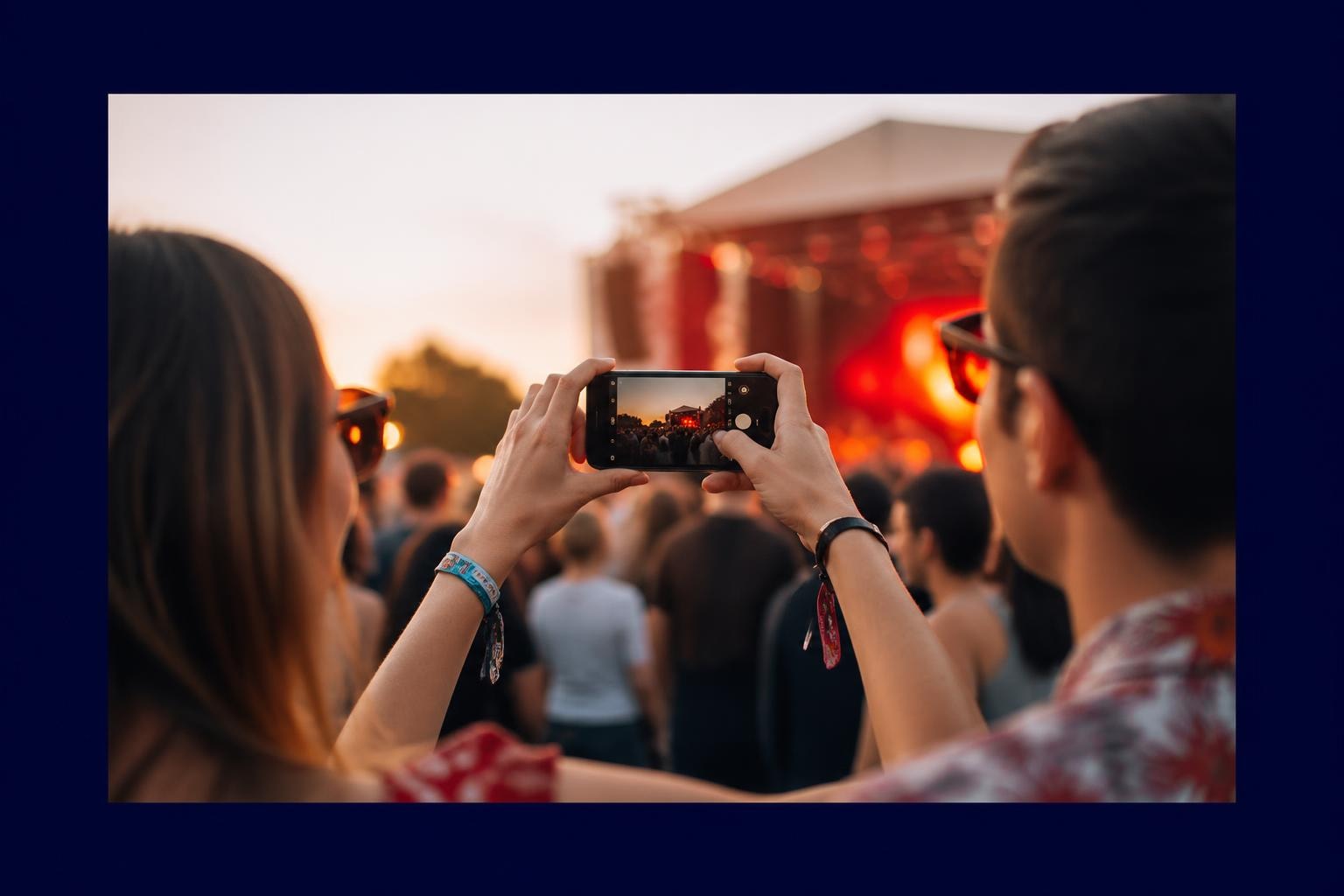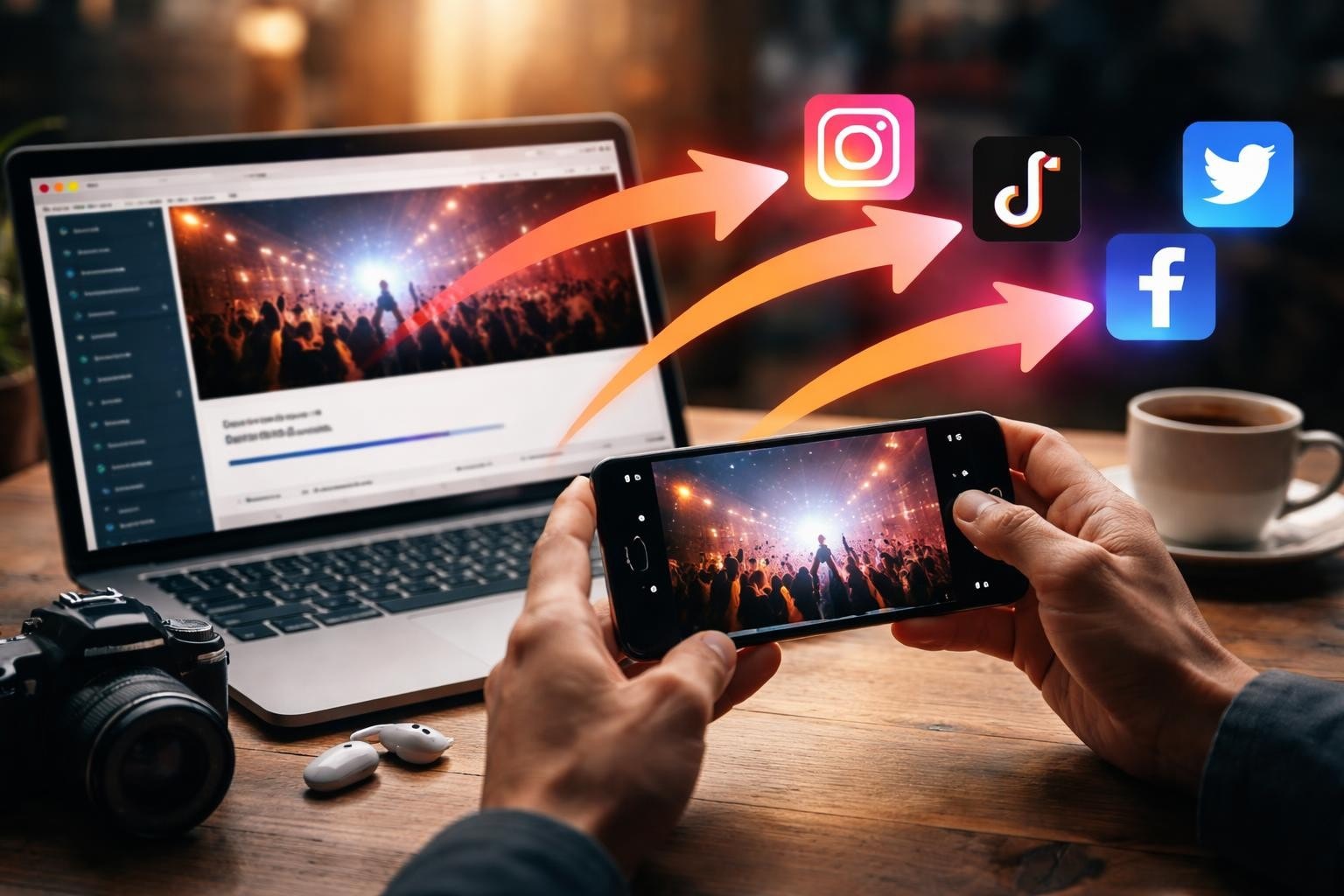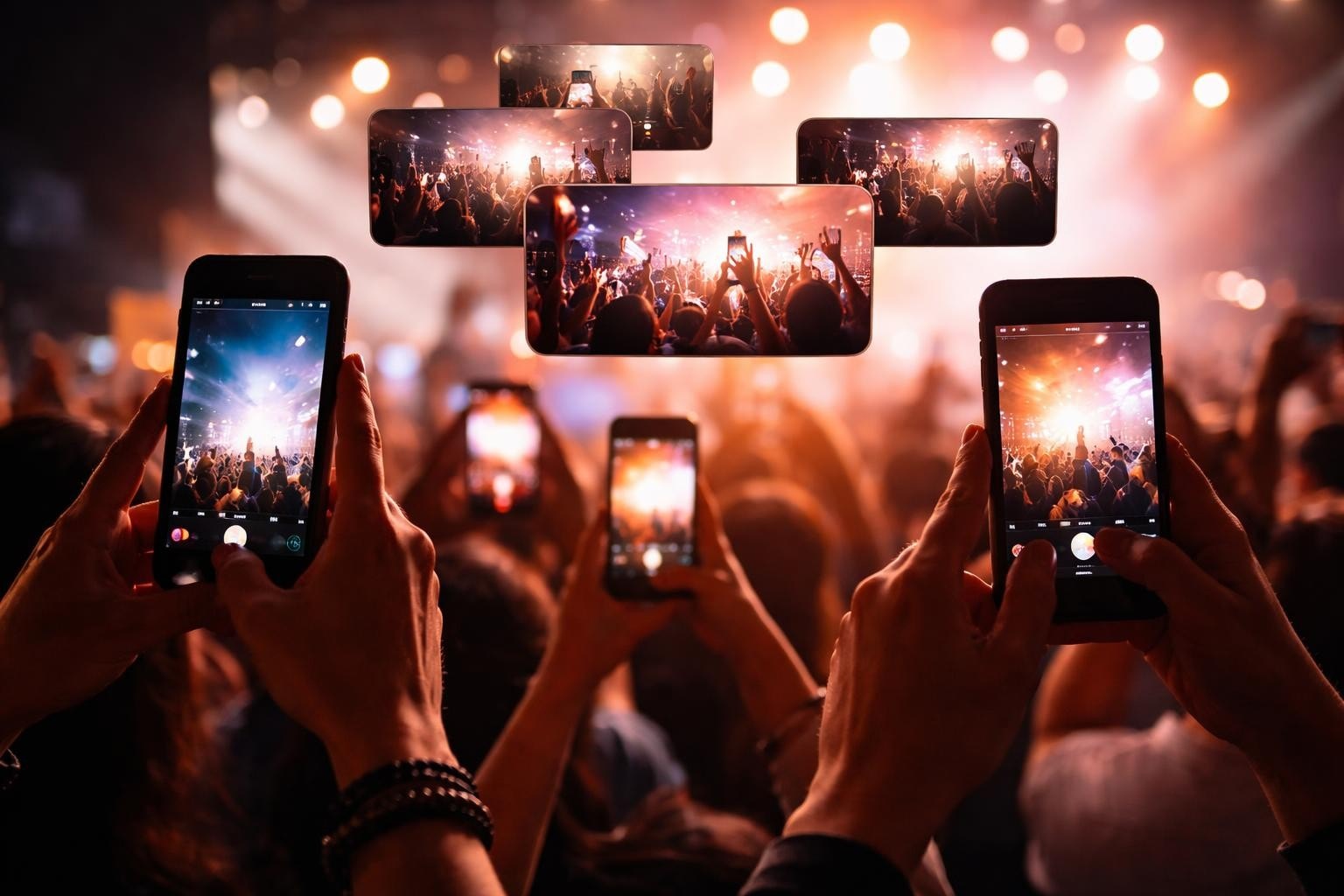
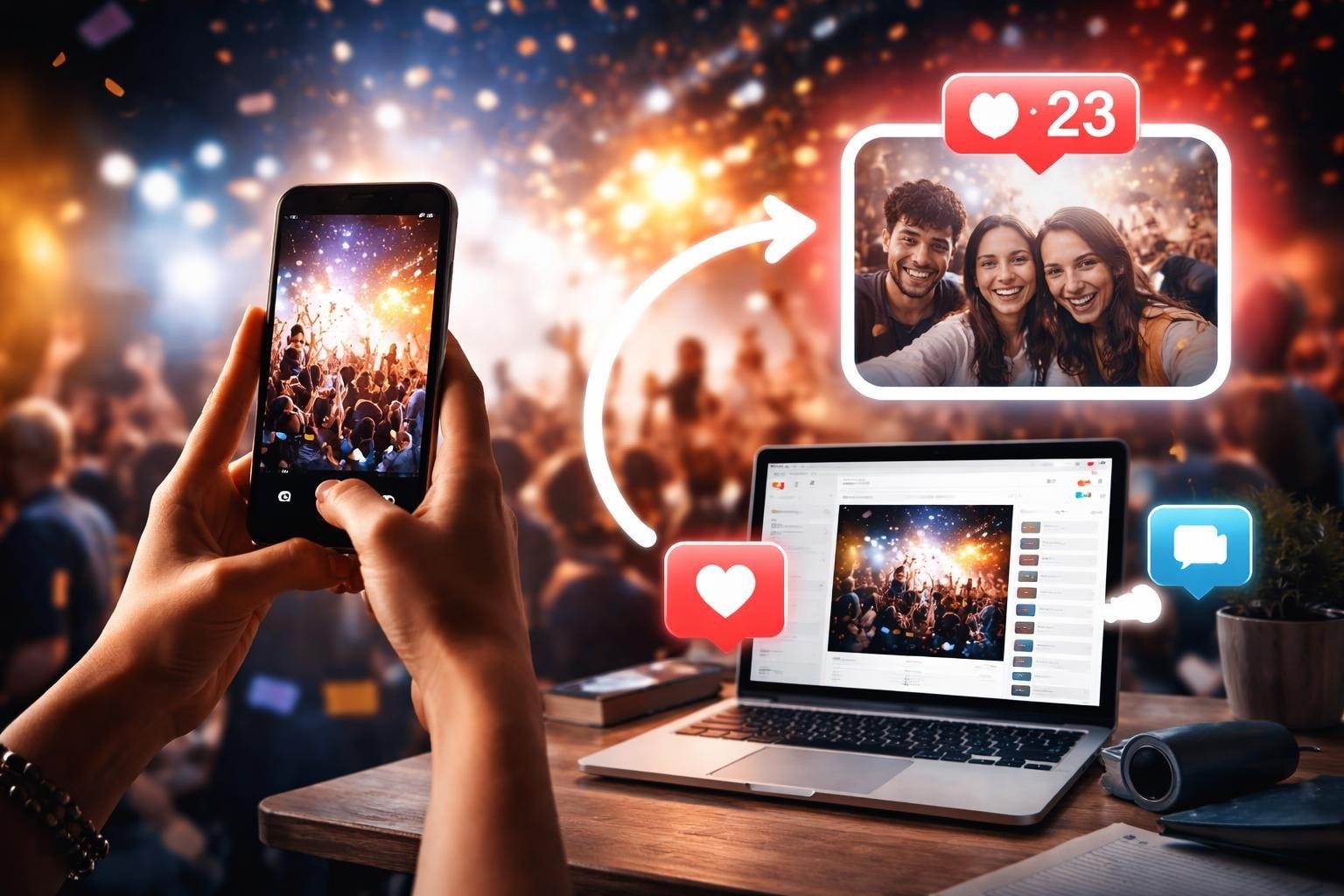

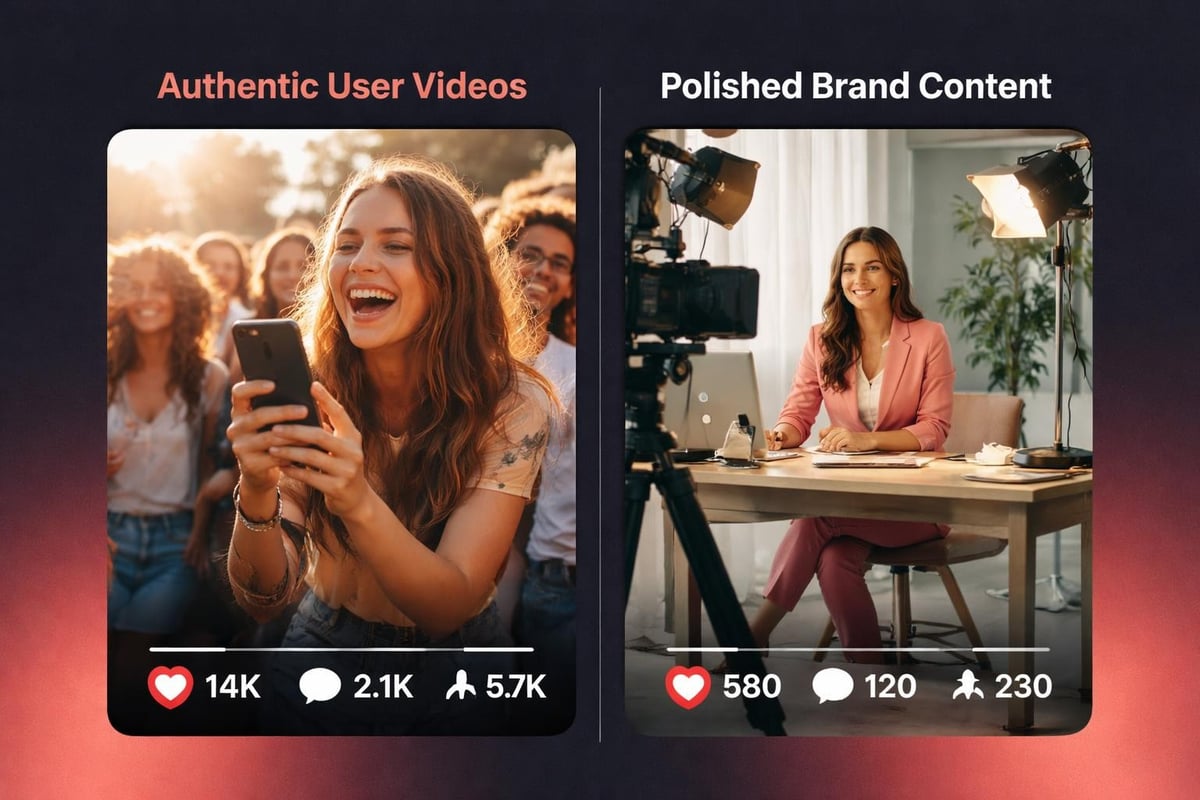
You've seen those slick brand videos with perfect lighting and scripted testimonials. They're polished. Professional. And nobody trusts them anymore. People scroll past content that smells like advertising, but they'll stop for a shaky phone video of someone genuinely excited about something. That's the entire point of user-generated content. When attendees at your event pull out their phones and capture what's happening, they're creating something you can't buy: authenticity. Let's look at what actually works.
What Makes UGC Video Different
The production value is lower. The editing is rougher. And that's exactly why it performs better.
Traditional brand content costs thousands to produce and feels like it was made in a boardroom. UGC videos feel like they were made by actual humans because they were. Your event attendees aren't thinking about brand guidelines when they film. They're capturing the bits that genuinely matter to them.
Here's what sets UGC videos apart:
- Nobody's following a script or hitting marks
- The emotions are real, not performed
- People film what they actually care about, not what marketing decided they should care about
- The format matches what people already watch on social media
- It costs you nothing to produce
This isn't theoretical. Brands using user-generated content effectively see engagement rates that their produced content can't match.
UGC Video Examples from Events
Music Festivals and Concerts
Glastonbury doesn't need to hire a film crew to show you what their festival feels like. Thousands of attendees do it for them. Someone films the exact moment the headliner walks on stage. Another person captures the sunset over the main stage. Someone else gets their mates singing along to the encore.
Each video shows a different angle of the same experience. Together, they create something no single production team could capture: the feeling of being there.

Sports Events
When your team scores in the final seconds, fans don't think about composition. They just hit record. That raw reaction is worth more than any highlight reel.
Premier League clubs have figured this out. They encourage fans to film their goal celebrations and tag the club. The result? Hundreds of unique perspectives on the same moment, each one showing genuine emotion you can't fake.
Corporate Events and Conferences
This is where most brands get it wrong. They set up interview booths with ring lights and microphones, then wonder why the videos feel sterile.
The better approach: let attendees film what matters to them. Someone learns something useful in a breakout session and films a quick reaction. A networking conversation leads to a collaboration, and they document it. These moments tell a better story than your official event recap video.
What Actually Works in UGC Videos
Let's be specific about what makes certain ugc video examples perform while others don't.
| What Works | Why It Works | What Doesn't Work |
|---|---|---|
| Spontaneous reactions | Emotions are genuine | Asking people to "act natural" |
| Quick tips shared peer-to-peer | Feels helpful, not promotional | Scripted testimonials |
| Behind-the-scenes moments | Shows what official content hides | Staged "candid" shots |
| Problem-solving in real time | Demonstrates actual value | Generic praise |
The pattern is obvious. Authenticity wins. Performance loses.
Product Launches
When Apple releases a new iPhone, the official event is one thing. The queue of people filming their unboxing? That's the real marketing.
Tech companies have learned to seed products with early adopters who'll document their genuine first impressions. Not reviews. Not testimonials. Just real people figuring out if the thing actually does what it promises.
This works because viewers know these people paid their own money. They're not reading from talking points.
Retail Experiences
Clothing brands used to spend fortunes on lookbooks and campaign shoots. Now they encourage customers to film themselves trying things on. The conversion rate difference is significant because people can see how clothes actually look on real bodies in normal lighting.
Gymshark built their entire brand on this. Their user-generated fitness videos show real people using their products during actual workouts, not models posing in a studio.
How Brands Are Using UGC Videos
Social Media Integration
The smartest brands aren't just collecting ugc video examples, they're integrating them everywhere. KIKO Milano embeds TikTok content directly on their product pages, showing real customers using their makeup.
When you're deciding between two lipsticks, would you rather see a professional model or twenty different people showing how it actually looks? The answer is obvious.
Email Campaigns
Nobody opens marketing emails hoping to see more polished brand content. But a compilation of customer reactions? That's worth watching.
Email open rates jump when the preview shows real people instead of stock photos. Click-through rates improve when the content inside feels personal rather than corporate.
Website Content
Your homepage probably has a professionally shot hero video. Fine. But scroll down and you'll see the same stock footage energy of people laughing at tablets that every tech company uses.
E-commerce brands replacing that with UGC see time-on-site increase because people actually watch the videos instead of scrolling past them.
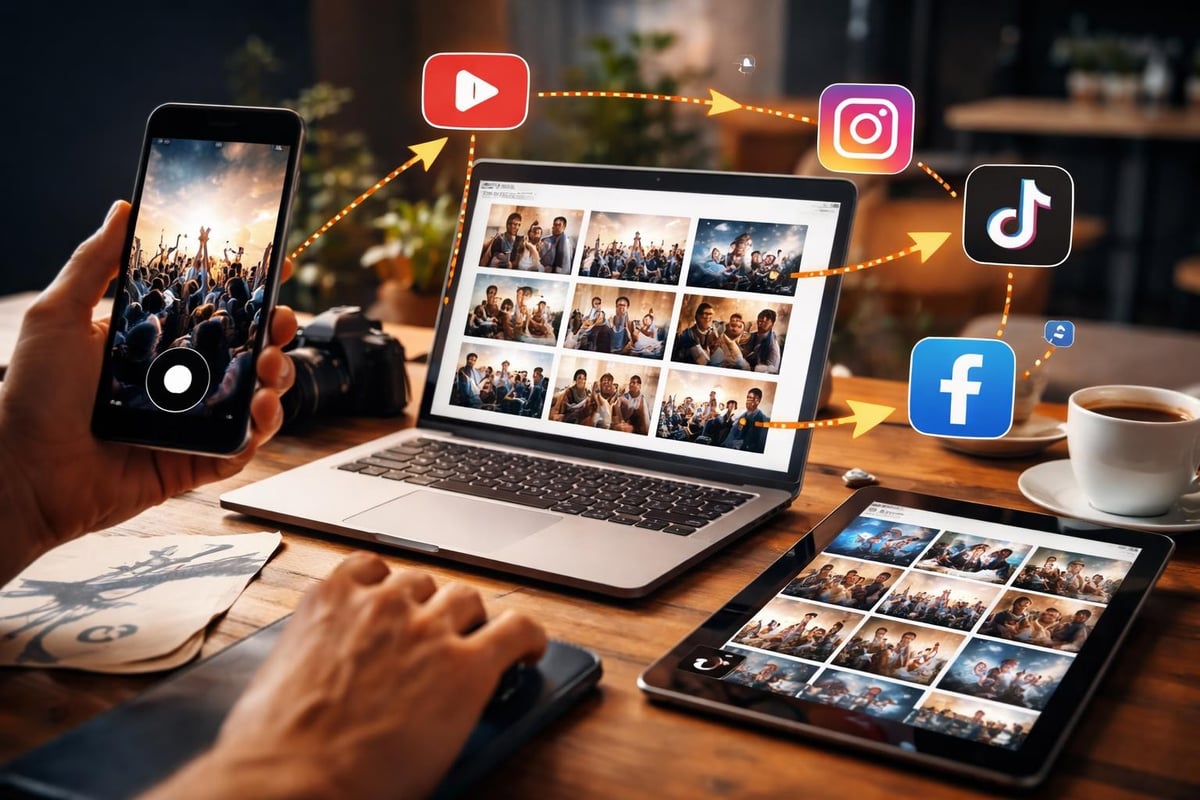
Industry-Specific Applications
Different sectors use UGC videos differently, but the principle stays the same: let real people tell real stories.
Hospitality and Tourism
Hotels can shoot all the property tours they want. What sells rooms is the family filming their kids jumping in the pool or the couple showing off their view at sunset.
Tourism boards have figured this out. Instead of hiring travel influencers, they encourage visitors to share their experiences. The result is hundreds of different perspectives on the same destination, each one appealing to different types of travelers.
Food and Beverage
Restaurant marketing used to mean professional food photography. Now it's customers filming their meals arriving at the table, the first bite reaction, the ambiance during dinner.
This shift happened because people trust other diners more than they trust marketing departments. When someone films their genuine reaction to trying something new, that's social proof you can't manufacture.
What restaurants are capturing:
- The moment dishes arrive at the table
- First bite reactions
- Special occasions and celebrations
- Kitchen tours and chef interactions
- Behind-the-scenes prep work
Education and Training
Corporate training videos are famously terrible. Someone reading bullet points off slides while stock music plays in the background.
Forward-thinking companies let their team members create quick tutorial videos showing how they actually solve problems. It's messier but infinitely more useful because it shows real workflows, not idealized processes.
The Technical Reality
You don't need expensive equipment to collect UGC videos. Everyone at your event already has a decent camera in their pocket. The challenge isn't capture quality, it's curation.
When you encourage attendees to film and share, you'll get hundreds or thousands of clips. Most will be unusable. Some will be gold. Sorting through them manually is impossible.
This is where choosing the right UGC platform matters. You need systems that help you find the good stuff without watching every single submission.
File Format Considerations
Most user-generated videos come in whatever format the phone defaults to. Usually that's H.264, sometimes H.265 on newer devices. For web distribution, you'll need to standardize these, and understanding the difference between H.264 and H.265 helps you balance quality against file size.
Consent and Rights
The legal bit everyone ignores until it bites them: you need permission to use people's content. Not just a vague terms of service buried somewhere. Clear, explicit consent.
Getting this right means having proper consent management built into your collection process from the start.
What Makes Examples Effective
Looking at successful ugc video examples, certain patterns emerge.
| Element | Impact | Example |
|---|---|---|
| Short duration (under 30 seconds) | Higher completion rate | Quick event highlights |
| Clear audio despite background noise | Message comes through | Attendee testimonials |
| Vertical format for mobile | Matches viewing behavior | Social media clips |
| Immediate emotional hook | Stops the scroll | Genuine surprise reactions |
The length matters more than you'd think. Short-form video performs better because attention spans are real and nobody's lying about that.
Authenticity Markers
Viewers can spot fake UGC instantly. The giveaways:
- Too perfect lighting or composition
- Professional audio quality
- Overly enthusiastic delivery that sounds scripted
- Multiple takes edited together seamlessly
- Brand messaging that feels rehearsed
Real UGC has rough edges. That's the point.
Distribution Strategies
Collecting videos is half the work. Getting them seen is the other half.
Organic Social Reach
When attendees share their videos and tag your event, their networks see it. Those people trust their friend more than they trust your brand. That's earned media working exactly as it should.
The multiplication effect is real. One person shares a video with their 500 followers. Ten of them engage with it, pushing it to their networks. Suddenly your event is reaching people who've never heard of you.
Paid Amplification
UGC videos work brilliantly in paid ads because they don't look like ads. The performance difference between polished brand content and real customer videos in paid social is significant enough that most brands now lead with UGC.
Email and Newsletter
People actually watch videos in emails when they look personal. A compilation of event highlights from attendees performs better than your professional recap video because it feels less like marketing and more like sharing.
Why This Matters for Event Organizers
Every event creates hundreds of potential video moments. Your attendees are already filming them. The question is whether you're capturing that content or letting it disappear into individual camera rolls.
Automating event video curation turns attendees into your content creation team without them having to do anything different from what they'd already do naturally.
The benefits add up:
- Content production costs drop because you're not hiring film crews
- Social reach expands because attendees share their own content
- Authenticity increases because the videos aren't scripted
- Post-event marketing material generates itself
- Future event promotion gets more effective because you're showing real experiences
Traditional event video coverage shows what you want people to see. Crowdsourced event video shows what people actually care about. There's usually a gap between those two things.
Common Mistakes to Avoid
Most UGC video strategies fail in predictable ways.
Don't:
- Over-curate to the point where you only show perfect moments
- Add so many graphics and edits that it loses the raw feel
- Make the submission process complicated
- Forget to ask for permission to use the content
- Ignore videos that don't fit your brand aesthetic (they're often the best ones)
The whole point is authenticity. The moment you start polishing too much, you've lost what made it valuable.
Over-Production
Adding your logo to every frame, color-grading it to match your brand palette, cutting out the awkward bits - all of this removes what made the video work in the first place.
Leave it rough. That's the appeal.
Poor Curation
Not every video deserves distribution. Some will be too dark, too shaky, or too off-topic. But some brands go too far the other way and only select videos that look semi-professional, which defeats the purpose.
The balance is using content curation best practices while keeping the authentic feel intact.
Making It Work for Your Events
Theory is fine. Implementation is where most plans fall apart.
You need a system that makes it dead simple for attendees to share videos and dead simple for you to collect and curate them. Complexity kills participation.
The best approach combines a mobile app that attendees already want to use with backend systems that handle the technical complexity for you. Nobody should need training to participate.
Encouraging Participation
Don't just ask people to share videos. Give them a reason. Recognition, prizes, seeing themselves featured in your marketing - these motivate participation.
Make it obvious what you want and how to share it. Announce it at the event. Put it in your email communications. Display it on screens throughout the venue.
Quality Control at Scale
When you get 500 video submissions, you can't watch them all. You need filtering systems that surface the good ones based on length, clarity, engagement, and relevance.
This is where AI actually helps without compromising authenticity. It handles the boring work of sorting and flagging so you can focus on the creative decisions.
Real Results from Real Brands
Successful UGC campaigns show consistent patterns. Brands that commit to authentic user content see engagement rates 5-10x higher than produced content.
Doritos built entire campaigns around fan-created videos. The content production cost was minimal. The cultural impact was massive because people made ads that other people actually wanted to watch.
IBM used employee-generated content to humanize their brand. Instead of corporate messaging about what they do, they showed real people explaining how they solve actual problems.
These examples work across industries because the principle is universal: people trust people more than they trust brands.
The best ugc video examples all share one thing - they're real. When you give event attendees the tools to capture and share what matters to them, you get content that money can't buy. SureShot turns your event attendees into your content team, handling the collection, curation, and distribution automatically so you get authentic videos that actually perform. Stop paying for content nobody trusts and start amplifying the stories your attendees are already telling.