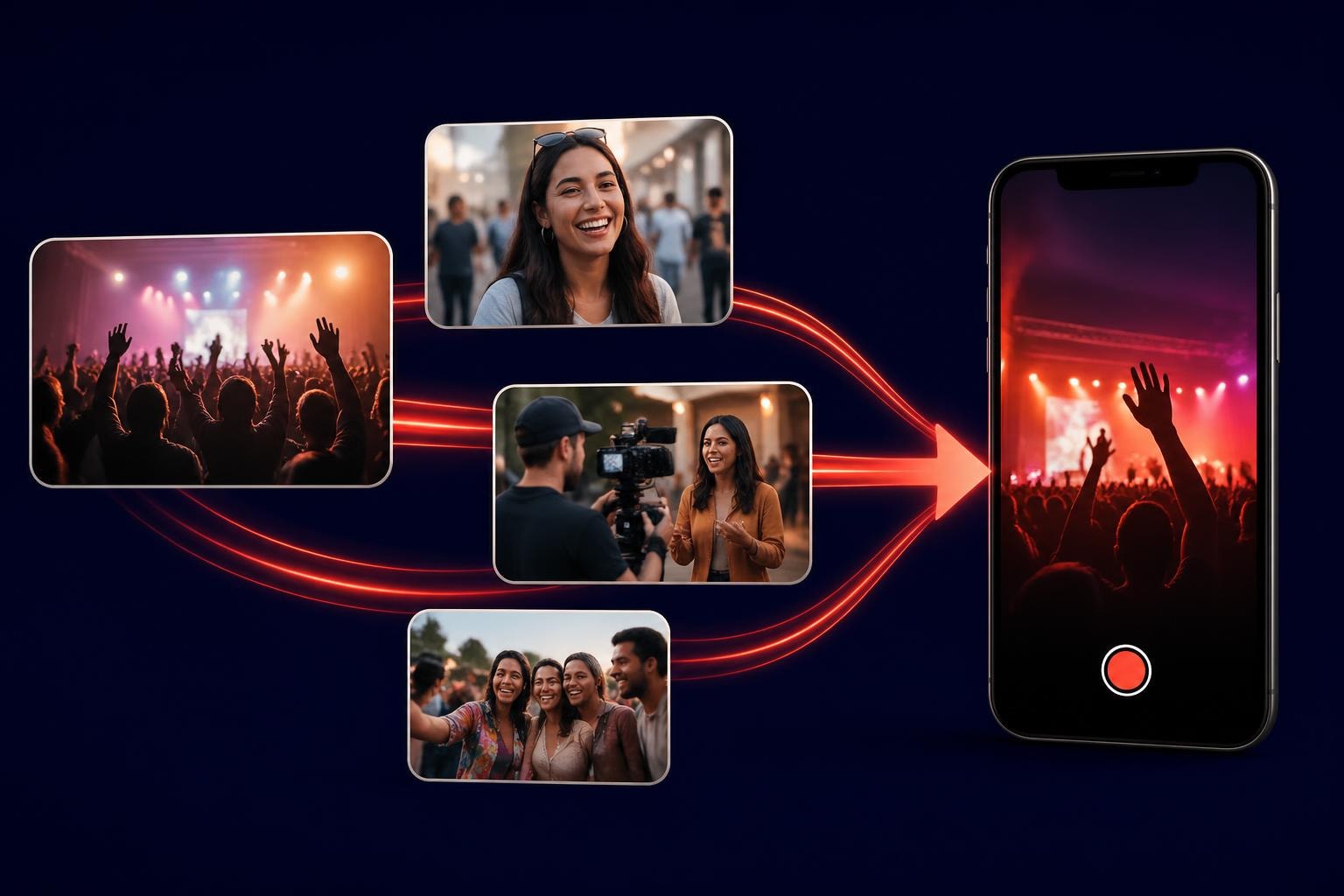

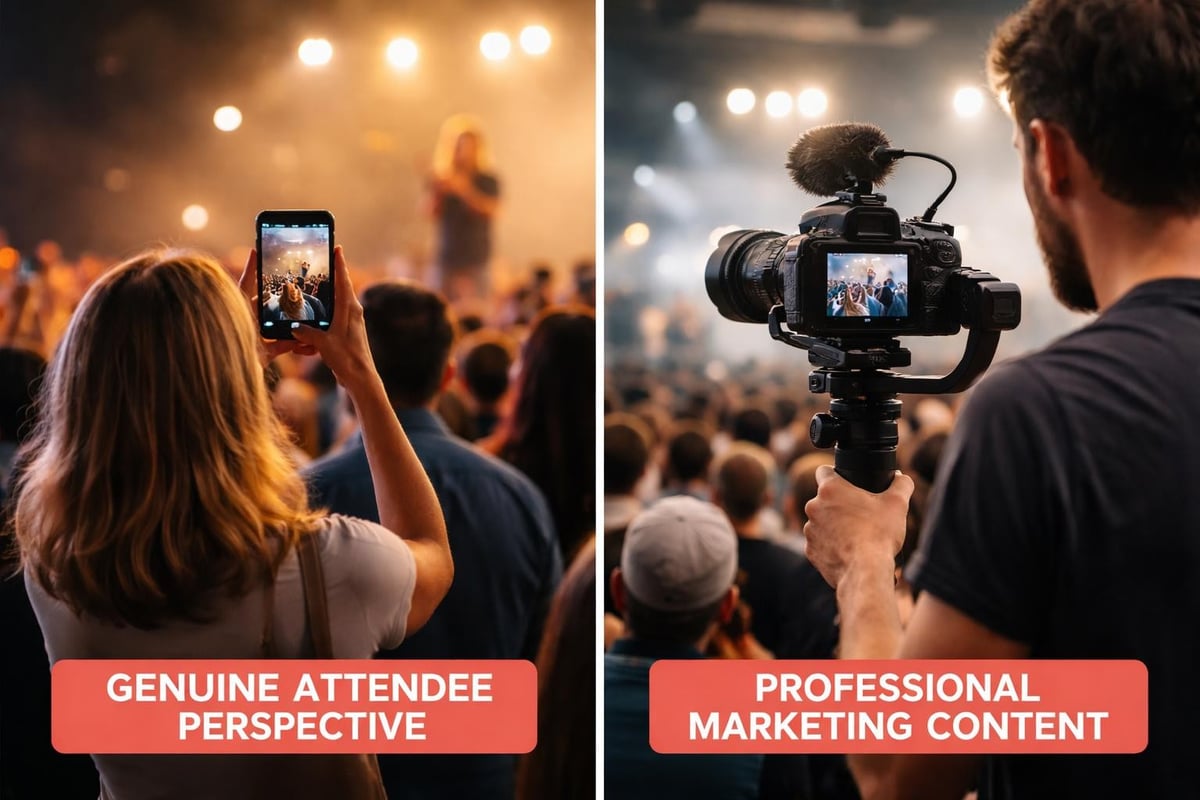
You've seen them everywhere. Someone at a festival films their mate doing something daft. A wedding guest catches the best man's speech from their angle. Conference attendees share quick clips of the keynote that actually mattered. These share it videos aren't polished. They're not professionally lit. But they get more engagement than anything a production crew could create, because they're real.
Why Share It Videos Actually Work
The numbers don't lie. User-generated content gets shared more often, trusted more readily, and costs less to produce than anything you'd commission. When someone shares a video from your event, they're not just documenting it. They're endorsing it to everyone they know.
Here's what makes share it videos different:
- They're authentic - No one's performing for a camera crew
- They're immediate - Shared while the event's still happening
- They're trusted - Friends share with friends, not brands with audiences
- They're free - Your attendees are already filming anyway
The shift happened quietly. Events used to hire videographers to capture everything. Now the best footage comes from the crowd. Not because professional crews got worse, but because audiences got better at spotting what's staged.
The Trust Problem with Professional Content
People scroll past ads. They ignore sponsored posts. They've built mental filters for anything that looks too polished. But share it videos slip through because they're not trying to sell anything. They're just someone sharing what they experienced.
When you're choosing between a slick promotional video and a shaky clip someone filmed on their phone, the phone wins. Every time. Because it feels like a recommendation, not a pitch.
What Makes People Want to Share
Not every video gets shared. Most sit in camera rolls forever. The ones that spread have specific qualities that make them worth passing on.
Emotional resonance matters most. People share content that makes them feel something. Excitement, surprise, connection. The technical quality barely registers if the moment's real.
Here's what actually gets shared:
- Unexpected moments - The things you couldn't have scripted
- Shared experiences - "You had to be there" content that proves you were
- Peak moments - The bits people will talk about for weeks
- Behind-the-scenes - What usually stays hidden
- Community proof - Evidence that others loved it too
The best share it videos aren't the ones with the best lighting. They're the ones that captured something genuine. A reaction. A surprise. A moment that mattered.
How Events Generate Shareable Content
You can't force people to create share it videos, but you can make it easier. The trick is removing friction whilst keeping it authentic.
Give people reasons to film. Not instructions - reasons. If your event's boring, no amount of encouragement will help. But if something interesting's happening, you just need to make sharing simple.
| What Works | What Doesn't |
|---|---|
| Natural moments worth capturing | Forced photo opportunities |
| Easy upload processes | Complicated submission forms |
| Clear content rights | Confusing legal terms |
| Immediate sharing options | Delayed publishing |
When you're choosing the best UGC platform, look for tools that actually understand how people use their phones. They're not going to spend five minutes uploading a video. It needs to be instant.
The Technical Side No One Talks About
Share it videos come in every format imaginable. Vertical, horizontal, square. Different resolutions, frame rates, codecs. This creates a proper mess if you're trying to use the content anywhere.
Quality varies wildly. Someone filming on a new iPhone produces different footage than someone using a three-year-old Android. You can't control that. What you can control is how you handle what you get.
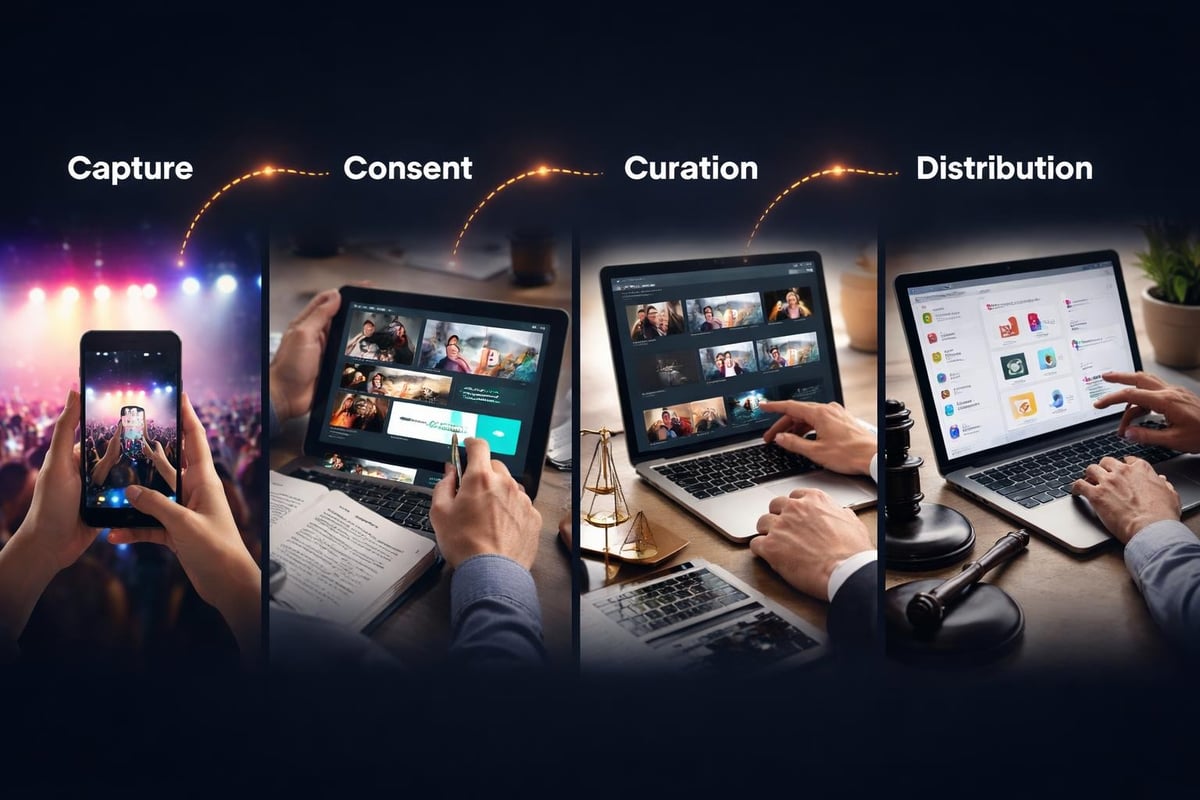
The real work happens after people share. Sorting through hundreds of clips to find the usable ones. Checking you've got proper consent. Making sure nothing inappropriate slipped through. Editing everything into something coherent.
This is where AI actually helps - not creating fake content, but curating real content faster. Smart curation software can flag the best moments, identify duplicate shots, and organize content by theme without losing the authentic feel.
Managing Rights and Permissions
Here's the bit everyone forgets until it's too late. Just because someone filmed something at your event doesn't mean you can use it however you want.
You need clear consent. Not buried in terms and conditions nobody reads - actual, informed consent. People should know what you're doing with their content before they share it.
The consent process should be:
- Clear about how you'll use the content
- Easy to provide or withdraw
- Documented for your protection
- Respectful of privacy concerns
When attendees understand they're contributing to something bigger, they're more likely to share quality content. When they feel tricked into giving up their rights, they stop participating entirely. Finding the best consent management platform matters more than most organizers realize.
Distribution Strategy That Actually Works
You've collected share it videos. You've got consent. Now what? Dumping everything on social media doesn't work. Neither does hoarding it all for your own channels.
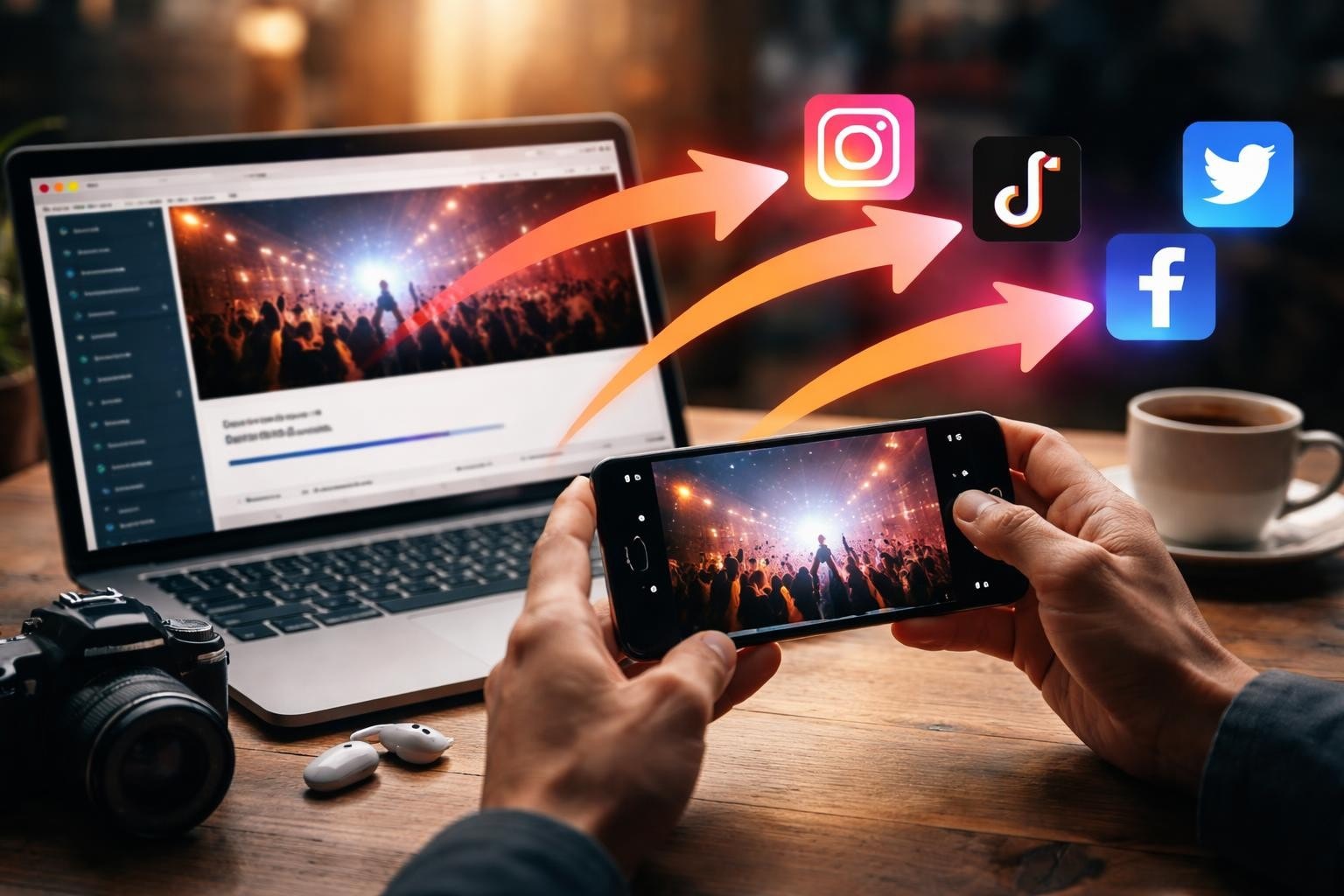
The content needs to flow naturally. Some goes back to the people who created it. Some gets curated for your official channels. Some spreads organically without your involvement.
Different platforms need different approaches:
| Platform | Best Share It Video Type | Timing |
|---|---|---|
| Instagram Stories | Quick, vertical moments | During event |
| TikTok | Entertaining, under 60s | Same day |
| Professional insights | Week after | |
| YouTube | Compiled highlights | 2-3 weeks post |
The mistake is treating all platforms the same. A share it video that works on TikTok dies on LinkedIn. Context matters. Audience expectations matter. According to research on user-generated video quality, how content's transcoded and distributed significantly affects viewer perception.
Making Share It Videos Part of Your Content Strategy
This isn't a one-off tactic. Share it videos should be central to how you think about event content. They're not replacing professional coverage - they're complementing it with something authentic.
Build your content curation strategy around the content people naturally create. Don't fight against how they want to share. Work with it.
Your professional crew captures the keynotes, the wide shots, the polished moments. Your attendees capture everything else. The reactions. The corridor conversations. The unexpected moments that make events memorable. Both matter, but they serve different purposes.
The ROI Nobody Mentions
Share it videos cost less than professional production. That's obvious. But the real value isn't what you save - it's what you gain.
Organic reach you couldn't buy. When attendees share content, their networks see it. Those networks aren't following your brand. They're following their mate who went to something interesting. That's worth more than any ad spend.
Research on leveraging user-generated video content shows it drives higher engagement rates than brand-created content across every platform. People trust recommendations from people they know.
But there's more:
- Extended event lifespan - Content keeps spreading weeks after the event ends
- Social proof at scale - Hundreds of perspectives validating your event
- Future marketing material - Real testimonials for promoting next year
- Community building - Participants feel part of something bigger
The traditional model was expensive. Hire a crew, produce content, push it out, hope people watch. Share it videos flip that. Your attendees create the content. They distribute it. They validate it to their networks. You just facilitate the process.
Measuring What Actually Matters
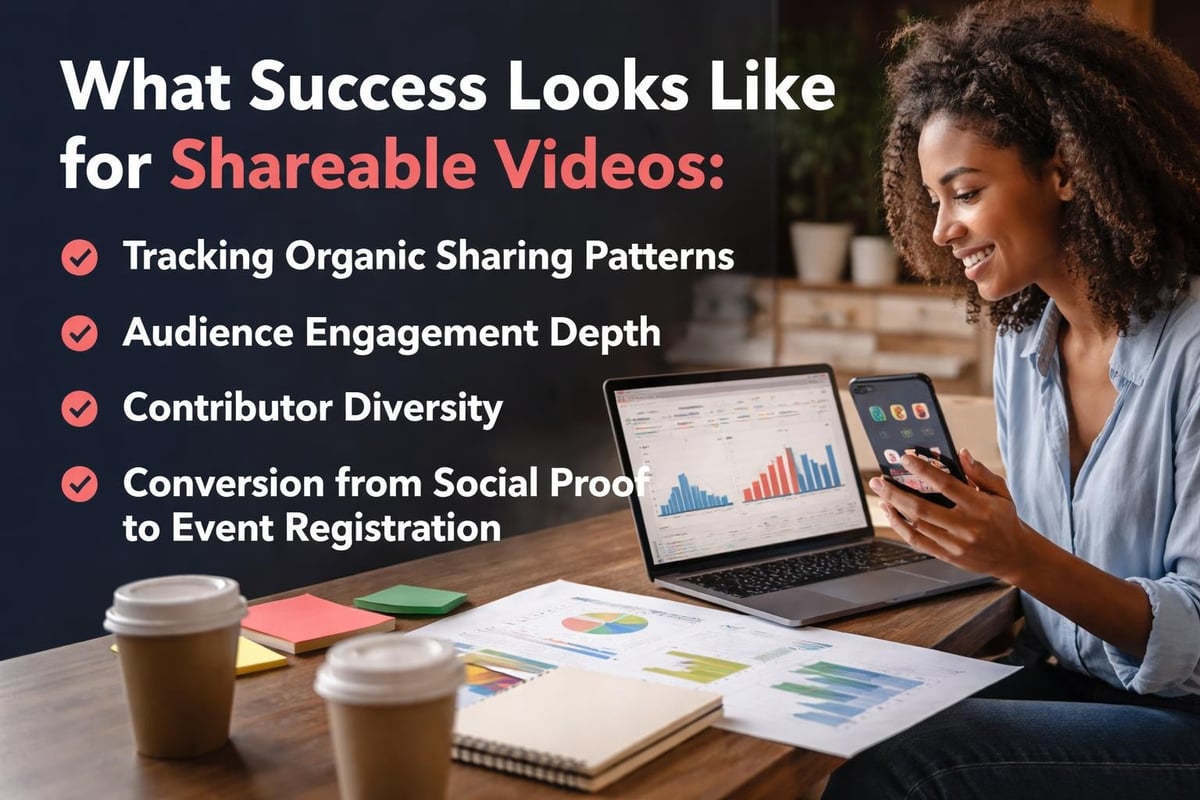
Views don't tell you much. Likes are nice but meaningless. What actually indicates success?
Track these instead:
- Share rate - How many people forwarded the content
- Completion rate - Did people watch the whole thing
- Source diversity - How many different people contributed
- Sentiment - What are people saying about the content
- Conversion - Did it drive ticket sales or registrations
When you're looking at how to promote an event, share it videos offer proof that previous events delivered. That's more convincing than any marketing copy you could write.
Common Mistakes to Avoid
Most organizations get share it videos wrong in predictable ways. They're not complicated mistakes, but they kill participation.
Over-controlling the content. The moment you start telling people exactly what to film and how to film it, you've lost the authenticity. Guidelines are fine. Requirements aren't.
Ignoring the technical chaos. Share it videos arrive in every format imaginable. If your workflow can't handle that variety, you'll spend hours just getting files to play properly. Understanding best video formats for web helps, but you need systems that adapt to what you receive.
Forgetting about privacy. Someone's always in the background of someone else's video. You need processes to handle privacy concerns before they become problems.
Delaying too long. Share it videos lose relevance fast. If you're publishing event content three weeks later, nobody cares anymore. The moment's passed. Tools for automating event video curation help you move faster.
The Quality Question
Here's what people get wrong. They think "user-generated" means accepting terrible content. It doesn't. You're not lowering your standards - you're changing what you value.
A shaky but genuine reaction beats a perfectly stable but staged shot. Every time. The question isn't "Is this technically perfect?" It's "Is this real and compelling?"
That said, unwatchable content helps nobody. Basic standards still apply:
- Audio that's audible
- Footage that's in focus
- Content that's relevant
- Length that's appropriate
You're curating, not just collecting. The difference matters. According to detailed quality assessment research, even user-generated content benefits from thoughtful selection and editing.
What's Actually Changing in 2026
The tools got better. That's the main shift. Five years ago, collecting and curating share it videos required significant manual effort. Now it's mostly automated, letting you focus on strategy instead of logistics.
AI handles the boring bits - sorting, tagging, identifying duplicates, flagging inappropriate content. But it doesn't create fake content or replace the authentic moments people capture. It just makes those moments easier to find and use.
Platform expectations evolved too. Audiences now expect to see real content from real people. Brands that only share polished production work feel disconnected from their communities. Share it videos aren't a nice-to-have anymore - they're expected.
The shift toward authenticity isn't slowing down. If anything, it's accelerating. People are tired of performance. They want proof that events, experiences, and communities are actually as good as advertised. Share it videos provide that proof.
When you're evaluating content curation tools, look for platforms that preserve authenticity whilst making curation manageable. The technology should be invisible - what matters is the content itself.
Making It Work for Your Organization
Start small. Pick one event. Make it easy for people to share. See what happens. Don't build complex systems before you've proved the concept works for your specific audience.
Your first share it videos campaign should:
- Have clear goals (what are you trying to achieve?)
- Use simple tools (complicated platforms kill participation)
- Set basic guidelines (not rules - suggestions)
- Provide easy sharing options (one-tap uploads)
- Show appreciation (feature the best content prominently)
Most importantly, actually use the content. There's nothing more deflating than contributing to something that disappears into a void. If people share videos and never see them used, they'll stop participating.
The organizations doing this well treat their attendees as collaborators, not just audiences. They're not extracting content from people - they're inviting them to help tell the story together. That mindset shift changes everything.
Share it videos work because they're real, trusted, and shared willingly. They cost less than professional production whilst delivering more authentic engagement and broader organic reach. If you're running events and ignoring the content your attendees naturally create, you're missing the most valuable marketing asset available. SureShot ApS helps you capture, curate, and distribute that authentic content efficiently, turning your attendees into storytellers who amplify your event's reach whilst reducing production costs.