
You've been told you need more video content. Everyone's saying it. Your competitors are doing it. The platforms reward it. But here's the problem: professional video production is expensive, time-consuming, and often feels staged. What if you could create your video content using the people already at your event, capturing moments that actually matter to them? That's not a hack. That's just smarter resource allocation.
Why Traditional Video Production Doesn't Scale
Hiring a production crew for every event sounds great until you see the invoice. You're paying for equipment, personnel, editing time, and often reshoots because something wasn't quite right.
The bigger issue? Professional crews miss the authentic moments. They're setting up shots, managing lighting, coordinating interviews. Meanwhile, your attendees are experiencing genuine reactions, spontaneous interactions, and organic storytelling that no script can replicate.
Here's what traditional production typically involves:
- Pre-event planning and shot lists
- Day-of coordination with videographers
- Hours of raw footage to review
- Weeks of editing and revisions
- Final delivery that feels polished but detached
That's a lot of overhead for content that might not even resonate with your audience.
The Shift to User-Generated Content
When you create your video strategy around user-generated content, you're not cutting corners. You're distributing the creative work to people who are already invested in your event.
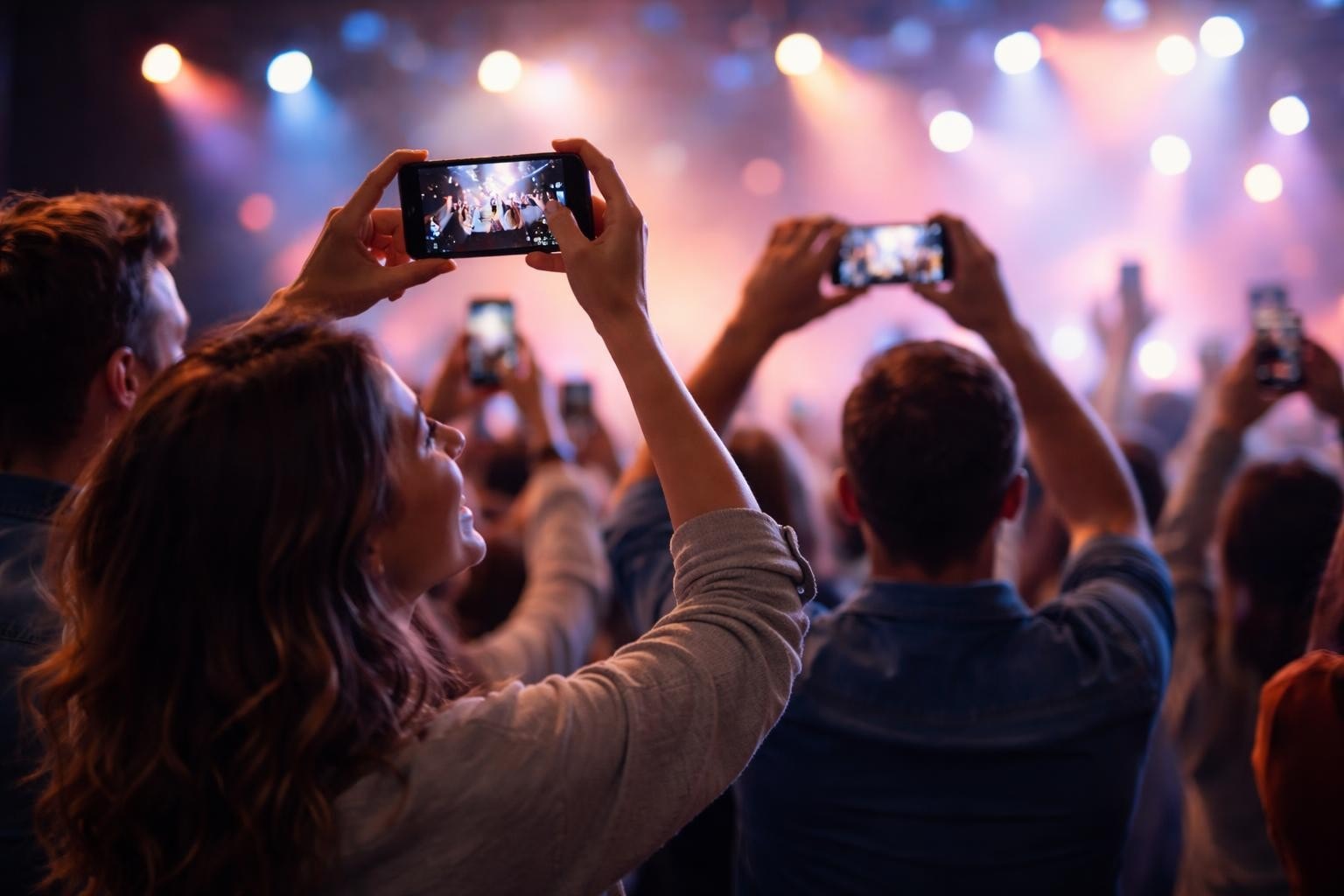
Think about it. Your attendees are already recording. They're already sharing. They're already telling stories about their experience. The question is whether you're capturing that content or letting it disappear into the void of personal camera rolls.
What Makes Authentic Video Different
Authentic video isn't about perfect framing or ideal lighting conditions. It's about real reactions, genuine excitement, and moments that actually happened. When someone captures a speaker saying something that genuinely surprised them, that reaction is visible in the footage. When they film a networking conversation that led to a real connection, that energy translates.
Professional crews can't fake that. They can make beautiful content, but beautiful doesn't always mean believable.
Video production best practices emphasize that effective video content starts with understanding your audience and purpose. User-generated content inherently does this because the creators are the audience.
Setting Up Your Event for Video Success
To create your video content through attendees, you need infrastructure. Not expensive equipment. Just a clear system that makes participation easy and collection possible.
| Traditional Setup | UGC-Enabled Setup |
|---|---|
| Hire video crew | Enable attendees with platform access |
| Create shot list | Provide content prompts and challenges |
| Schedule interviews | Let moments happen naturally |
| Manage equipment | Attendees use their own devices |
| Wait weeks for edits | Get content in real-time |
The UGC approach requires different planning, not more planning. You're thinking about prompts instead of scripts. You're creating opportunities for capture instead of staging shots.
Technical Requirements That Actually Matter
Your attendees aren't professional videographers. That's the point. But you do need to give them basic guidance so the footage is usable.
Recording video best practices emphasize fundamentals like stable shots, decent lighting, and clear audio. These aren't production-level requirements. They're "hold your phone steady and face the light" basics.
Essential guidelines for attendee creators:
- Hold your phone horizontally (unless specifically creating vertical content)
- Film in well-lit areas when possible
- Keep the camera steady
- Get close enough to hear clearly
- Capture 10-15 second clips rather than long takes
That's it. When you're dealing with volume, you can curate for quality. You don't need every clip to be perfect when you're collecting hundreds of moments.
The Curation Layer
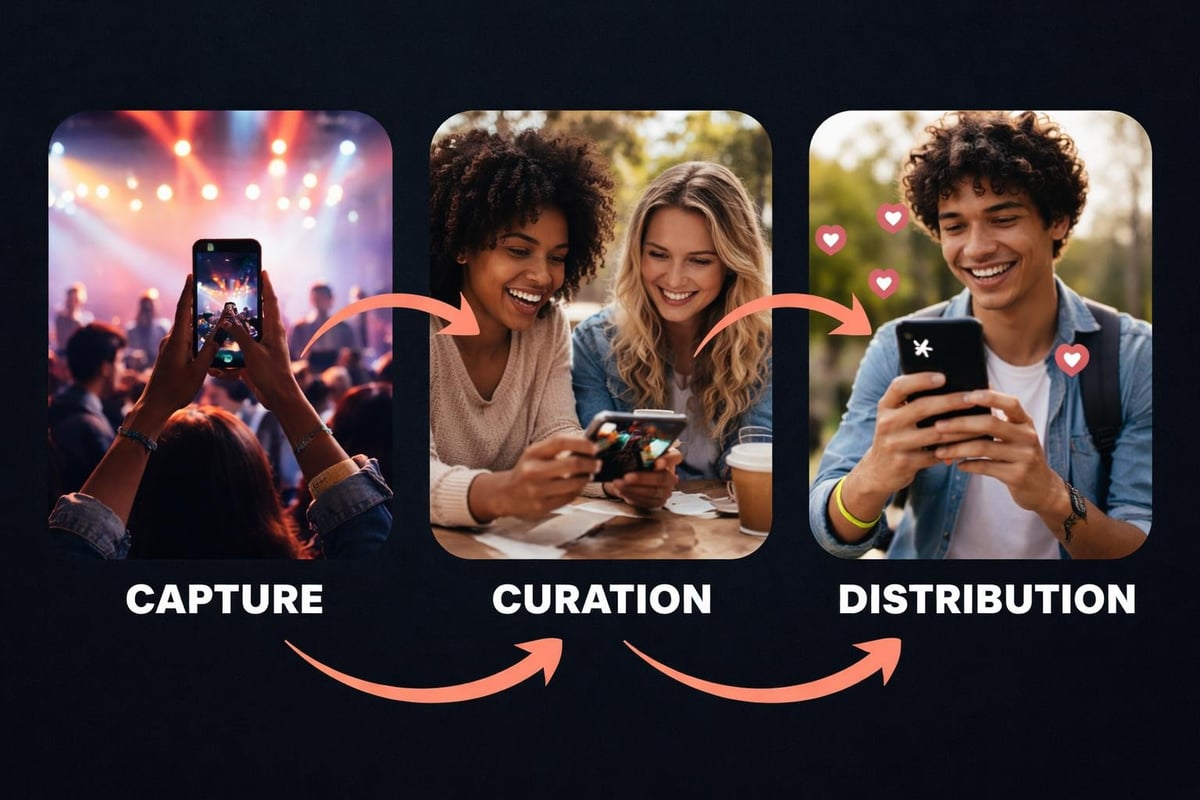
Here's where most UGC strategies fall apart. You ask people to create content, they do it, and then you have 500 clips of varying quality sitting in a folder somewhere. The best content curation software helps you sort through that volume efficiently.
Curation isn't about controlling the narrative. It's about finding the signal in the noise. Some clips will be gold. Some will be unusable. Most will be somewhere in between. Your job is to identify which moments actually tell the story of your event.
What to Look for When You Create Your Video Collections
When you're reviewing user-generated footage, you're not looking for technical perfection. You're looking for authenticity markers.
Does the person filming seem genuinely engaged? Is there real emotion visible? Did they capture something unexpected? These are the clips that will actually get shared when you distribute them.
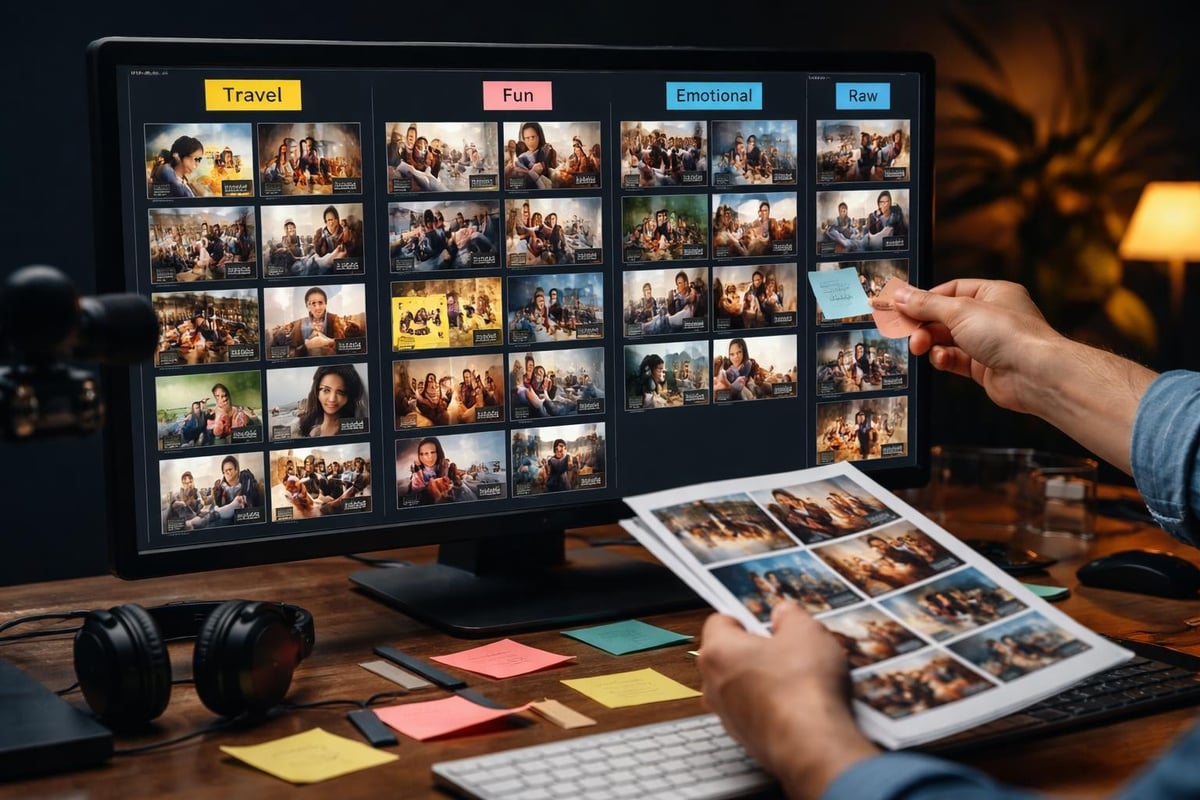
Content curation best practices suggest creating categories and themes before you start reviewing. If you know you want clips about keynote reactions, networking moments, and product demonstrations, you can sort faster and build compilations that actually make sense.
The Editing Reality
You can't publish raw user-generated content without some level of editing. But you also can't spend 40 hours in Adobe Premiere making everything perfect. That defeats the entire efficiency advantage.
When you create your video content from UGC, editing should be about assembly and polish, not reconstruction. You're trimming clips, adding transitions, maybe including some text overlays or branded elements. You're not color grading every frame or recording voiceovers.
Efficient UGC editing workflow:
- First pass: Remove obviously unusable clips (shaky, unclear, off-topic)
- Second pass: Organize remaining clips by theme or moment
- Third pass: Trim to best 5-10 seconds of each clip
- Assembly: Arrange clips into narrative sequence
- Polish: Add branding, transitions, background music if needed
Consistent branding and clear messaging matter more than production value. Your edited compilations should feel cohesive, but they don't need to feel corporate.
Distribution and Amplification
Creating the content is half the work. Getting it seen is the other half. User-generated content has a built-in distribution advantage: the people who created it want to share it.
When someone sees themselves or their friends in your event video compilation, they'll share it. That's not a maybe. That's human nature. And when they share it, it reaches their network with implied endorsement.
Making Content Easy to Share
To create your video distribution strategy, start with where your content creators already are. Most likely that's Instagram, LinkedIn, TikTok, or Facebook, depending on your event type and audience demographics.
Understanding formats like YouTube Shorts helps you optimize for each platform. Vertical video dominates mobile viewing. Short-form content (under 60 seconds) gets more complete views. Platform-specific features like captions and hashtags affect reach.
Don't just post the same video everywhere. Reformat, recut, and optimize for each platform's algorithm and audience expectations.
| Platform | Ideal Length | Format | Best Content Type |
|---|---|---|---|
| Instagram Reels | 15-30 sec | Vertical (9:16) | High energy moments |
| 30-90 sec | Square or horizontal | Professional insights | |
| TikTok | 15-60 sec | Vertical (9:16) | Authentic reactions |
| YouTube Shorts | 15-60 sec | Vertical (9:16) | Compilations |
| 60-120 sec | Square or horizontal | Community moments |
The ROI Nobody Talks About
When you create your video content through user generation, you're not just saving production costs. You're building community investment. People who contribute content feel ownership. They become advocates, not just attendees.
Calculate what you'd spend on professional video production for a single event. Include crew fees, equipment rental, editing time, revisions, and project management. Now compare that to a platform fee and some curation time. The difference isn't marginal.
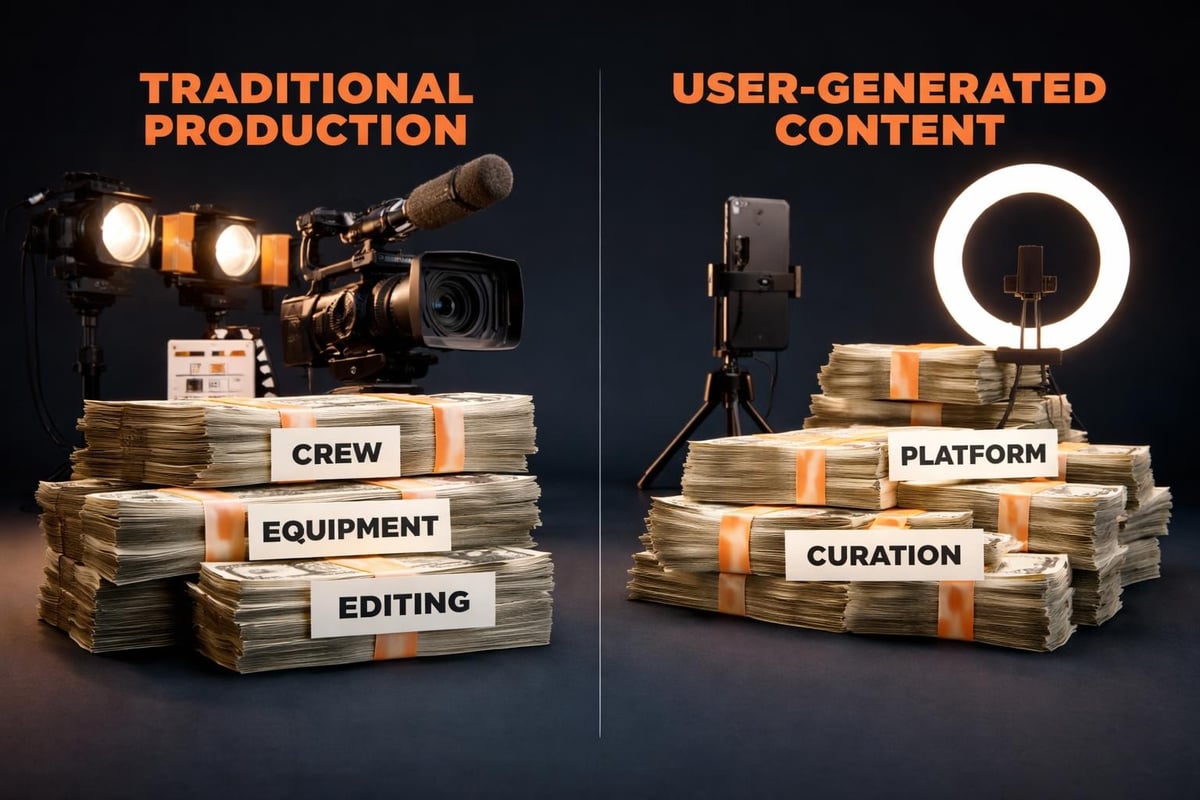
But the real ROI is in reach. Earned media from authentic content spreads further than paid promotion because it comes with social proof. When your attendee shares your event video to their 2,000 LinkedIn connections, that's distribution you didn't pay for and couldn't buy.
Common Obstacles and Real Solutions
You'll hear objections. "What if people film bad content?" "What if they don't participate?" "What if someone captures something we don't want public?"
Valid concerns. Here's how you address them.
Low participation: Create prompts and incentives. Make it easy and fun. People participate when they see others participating and when there's a clear reason to do it.
Quality concerns: Volume solves this. If you get 200 clips, 50 will be great, 100 will be usable, and 50 will be unusable. You only need the top 50.
Content control: Set clear guidelines up front. Use a platform that lets you review before publishing. Managing consent properly means people know what they're agreeing to when they submit content.
Technical Issues People Actually Encounter
Common technical mistakes include poor audio, bad lighting, shaky footage, and background distractions. These happen with user-generated content too.
But here's the thing. When you're collecting hundreds of clips, technical imperfections in some clips don't sink the entire project. You work around them. You use the clips where audio is clear. You include the shaky celebration footage because the emotion matters more than the stability.
Professional production can't afford mistakes. User-generated content builds them into the process.
Measuring What Matters
To create your video strategy properly, you need metrics that actually indicate success. Views are fine. Shares are better. Conversions are best.
Track how user-generated video content performs compared to professionally produced content. Look at engagement rates, watch time, and most importantly, what people do after watching.
Metrics worth monitoring:
- Completion rate (what percentage watch to the end)
- Share count (organic distribution indicator)
- Comments and reactions (engagement depth)
- Click-through to event registration or website
- Cost per view compared to traditional video
If your UGC video gets 60% completion rate and professional video gets 35%, that tells you something about what resonates. If people share UGC three times more often, that's your distribution advantage quantified.
Building Long-Term Content Assets
Each event generates a library of authentic moments. That content doesn't expire after the event ends. You can repurpose it for promotional material, create highlight reels for future events, or use specific clips in targeted marketing.
When you build a brand community around authentic content, you're creating ongoing value. Past attendees see themselves in your content and remember their experience. Future attendees see real people having real experiences and trust that it's possible for them too.
The content library grows with every event. Year one, you have 200 clips. Year two, you have 600. Year three, you have 1,500. That's a substantial asset that required no additional production budget beyond your platform and curation costs.
Making It Sustainable
To create your video content strategy sustainably, you need processes that don't require heroic effort each time. Document what works. Create templates for prompts, guidelines, and editing workflows. Train your team on curation standards.
The first event using UGC will take longer because you're learning. By the third event, you'll have it down. By the tenth, it'll be automatic.
Sustainability also means keeping creators engaged long-term. Recognize contributors. Feature their content prominently. Make them feel valued for their participation. People will keep creating when they see their work appreciated and used well.
When you create your video content through the people actually experiencing your event, you're choosing authenticity over polish and community over control. The footage won't look like a corporate production, but it'll feel real because it is. SureShot ApS gives you the platform to collect, curate, and distribute that authentic content without the production overhead, turning your attendees into storytellers and your events into shareable moments that actually spread.