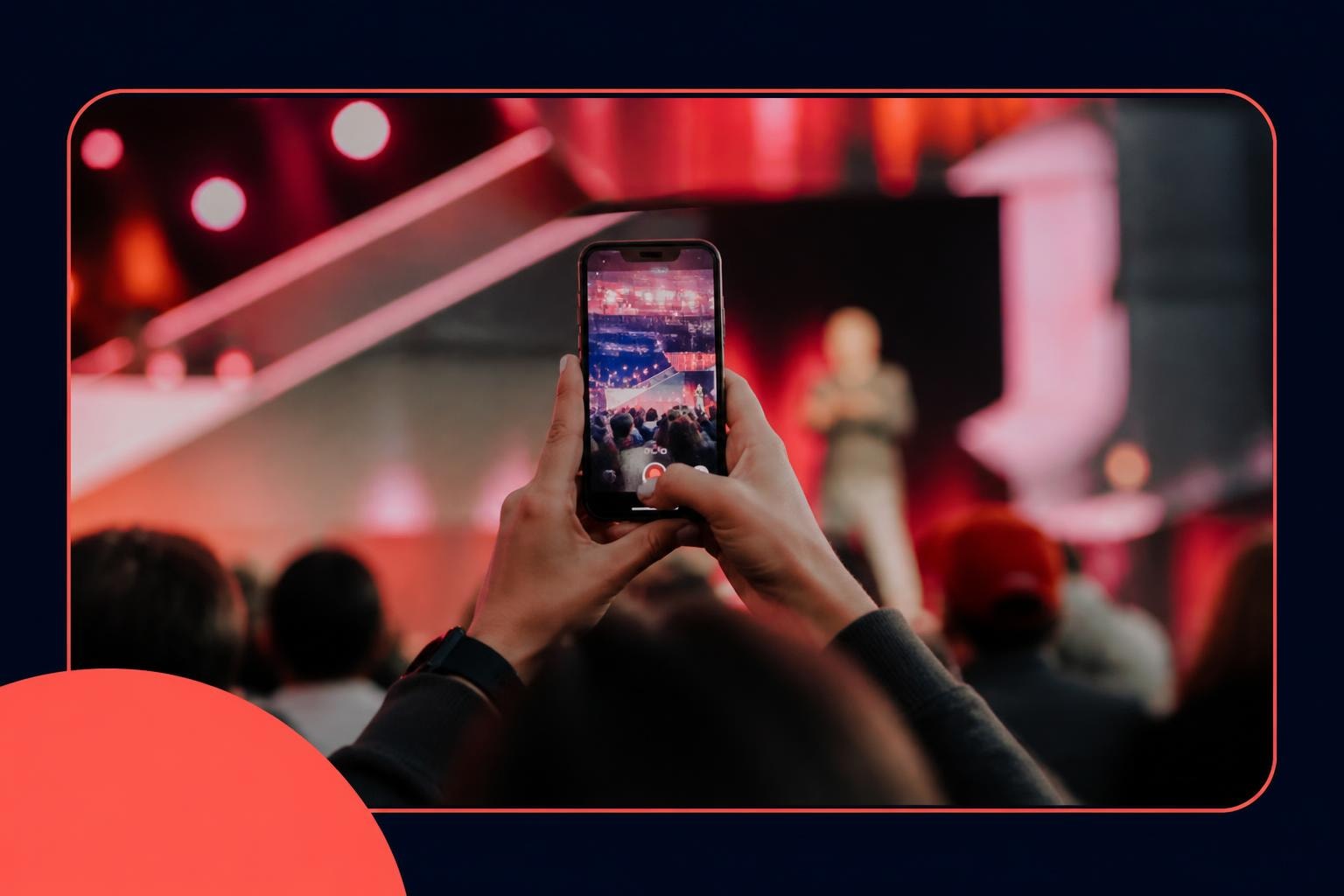
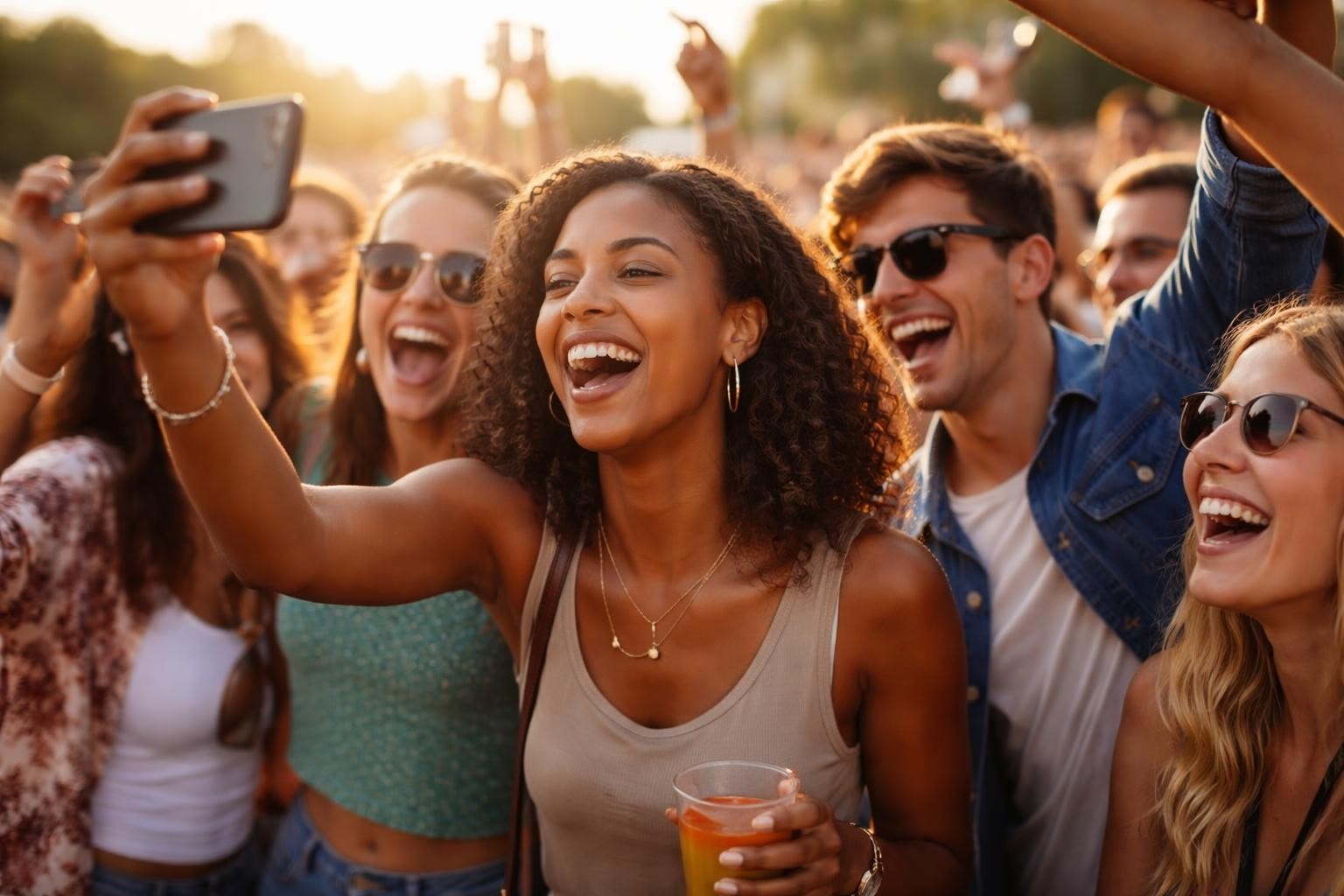

The best moments with you happen when no one's performing for the camera. When someone at a conference catches their mate realising something mid-talk. When a festival-goer films their friend's genuine reaction to seeing their favourite band. When attendees document the bits that actually mattered to them, not what the marketing brief said should matter. That's the content people actually watch, share, and remember. It's messy, it's real, and it works better than anything you'd script.
Why Authentic Moments Beat Polished Content
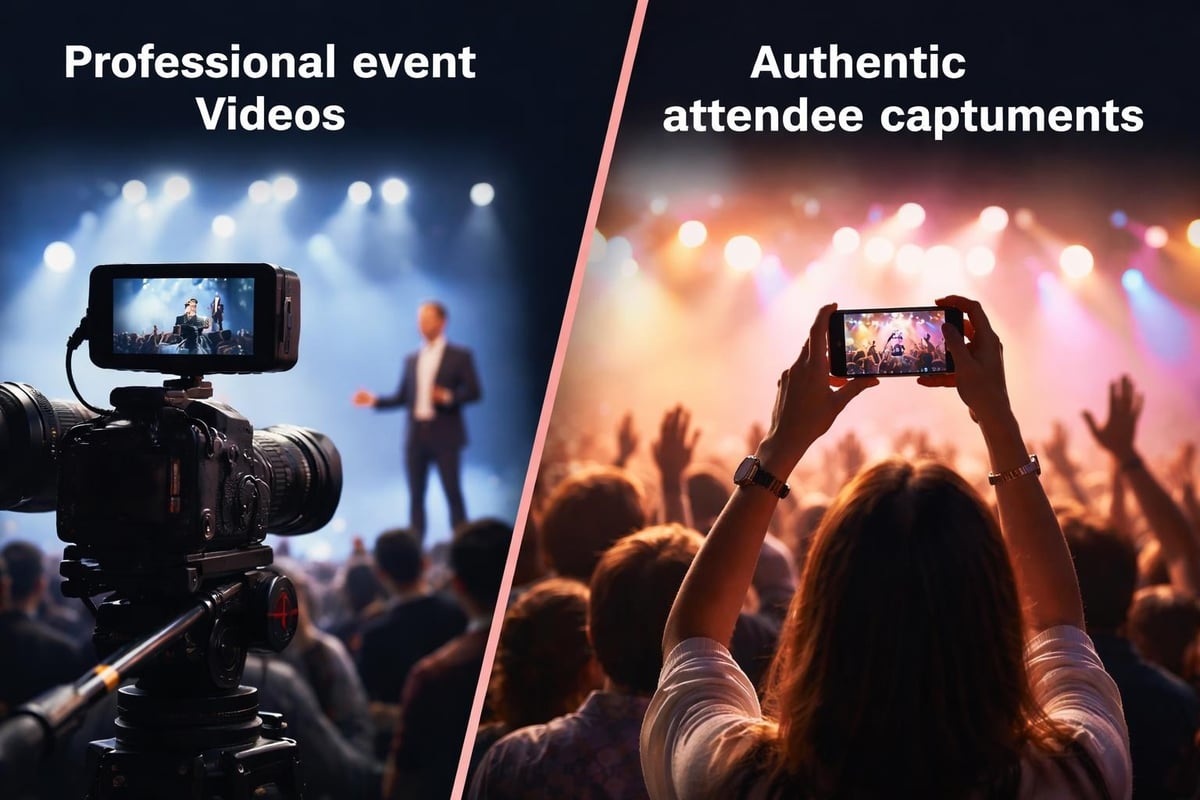
Professional event videos look great. They're also forgettable.
Here's what happens: you hire a crew, they capture the keynote, the venue shots, the perfectly lit interviews. It goes on your website. Maybe gets 200 views. Then it sits there, expensive and useless.
User-generated content from attendees does something different:
- It shows what people actually cared about
- It spreads through their networks organically
- It costs a fraction of professional production
- It feels like a recommendation, not an advert
The difference is intent. Professional crews capture what you want people to see. Attendees capture moments with you that actually resonated. One is marketing. The other is proof.
What Makes These Moments Actually Shareable
Not all attendee content is worth having. Some of it's shaky, poorly lit, or just boring. The magic happens when genuine moments meet basic quality standards.
The Three Elements That Matter
Authenticity - The moment has to be real. Someone's actual reaction, not performed. The laugh that happened because something was funny, not because they knew they were on camera. Capturing those special moments requires being present, not performing.
Relevance - It needs to connect to why people attended. A festival clip of the crowd during a drop. A conference moment where someone asks the question everyone was thinking. Context matters.
Quality - Doesn't need to be perfect, but it needs to be watchable. Stable enough, clear enough, audible enough. That's where smart content curation best practices come in.
The Sharing Mechanism
People share moments with you when they serve a purpose. Showing friends what they missed. Proving they were there. Capturing something that mattered. It's social currency.
| Why People Share | What It Does | Result |
|---|---|---|
| FOMO creation | Shows what others missed | Friends want to attend next time |
| Social proof | "I was there" validation | Extends event reach organically |
| Genuine recommendation | Shares actual experience | Builds authentic interest |
| Memory preservation | Captures what mattered to them | Creates lasting event association |
The event industry has spent years trying to manufacture these moments. Turns out you just need to let them happen and capture them properly.
How Event Organisers Actually Use This
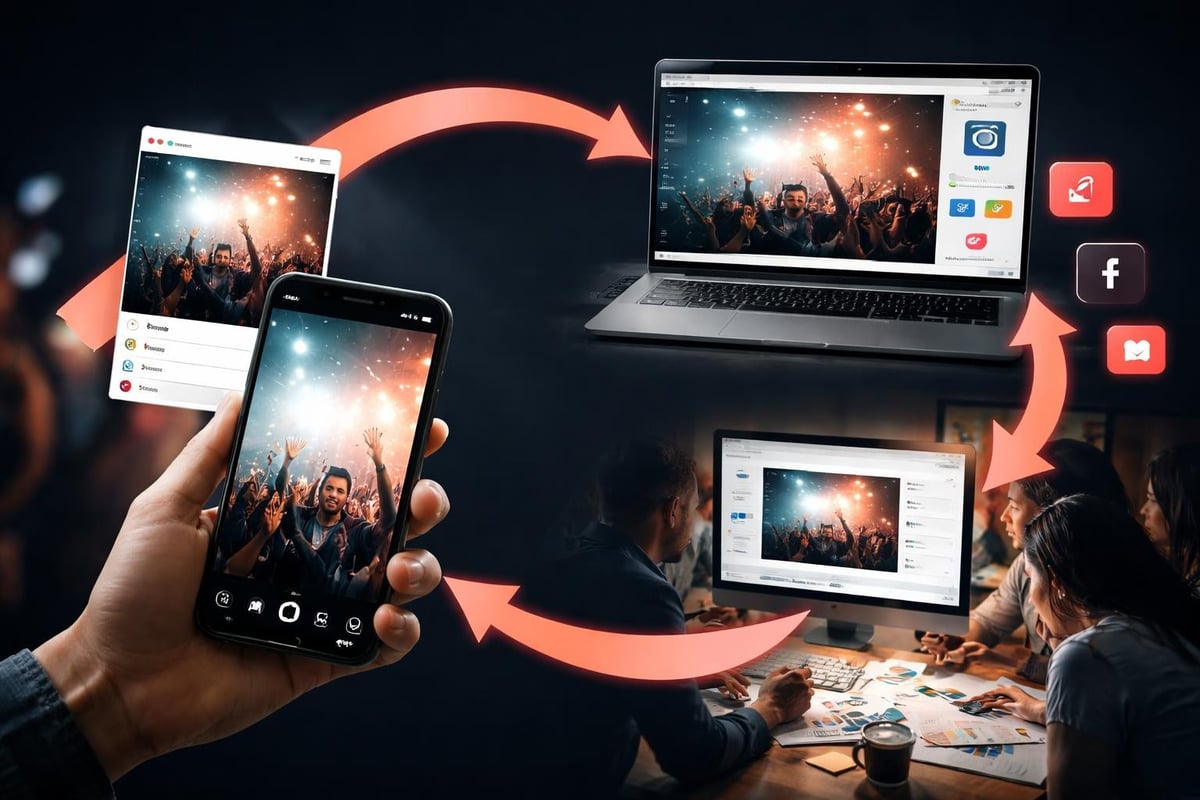
The smart ones stopped trying to control everything. They gave attendees the tools to capture moments with you, then curated what came back.
Here's what works:
- Make capturing easy - Give people a simple way to submit content during the event
- Set basic standards - Quality thresholds that keep the unusable stuff out
- Curate quickly - AI-assisted sorting separates gold from garbage
- Distribute fast - Get the good stuff out while the event's still happening
- Repurpose afterwards - Use it for next year's marketing
This isn't theoretical. Event organisers using user-generated content platforms see their content volume multiply whilst production costs drop. More importantly, the content actually gets watched.
The Cost Reality
Traditional event video production runs £5,000-£20,000 for a multi-day event. You get maybe 5-10 polished pieces. They're lovely. They're also a terrible return.
User-generated approaches flip this. Lower upfront cost, exponentially more content, better engagement rates. The maths isn't close.
The Organic Reach Nobody Talks About
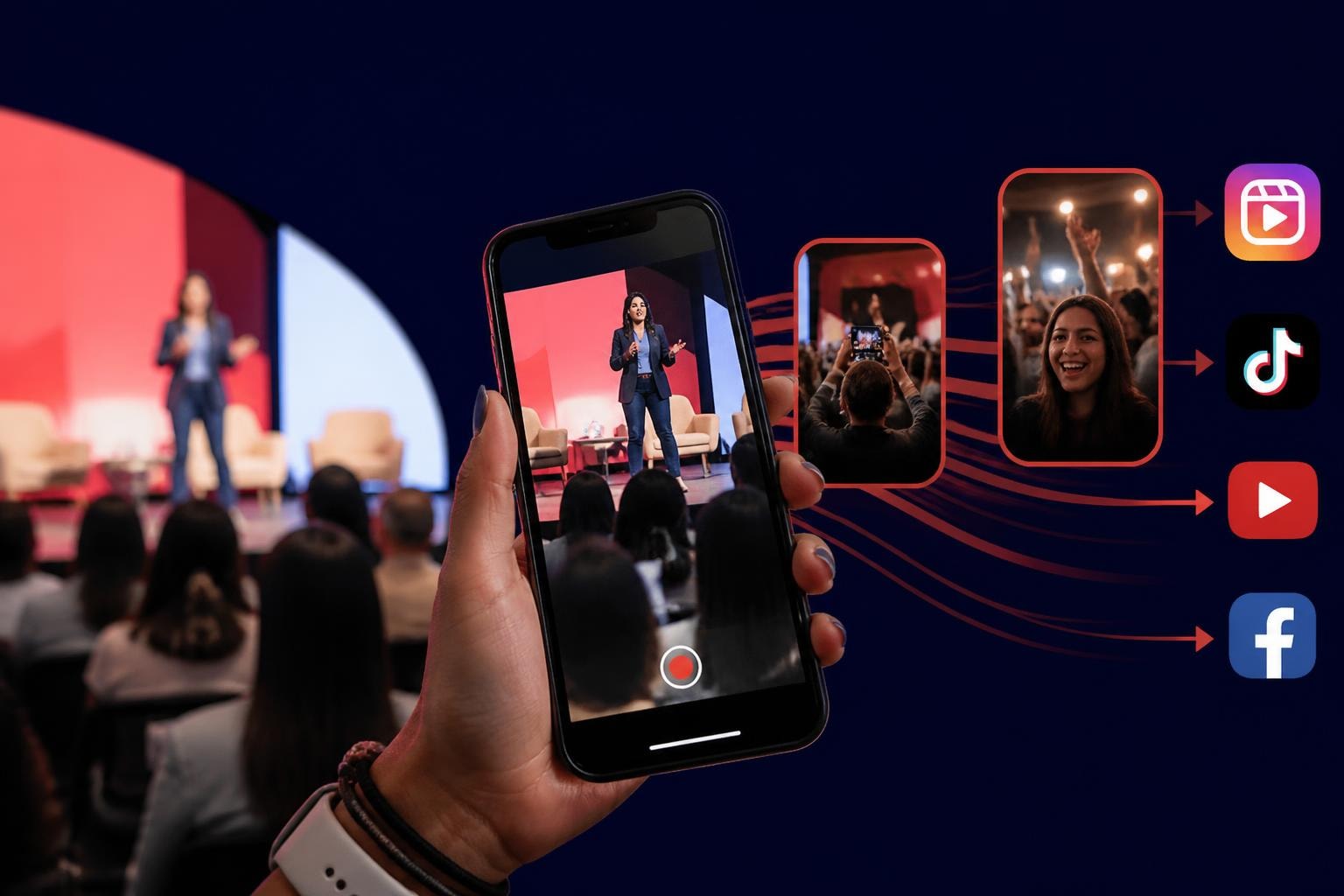
When attendees share moments with you from your event, they're not just creating content. They're distributing it through their networks, which trust them more than they'll ever trust you.
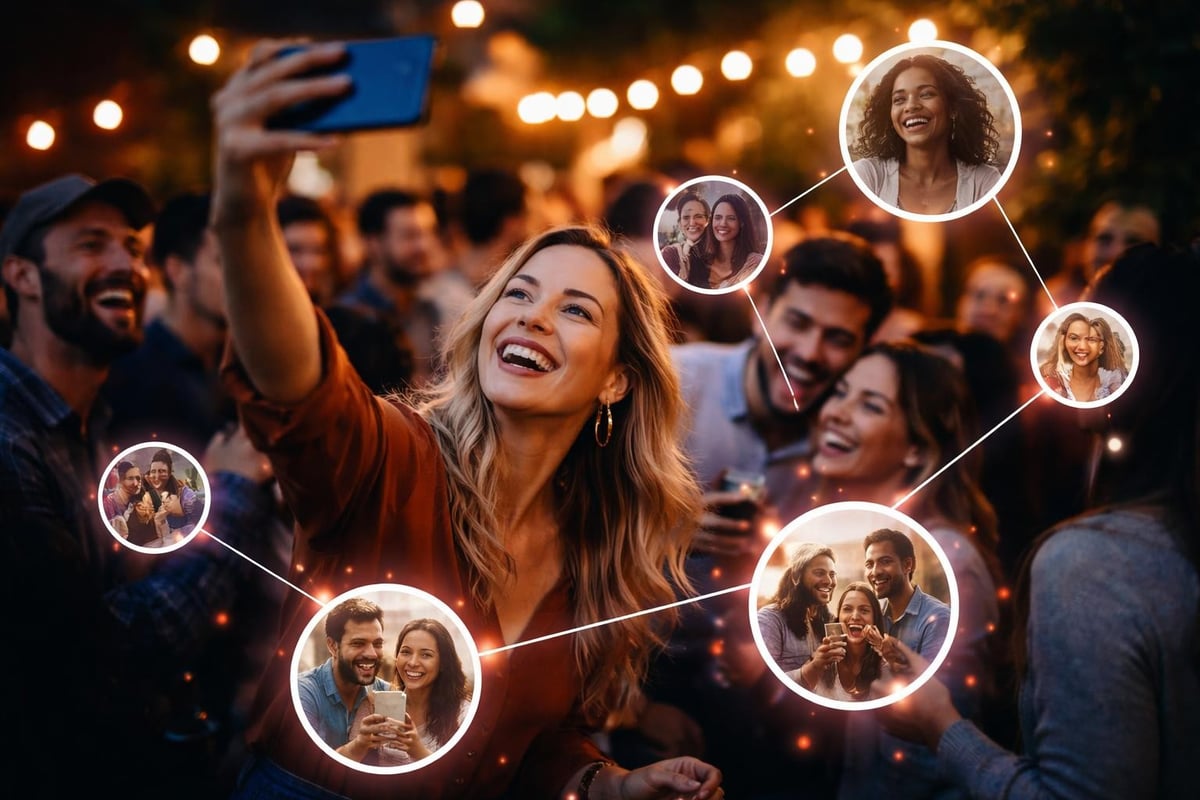
Think about reach mechanics. Your event account has maybe 10,000 followers. An attendee with 500 connections shares their genuine moment. Their network actually watches it because it comes from someone they know. That's how event videos generate real visibility.
The multiplication effect:
- 200 attendees each share one moment
- Average 400 connections per person
- Even 5% engagement means 4,000 real views per piece
- That's 800,000 authentic impressions from trusted sources
You can't buy that kind of reach. You definitely can't buy that kind of trust.
What This Looks Like in Practice
A music festival in Denmark used attendee-captured content across their social channels. Not just for promotion - as the actual content strategy. Capturing life's special moments at scale, then letting it spread naturally.
Results: 3x the social engagement compared to previous years. 40% reduction in content production costs. And the content people actually remembered.
A tech conference took a similar approach. Instead of just filming speakers, they equipped attendees to capture moments with you that resonated. The breakthrough explanation in a workshop. The networking conversation that led to a partnership. The practical tip someone actually used.
That content drove registrations for the next year better than any promotional video could.
The Curation Challenge
Here's the problem: if 200 people each submit 5 clips, you've got 1,000 videos to sort through. Most of them are rubbish.
This is where people give up. Too much content, not enough time, can't possibly review it all. Fair concern. Wrong conclusion.
The solution isn't less content. It's better curation.
Modern content curation tools use AI to handle the first pass. Quality checks, duplicate detection, content categorisation. The machine sorts through the bulk, flags the promising bits, and lets humans make the final calls.
| Curation Stage | What Happens | Time Investment |
|---|---|---|
| Automated filtering | AI removes technically poor content | Minutes |
| Quality scoring | Machine learning ranks by engagement potential | Minutes |
| Human review | Team picks the best from top-scored content | Hours, not days |
| Light editing | Basic cuts and enhancements | As needed |
This isn't about replacing human judgment. It's about not wasting it on obvious rejections.
Making It Work for Your Events
Start small. Pick one event, one content stream, one clear goal.
Give attendees a dead-simple way to submit content. QR code to a mobile upload. Event-specific app. Whatever removes friction. The moment they have to think about it, they won't bother.
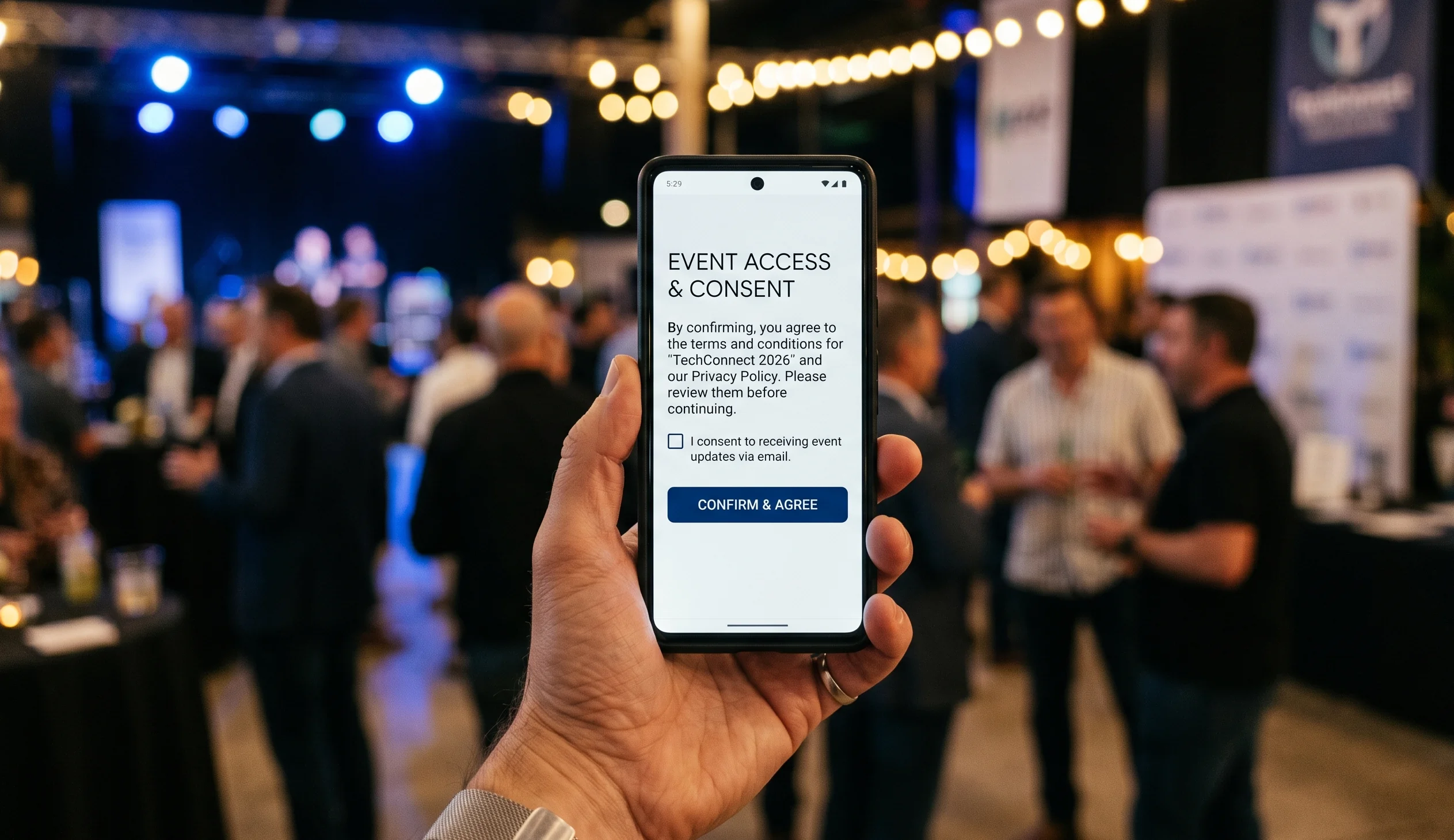
Set expectations upfront. What you're looking for, why you want it, how you'll use it. People are more likely to capture moments with you when they understand the purpose. Also: get your consent management sorted before, not after.
The Distribution Strategy
The content you curate needs somewhere to go. This isn't about hoarding it for next year's highlight reel.
Release it whilst the event's happening. Post the best clips in real-time. It creates energy, shows people they might end up featured, and gives those still deciding whether to attend proof that something interesting is happening.
Use it across channels. What works for LinkedIn video might need different framing than Instagram. But the raw moment is the same. Repurpose intelligently.
Make it part of next year's marketing. Real attendee experiences sell future tickets better than any promotional copy. Why people photograph or film special events comes down to preserving what mattered - and that's exactly what sells.
What This Changes About Event Marketing
Traditional event marketing is a one-way broadcast. You tell people why they should attend. They ignore you because everyone says their event is unmissable.
Content captured by actual attendees changes the conversation. It's not you claiming your event matters. It's proof that it mattered to real people.
This shifts how you think about video content creation entirely. Instead of controlling every frame, you're enabling authentic documentation. Instead of manufacturing moments, you're capturing the ones that happen naturally.
The knock-on effects:
- Lower production costs - Less professional crew time needed
- More diverse content - Multiple perspectives instead of one official view
- Better engagement - Real moments resonate more than polished presentations
- Extended shelf life - Authentic content stays relevant longer
- Organic amplification - Attendee networks spread it for you
This isn't just cheaper. It's more effective. Which is rare.
The Quality Question
Won't user-generated content look amateurish? Sometimes, yeah. That's kind of the point.
People trust amateur documentation more than professional marketing. It feels honest. When someone's mate films a moment at your event and shares it, that carries weight. When your official channel posts a perfectly lit, professionally edited piece, that's just marketing.
But there's a threshold. Unwatchably shaky footage helps no one. Audio so bad you can't hear anything. Clips that are just darkness. That stuff gets filtered out in curation.
The sweet spot is "good enough to watch, authentic enough to trust." That's where moments with you become genuinely valuable content.
How This Plays Long-Term
Event organizers who figure this out build libraries of authentic content that keep working.
Next year's marketing campaign? Built from this year's real moments. Social proof for sponsors? Here's actual attendee reactions. Convincing speakers to participate? Show them the genuine engagement their last talk generated.
It compounds. Each event adds to the library. Each moment captured becomes an asset. Not just for nostalgia - for demonstrating consistent value.
The organisations still relying purely on professional production are spending more for less impact. The ones who've cracked user-generated content are spending less and getting better results. The gap widens every year.
Making the Shift
This requires thinking differently about event content. You're not the sole creator anymore. You're the curator, the enabler, the distributor.
That's uncomfortable for people used to control. But control is expensive and limiting. Trust your attendees to capture what matters. Give them the tools. Set the standards. Curate intelligently. Let the authentic moments with you do what polished marketing never could - prove your event actually delivers.
The infrastructure exists now. Platforms that transform event attendees into video storytellers handle the heavy lifting. The only question is whether you're ready to let go of the illusion that more control equals better content.
The events that win aren't the ones with the biggest video production budgets. They're the ones that capture authentic moments and let them spread naturally. If you're ready to turn your attendees into storytellers and build content that actually drives results, SureShot handles the platform, curation, and distribution so you can focus on creating experiences worth documenting. Your attendees are already capturing the moments - make sure you're using them.