
Brand Activation Strategy: Step-by-Step Guide + Examples
Most brands spend thousands on activations that disappear the moment the event ends. Attendees walk away, the booth comes down, and all that's left are a few professional photos that look just like everyone else's. A solid brand activation strategy changes this equation entirely, turning one-time experiences into lasting connections that keep working long after the event wraps.
The difference between forgettable activations and memorable ones often comes down to planning. Brands that document their process, set clear goals, and build in ways to capture authentic moments see dramatically better results. This is especially true when you empower attendees to become content creators themselves, something that scales your reach far beyond what any production crew could achieve alone.
This guide walks you through building a brand activation strategy from scratch. You'll learn what makes activations effective, see real examples worth studying, and get a step-by-step framework you can apply to your next event. We'll also cover how user-generated video content, the kind SureShot helps you collect and curate, can amplify your activation's impact across social channels and beyond.
What a brand activation strategy is and what it does
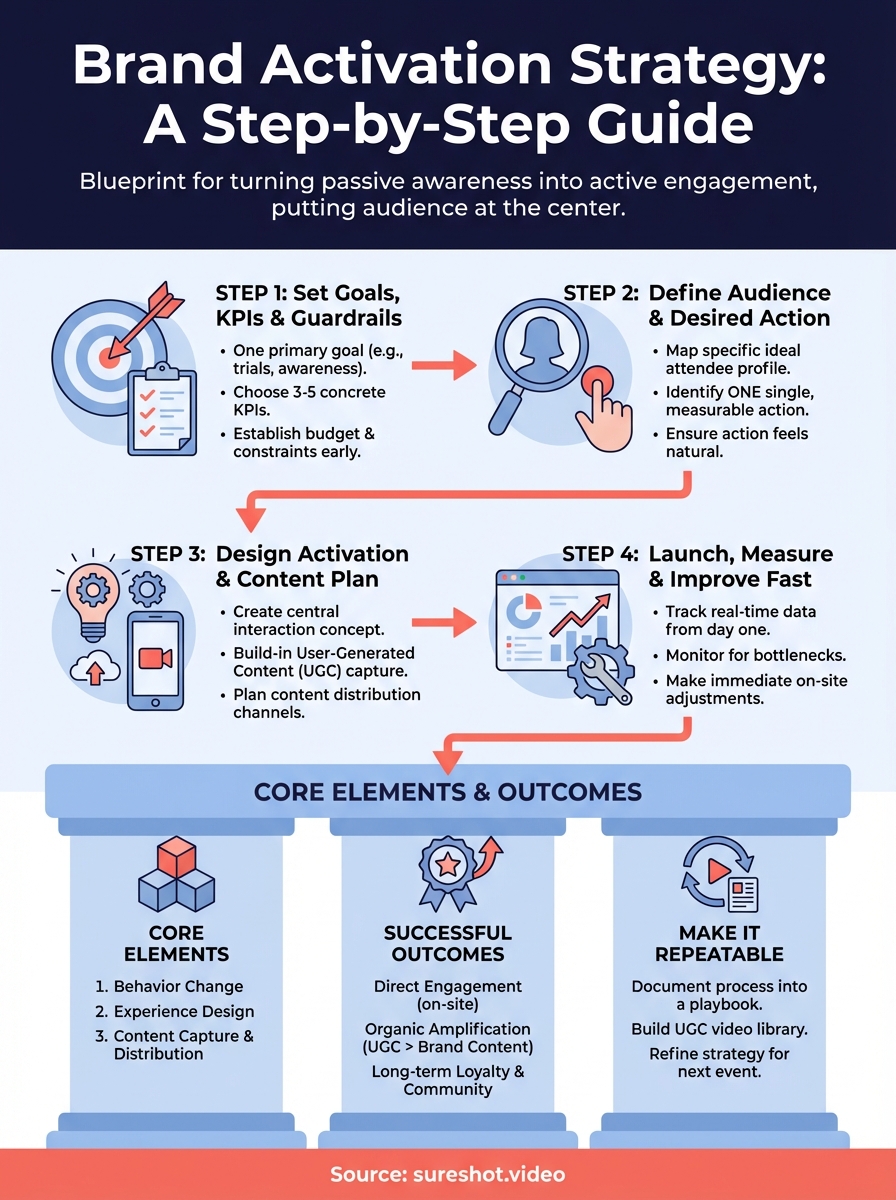
A brand activation strategy is your blueprint for turning passive awareness into active engagement. It maps out exactly how you'll bring your brand to life through experiences that prompt people to interact, participate, and ultimately form stronger connections with what you offer. Unlike traditional advertising that asks people to watch or listen, a strong activation strategy puts your audience at the centre, creating moments where they become part of the story rather than spectators on the sidelines.
The strategy itself includes your objectives, target behaviors, creative concept, distribution channels, and measurement framework. You're essentially answering five questions: who you're reaching, what action you want them to take, how you'll make it happen, where you'll amplify the experience, and how you'll know if it worked. Every decision flows from these answers, which is why activations built on solid strategy outperform ones that rely on creative intuition alone.
What makes up an effective activation strategy
Your activation strategy needs three core elements working together. First, you define the specific behavior change you're after, whether that's product trials, social sharing, community participation, or something else entirely. Second, you create an experience design that naturally encourages that behavior without feeling forced or transactional. Third, you build in content capture and distribution so the activation's reach extends far beyond the people who physically attend.
Most brands miss this last component. They create amazing on-site experiences but fail to plan for how those moments will spread. User-generated content solves this problem elegantly because attendees naturally want to share memorable experiences, and their authentic videos carry more weight than branded content ever could. When you plan for this from the start, your activation becomes self-amplifying rather than ending when the event does.
A strategy that includes content capture from attendees can multiply your reach by 10x or more compared to relying solely on professional documentation.
What successful activations accomplish
Brand activations drive three types of outcomes when executed well. The immediate outcome is direct engagement with your target audience during the experience itself. You see this in metrics like booth visits, product trials, sign-ups, or whatever action your activation was designed to prompt. This first-order effect is what most brands focus on, but it's actually just the beginning.
The secondary outcome is organic amplification through social sharing and word-of-mouth. When attendees post videos, tag friends, and talk about their experience, you reach people who weren't at the event but now feel connected to your brand through authentic peer content. Research consistently shows that user-generated content performs better than brand-created material because it carries inherent trust and relatability that polished marketing can't match.
Long-term outcomes include strengthened brand perception, increased loyalty, and community formation. Activations create memories that stick, especially when people have tangible proof in the form of videos they captured and shared. These lasting effects compound over time as you run multiple activations and build a library of authentic moments that demonstrate what your brand stands for. The strategy ensures each activation builds on the previous one rather than starting from zero every time.
Step 1. Set goals, KPIs, and guardrails
Your first step shapes everything that follows, so you need to get specific about what success looks like. Start by defining one primary goal that aligns with your broader marketing objectives. This might be driving product trials, building brand awareness in a new market, or growing your social media presence. Avoid the trap of setting five different goals that pull your activation in competing directions. One clear goal gives your team a north star and makes every downstream decision easier.
Define your success metrics upfront
Once you know your goal, translate it into concrete numbers you can track. If your goal is awareness, you might measure reach, impressions, and share of voice. For engagement goals, track participation rates, time spent, and content captured. Direct response activations need conversion metrics like sign-ups, trials, or purchases. Choose 3-5 KPIs that directly connect to your primary goal rather than tracking everything possible.
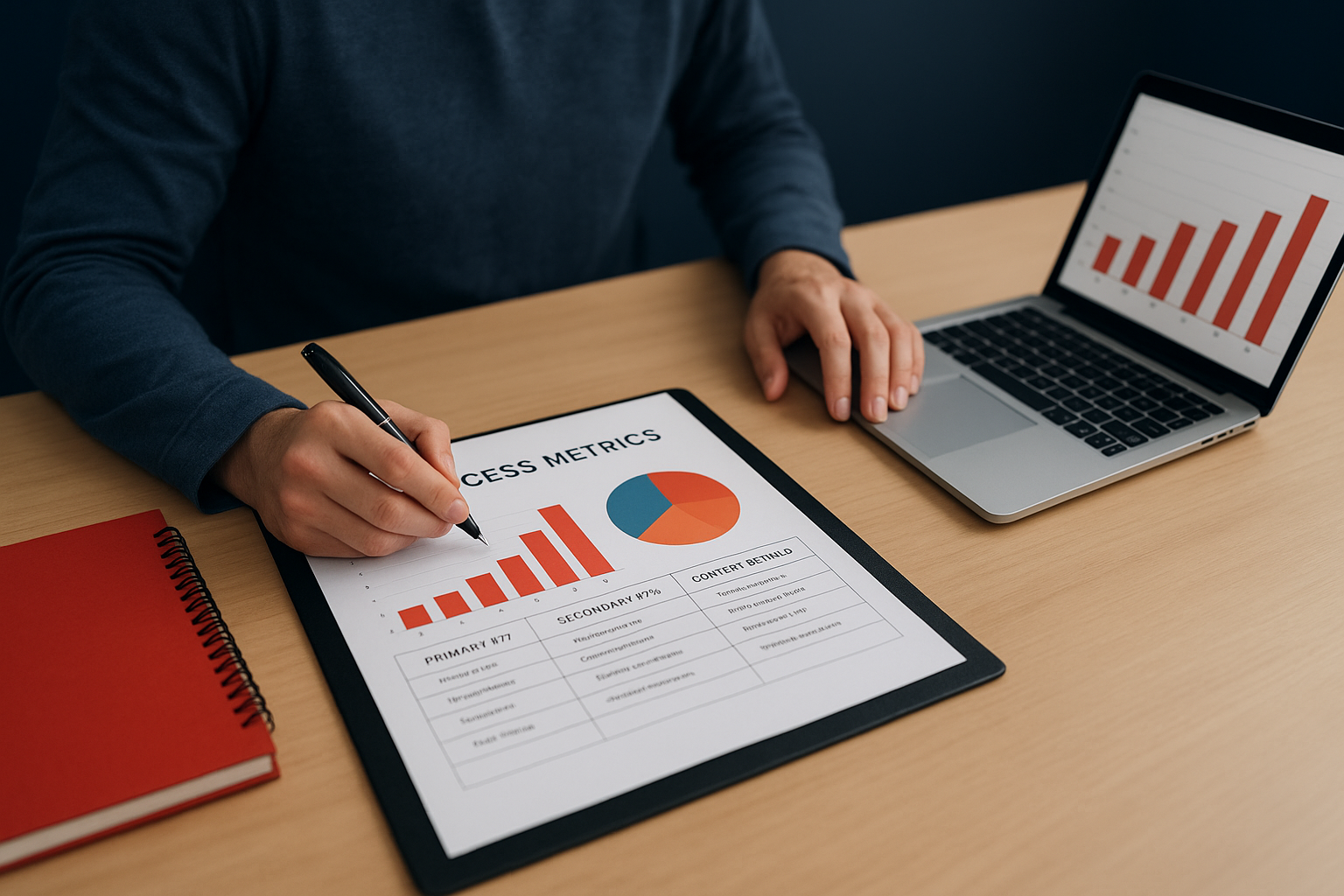
Here's how to structure your measurement framework:
| Goal Type | Primary KPI | Secondary KPIs | Content Metrics |
|---|---|---|---|
| Awareness | Total reach | Brand mentions, hashtag use | Videos captured, shares |
| Engagement | Participation rate | Dwell time, interactions | UGC submissions, social posts |
| Conversion | Sign-ups/trials | Cost per acquisition | Conversion from video views |
Setting clear KPIs before launch lets you make real-time adjustments rather than waiting weeks to analyse results.
Establish your constraints early
Guardrails keep your activation focused and prevent scope creep that kills effectiveness. Define your budget ceiling and stick to it. Set clear timelines with hard deadlines for creative approval, production, and launch. Identify any brand guidelines, legal requirements, or compliance issues that limit what you can do. These constraints force creativity rather than limiting it, helping your team find solutions that work within reality instead of chasing perfect but unexecutable ideas.
Include practical limits like venue capacity, staffing levels, and technical requirements in your planning documents. When everyone knows the boundaries upfront, you avoid wasted effort on concepts that can't actually happen.
Step 2. Define your audience and the action you want
Generic activations aimed at "everyone" consistently underperform compared to those designed for specific people. You need to identify exactly who you're trying to reach and what you want them to do. Specificity drives results because it lets you craft experiences that resonate deeply with the right people rather than appealing weakly to everyone. Your brand activation strategy gets sharper when you narrow your focus, making every creative decision easier and more effective.
Map your ideal attendee profile
Start by building a detailed picture of your target participant. Look beyond basic demographics to understand their motivations, behaviors, and current relationship with your brand. Are they existing customers who need deeper engagement, prospects who've shown interest but haven't converted, or completely new audiences you want to introduce to your brand? Document their pain points, what they value, and how they typically interact with brands like yours at events.
Create a simple one-page profile that your team can reference throughout planning. Include details like:
- What events they already attend and why
- How they consume and share content (video, photos, stories)
- What would make them stop and engage at your activation
- Their typical objections or hesitations about your brand
- Where they spend time online after the event
The tighter your audience definition, the easier it becomes to design moments that genuinely resonate instead of generic experiences that fade quickly.
Identify the single action that matters most
Now define the one specific behavior you want attendees to perform during or after your activation. This could be trying your product, capturing and sharing a video moment, signing up for your service, or joining your community. Choose an action that directly supports your primary goal and feels natural within the experience rather than forced or transactional. Clarity here prevents mixed messages that confuse participants and dilute your results.
Make your desired action concrete and measurable. Instead of "engage with our brand," specify "record a 15-second video testimonial" or "complete a product demo and share feedback." Write this action statement down and test it against your audience profile. Would your ideal attendee naturally want to do this? Does it fit how they already behave? Adjust until you have an action that feels obvious and valuable from their perspective, not just yours.
Step 3. Design the activation and the content plan
Now you're ready to build the actual experience. This step connects your goals and audience insights to a tangible activation concept that attendees will interact with. Your brand activation strategy comes to life here, transforming abstract objectives into concrete moments that people want to participate in and share. The key is balancing what makes your brand unique with what naturally encourages the specific action you defined in step two.
Create your experience concept first
Start with the central interaction that drives everything else. What will people actually do when they encounter your activation? Map out the core experience in 2-3 sentences: "Attendees enter a photo booth setup where they record their best celebration move, then watch it instantly transformed into a shareable highlight reel." Keep this description simple and physical, avoiding abstract marketing language that doesn't translate to reality.
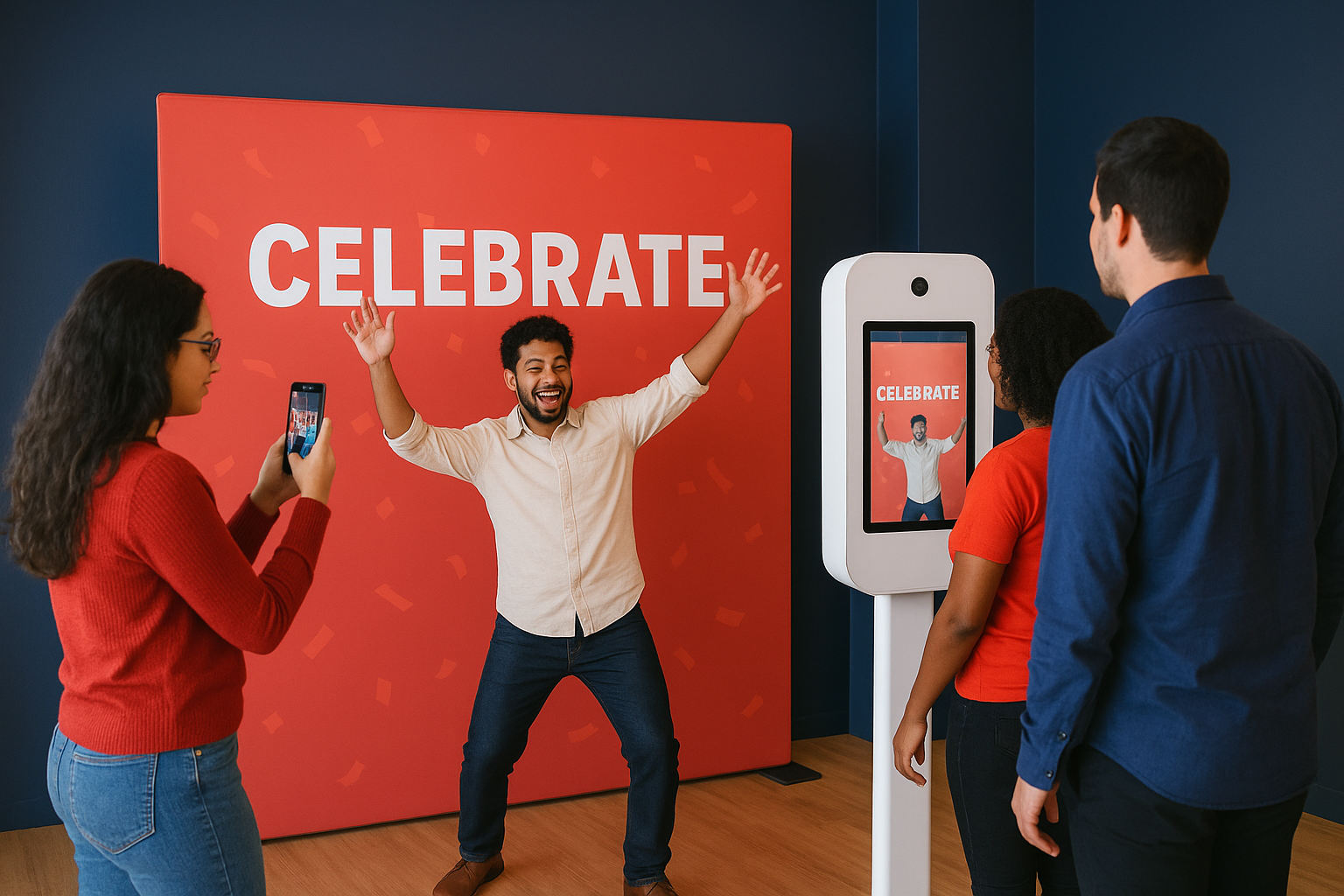
Build supporting elements around this core that reinforce your brand while maintaining focus on participant experience. Consider these components:
- Visual design: How your space looks and feels (colours, signage, props)
- Staff role: What your team does to guide or enhance participation
- Tech requirements: Equipment, apps, or systems needed for smooth execution
- Participant flow: Physical path from discovery to completion to sharing
- Brand touchpoints: Where and how your branding appears without overwhelming the experience
Design activations where capturing video feels natural rather than tacked on, because forced content requests consistently underperform organic sharing opportunities.
Build your content capture plan
Your content strategy determines whether the activation's impact ends at the venue or multiplies online. Define exactly how participants will create and share content, what format that content takes, and where it goes after capture. For video-focused activations, specify recording method (attendee phones, provided devices, booth setup), ideal clip length, and submission process. User-generated video creates the most authentic amplification because attendees share moments they're genuinely excited about rather than branded content they feel obligated to post.
Create a simple framework that maps content types to distribution channels:
| Content Type | Capture Method | Primary Channel | Brand Use |
|---|---|---|---|
| 15-sec clips | Attendee phones via app | Instagram Stories | Compilation reels |
| Testimonials | On-site recording booth | YouTube, website | Marketing assets |
| Behind-scenes | Staff documentation | LinkedIn, Facebook | Community building |
Step 4. Launch, measure, and improve fast
Execution day arrives and your team needs to shift from planning mode to active monitoring. Launch your activation with clear data collection in place from the first participant interaction. Track your primary KPIs in real time rather than waiting for post-event analysis, because immediate visibility lets you fix problems and amplify what works while the event is still running. Your brand activation strategy only succeeds when you treat launch as the beginning of optimization rather than the end of preparation.
Track real-time data from day one
Set up a simple dashboard that shows your core metrics updating live throughout the event. Monitor participation rates, content submissions, social mentions, and any conversion actions as they happen. Use tracking tools that feed directly into a shared view your team can access from phones or tablets on-site. Real numbers beat gut feelings every time, especially when deciding whether to adjust staffing, signage, or participant flow.
Create a basic tracking sheet that captures:
- Hourly participation counts
- Video submissions and social shares
- Staff observations about what's working
- Technical issues or participant friction points
- Unexpected positive moments worth amplifying
Activations that adapt based on live data consistently outperform those following rigid plans regardless of actual performance.
Make adjustments during the event
Watch for bottlenecks and drop-off points in your participant flow and fix them immediately. If people hesitate at a certain step, simplify the ask or add staff guidance. When you spot popular elements that exceed expectations, redirect resources to maximise their impact. Quick fixes during the event often deliver more value than perfect pre-planning because you're responding to actual behavior rather than assumptions.
Document every change you make along with the result it produces. This creates a learning record that improves your next activation, turning each event into research for your broader strategy. Test different messaging, adjust visual elements, and experiment with how you prompt content sharing. Small tweaks to video recording prompts or social sharing instructions can double your UGC capture rates when you iterate based on what participants actually respond to rather than what you hoped would work.
Make it repeatable
The real power of a brand activation strategy emerges when you stop treating each event as a standalone project. Document everything from your planning process to your on-site adjustments, creating a playbook that improves with each activation. Save your participant profiles, content templates, measurement dashboards, and staff briefings in a centralized system your team can reference and refine. Systematic documentation transforms one-time wins into repeatable frameworks that compound value over multiple events.
Build a content library from the user-generated videos you collect at each activation. These authentic moments become assets you can repurpose across marketing channels, proving your brand's impact through real attendee experiences rather than polished promotional material. Tools like SureShot make this process simple by letting attendees upload their clips directly while giving you organised access to curate and deploy the best content. Book a demo to see how easy capturing and managing event video content becomes when you have the right system in place.