
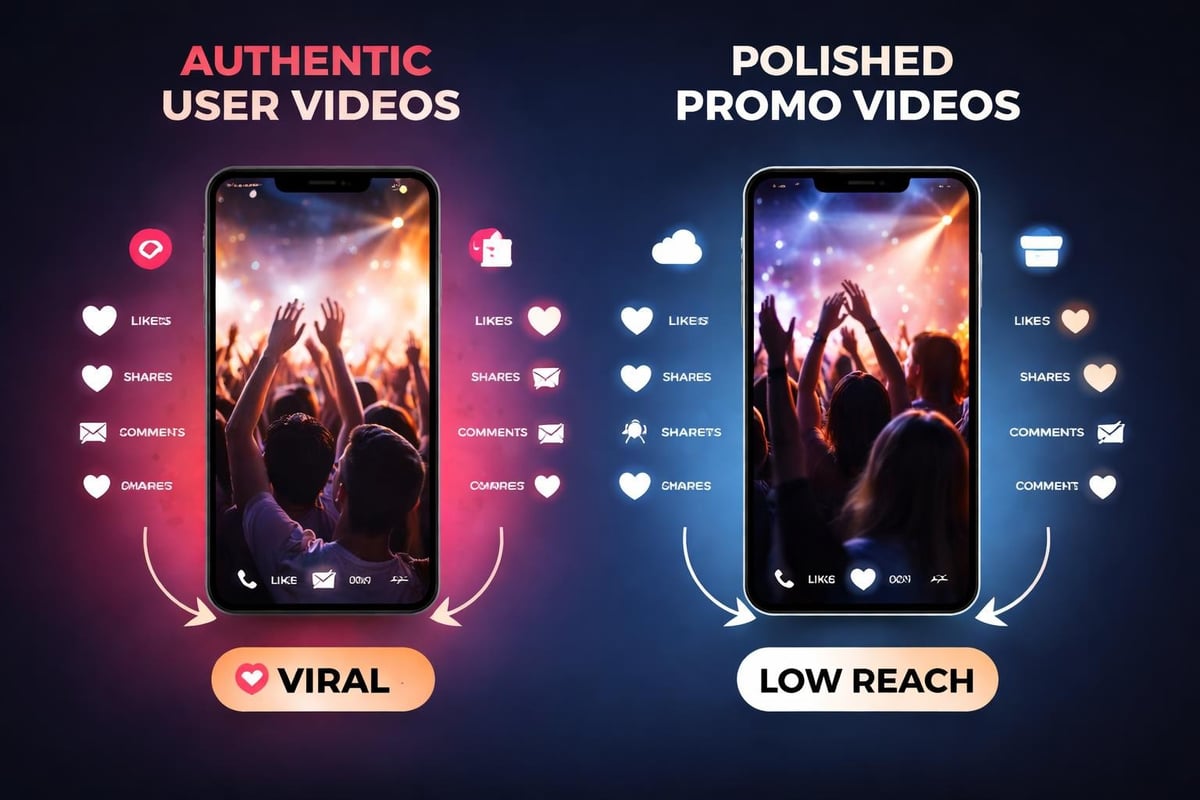
Video content social media strategies have changed. The polished, studio-produced stuff that used to dominate feeds is getting less engagement than raw clips from real people. If you're running events and still hiring expensive crews to capture everything, you're doing it the hard way. Your attendees already have phones out. They're already filming. The question is whether you're tapping into that or letting it scatter across the internet without you.
Why Authentic Video Beats Produced Content
People scroll past ads. They stop for content that feels real.
The data backs this up-video consumption patterns show that authentic content drives higher engagement rates than traditional advertising. But you don't need statistics to know this. Just watch what people actually share versus what they skip.
Here's what works:
- Unfiltered reactions from attendees
- Behind-the-scenes moments nobody planned
- Crowd perspectives that show the energy
- Quick clips that capture a feeling, not a script
Here's what doesn't:
- Overly polished promo videos
- Scripted testimonials that sound rehearsed
- Generic b-roll that could be from any event
- Long-form content that buries the good bits
The shift happened because platforms changed how they distribute content. Social algorithms favour video content social media users actually engage with, not what brands pay to promote. Raw moments get comments. Polished ads get scrolled past.
The Platform Reality Check
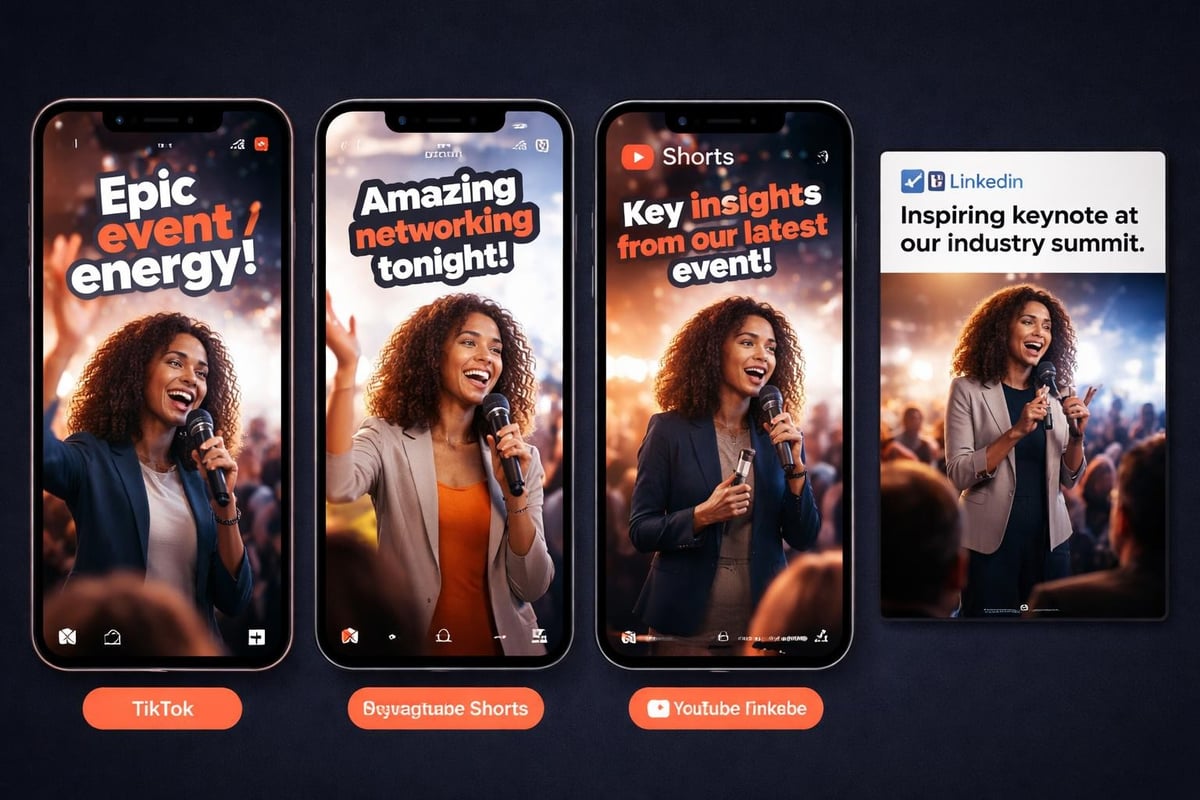
Every platform handles video differently. Instagram wants vertical. YouTube still prefers landscape. TikTok needs fast cuts and trending audio. LinkedIn works best with subtitles since most people watch with sound off.
| Platform | Preferred Format | Optimal Length | What Actually Works |
|---|---|---|---|
| TikTok | Vertical (9:16) | 15-60 seconds | Quick payoff, hook in 2 seconds |
| Instagram Reels | Vertical (9:16) | 30-90 seconds | Authentic moments, trending audio |
| YouTube Shorts | Vertical (9:16) | Under 60 seconds | Story-driven, complete thoughts |
| Square or horizontal | 30-120 seconds | Value-first, professional context |
What matters more than specs is understanding that short-form content is moving beyond social media into how people consume all video. Even traditional TV viewing has shifted-social video now accounts for 20% of TV viewing time, which tells you where attention actually lives.
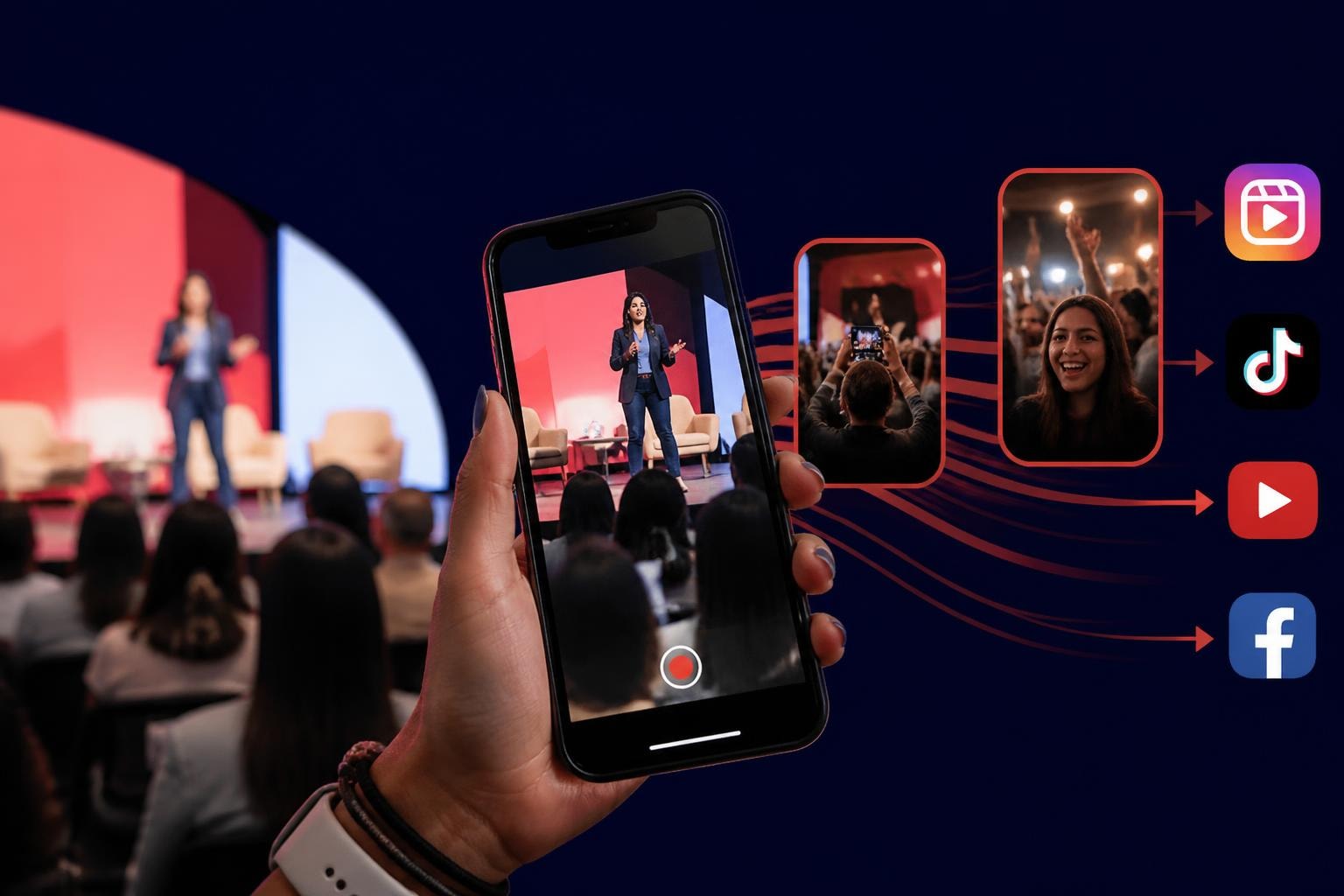
Your event content needs to work across these platforms without being reformatted from scratch each time. That means planning for vertical from the start, keeping moments short enough to repurpose, and capturing authentic reactions that translate anywhere.
User-Generated Content Changes the Economics
Hiring a video crew costs money. A good one costs a lot of money. They'll give you beautiful footage, properly lit and professionally edited. And it'll perform about as well as a corporate brochure.
Meanwhile, your attendees are already creating content. They're filming the bits they find interesting, catching reactions you'd never script, and sharing moments that feel genuine because they are.
The maths here isn't complicated:
- Professional crew: £2,000-5,000+ per event day
- Editing and post-production: £500-2,000
- Final deliverables: 3-5 polished videos
- Organic reach: Limited (needs ad spend to distribute)
Versus:
- User-generated approach: Platform cost only
- Content volume: Dozens to hundreds of clips
- Editing: Smart curation, not full production
- Organic reach: Built-in (attendees share their own clips)
The best UGC platforms don't just collect videos-they help you identify which moments matter, clip them properly for each platform, and get them distributed while they're still relevant.
Curation Matters More Than Creation
You don't need more content. You need the right content, edited down to what works.
This is where most event organisers get stuck. They either film nothing or film everything and drown in footage. The middle path is curation-letting attendees capture what matters to them, then using smart tools to surface the moments worth sharing.
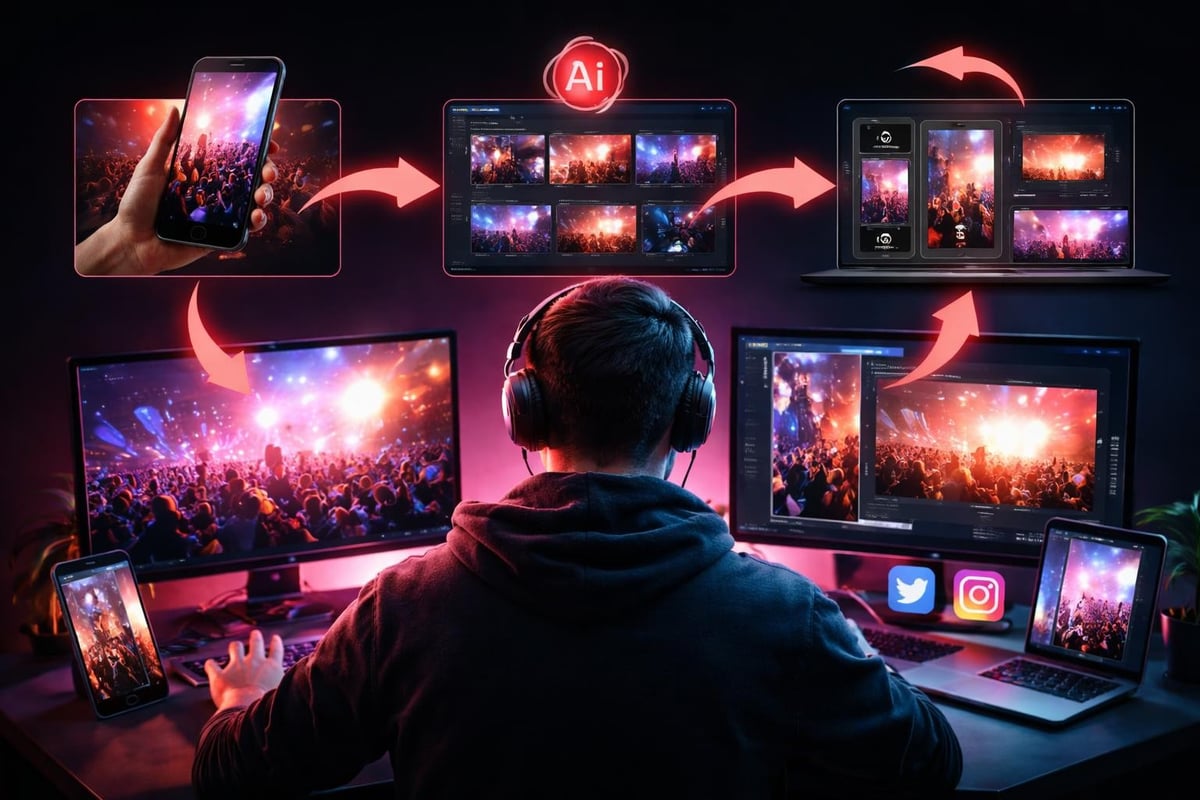
A proper social media content curation tool does three things:
- Collects content from multiple sources without making people jump through hoops
- Identifies which clips have shareability based on actual engagement signals
- Formats content for different platforms without manual rework
The system part isn't about generating fake content. It's about handling the tedious stuff-trimming clips to platform specs, adding captions, identifying the hook in a 2-minute clip and cutting it down to 30 seconds.
Distribution That Actually Happens
Creating content is half the job. Getting it seen is the other half.
Traditional event video follows this path: film everything, spend weeks editing, post a highlight reel a month later when nobody cares anymore. By then, the algorithm has moved on and your attendees have forgotten the event happened.
Better approach:
- Capture content during the event
- Identify strong moments in real-time
- Edit and post within 24-48 hours
- Let attendees share their own clips immediately
Speed matters because video content social media algorithms favour fresh content. A decent clip posted today beats a perfect video posted next week.
The other distribution advantage of user-generated content is built-in amplification. When attendees appear in clips, they share them. Their networks see authentic moments from real people, not branded content that screams "advertisement."
Rights and Permissions Without the Headache
Legal stuff kills momentum. If you're chasing people for release forms weeks after an event, you've already lost.
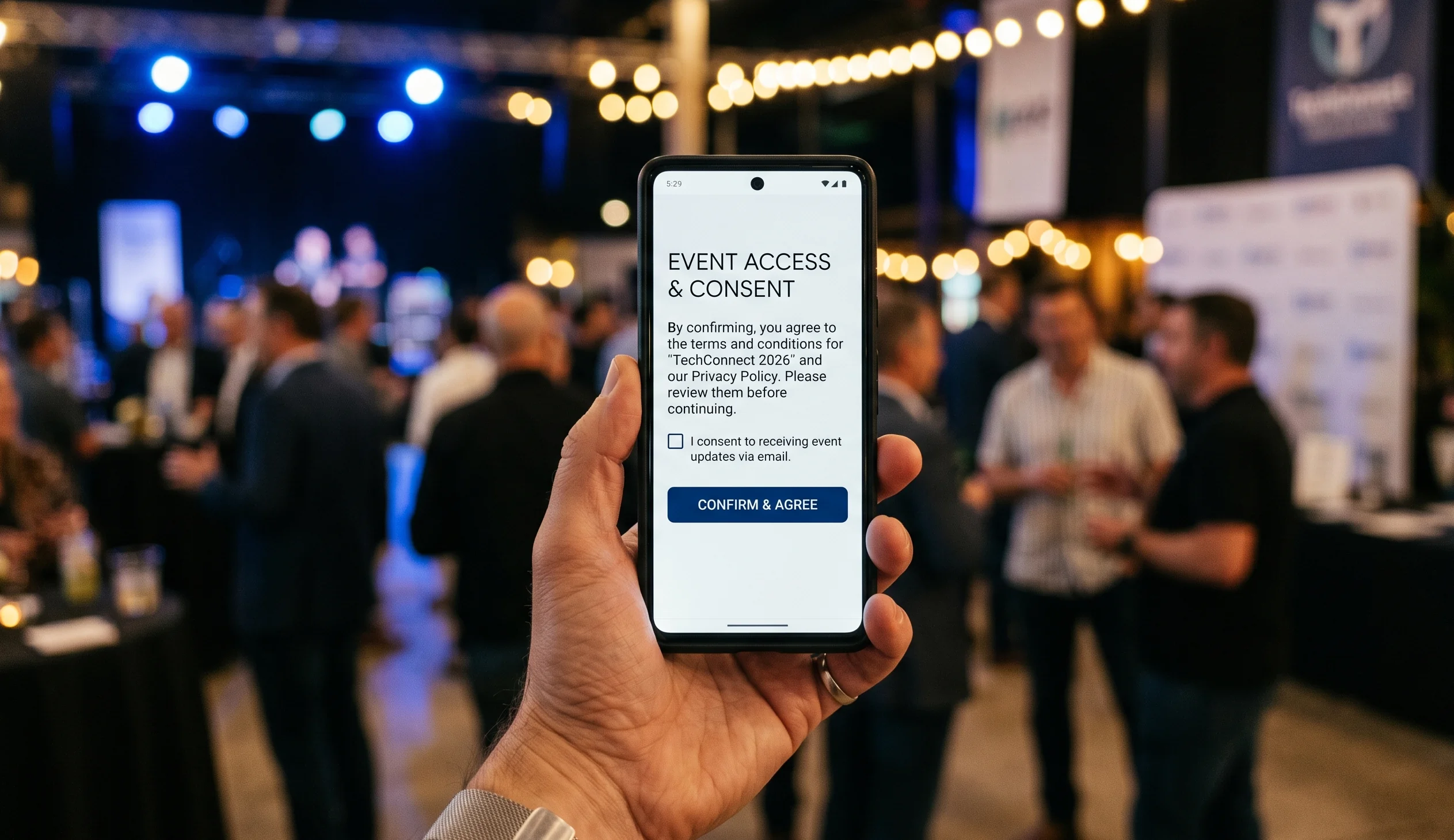
Smart content licensing happens upfront. Attendees agree to terms when they opt in, your platform tracks consent automatically, and you can actually use the content you collect.
This matters more as platforms crack down on rights issues. You can't just grab content people posted publicly and use it in your marketing. You need explicit permission, properly documented, especially if you're running paid promotions.
| Permission Type | What It Covers | When You Need It |
|---|---|---|
| Basic opt-in | Event footage, organic social sharing | All user-generated content |
| Commercial rights | Paid advertising, promotional materials | Any content used in ads |
| Extended licensing | Merchandise, broadcast, long-term use | Major campaigns or commercial products |
The cleanest approach is collecting this at registration. People opt in as part of signing up, your platform handles tracking, and you're not scrambling for permissions later.
Making Video Content Social Media Actually Work
Theory is easy. Execution is where most people struggle.
Here's what actually working looks like: You run an event. Attendees download your app or access your platform. They film moments that matter to them-a great speaker, an unexpected connection, the energy of a session. Your system collects this, flags the clips with engagement potential, and gives you a curated feed of shareable content.
You pick the best moments, format them for your target platforms, and post while the event is still happening or within a day or two. Attendees see themselves featured, share the clips, and their networks get exposed to your event through trusted sources instead of ads.
The results aren't hypothetical. Video marketing statistics consistently show user-generated content outperforms branded content on engagement metrics. But more importantly, it costs less and scales better.
Platform-Specific Tactics That Matter
Each platform has quirks. Ignoring them means your content doesn't perform.
TikTok: Hook in the first 2 seconds. Use trending audio. Keep it under 45 seconds. The algorithm favours completion rate, so don't waste time with slow builds.
Instagram Reels: Similar to TikTok but slightly longer attention spans. Captions matter since many people browse with sound off. Use hashtags strategically, not spam.
YouTube Shorts: Needs a clear story arc even in 60 seconds. People expect value or entertainment, not just random clips. Works well for how to promote an event since you can tease longer content.
LinkedIn: Professional context is everything. Raw event footage works if you frame it around insights or connections. Subtitles aren't optional-most LinkedIn users watch with sound off.
The mistake is creating one video and blasting it everywhere. Better: create once, adapt for each platform. The core moment stays the same, but the framing, format, and context shift.
What Changes When You Go User-Generated
Your role shifts from creator to curator. Instead of controlling every frame, you're identifying and amplifying the moments that resonate.
This feels uncomfortable if you're used to traditional marketing where you script everything. But it works better because people trust other people more than they trust brands.
What you gain:
- Volume of content you couldn't afford to produce
- Authentic perspectives you wouldn't think to capture
- Built-in distribution through attendee networks
- Lower production costs with higher engagement rates
What you lose:
- Perfect control over messaging
- Polished aesthetics (which people scroll past anyway)
- The comfort of scripted content
- Traditional production workflows
The trade-off is worth it if you care about results more than process. Event organisers using effective video content strategies report 3-5x more social reach with user-generated approaches compared to traditional filming.
The Technical Side Nobody Talks About
Collecting video from multiple sources is messier than it sounds. You need:
- A platform that handles different file formats without breaking
- Storage that scales when 200 people upload 5 clips each
- Quick processing so content is usable within hours, not days
- Rights management that tracks who uploaded what and what permissions you have
Most event teams either use consumer apps (which leak data and don't give you rights) or enterprise video platforms (which are overkill and expensive). The middle ground is purpose-built tools designed for event content curation.
You also need to think about workflow. Who reviews clips? Who makes editing decisions? Who handles posting? If this all falls on one person scrambling between sessions, it won't happen consistently.
The Authenticity Question
Some marketers worry that user-generated content looks "unprofessional." That's the point.
Professional means polished. Polished means it looks like an ad. Looking like an ad means people scroll past it. The loop continues.
What performs now is content that feels real because it is real. A slightly shaky clip of a speaker making an unexpected point. Attendees laughing at something spontaneous. The energy of a crowd during a peak moment. These don't need perfect lighting or colour grading.
The late-night shows figured this out-their social content isn't polished bits from the broadcast. It's raw clips, behind-the-scenes moments, and authentic reactions that feel different from the main show.
Your events can follow the same approach. Save the polished highlight reel for your website. Use authentic moments for social. They'll perform better and cost less.
Metrics That Actually Matter
Views are vanity. Engagement is what counts.
When you're measuring video content social media performance, track:
- Completion rate: How many people watch to the end
- Shares: Who's distributing your content for you
- Comments: Real engagement, not just passive scrolling
- Click-throughs: If you're driving action, are people taking it
- Follower growth: Is content attracting your target audience
A video with 10,000 views and 50 shares matters more than one with 50,000 views and 5 shares. The first indicates content people care about enough to put their name on. The second is just noise.
| Metric | What It Tells You | Why It Matters |
|---|---|---|
| Completion Rate | Content holds attention | Signals to algorithms to show it more |
| Share Rate | Content is share-worthy | Free distribution through trusted networks |
| Comment Rate | Content sparks conversation | Boosts algorithmic reach and builds community |
| Save Rate | Content has lasting value | Instagram especially favours saved content |
Most platforms give you these metrics. Use them. If completion rate is low, your hooks aren't working or content runs too long. If shares are low, you're not creating moments people want to associate with.
Getting Started Without Overthinking It
You don't need a full strategy document and six months of planning. Start small:
- Pick one upcoming event
- Set up a simple collection method (app, platform, or QR code)
- Ask attendees to film moments they find interesting
- Review what you get and post the best 3-5 clips
- Track what performs and do more of that
The first event won't be perfect. That's fine. You'll learn more from one real attempt than from endless planning meetings.
Common mistakes to avoid:
- Overcomplicating the upload process (people will just not bother)
- Waiting too long to post (momentum dies fast)
- Trying to polish everything (kills the authentic feel)
- Ignoring platform requirements (vertical video isn't optional anymore)
- Forgetting to follow up with contributors (they're your distribution network)
After your first event, you'll know what worked and what didn't. Double down on what resonated. Cut what didn't. This isn't rocket science-it's testing and iterating based on actual results.
Video content social media works best when it's authentic, timely, and comes from real perspectives. Event organisers who figure this out get better reach for less money than traditional production approaches. If you're running events and want to tap into what your attendees are already filming, SureShot gives you the tools to collect, curate, and distribute authentic moments that actually perform. Turn your attendees into your content team and let real moments drive your social presence.