
UGC vs Influencer Content: Differences, Pros, and Strategy
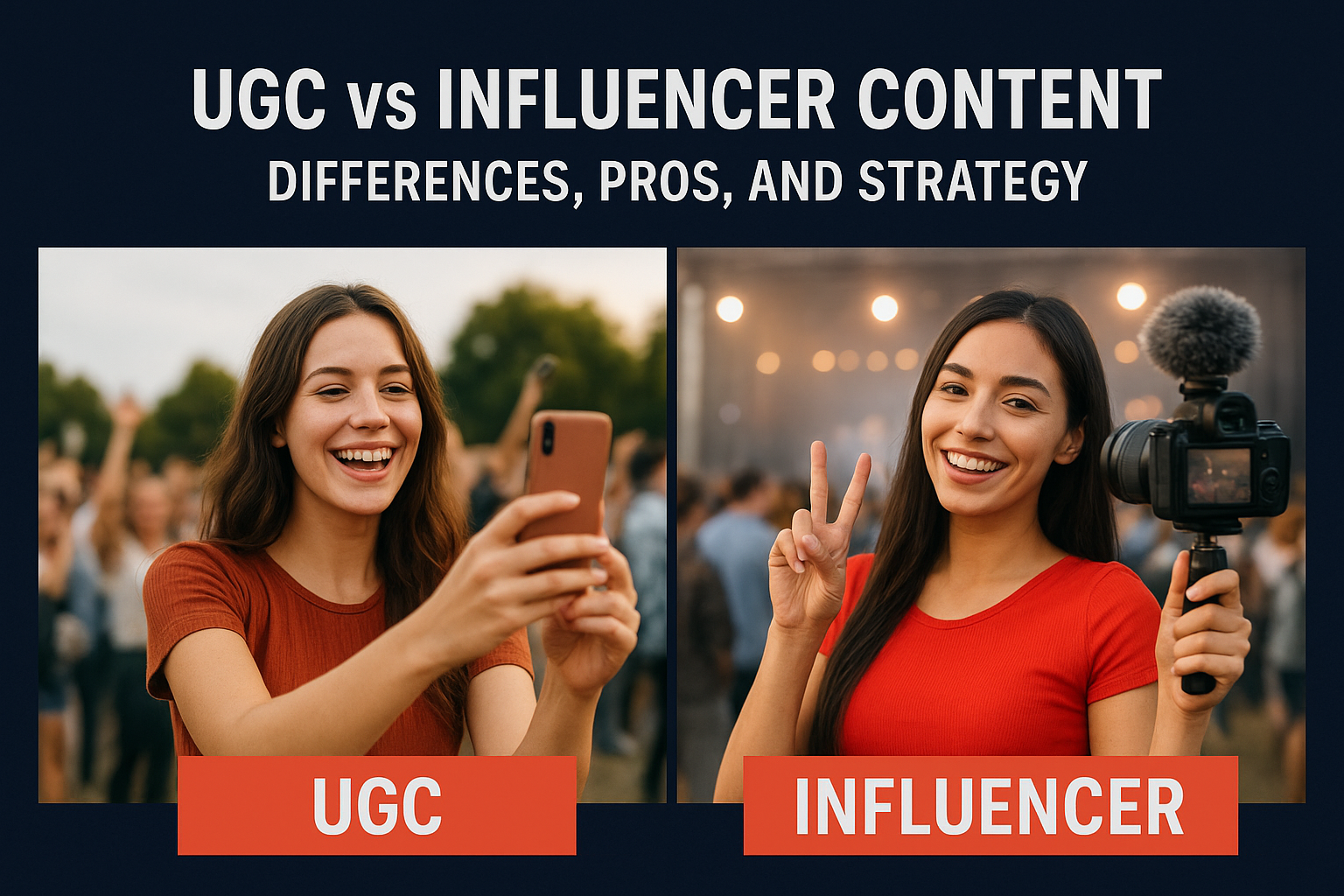
UGC vs influencer content represents two distinct approaches to creating marketing material. User-generated content comes from your actual attendees or customers who share their genuine experiences. Influencer content is produced by individuals with established followings who promote your brand to their audience. Both generate social proof, but they differ significantly in authenticity, cost, reach, and how you acquire and distribute them.
Event organizers face this decision constantly. You can encourage attendees to capture and share their own moments, or you can partner with influencers who create polished posts for their followers. The choice affects your budget, timeline, and results. This article breaks down the practical differences between these content types. You'll learn when each approach makes sense for your events, how to evaluate the pros and cons, and what strategy works best based on your specific goals. Whether you're planning a festival, conference, or brand activation, understanding these distinctions helps you invest your resources where they'll have the greatest impact.
Why UGC vs influencer content matters
Your content strategy directly impacts your event's success and budget. The choice between UGC vs influencer content determines how much you spend, what type of reach you achieve, and how audiences perceive your brand. Event organizers who understand these differences make smarter decisions about where to allocate resources. Your content approach also shapes the attendee experience, affects post-event momentum, and influences whether people return for future events.
Impact on your event budget
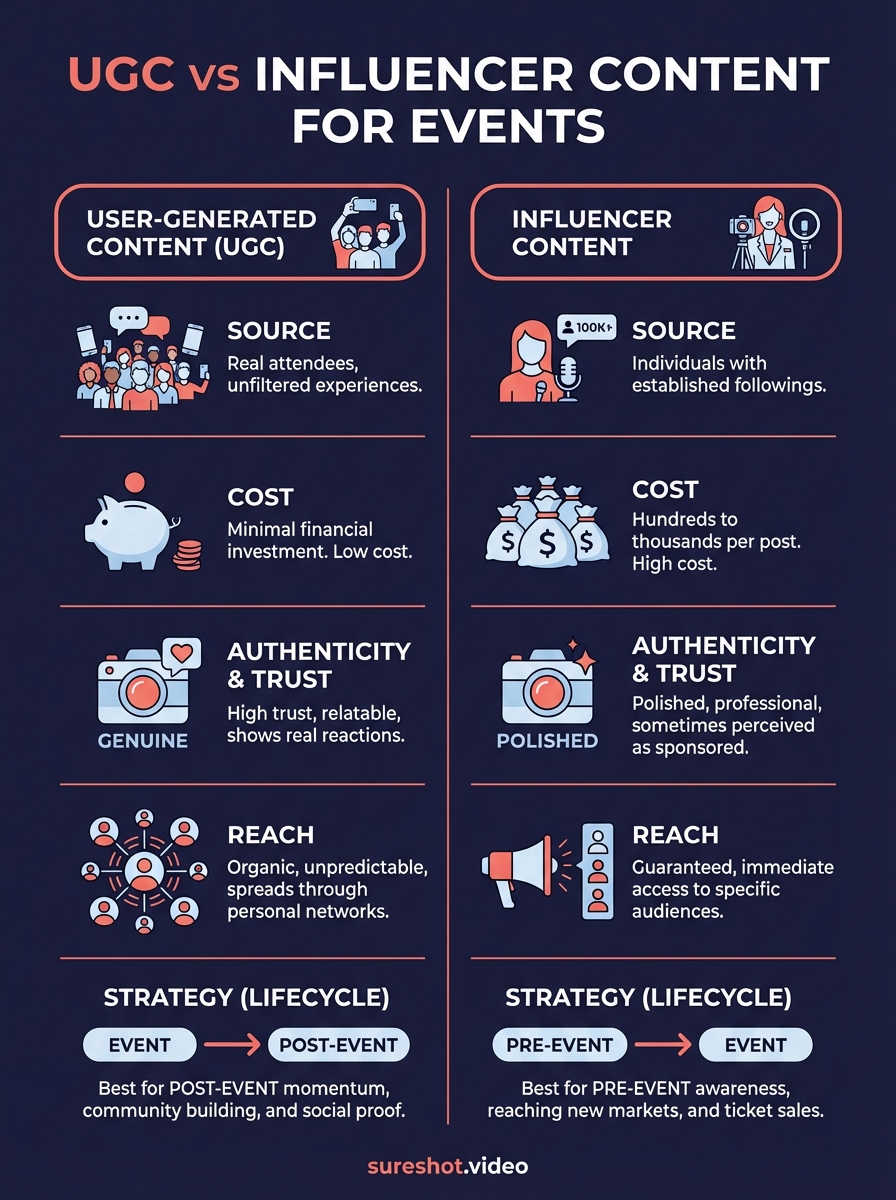
Professional influencer partnerships typically cost hundreds to thousands of dollars per post, depending on follower count and engagement rates. You negotiate fees, manage contracts, and often provide additional perks like VIP access or travel expenses. UGC requires minimal financial investment since attendees create content willingly as part of their experience. Your main costs involve setting up a collection system and potentially offering small incentives. This difference matters significantly when you're planning multiple events or working with limited marketing budgets.

Authenticity and trust factors
Attendees trust content from other attendees more than polished influencer posts. When someone sees a real person sharing an unfiltered moment from your event, it resonates differently than a sponsored promotion. Your UGC reflects genuine reactions and diverse perspectives that professional content creators can't replicate. Influencer content works best for reaching new audiences who haven't heard of your event yet, while UGC convinces people who are already considering attendance.
UGC converts at higher rates because it shows real experiences without the promotional filter that audiences have learned to recognise.
How to choose the right mix for your brand
Your event goals determine which content approach works best. Most successful events don't rely exclusively on one method. You need both UGC and influencer content serving different purposes throughout your event lifecycle. The key lies in understanding when each type delivers the strongest results and allocating your resources accordingly. Your decision should reflect your specific event type, audience demographics, budget constraints, and timeline.
Consider your event goals and timeline
Pre-event promotion benefits most from influencer partnerships because you need reach before attendees arrive. Influencers introduce your event to new audiences who trust their recommendations. Launch your influencer campaigns 4-8 weeks before the event to build awareness and drive ticket sales. During the event itself, shift focus to UGC collection. Attendees create authentic moments in real-time that showcase the experience better than any pre-produced content. Post-event marketing thrives on UGC because you'll have hundreds of genuine clips showing what people actually experienced.

Evaluate your audience and reach needs
Target audience maturity affects the ugc vs influencer content balance. Events targeting younger demographics (18-30) see higher UGC participation rates because these attendees naturally share experiences online. Influencers work better when you're entering new markets or launching events where you lack brand recognition. If you're promoting an established annual festival, emphasize UGC to strengthen community bonds. For a brand-new conference series, invest more heavily in influencer partnerships to establish credibility quickly.
Events with strong communities generate more UGC naturally, reducing your need for paid influencer partnerships.
Balance cost against expected returns
Calculate your content acquisition costs before committing to either approach. Influencer fees might seem high, but they guarantee professional content and specific delivery dates. UGC platforms cost less upfront but require technology investment and attendee participation. Events with 1,000+ attendees typically generate enough UGC to justify the platform costs. Smaller events under 300 people might benefit more from targeted influencer partnerships that guarantee content volume regardless of attendee participation rates.
Key differences between UGC and influencer content
The fundamental distinction between ugc vs influencer content lies in who creates it and how you acquire it. Understanding these operational differences helps you decide which approach fits your event strategy. Each content type follows different workflows, requires distinct management approaches, and delivers results through separate mechanisms. These differences extend beyond just cost to affect your timeline, quality control, legal considerations, and distribution channels.
Creation and ownership
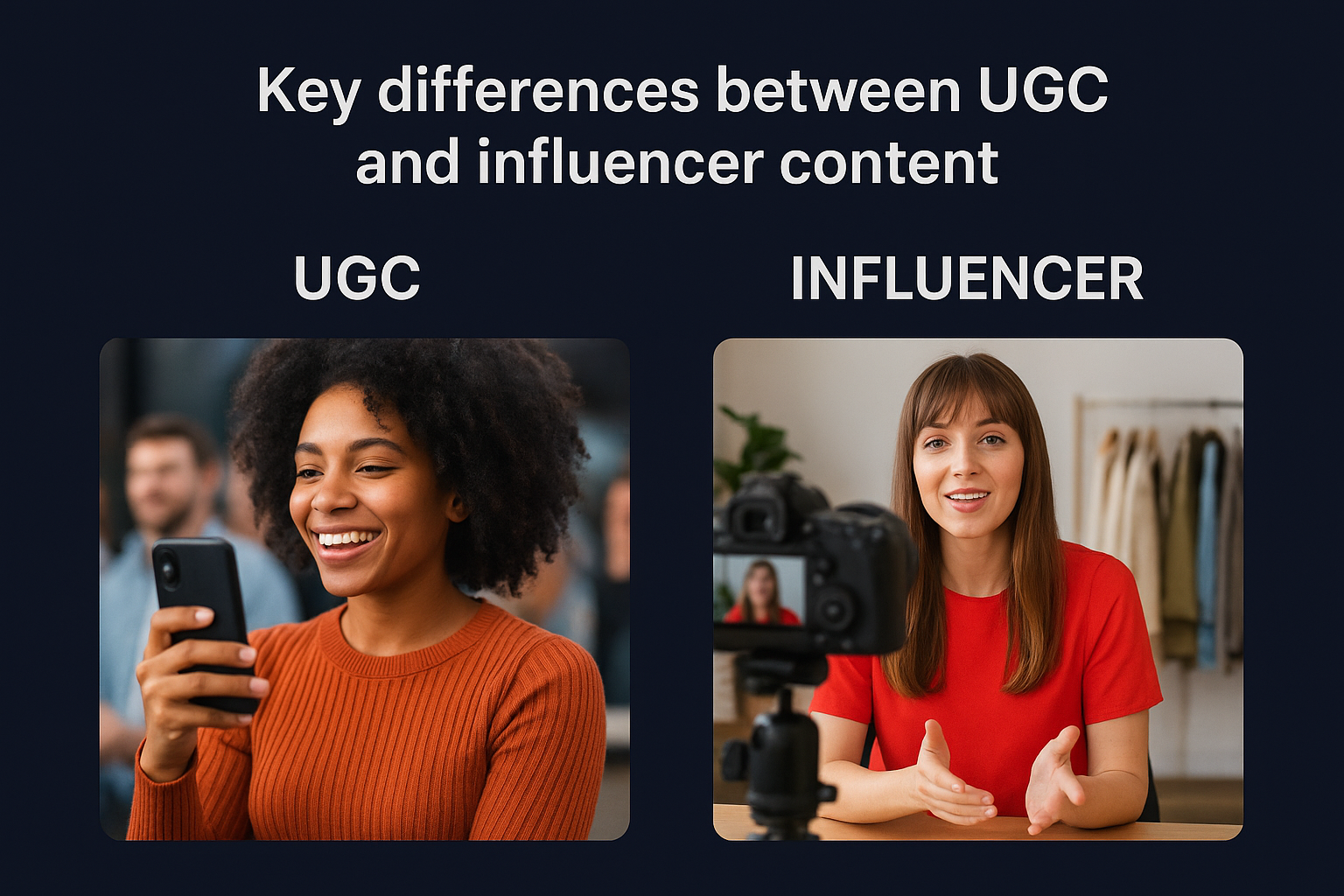
UGC comes from your actual attendees who capture moments during your event. You provide the platform or system for collection, but attendees decide what to film and when to share. Ownership typically transfers to you through licence agreements that attendees accept when uploading content. Influencer content works differently because you commission it through contracts that specify deliverables, deadlines, and usage rights. Influencers maintain creative control within your brand guidelines, while UGC creators shoot spontaneously without direction. Your legal team needs separate frameworks for each type since UGC involves mass licensing while influencer deals require individual negotiations.
Distribution and reach patterns
Influencers distribute content directly to their followers through their established channels. You gain immediate access to audiences that already trust that creator. Their content reaches people who may never have heard of your event. UGC follows a different distribution path because attendees share clips with their personal networks first. You then repurpose this content across your own marketing channels. UGC spreads organically through social sharing when attendees tag friends and post in real-time. Influencer posts generate reach through the creator's audience, while UGC creates reach through your attendees' combined networks.
Influencer content delivers guaranteed reach to specific audiences, while UGC generates unpredictable but authentic spread through personal networks.
Production quality and control
Influencer content typically features professional production values because creators invest in equipment, editing software, and production skills. You receive polished videos that match current content trends and platform algorithms. UGC varies widely in production quality from shaky smartphone clips to surprisingly well-composed shots. You sacrifice production control for authenticity and volume. Quality inconsistency becomes less important when you have hundreds of clips to choose from. Your team can curate the best UGC submissions while influencers deliver a predetermined number of professional posts. Production timelines differ significantly because influencers require lead time for creation and approval, while UGC appears in real-time as your event unfolds.
Pros and cons for events and campaigns
Your event strategy needs to account for both the advantages and limitations of each content type. The ugc vs influencer content decision affects your campaign execution, resource allocation, and results measurement. Understanding these tradeoffs helps you avoid common mistakes that waste budget or miss opportunities. Each approach carries specific benefits and challenges that vary depending on your event scale, audience maturity, and marketing objectives.
UGC advantages and limitations
Events benefit from UGC through volume, authenticity, and cost efficiency. You receive dozens or hundreds of clips that showcase diverse perspectives and genuine reactions. Attendees create content willingly without payment, reducing your content production expenses dramatically. The authenticity factor builds trust with potential attendees who see real experiences instead of promotional material. However, quality remains inconsistent and unpredictable. Some attendees capture shaky footage, poor lighting, or unflattering angles. You can't guarantee specific shots or messaging since creators work independently. Participation rates fluctuate based on attendee demographics and event type. Technical events like B2B conferences generate less UGC than music festivals where attendees naturally share moments.

Influencer content strengths and weaknesses
Influencer partnerships deliver professional quality and guaranteed reach to targeted audiences. You negotiate specific deliverables, approve content before publication, and access established follower bases that trust creator recommendations. The production value matches platform standards and current content trends. Your campaign timeline becomes predictable because contracts specify delivery dates. Yet costs escalate quickly as you scale influencer campaigns across multiple creators or events. Audiences increasingly recognise sponsored content and discount its authenticity compared to organic posts. You sacrifice spontaneity and genuine reactions for polished presentations that may feel less relatable. Finding influencers whose audiences align perfectly with your target demographics requires significant research and relationship building.
Professional polish from influencers attracts new audiences, while UGC authenticity converts attendees already considering your event.
Practical ideas and next steps
Your immediate action starts with assessing your current event content strategy. Look at your upcoming event calendar and identify which events need awareness building versus community engagement. Allocate 60-70% of your content budget to the approach that matches your primary goal for each specific event. New events benefit from influencer partnerships that build initial awareness, while established events should emphasize UGC collection to deepen attendee connections and reduce content costs over time.
Start with your next event
Pick one upcoming event as your testing ground for implementing both content types. Identify 2-3 micro-influencers whose audiences align with your target attendees and negotiate partnerships that include pre-event promotion. Simultaneously set up a UGC collection system that makes it simple for attendees to share clips during the event. Give attendees clear instructions about how to participate and what types of moments to capture. This dual approach lets you compare results directly and understand which content type delivers better engagement for your specific audience and event format.
Build your content collection system
Technology solves the ugc vs influencer content management challenge. You need separate workflows for each content type since they require different handling. Create templates for influencer briefs that specify deliverables, timelines, and brand guidelines while leaving room for creative interpretation. For UGC, implement a platform that handles collection, licensing, and organization automatically. Train your team to curate the best submissions quickly because timing matters for social media momentum.
Your content strategy succeeds when you make participation effortless for both influencers and attendees.
Measure what actually works
Track specific metrics for each content type to understand their real impact on your events. Monitor influencer post reach, engagement rates, and ticket sales attributed to their unique codes. For UGC, measure submission volume, social sharing rates, and conversion impact when you repurpose clips in your marketing. Adjust your strategy based on data rather than assumptions about what should work.
Final thoughts
The ugc vs influencer content debate doesn't require choosing one over the other. Your most effective strategy combines both approaches based on your event lifecycle and specific goals. Use influencers when you need guaranteed reach and professional polish for awareness building. Deploy UGC collection when you want authentic moments that showcase real attendee experiences and build community. Events succeed when you match content type to campaign objective rather than following industry trends blindly.
Start testing both methods at your next event to discover what resonates with your specific audience. Book a demo to see how SureShot simplifies collecting and managing attendee video content for your events.