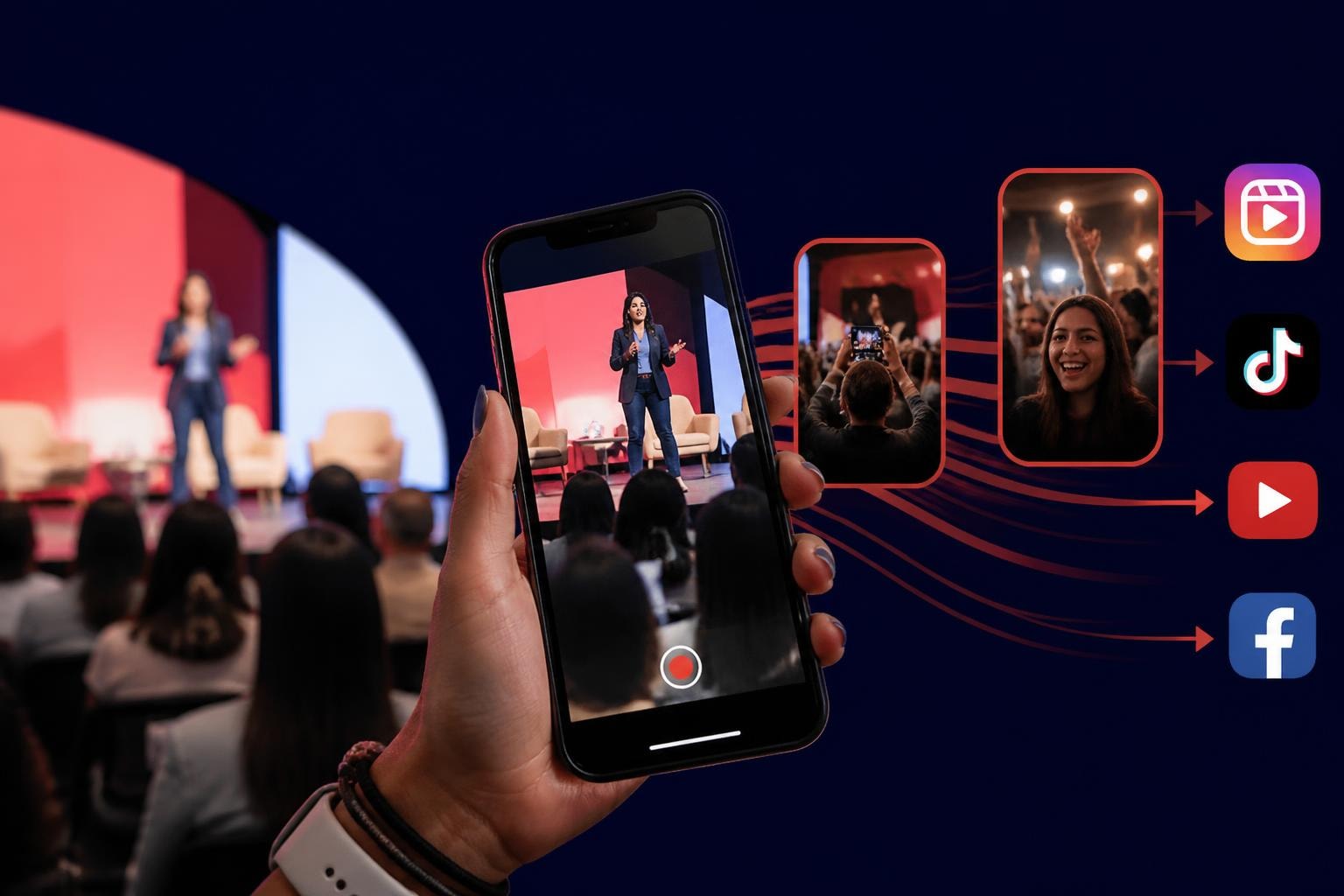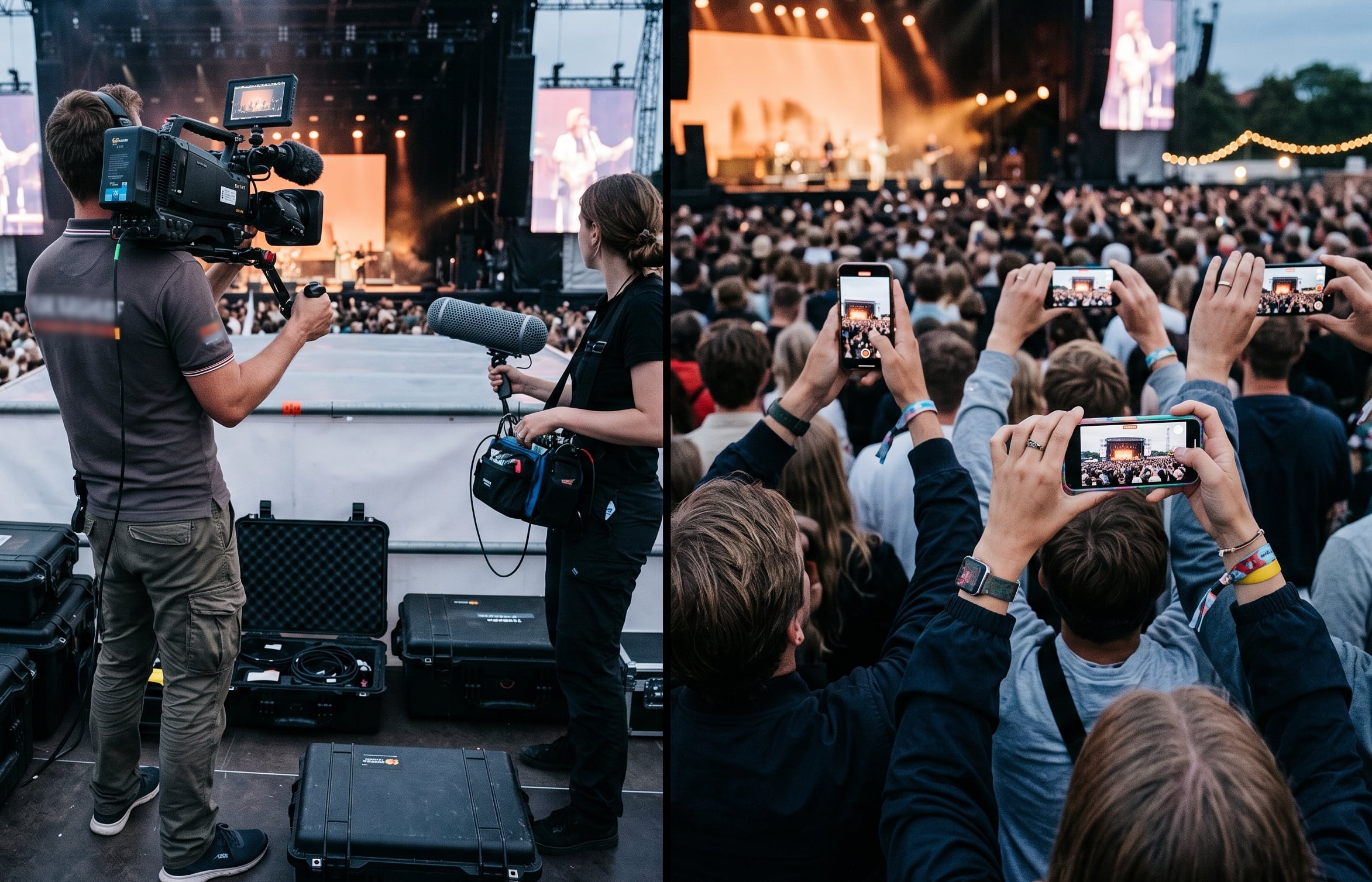
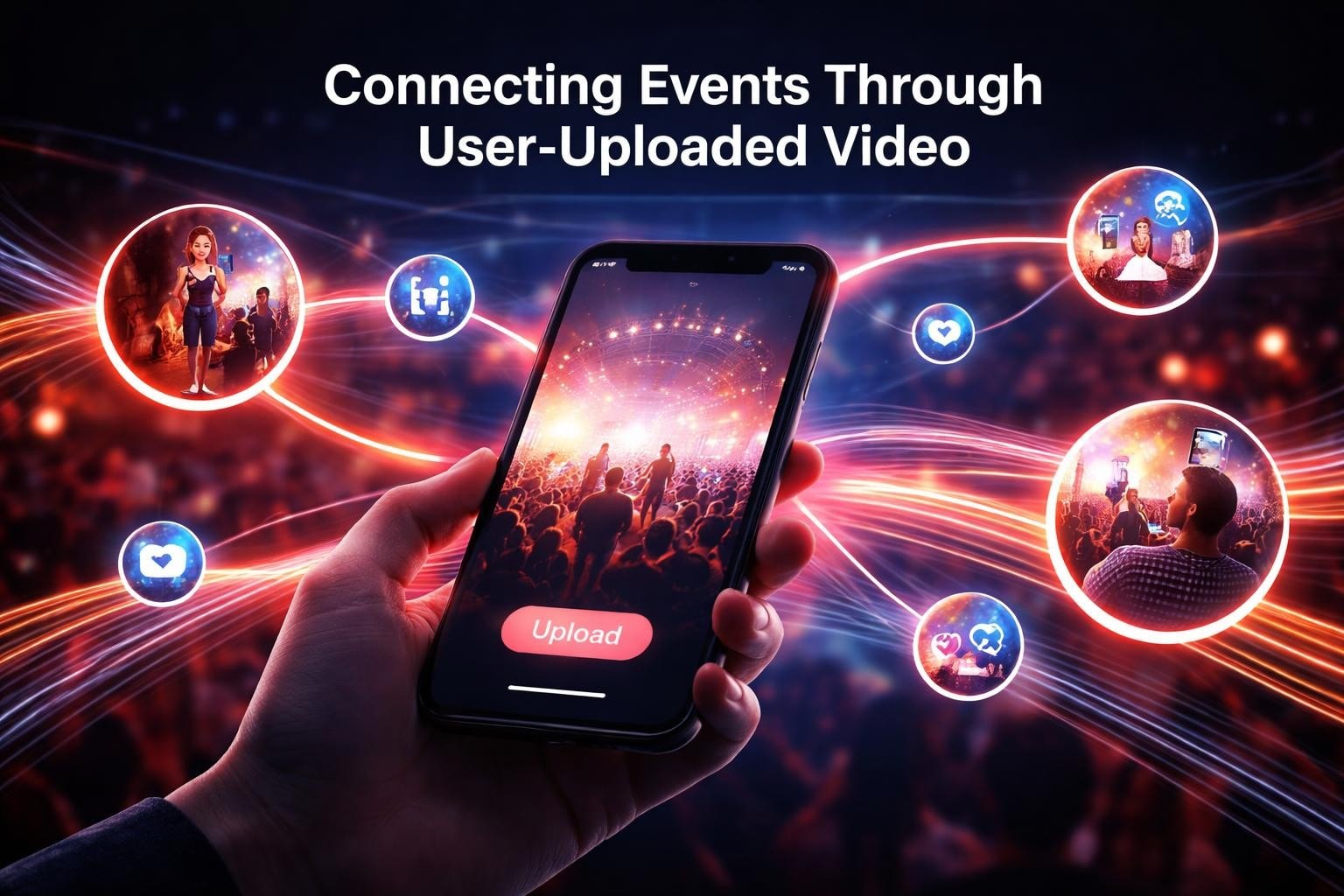

You've probably noticed that every event now has a dozen people recording on their phones. That's not vanity, that's content. The question isn't whether to collect that footage, it's how. A video uploading platform does the heavy lifting: it gathers, organises, and distributes video content without you babysitting every file. For events especially, where authenticity matters more than polish, the right platform turns attendees into your content team. No film crew, no massive budget, just real moments from real people.
Why Most Video Platforms Miss the Point
Most online video platforms were built for broadcasting, not collaboration. YouTube wants you to upload once and rack up views. Vimeo wants to host your brand videos. Neither cares much about collecting dozens of clips from different people at the same event and making sense of them.
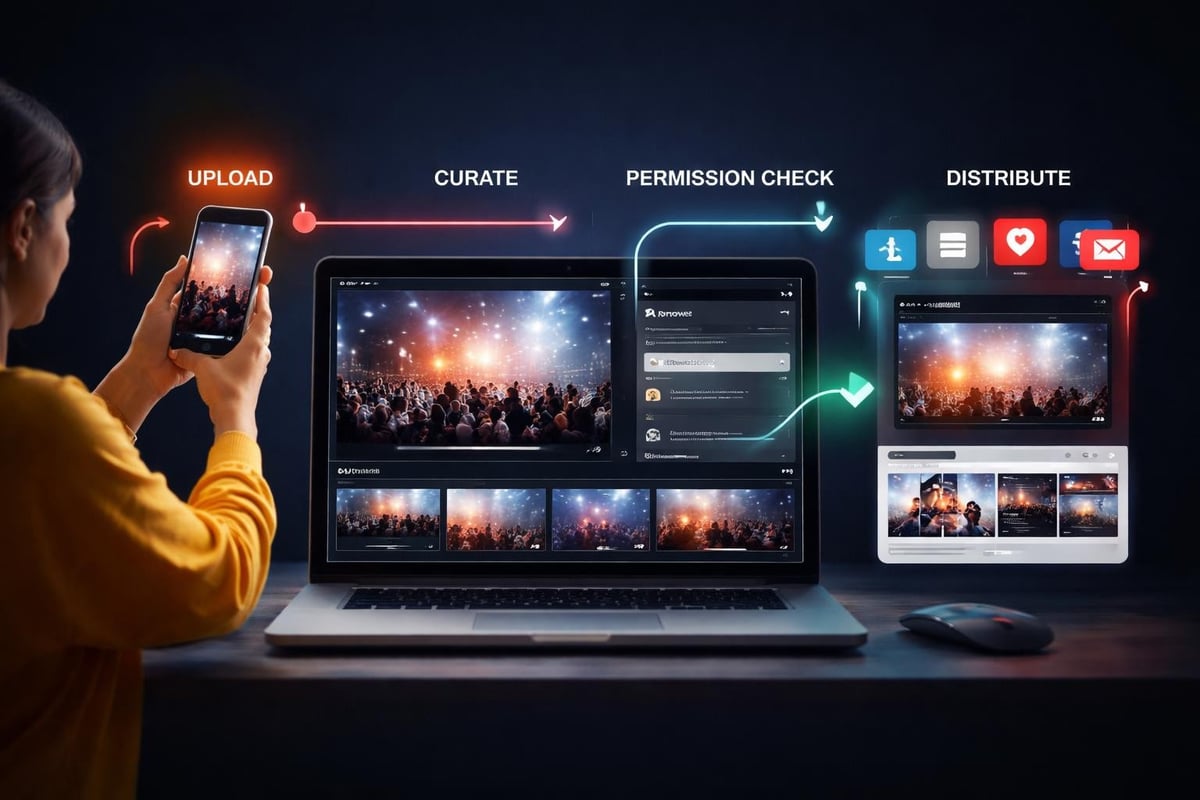
That's the gap. Event organisers don't need another place to dump finished videos. They need a system that:
- Accepts uploads from multiple contributors without technical friction
- Sorts and curates content automatically
- Pushes the best bits to social channels
- Keeps rights and permissions sorted from the start
The comparison between video hosting services shows features like storage limits and player customisation. Fine. But none of that matters if your contributors can't figure out how to submit footage or if you're spending hours manually editing clips together.
The Real Cost Isn't Storage
Everyone fixates on storage costs. How many gigabytes? How much per month? That's backward thinking.
The actual cost is time. Hours spent chasing contributors for footage. Hours editing clips that should've been flagged by the platform. Hours dealing with wrong file formats or footage that violates someone's image rights.
A proper video uploading platform handles those problems before they reach you. Automated curation tools spot the clips worth keeping. Permission management ensures everyone who appears in a video has consented. That's where smart tools actually help, not by generating fake content, but by sorting through real content faster than any human could.
What Event Content Actually Needs
Events generate content differently than brands do. You're not planning every shot. You're capturing what happens, through dozens of different perspectives.
The platform needs to handle:
- Multiple uploads simultaneously - Twenty people recording the same keynote? Great. The platform should accept all twenty without choking.
- Mobile-first submission - Nobody's bringing a laptop to a music festival. If it doesn't work smoothly on a phone, it doesn't work.
- Immediate processing - Waiting 24 hours to see uploaded content defeats the purpose. Real-time or near real-time processing keeps momentum going.
- Smart filtering - Not every clip deserves distribution. The platform should help identify the keepers based on engagement signals, quality metrics, or manual curation.
Traditional platforms weren't designed for this workflow. They assumed one uploader, maybe a team, not a crowd. Research on user behaviour patterns shows how content creators interact with platforms, but that research focuses on individual creators building audiences, not collaborative content creation at scale.
The Authenticity Problem
Here's where most platforms completely miss it: they're optimised for production value, not authenticity.
Authentic content looks different. Shaky camera. Background noise. Imperfect framing. That's the point. People trust it because it doesn't look like an advert.
But platforms penalise that content. Their algorithms were trained on broadcast-quality uploads. Their compression settings assume you care about preserving every detail. Their interfaces push you toward adding titles, transitions, effects.
Sometimes you just need to get footage from phones to social media with minimal fuss. The best video hosting platforms often emphasise features that events don't need: password protection, detailed analytics dashboards, white-label players. Those matter for corporate training videos. For event content, speed and authenticity matter more.
Platform Architecture That Actually Works
Skip the technical jargon. Here's what separates platforms that work from platforms that frustrate you:
| Feature | Why It Matters | What to Avoid |
|---|---|---|
| Upload speed | Contributors lose interest fast | Platforms requiring file conversion before upload |
| Mobile app quality | Most footage comes from phones | Desktop-first interfaces bolted onto mobile |
| Permission management | Legal headaches kill events | Manual consent tracking via spreadsheets |
| Smart curation | Saves hours of review time | Tools that generate or alter content instead of organising it |
The architecture should be invisible. Contributors shouldn't think about codecs or file sizes. They record, they upload, it works.
Behind the scenes, the platform handles transcoding, storage, metadata tagging, and distribution. That's where content curation tools come in, separating useful clips from noise without manual sorting.
Integration Points That Matter
A video uploading platform doesn't exist in isolation. It needs to connect with:
- Social media platforms for distribution (Instagram, TikTok, LinkedIn)
- Rights management systems for consent and licensing
- Event management software for attendee data
- Analytics tools for measuring reach and engagement
Most platforms offer API access. That's table stakes. What matters is whether those integrations actually work smoothly or require custom development every time.
SureShot's mobile app handles the upload side without forcing contributors through complicated setup. That's the standard: if it takes more than two taps to start recording and uploading, it's too complicated.

The Permission Minefield
Nobody talks about this enough: user-generated content is a legal minefield if you don't handle permissions properly.
Someone records a video at your event. They appear in it. Three other people appear in the background. You want to post it on Instagram. Do you have everyone's permission? Can you prove it?
Three permission layers you need:
- Recording consent - Did attendees agree to be filmed when they bought tickets?
- Subject consent - Do people appearing in videos consent to that specific content being shared?
- Distribution rights - Can you use the footage commercially, or just editorially?
A proper video uploading platform bakes this into the workflow. Contributors confirm permissions when they upload. The platform tracks who appears in what footage. You can filter by permission status before distributing anything.
Content licensing gets complicated fast. The platform should make it simple, not add another layer of complexity.
GDPR and Data Protection
If you're handling video content from European events, GDPR isn't optional. The video uploading platform needs to:
- Store data in compliant regions
- Allow deletion requests to be honoured
- Track consent withdrawals
- Provide data export on request
Most platforms treat this as a checkbox exercise. They claim compliance without building it into their core functionality. That's a risk. When someone requests deletion, you should be able to remove their footage across all copies and derivatives with one action, not hunt through backups manually.
What Actually Drives Engagement
Here's the part that surprises people: the technical platform matters less than the content strategy.
You can have the best video uploading platform in the world. If the content is boring, nobody cares.
What works for event content:
- Contributor diversity - Different perspectives tell a fuller story than one official camera
- Real moments - Backstage footage, crowd reactions, unexpected incidents beat staged content
- Quick turnaround - Posting during or immediately after the event while it's still relevant
- Social-first formatting - Vertical video for stories, short clips for feeds, longer cuts for YouTube
The platform should enable this strategy, not fight it. That means supporting multiple aspect ratios, quick editing tools for trimming clips, and direct posting to social platforms.
Research on credibility signals in video platforms shows that authenticity markers improve trust. User-generated content has those markers built in: it looks real because it is real.
Distribution Mechanics
Creating the content is half the job. Getting it seen is the other half.
The video uploading platform should handle distribution automatically:
- Post top clips to Instagram Reels
- Share extended highlights to YouTube
- Push behind-the-scenes footage to LinkedIn
- Generate compilation videos from multiple contributor clips
This isn't about replacing human judgment. It's about reducing friction. The platform suggests what to post where based on format, length, and engagement history. You approve or adjust. Simple.

Cost Structure Reality
Pricing for video uploading platforms confuses everyone because providers hide the real costs.
What you're actually paying for:
| Cost Component | Typical Range | What Affects It |
|---|---|---|
| Storage | £50-500/month | Total footage volume, retention period |
| Bandwidth | £0.05-0.15/GB | Distribution volume, streaming quality |
| Processing | £0.01-0.10/minute | Transcoding, smart curation, editing automation |
| Platform fee | £100-2000/month | User count, feature access, support level |
Most platforms bundle these costs, which sounds convenient until you realise you're paying for storage you don't use or bandwidth caps that don't match your pattern.
For events, costs spike around the event date then drop off. You need a platform that handles that without charging you for peak capacity year-round.
Smart Features Worth Looking For
Smart tools are everywhere in 2026. Most of them are rubbish.
For video uploading platforms, smart tools help in specific ways:
- Content tagging - Identifying who/what appears in footage
- Quality filtering - Flagging blurry or unwatchable clips
- Highlight detection - Finding moments worth sharing from long recordings
- Automated editing - Cutting multiple clips into compilations
What smart tools shouldn't do: generate fake content, alter footage without disclosure, or make creative decisions that need human context.
The best platforms use smart tools as a sorting mechanism, not a replacement for human judgment. It helps you find the good clips faster. You still decide what gets shared.
Video best practices emphasise the importance of maintaining content authenticity while using automation to improve efficiency. That balance matters.
Platform Selection Criteria
Choosing a video uploading platform comes down to answering these questions honestly:
- How many contributors will you have? (Ten? Hundreds? Thousands?)
- What's your technical comfort level? (Do you need hand-holding or just API access?)
- How quickly do you need content live? (During the event? Next day? Next week?)
- What's your actual budget? (Not what you hope to spend, what you can actually allocate)
- Do you need advanced features now or eventually? (Start simple or plan for scale?)
Don't overthink it. Most platforms offer trials. Test with real content from a real event, not dummy footage. See what breaks.
Red Flags to Watch For
Some warning signs that a platform will cause problems:
- Requires training sessions to upload a basic video
- Charges extra for "premium support" that should be standard
- Locks you into long contracts without trial periods
- Can't clearly explain their permission management
- Treats mobile as an afterthought
- Doesn't have transparent pricing
If the sales process feels complicated, the platform will be worse.
Making It Work for Events
Event video content has specific requirements that generic platforms struggle with.
You need to:
- Onboard contributors quickly - Event attendees won't sit through tutorials
- Collect footage in real-time - Waiting until after the event means lost momentum
- Curate at scale - Hundreds of clips need sorting, not manual review
- Distribute while relevant - Post during the event or immediately after
- Track what works - Measure which clips drive engagement for next time
SureShot's platform was built specifically for this workflow. Contributors record and upload through a simple app. Smart curation flags the best content. Distribution happens automatically to configured social channels. Permissions are tracked from the start.
That's not a sales pitch. That's just what a video uploading platform should do for events.
The Format Wars
Vertical vs horizontal. 9:16 vs 16:9. 4K vs 1080p. The format debates never end.
Here's what actually matters: support multiple formats natively. Don't force contributors to think about aspect ratios or resolutions.
The platform should accept whatever people record and optimise it for wherever you're distributing. Vertical footage from phones gets posted to Stories. Horizontal footage goes to YouTube. The same clip, formatted differently.
Converting between formats used to require manual editing. Now platforms should handle it automatically, cropping or padding as needed while preserving the important parts of the frame.
Security Without Friction
Video content needs security, but not so much that it prevents people from contributing.
Balance these priorities:
- Encryption in transit and at rest (technical requirement, invisible to users)
- Access controls (who can view/download specific content)
- Watermarking (optional, for protecting distributed content)
- Audit trails (tracking who accessed what, when)
The security should be comprehensive but invisible. Contributors shouldn't need to think about encryption. They upload, it's secured automatically.
Platform administrators need control without complexity. Grant access by role, event, or content type. Revoke it just as easily.
What's Actually New in 2026
The video uploading platform space hasn't changed as much as vendors claim.
What's genuinely improved:
- Processing speeds (real-time transcoding is standard now)
- Mobile app quality (finally matches web interfaces)
- Smart curation accuracy (fewer false positives on highlight detection)
- Cross-platform distribution (one-click posting actually works)
What's still broken:
- Permission management (still clunky on most platforms)
- Pricing transparency (hidden costs everywhere)
- Integration quality (APIs exist but often don't work smoothly)
- Customer support (chatbots that can't actually help)
Don't believe the hype about revolutionary features. Look for platforms that do the basics well.
A video uploading platform should make your life easier, not add complexity. For events, that means accepting footage from anyone with a phone, sorting through it automatically, and getting the best bits distributed while people still care. SureShot handles exactly that workflow, turning event attendees into contributors and their footage into social content that actually spreads. If you're running events and want real content without the production costs, that's what a proper platform delivers.