
UGC in Marketing: Definition, Examples, Benefits, and Tools
UGC stands for user-generated content. It's any content your customers or audience create about your brand. Photos from attendees at your event. Videos people share on social media. Reviews customers post online. Comments and testimonials. All of it counts as UGC. The content comes from real people, not your marketing team or hired creators. That authenticity makes it powerful.
This article shows you how UGC works in marketing and why it matters for your events. You'll see real examples from brands and event organizers who get results with user content. We'll walk through practical ways to collect and use UGC, the tools that make managing it easier, and the risks you need to know about. Whether you run music festivals, conferences, or corporate events, you'll find specific tactics you can apply right away. By the end, you'll know exactly how to turn your attendees into content creators who amplify your reach.
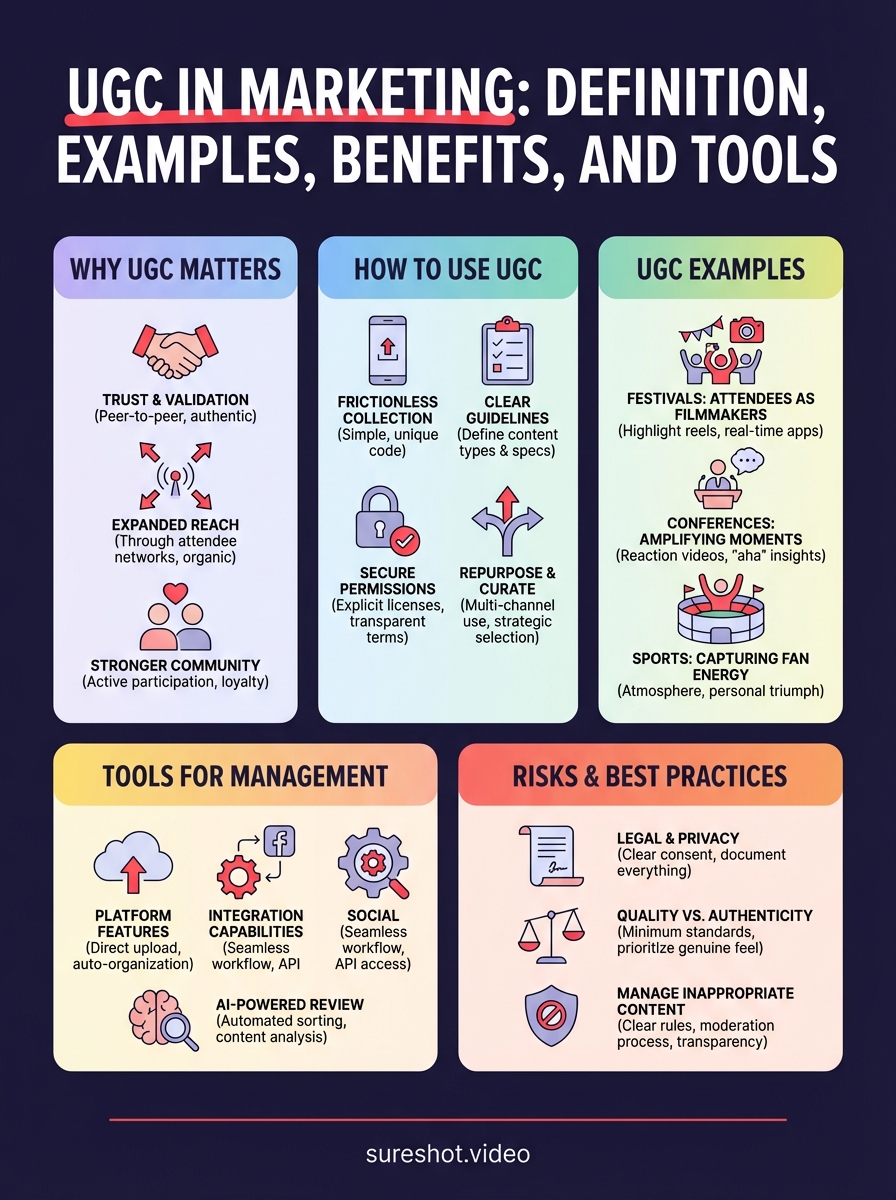
Why UGC matters in marketing
Your potential attendees scroll past traditional marketing content every day. They ignore ads. They skip sponsored posts. But when they see real people sharing genuine experiences at your event, they stop and pay attention. User-generated content cuts through the noise because it carries something your brand voice can't deliver on its own: peer validation. People trust other people more than they trust brands. That simple truth makes UGC one of the most effective tools in your marketing arsenal.
Building trust through authenticity
Content from your marketing team looks polished and professional, but audiences know you're selling something. UGC shows your event through unfiltered eyes. When an attendee posts a video of the crowd singing along at your festival or shares photos from a conference session that changed their thinking, that authenticity resonates with people who haven't attended yet. They see real reactions, genuine emotions, and honest perspectives. Research consistently shows that consumers trust peer recommendations far more than branded content. This trust translates directly into ticket sales and registrations.
User-generated content performs better because it answers the question every potential attendee asks: "What's it really like?"
Expanding reach without expanding budget
Every person who posts about your event becomes a distribution channel for your message. Their friends, followers, and connections see that content. Your reach multiplies without you spending another dollar on ads. A single video from an enthusiastic attendee can reach hundreds or thousands of people in their network, people who might never see your official marketing. The algorithm on most social platforms favours content from individuals over branded content, so ugc often gets better organic reach than your own posts. You're tapping into networks you couldn't access otherwise.
Strengthening community and loyalty
When you encourage and showcase attendee content, you transform passive consumers into active participants. People who create content about your event develop a stronger connection to it. They're more invested. They're more likely to return next year and bring friends. Featuring their content on your channels validates their experience and strengthens their loyalty. You build a community of advocates who promote your event because they genuinely want to share what they love about it, not because you paid them to.
How to use UGC in your marketing
You can't just hope attendees create content and tag you. You need a deliberate strategy that makes sharing easy, encourages participation, and gives you the rights to use what people create. The process starts before your event begins and continues long after it ends. Smart event organizers build ugc collection into every stage of their marketing plan, from pre-event promotion through post-event follow-up. Here's how to do it effectively.
Create a frictionless collection system
The easier you make it for attendees to share content, the more content you'll get. Set up a dedicated submission method that doesn't require multiple steps or complicated instructions. Give people a simple way to upload videos and photos directly from their phones. Use a unique event code or PIN that attendees enter to submit content to your collection system. This approach works better than asking people to tag you on social media, where you might miss posts or face challenges getting permission to reuse content. When the barrier to sharing drops, participation increases dramatically.
The best collection systems work in the moment, capturing content while the experience is fresh and the excitement is real.
Define your content guidelines upfront
Tell attendees what you're looking for before they start recording. Create clear guidelines about the types of content you want: crowd shots, speaker moments, behind-the-scenes footage, or personal reactions. Let them know your technical requirements like minimum video length, acceptable formats, and quality standards. Share these guidelines in your pre-event communications, on signage at the venue, and through your app or website. People create better content when they understand what you need. You'll spend less time sorting through unusable submissions and more time promoting great material.
Secure proper permissions and licences
You can't use someone's content without their consent. Build a permission system into your collection process that clearly states how you'll use submitted content. Explain that by submitting, attendees grant you a licence to edit, share, and promote their videos and photos. Keep the language simple and transparent. Make sure your terms cover commercial use, derivative works, and distribution across all your marketing channels. This legal foundation protects you from potential issues while showing respect for content creators. Most attendees happily grant permission when you're upfront about your intentions.
Curate strategically for maximum impact
Not every piece of submitted content deserves a place in your marketing. Review submissions and select the material that best represents your event and resonates with your target audience. Look for content that shows genuine emotion, captures key moments, or highlights what makes your event special. Consider the technical quality but don't dismiss slightly imperfect content if it tells a compelling story. Authenticity often matters more than production value. Create folders or categories for different types of content so you can quickly find the right clip for specific campaigns or platforms.
Repurpose across multiple channels
One piece of great ugc can fuel dozens of marketing touchpoints. Use attendee videos in your social media posts, email campaigns, and website updates. Edit longer submissions into shorter clips for different platforms. Combine multiple attendee perspectives into compilation videos that showcase the full event experience. Feature the best content in your ads for next year's event. Every time you repurpose content, you extend its value and reach. Track which pieces perform best so you know what resonates with your audience and can guide future content collection efforts toward similar material.
Acknowledge and engage with contributors
When you feature someone's content, tag them and thank them publicly. This recognition rewards participation and encourages that person to create and share more content in the future. They'll likely share your post with their network, extending your reach even further. Respond to comments on ugc posts and engage in conversations. Create a feedback loop that makes contributors feel valued and connected to your brand. Some of your best content creators will emerge as brand advocates who consistently produce high-quality material for your events. Nurture these relationships.
UGC examples you can learn from
Real examples show you what works in practice. The best ugc campaigns don't just collect random content from attendees. They create specific frameworks that guide people toward capturing moments that matter. Event organizers across different industries use user-generated content to solve similar problems: building authentic buzz, extending reach, and creating a library of promotional material. You can adapt these approaches to your own events regardless of size or type. These examples demonstrate proven tactics you can implement right away.
Festival organizers turning attendees into filmmakers
Music festivals face a unique challenge: capturing the energy of thousands of people experiencing dozens of performers across multiple stages over several days. Professional video crews can only be in one place at a time. Coachella solved this by encouraging attendees to share their perspectives through a dedicated content collection system. They created a unique hashtag and submission portal where fans uploaded videos and photos throughout the weekend. The festival team curated this content into highlight reels that showcased different stages, artist performances, and crowd reactions simultaneously. This approach gave them hundreds of hours of footage from angles their crew never could have captured. The content felt authentic because it came from real fans in the moment, not from a staged production setup.

When your attendees become your content creators, you multiply your creative team by hundreds or thousands without increasing your budget.
European electronic music festivals took this further by integrating submission systems directly into their mobile event apps. Attendees received push notifications at key moments asking them to capture and share what they were experiencing. Submission rates jumped because the request came exactly when people were most excited and their phones were already in their hands. The festivals gained real-time content they could share on social media while the event was still happening, driving fear of missing out among people who hadn't bought tickets yet.
Conference organizers amplifying speaker moments
Corporate conferences and industry events use ugc to extend the life of speaker sessions beyond the venue. TED has mastered this by encouraging attendees to record and share reaction videos immediately after talks that resonated with them. These personal responses carry more weight than official recordings because they show genuine emotional reactions and highlight different takeaways. Someone watching a clip of an attendee explaining how a talk changed their thinking about a business problem gets two valuable pieces of content: insight into the original talk and proof that it delivers real value.
Technology conferences ask attendees to film their biggest aha moments during workshops and breakout sessions. They provide simple guidelines: thirty seconds explaining one thing you learned that you'll implement immediately. This content works perfectly for promotional campaigns leading up to the next year's event because it demonstrates tangible outcomes and returns on investment that matter to potential attendees.
Sports events capturing fan energy
Stadium events leverage ugc to showcase atmosphere and excitement that static photos can't convey. Soccer clubs in Europe collect fan videos from the stands during matches, focusing on goal celebrations, chants, and crowd reactions. They edit these clips into matchday recap videos that capture the experience of being there. This content performs better on social media than professionally shot highlights because it puts viewers in the crowd rather than showing them the crowd from a distance. The perspective shift makes a significant difference in engagement rates.
Marathon organizers collect video submissions from participants at different points along the race course. Runners film themselves and other competitors, capturing moments of struggle and triumph that professional cameras miss. These authentic clips become powerful testimonials for future race promotion, showing real people achieving their goals rather than elite athletes dominating the field.
Tools that help you manage UGC
You can't manage hundreds or thousands of content submissions manually. The right tools transform ugc collection from an overwhelming task into a streamlined process that saves time and improves results. You need systems that handle the technical heavy lifting so you can focus on strategy and promotion. Different tools serve different purposes in your workflow, from initial collection through final distribution. Understanding what each type of tool accomplishes helps you build an efficient stack that matches your event's specific needs.
Platform features that matter most
Look for platforms that provide direct upload capabilities from mobile devices without requiring attendees to download special apps or create accounts. The submission process should take seconds, not minutes. Your tool needs automatic organization systems that sort content by event, date, or contributor, making it easy to find specific clips later. Built-in permission management that captures legal consent during upload protects you from future complications. Search functionality that filters by keywords, dates, or content type becomes critical when you're managing thousands of submissions. Choose platforms designed specifically for events rather than general-purpose tools adapted for this use.

The best ugc management tools disappear into the background, handling complexity while keeping the contributor experience simple.
Integration capabilities
Your ugc platform should connect seamlessly with the marketing tools you already use. Look for systems that export content directly to your social media scheduling platforms, email marketing software, and website content management system. Integration eliminates manual download and re-upload steps that waste time and introduce errors. Some platforms offer API access that lets you build custom workflows matching your specific process. Direct connections to video editing software help your team quickly polish and repurpose content without moving files between multiple systems.
AI-powered content review
Automation speeds up the curation process dramatically. Tools with AI-powered analysis can scan video submissions and identify key moments, flag potentially problematic content, and suggest the best clips for promotion. This technology doesn't replace human judgment but handles the initial sorting that would otherwise consume hours of staff time. You review curated selections rather than watching every submission from start to finish. Machine learning improves over time as the system learns what types of content you typically select and promote.
Risks and best practices for UGC
User-generated content delivers powerful results, but it introduces risks you need to manage proactively. Legal issues, brand reputation concerns, and quality control challenges come with the territory when you hand creative control to attendees. Understanding these risks upfront helps you build safeguards into your process without killing the authenticity that makes ugc valuable. The best practices outlined here protect your organization while maintaining the genuine feel that makes user content effective.
Legal and privacy considerations
You must obtain explicit permission before using anyone's content in your marketing. Build a clear consent mechanism into your submission process that explains exactly how you'll use the content and where it might appear. Your terms should cover commercial use, editing rights, and duration of use. Don't assume a social media post with your hashtag grants you automatic permission to repurpose that content elsewhere. Some jurisdictions have strict privacy laws about using someone's image or voice without consent, especially in commercial contexts. Include visible individuals in your permission process, not just the person who submitted the video. Document everything. Store consent records securely and make them easy to retrieve if questions arise later.
Quality control without losing authenticity
Setting minimum quality standards prevents unusable content from clogging your system while preserving the authentic feel that makes user content work. Specify basic technical requirements like minimum resolution, acceptable file formats, and lighting conditions. Guide contributors toward better content without demanding professional production values. A slightly shaky video with genuine emotion beats a perfectly stable shot with no energy. Review submissions quickly and provide feedback to frequent contributors who create almost-great content. They'll improve with specific direction, becoming reliable sources of quality material.
The goal isn't perfection but rather capturing real moments with enough clarity to use them effectively.
Managing negative or inappropriate content
Establish clear submission guidelines that define unacceptable content before issues arise. Offensive language, dangerous behavior, recognizable minors without guardian consent, and competing brand logos all need explicit mention in your rules. Implement a review process that catches problematic content before it reaches your public channels. Automated filters can flag potential issues, but human judgment makes final calls. When you receive negative content about genuine problems at your event, address those concerns directly rather than simply rejecting the submission. Transparency builds more trust than pretending issues don't exist.
Key takeaways
User-generated content gives you authentic marketing material that resonates with potential attendees better than anything your team creates in-house. Your attendees already capture videos and photos at your events. Building a systematic collection process turns that existing behavior into a powerful promotional asset. The key lies in making submission frictionless, securing proper permissions upfront, and curating strategically for maximum impact.
Tools designed specifically for ugc management handle the technical complexity while keeping the contributor experience simple. You eliminate hours of manual work through automated sorting and AI-powered review. Smart event organizers view attendee content as both immediate promotional material and long-term archival value for future campaigns.
Start small if you need to. Test content collection at your next event with clear guidelines and simple submission methods. Learn what types of content your audience creates naturally and what resonates with your promotional efforts.
Ready to turn your attendees into content creators? Book a demo to see how SureShot makes collecting and managing event video content effortless.