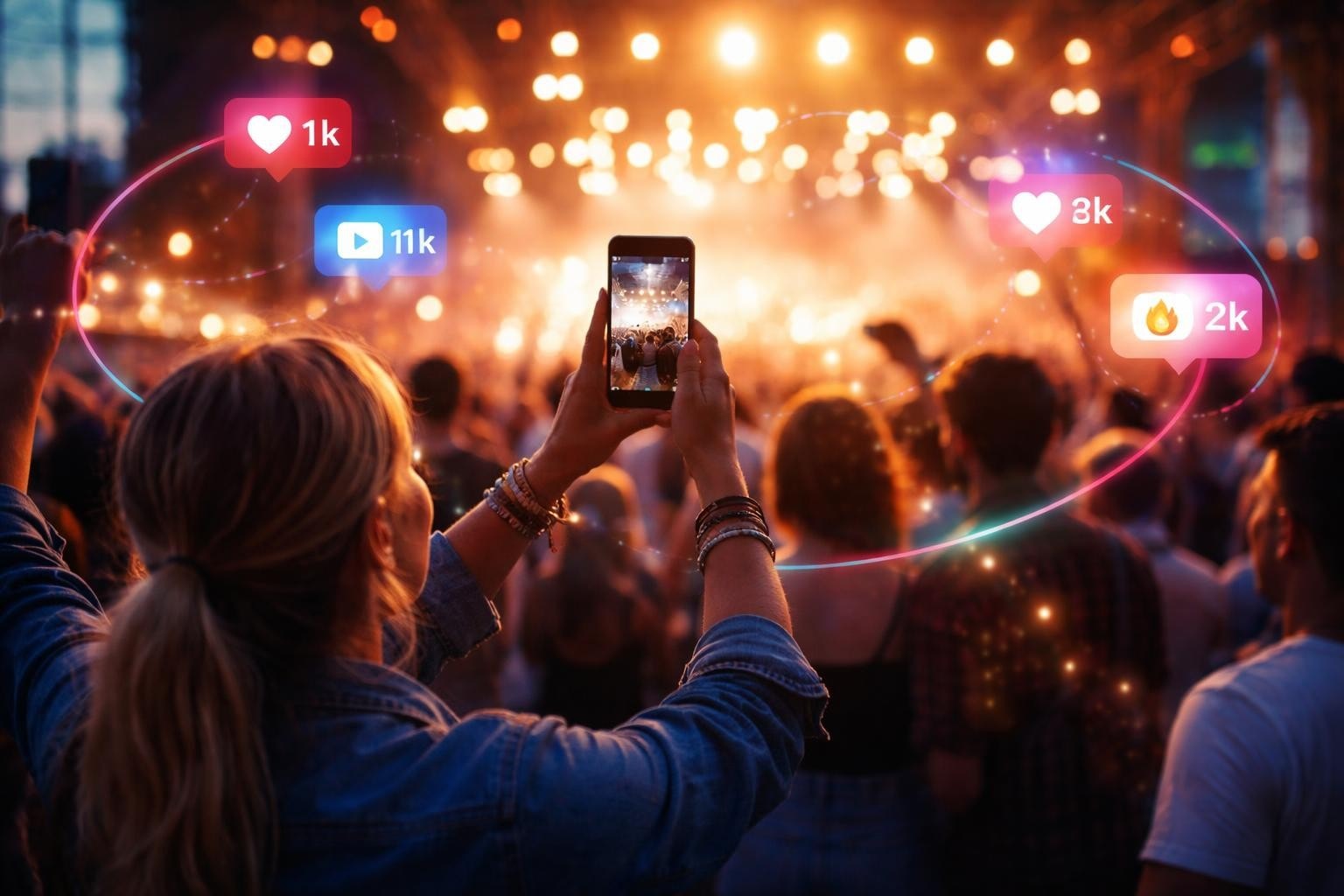

The European music festival market is enormous and structurally underserved when it comes to attendee content. YOUROPE's 131-member network represents events spanning 31 countries, and that's just the organised tier. Add the unaffiliated regional and national festivals, and you're looking at thousands of events running every year, collectively drawing tens of millions of attendees who arrive already equipped with broadcast-quality cameras in their pockets.
The footage that gets created at these events: authentic, multi-perspective, emotionally invested clips from people who paid to be there, is the most commercially valuable content any festival can access. The industry term for it is UGC, user-generated content, and the European festival market produces it at a scale that almost no other sector can match. Almost none of it is being systematically captured.
The market by tier
European festivals break broadly into three commercial tiers, and the content opportunity looks different at each level.
Tier 1: category-defining events
Roskilde (Denmark, 130,000+), Glastonbury (UK, 200,000), Rock en Seine (France, 120,000), Hurricane (Germany, 80,000+), Primavera Sound (Spain, 220,000 across Barcelona and Madrid). These are the events that set the cultural agenda for the festival market every year. Their brand power is global. Their sponsor relationships are long-term and high-value.
At this tier, the content opportunity is primarily a question of infrastructure. These festivals generate extraordinary volumes of attendee footage. The challenge is building the collection and curation pipeline to use it. Brand partners at Tier 1 festivals are paying for cultural association, and crowd footage that captures authentic fan experience is worth more to those partners than conventional production.
Tier 2: strong regional anchors
Les Vieilles Charrues (France, 300,000), Smukfest (Denmark, 50,000), NorthSide (Denmark, 35,000), Green Man (UK, 25,000), Melt (Germany, 25,000), Tønder (Denmark, 20,000). These events have deep community loyalty, distinct identities, and audiences that are genuinely invested in the experience.
Tier 2 is where the content strategy often has the most room for development. These festivals have strong brand partnerships and meaningful sponsor revenue, but haven't necessarily built the attendee footage infrastructure that would maximise the value of those partnerships. The return on investment for a platform working at this level is clear and demonstrable.
Tier 3: niche and emerging events
Hundreds of events with 5,000–25,000 attendees, often with highly engaged communities and clear genre identities. La Route du Rock (France), SPOT Festival (Denmark), Supersonic (UK), Donaueschingen (Germany). These festivals often have the highest attendee engagement per head in the market: small crowds, deep loyalty, footage that travels far beyond its origin audience.
The B2B2C flywheel across European markets
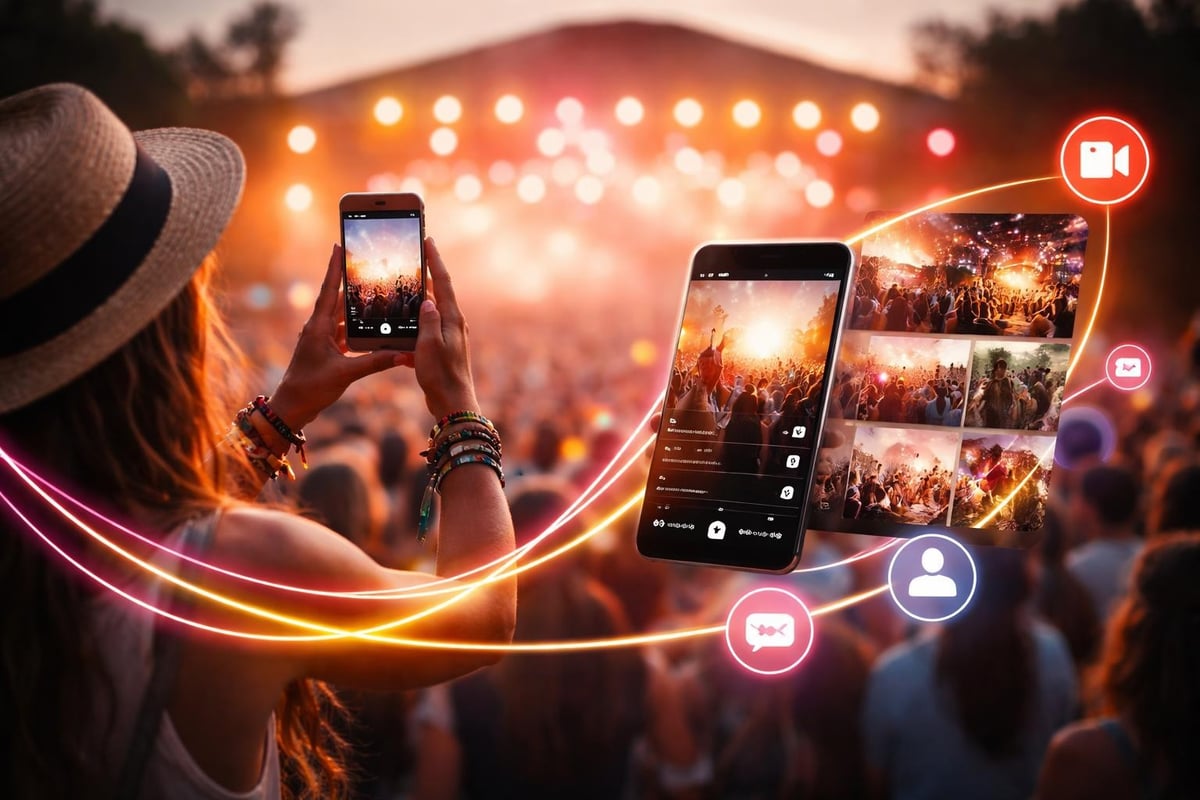
The commercial logic for festival content platforms compounds across markets. Each festival deal creates a user acquisition engine: attendees download the app at the event, creating a direct user relationship that extends beyond the festival weekend. Those users are then reachable for future activations: at other festivals, at weddings, at corporate events, at any occasion where they want to capture and share footage collectively.
At 5,000–40,000 attendees per event, even a modest download rate of 5–10% creates meaningful consumer reach from a single B2B deal. A festival like Roskilde at 130,000 attendees represents potential direct consumer reach of 6,500–13,000 new users from a single contract.
The implication: every festival deal in Europe is simultaneously revenue, user acquisition, and market entry. The B2B festival contract is also a paid distribution channel into the consumer market.
Market-by-market differences
European festival markets aren't homogeneous. The commercial opportunity varies by market in ways that matter to how you approach it.
| Market | Key events | Commercial character | GTM priority |
|---|---|---|---|
| Denmark | Roskilde, Smukfest, NorthSide, Jelling | High brand investment, community-oriented, Nordic leadership | Phase 1: home market |
| Sweden/Norway | Way Out West, Oslo Spektrum | Affluent audiences, strong sponsorship culture | Phase 2: natural adjacency |
| UK | Glastonbury, Latitude, Download, Green Man | Mature market, highest total attendance in Europe | Phase 4: anchor-led entry |
| Germany | Hurricane, Rock am Ring, Melt, Lollapalooza Berlin | Scale and diversity, strong brand ecosystem | Phase 4: large festival market |
| France | Les Vieilles Charrues, Hellfest, Rock en Seine | Non-profit culture, community depth, diverse genres | Phase 4: large festival market |
What the best European festivals are doing
The festivals at the front of this are not necessarily the largest ones. They're the ones that have recognised their attendees as content infrastructure and built accordingly.
The pattern is consistent across markets: events that make it easy for attendees to submit footage, manage rights cleanly, and curate and publish in near real-time, compound their marketing and sponsor revenue over time. Post-event clips drive ticket sales for the following year. Sponsor footage gets distributed through authentic attendee channels. The event builds an archive of real clips that becomes more valuable each year as evidence that the experience delivers.
Events that don't do this spend more on production every year and get diminishing returns on content that looks increasingly like every other festival's promo reel.
The sponsor angle that changes the economics
Brand partners at European festivals: Heineken at Roskilde, Red Bull at various events, Carlsberg and others across the Nordic market, are paying for cultural association. The question they're increasingly asking is how that association translates into content that reaches audiences beyond the festival gates.
The answer is crowd footage. Clips that capture real fan experiences with brand touchpoints visible, a branded stage, a sponsor activation, a product being used by someone who's clearly having the time of their life, are worth more than any produced content. They're proof the association is real, not just transactional.
The commercial model that works: festival organiser pays for the content platform as part of their event infrastructure, brand partner pays an uplift to have their activation documented through the attendee footage stream, and both parties get assets they can use year-round.
This is the direction the European festival market is moving. The organisers who build this infrastructure now are the ones who'll have the commercial advantage when the market fully realises what crowd footage is worth.
SureShot works with festival organisers across Europe to make this practical: collecting footage at scale, managing rights automatically, and turning attendee clips into commercial assets. If you're running an event or advising a brand partner on festival strategy, book a demo.