
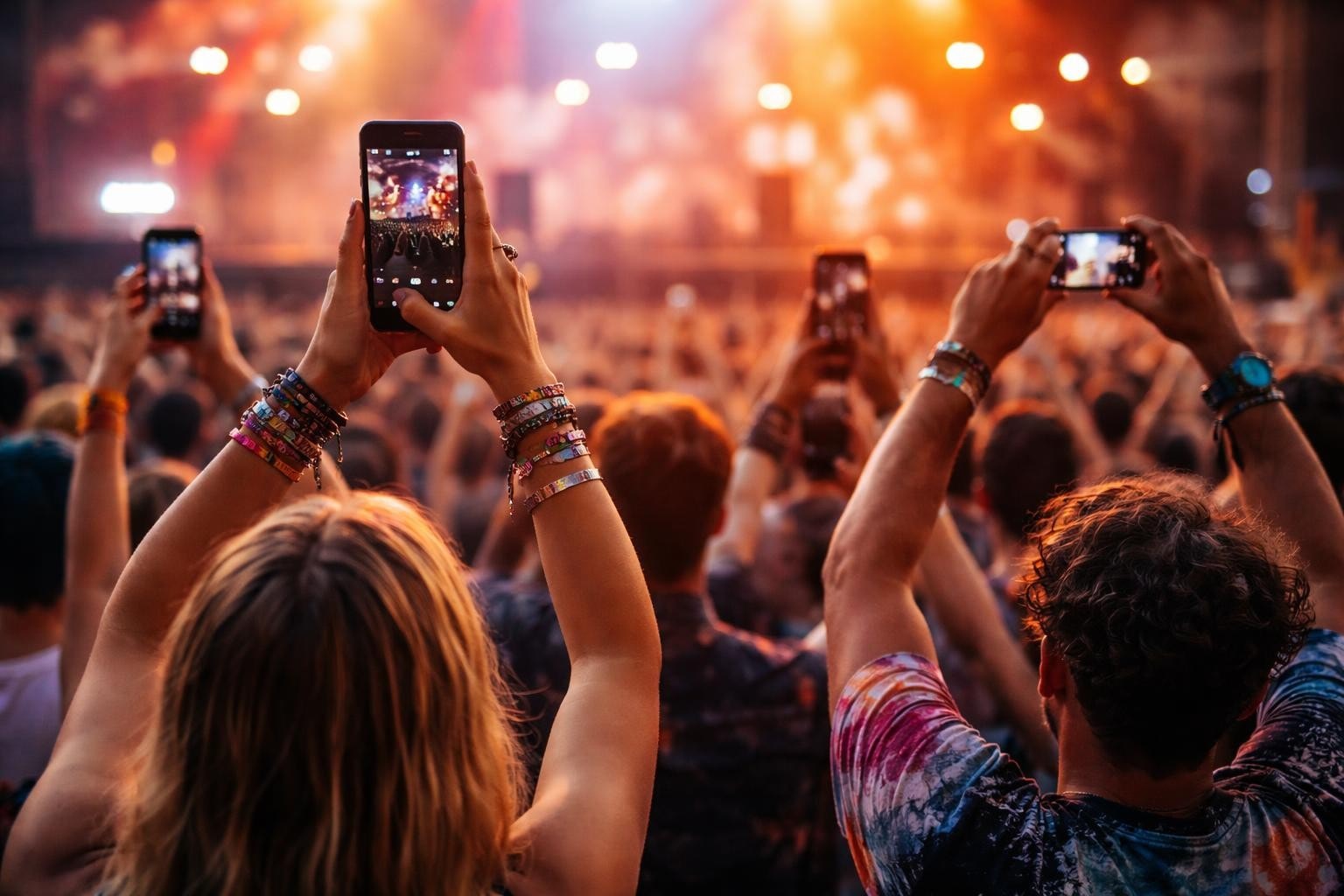

The best music festivals in 2026 are not necessarily the ones with the biggest headliners. They're the ones where something genuinely unexpected happens: where the crowd, the setting, and the programming combine to produce moments that people feel compelled to share because the experience actually delivered.
This guide covers what separates festivals worth attending from those worth skipping, with specific events across Europe that consistently meet that bar. It's written for attendees, but it's also a useful map for anyone, organiser, sponsor, or platform, thinking about where festival investment pays off.
The criteria that actually matter
Forget tier lists based purely on headliner prestige. The best music festivals share a set of properties that have nothing to do with which act closes the main stage.
Programming density over scale. A well-curated 30,000-person festival beats a bloated 100,000-person event. The best festivals programme every slot as if it matters, which means you're always choosing between things worth seeing rather than filling time before the headliner.
Setting specificity. The festivals that generate the most organic content reach are the ones that look different from everywhere else. Smukfest in a beech forest. Melt at an industrial excavation site. Rock am Ring at a motorsport circuit. La Route du Rock in a medieval walled city. The setting is part of the footage.
Community investment. The best festivals have audiences that feel ownership over the event. Roskilde's non-profit model. Fusion's volunteer-run ethos. Jelling's 50-year community history. That ownership produces attendee behaviour that's categorically different from passive consumption, and it shows in the clips people create.
Sponsor integration that feels right. Good festivals don't plaster logos on everything. They find brand partners whose presence adds to the experience rather than extracting from it. Attendees share things that feel authentic. They filter out things that feel transactional.
Denmark: the Nordic benchmark
Denmark punches significantly above its weight. For a country of six million people, it hosts four major festivals that would rank highly by any European standard.
Roskilde Festival (130,000 attendees, late June) is the category-defining event. Northern Europe's largest festival, running since 1971, with a non-profit structure that gives it genuine cultural authority. Eight stages, eight days, an internationally diverse crowd, and a history of booking headline acts at the peak of their relevance.
Smukfest (~50,000 attendees, August) is held in a beech forest in Skanderborg and is widely considered the most beautifully located festival in Scandinavia. The setting produces extraordinary footage naturally. People film because it looks like nothing else.
NorthSide (~35,000 attendees, June) in Aarhus is Denmark's most sustainability-focused major festival, with a consistently strong international lineup and a digitally active, urban crowd.
Jelling Musikfestival (~50,000 attendees, May) has been running since 1970 and has the kind of loyal returning audience that most festivals spend decades trying to build. The community is real, and it shows in how people engage with and document the event.
UK: the volume market
The UK hosts more music festivals per capita than any other country in Europe. The range in quality is wide, but at the top end, the events are among the world's best.
Glastonbury (200,000 attendees, June) is the cultural reference point. It sells out without announcing its lineup because the reputation is the draw. The Pyramid Stage, the Park Stage, the Arcadia structure, the Glastonbury mud: these are cultural touchstones, and the footage that comes from them has a specificity that no other event can replicate.
Green Man (~25,000 attendees, August) in the Brecon Beacons is what a boutique festival looks like when it's done correctly. Strong programming, spectacular mountain setting, deeply loyal audience. The clips from Green Man have a quality and specificity that makes them travel far beyond the attendee base.
Latitude (~40,000 attendees, July) in Suffolk extends beyond music into arts, comedy, theatre, and literature, which creates a content diversity that distinguishes it from single-genre events. Latitude's crowd is engaged with all of it, which produces a richer and more varied footage archive than a standard music festival of the same size.
Germany: scale and seriousness
Germany approaches its festivals with the same rigour it applies to most things. The logistics are tight, the production values are high, and the audiences take the music seriously.
Rock am Ring (~90,000 attendees, June) at the Nürburgring has been running since 1985 and has accumulated decades of audience loyalty. The setting, a motorsport circuit, creates visual specificity that makes footage from the event immediately recognisable.
Hurricane and Southside (80,000+ and 65,000 respectively, same June weekend) run simultaneously with the same lineup across north and south Germany. The combined reach exceeds 145,000 attendees in a single weekend, with footage from both sites covering identical performances from entirely different audience perspectives.
Melt Festival (~25,000 attendees, July) at the Ferropolis industrial site is Germany's premier electronic and alternative festival. The abandoned mining equipment that forms the site infrastructure creates an aesthetic that makes every shot from the event look distinctive.
France: community and scale
France has the largest individual festival audiences in Europe, and several of them operate with non-profit or community ownership models that create distinctive attendee behaviour.
Les Vieilles Charrues (~300,000 attendees, July) in Brittany is the largest music festival in France and one of the largest on the continent. The non-profit association model gives it community ownership that manifests in unusually invested crowd footage.
Hellfest (~180,000 attendees, June) in Clisson is the leading metal festival in Europe. Metal communities create footage with unusual depth and consistency: detailed documentation, ongoing community engagement, clips that continue performing long after the festival weekend ends.
Rock en Seine (~120,000 attendees, August) near Paris has the French capital as its backdrop, which gives footage from the event an immediately distinctive visual context.
What the best festivals have in common for content
Looking across the events above, the pattern is clear. The festivals worth attending and worth working with share three characteristics.
They create conditions where unexpected things happen, through programming choices, setting, or community culture, that are worth documenting.
Their attendees are emotionally invested rather than passively consuming, which produces footage with authenticity that performs organically.
Their visual identity is specific enough that clips from the event are immediately recognisable, giving that footage distinctive value in a crowded social media landscape.
The gap in every case is the same: extraordinary volumes of crowd footage being created, and almost none of it making its way back to the organiser in a structured form. The industry term for this footage is UGC, and the festivals that build infrastructure to collect and use it are the ones that compound their audience and sponsor revenue year on year.
SureShot works with festival organisers across Europe to collect attendee footage, manage rights, and turn what their audience is already creating into content that works commercially. If you're organising an event or working with a festival brand partner, book a demo.